Iran strikes US bases across Gulf after deadly attack on Kuhestak wedding
Iran launched missiles and drones at US bases in Jordan, Kuwait, Iraq, Bahrain and the UAE after Washington's renewed strikes on the Strait of Hormuz, including one that Iranian authorities say killed civilians at a wedding gathering in Kuhestak.
- Iranian Red Crescent says US strike killed four and injured 67 at Kuhestak wedding gathering.
- Iran fired missiles and drones at US bases in five neighbouring states in retaliation.
- Trump warned of harder strikes and said he had no interest in a deal.

Hostilities between the United States and Iran escalated overnight into Wednesday, 2 September 2026, after Tehran launched missiles and drones at American bases across the Middle East in retaliation for renewed US strikes.
The escalation followed an American attack that Iranian authorities say struck a home hosting a wedding celebration in the southern coastal town of Kuhestan, in Sirik, Hormozgan province.
Wedding gathering struck in Sirik
The Iranian Red Crescent Society said shrapnel from a missile hit a family wedding ceremony at a residential building, killing at least four people and injuring 67 others.
Media outlets initially quoted the society as saying five people had been killed. The regional Red Crescent had said at least one child was among the dead.
Citing the Hormozgan Governorate, Iranian media named those killed as Zarkhatoon Taheri, 50; Kolsum Mallahi Nazhdnia, 43; Mohammad Mallahi, 16; and Amirali Karimi, aged four.
Ali Mallahi, the father of the bride and owner of the building, said in a video broadcast by Iranian state television that the site was a residential home and that the deaths occurred during his daughter's wedding ceremony.
"It is a very saddening incident... Thank God the casualties were not higher," he said.
Iranian foreign ministry spokesman Esmaeil Baqaei described the incident as a "war crime". Mohammad Bagher Ghalibaf, Iran's parliamentary speaker and top negotiator, said the attack showed the United States was "Satan".
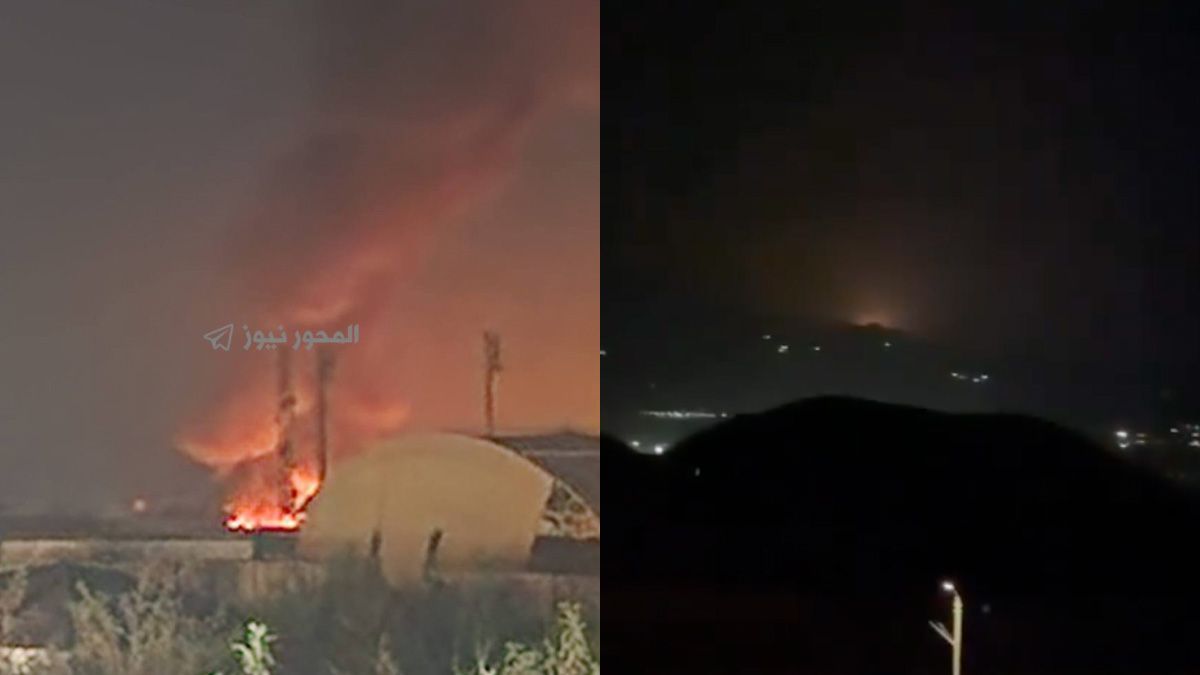
Footage published by the Iranian Red Crescent Society and geolocated to Kuhestak showed a building surrounded by rubble with a hole blown through its roof, and a downed telecommunications tower a short walk away.
Forensic examination of published videos and CCTV footage placed the telecommunications tower roughly 112 metres from the house where the wedding was held, with severely damaged houses about 130 metres north of the tower.
American account of the strikes
US President Donald Trump said in a post on Truth Social on Tuesday that the United States had launched a wave of "large and powerful" strikes on Iranian targets near the Strait of Hormuz.
He said the strikes were retaliation for what he described as a "failed attempt" at laying mines along the trade route.

United States Central Command (CENTCOM) said it had attacked Iranian military targets including air defence sites, radar systems, maritime assets and facilities, communication sites and mine-laying capabilities.
CENTCOM said the strikes followed recent attempted attacks by the Islamic Revolutionary Guard Corps (IRGC) against American forces and commercial shipping in the Strait of Hormuz, through which around 20 per cent of global oil and gas shipments usually pass.
CENTCOM spokesman Captain Tim Hawkins said he was aware of reports of civilian casualties. "The US military never targets civilians, unlike the IRGC," he said.
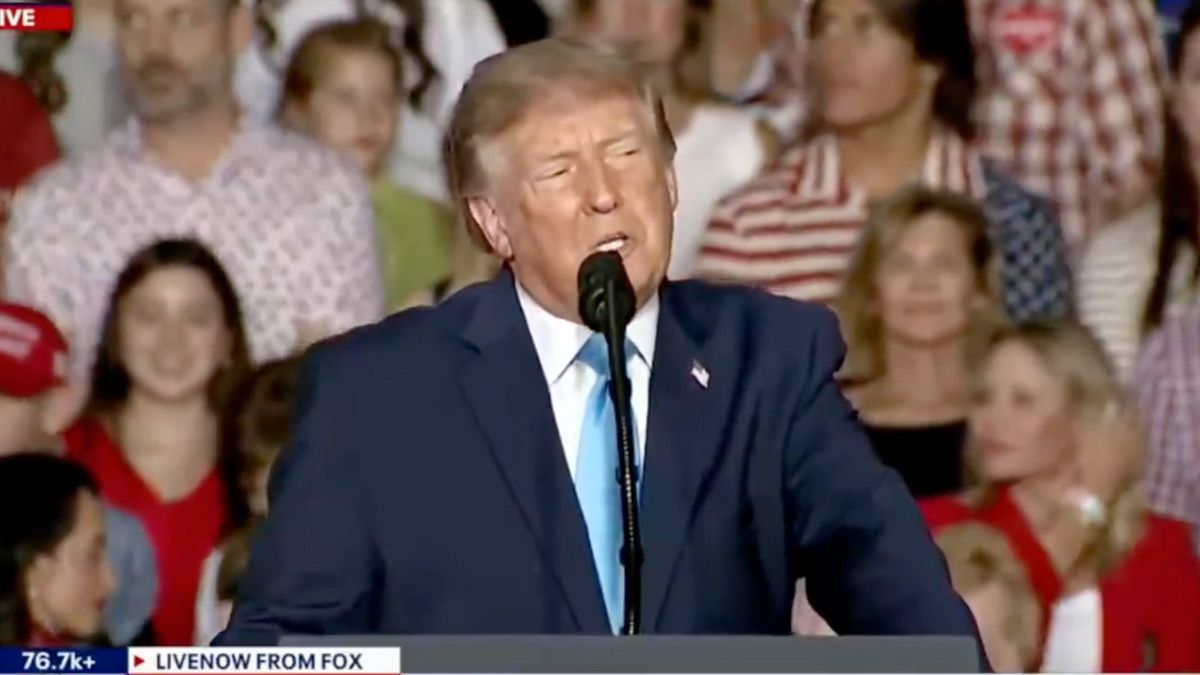
Speaking to reporters at the Oval Office on Wednesday, Trump said further attacks were possible. "It was a very heavy attack last night, and we're prepared to do another one any time we want," he said.
Casualties reported across southern Iran
Iranian media reported explosions across the southern provinces of Hormozgan, Sistan-Baluchestan, Kerman and Khuzestan.
Iranian state media reported that seven further people were killed in three separate US strikes around Ahvaz and Aqajari, in Khuzestan. Iranian authorities said 14 people were killed elsewhere in total.
The IRGC said four members of its aerospace force, which oversees Iran's ballistic missiles, were killed in Kermanshah, and that three members of the paramilitary Basij Resistance Force were killed on Lavan island in the Gulf.
Retaliation against bases in five countries
Early on Wednesday, the IRGC and the regular Iranian military announced they had fired ballistic missiles and drones at US bases in Bahrain, Iraq, Jordan, Kuwait and the United Arab Emirates.
In a statement, the IRGC described the American bombing as a "flagrant violation of human rights" that turned what it called an engagement event into a mourning ceremony.
Iranian forces said the attacks caused casualties and damage at the US Marine barracks at Camp Titin on Jordan's Gulf of Aqaba coast. US officials cited by Reuters said there were no casualties.
The Jordanian Armed Forces said they engaged 13 ballistic missiles, destroying 10, with three falling in remote, uninhabited areas.
The IRGC and the Iranian military also said a maintenance centre, warehouses and equipment belonging to the US military were destroyed in Irbil, in Iraq's northern Kurdistan region.
Iraqi authorities did not comment, though local media reported that a US surveillance balloon was hit by drones.
Kuwait and Bahrain on alert
Iranian military spokesperson Ebrahim Zolfaghari said shortly after the US strikes began on Tuesday night that Iran "will no longer exercise restraint regarding Bahrain and Kuwait", adding that "gifts are on the way".
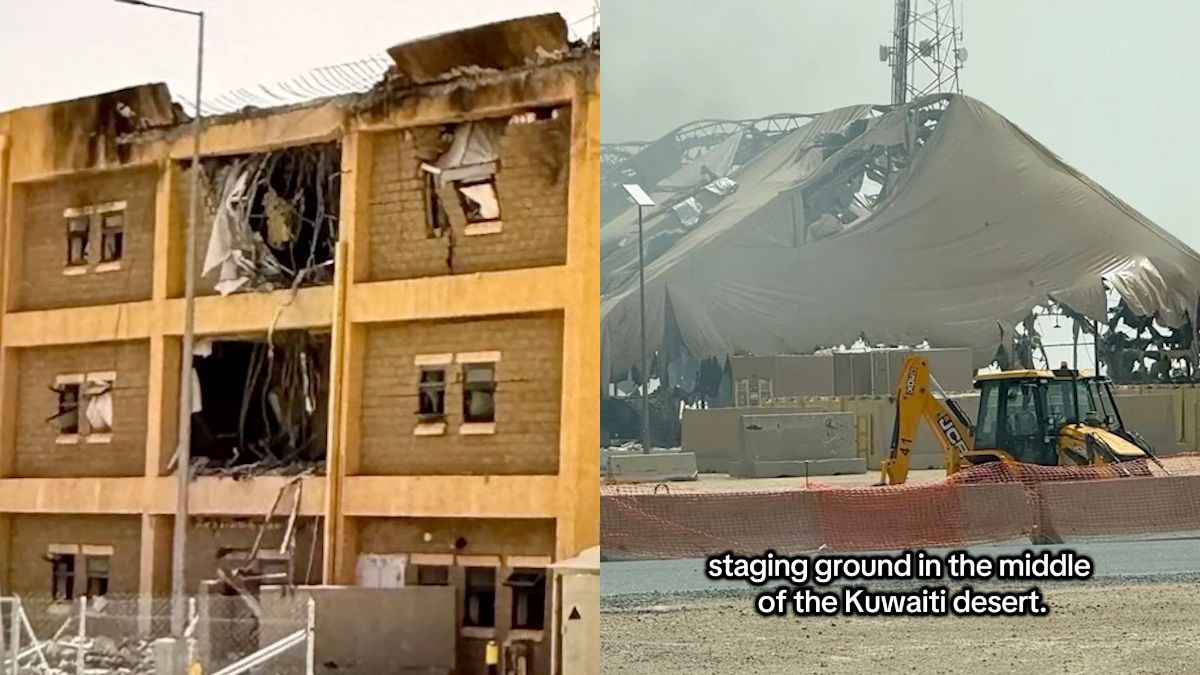
Kuwait's army said sirens sounded on Wednesday morning as air defences confronted hostile drones. The fire service said crews extinguished a blaze at a residential complex struck by a drone, with no casualties reported.
Kuwaiti air defences were again engaging threats on Thursday morning, the Kuwait Armed Forces said on X.
"Kuwaiti air defenses are currently responding to hostile missile and drone threats," the post said, adding that any explosions heard would be interception systems and urging the public to follow official safety instructions.
Iranian state broadcaster IRIB reported that the attack targeted US military bases in Kuwait, citing local sources who said a base had been struck and smoke was rising from the site. Neither the United States nor Kuwait confirmed the claim.
Sirens also sounded in Bahrain on Wednesday morning, with the Bahraini interior ministry announcing an alert of potential threat. Local sources told IRIB that at least four consecutive explosions were heard.
Shipping and oil flows
The IRGC said two tankers caught fire after striking mines while being guided through what it called an "illegal route" in the Strait of Hormuz by the US military.
Saudi Arabia's national shipping company said two Filipino sailors were killed in a security incident involving its crude oil tanker SIDR as the vessel transited the waterway on Monday.
Despite the fighting, Energy Secretary Chris Wright told reporters in Caracas that 17 million barrels of oil passed through the Strait of Hormuz on Monday, the largest volume since the conflict began. Wright said the average is now 8 million barrels a day.
Warnings from both sides
Trump warned that if Iran retaliated, "they will be hit again at a much harder and higher level, but it will not be the biggest attack of them all, that is waiting in the wings". He said that when that was over, "there will be very little left" of the country.
In a further post, Trump said he was not interested in negotiating. He said he preferred the current American position, citing near-total control of the Strait of Hormuz and a collapsing Iranian economy.
Ebrahim Azizi, chairperson of the Iranian parliament's National Security and Foreign Policy Committee, wrote on X: "Make no mistake: these crimes will not go unpunished."
Iran's armed forces general staff said on Telegram that it would "impose a heavy cost on the American enemy", adding that the more the US military insisted on hostile actions in the region, the heavier its losses would be.
The Iranian military's Khatam al-Anbiya Central Headquarters warned that operations against American forces would continue until the United States "regrets" its crimes.
Background
The United States and Israel launched a joint attack on Iran on 28 February 2026, killing the country's supreme leader and other senior officials at the start of a large air campaign.
Iran responded by attacking Israel, US bases and allied states in the Gulf with missiles and drones, and effectively closed the Strait of Hormuz to commercial shipping.
In June 2026, the United States and Iran signed a memorandum of understanding calling for an end to hostilities and the reopening of the Strait of Hormuz. It allowed two months to reach a final agreement covering Iran's nuclear programme, US sanctions and a permanent truce.
The memorandum collapsed within weeks. Both US and Iranian forces subsequently fired on commercial shipping, with Iran targeting vessels it said sought to transit the strait without permission and the United States enforcing a naval blockade of Iranian ports.
Last week, Washington indicated it was switching to economic sanctions rather than military options to win concessions and reopen the waterway. Iranian officials and state media largely dismissed the campaign as a continuation of earlier measures.
The current round of fighting began on Sunday, 30 August 2026, when the United States said it had struck two rocket launchers to prevent them being used to lay naval mines. That ended a month-long lull.