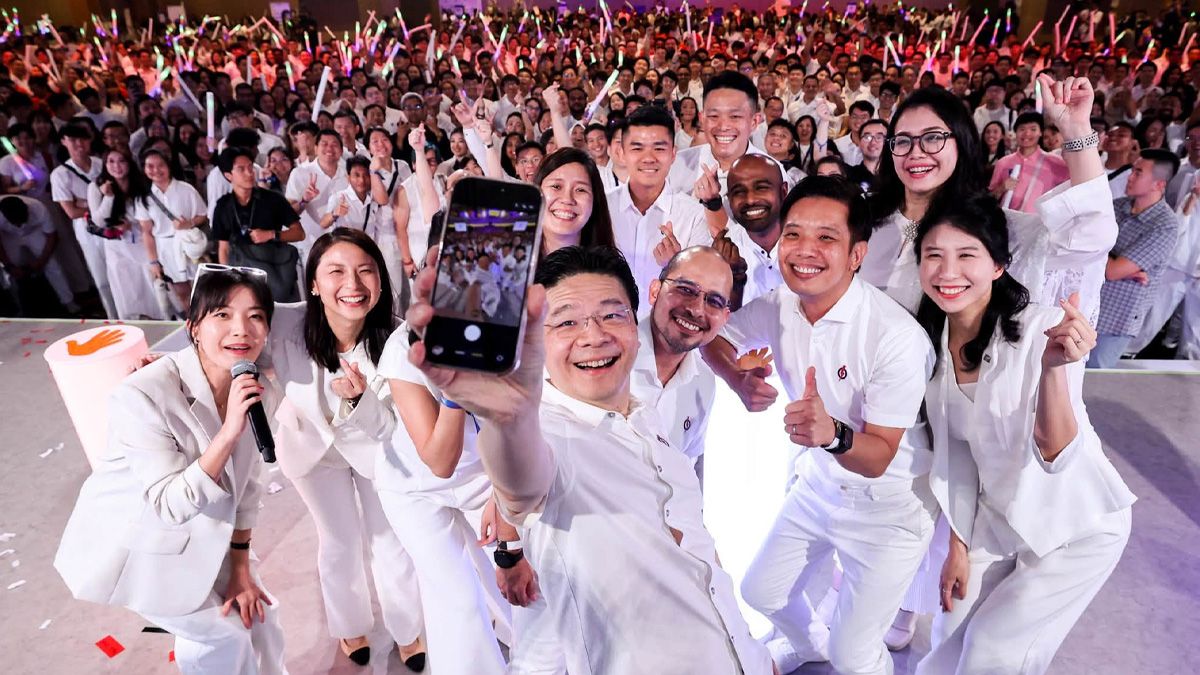
Hypocrisy in PM Lawrence Wong’s message on success
Singapore ministers, being the highest-paid in the world, have little standing to ask citizens to lower their material aspirations while they live the high life.
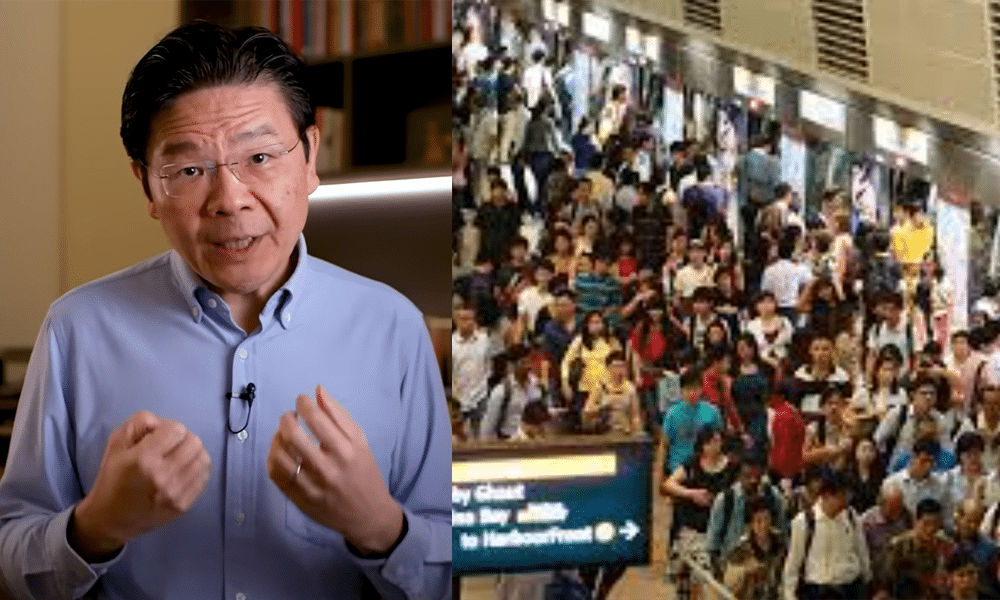

In a six-minute video message released on 22 June, Prime Minister Lawrence Wong emphasized the need for a broader definition of success in Singapore. He outlined his vision for a society where every individual is valued for who they are and where success is not a zero-sum game.
PM Wong urged Singaporeans to move away from the traditional definition of success embodied by the “5Cs” – cash, car, credit card, condominium, and country club.
While acknowledging that these are not inherently negative aspirations, he highlighted their adverse effects. “We have seen how such a narrow definition of success can lead to negative consequences,” he said.
“We become more anxious and stressed, and worse, we pass this on to our children. This is not the society I want Singapore to become.”
Instead, PM Wong envisions a Singapore where everyone matters and is valued for their individuality. “We can all strive to be the best possible versions of ourselves. Our success is defined by how we help each other to do well collectively,” he stated.
He emphasized that success should be about excelling at what we do today with pride and perseverance rather than seeking status or rewards.
“My team and I want to build a society that allows space for U-turns, side-steps, slowdowns, pauses, experimentations, and outliers. We want to broaden our concept of achievement.”
PM Wong also shared his personal experiences, including his initial desire to leave the government sector due to constant competition and comparison. He called for an expanded perspective, citing healthcare workers during the Covid-19 pandemic as examples of unsung heroes who deserve recognition alongside doctors.
“There are many unsung heroes – nurses, physiotherapists, occupational therapists, radiographers – who put in their hearts and souls into supporting every patient’s recovery,” he said. “To me, they are all successful role models we should look up to.”
In his parting message, PM Wong asked the public to celebrate every kind of success, respect all forms of work, and never be afraid to try even if setbacks are inevitable.
However, PM Wong's words ring hypocritical considering the lifestyle that he and his colleagues enjoy as leaders of the country.
First, let us remember that Singapore ministers are the highest paid in the world, earning more than the US president, who is paid $US400,000 per year.
Under the ministerial salary framework, which was not reviewed last year despite promises and apparently will not be reviewed this year to avoid public scrutiny, the current total annual salary of an entry-level Minister (i.e., MR4) is benchmarked to 60% of the median income of the top 1,000 earners who are Singapore Citizens.
If an MR4 minister meets the National Bonus indicators, he or she will earn S$1,200,000 a year, and for the Prime Minister, the amount will be S$2,200,000.
Assuming that PM Wong works 44 hours a week and works every week without a break, he is essentially paid S$961.54 per hour.
ADP® Research Institute’s People at Work 2023: A Global Workforce View said that 40% of Singapore workers feel they work up to 10 hours of unpaid time every week. At the same time, to many Singaporeans, it might seem that Singapore politicians are paid disproportionately more compared to the hours they work.
With their pay, cash and credit cards are surely not a problem for PAP ministers or even to be considered aspirations.
Regarding condominiums, it is not wrong to assume that ministers, with their level of income, live on private property.
The most high-profile ministers with extragant housing are Minister for Home Affairs and Law K Shanmugam and Foreign Affairs Minister Vivian Balakrishnan with their state-owned Ridout Road properties while having owned private properties themselves. Mr Shanmugam, in particular, lives in an estate the size of 23,164 square meters, which costs S$26,500 a month in rent.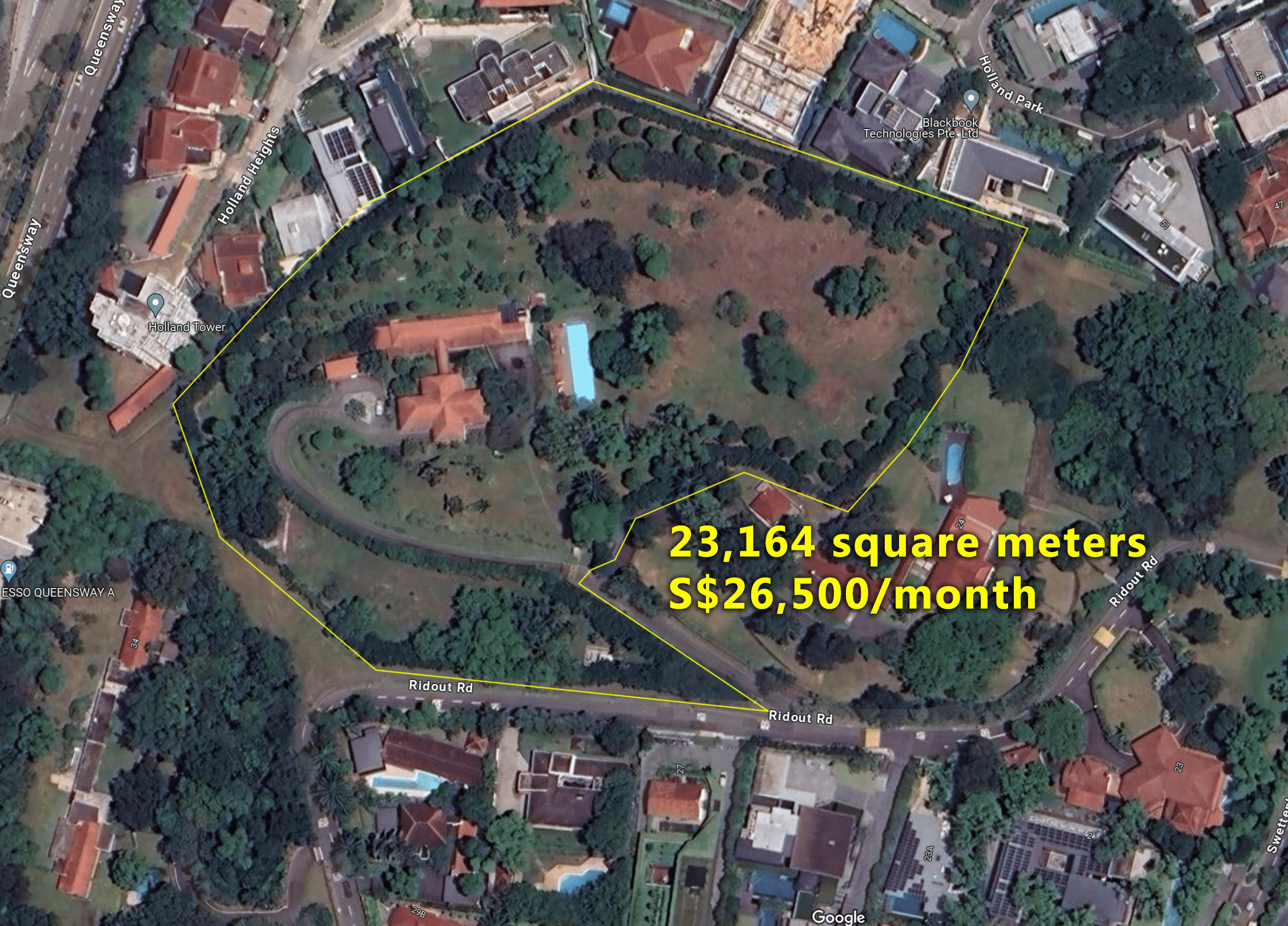
To put that into perspective, an average 5-room HDB flat costing over half a million is 110 sqm. According to property listing websites and HDB's data, the cost of renting a 5-room flat in the area is around the vicinity of S$5,000.
As for cars, which ministers take public transportation to work? Furthermore, cars are increasingly getting out of reach for many Singaporeans.
Despite an increase in the population of half a million over the past ten years, the number of cars under the Certificate of Entitlement (COE) bidding system only increased by 34,000. This limited increase has pushed the demand and cost of owning a car to the highest in the world.
While politicians may say that cars are not essential, many families rely on private transportation for essential needs such as employment and ferrying their family members for medical purposes, something public transportation cannot replace.
As for country clubs, frankly, no one really cares today. The reason why country clubs were part of the 5Cs is because they represented the epitome of one's material wants and career progression for networking.
You would probably only choose to invest in a country club membership if you had enough of the previous four and nowhere else to spend the money, just for the sake of status.
With the work-life balance that Singaporeans have today, even if they can afford the membership, they have no time to enjoy the facilities. Contrast that with the high life that politicians enjoy; take former PAP minister S Iswaran, for example, with his attendance at various major events and flying to various countries.
So, considering these points, Singapore politicians, especially ministers, have little standing to ask Singaporeans to lower their expectations of material aspiration when they are already living the high life.
If anything, their stance is no different from the infamous saying attributed to Marie Antoinette, "let them eat cake."