Prime Minister Lawrence Wong's first National Day message: Reassurance or rhetoric?
In his first National Day message as Prime Minister, Lawrence Wong highlighted Singapore's past achievements while addressing future challenges. Despite assurances on economic growth, cost of living, and social support, questions remain on whether his government can truly deliver on its promises.
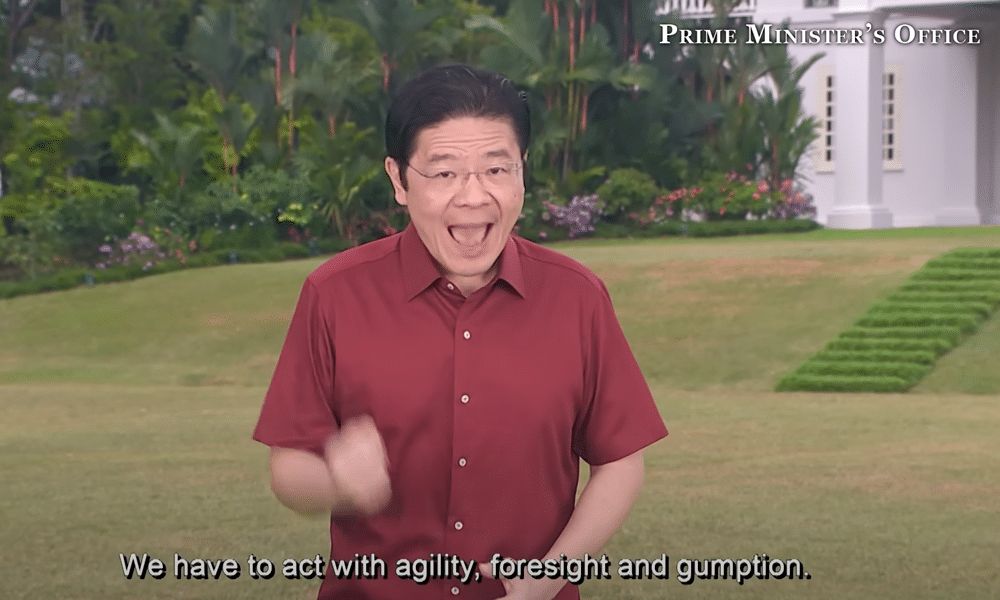

SINGAPORE: In his first National Day message as Prime Minister, Lawrence Wong addressed the nation from the historic Sri Temasek, invoking the memory of Singapore's founding days. While the symbolism was strong, the substance of his speech may leave many wondering if the government truly grasps the challenges facing Singaporeans today.
Delivering his message from the same residence where late Mr Lee Kuan Yew once grappled with the nation's uncertain future, Mr Wong sought to draw a parallel between the struggles of the past and the challenges of the present.
He praised the resilience of Singapore’s Pioneer Generation and reiterated the nation’s transformation from a struggling city-state to a "shining red dot on the global stage."
However, the speech also highlighted the government's reliance on nostalgia and the endearing support for the founding Prime Minister as a means of rallying support, perhaps at the expense of addressing more immediate and pressing concerns.
A World of New Challenges
Mr Wong painted a picture of a world in turmoil, with conflicts in Europe and the Middle East, rising tensions between the United States and China, and a growing tide of populism and protectionism. While these are indeed significant issues, some might argue that Mr Wong's speech offered little in the way of concrete solutions to how Singapore will navigate these global challenges beyond vague calls for "agility, foresight, and gumption."
The Prime Minister warned that the strategic rivalry between the U.S. and China could undermine peace and stability in the region, a scenario that has been well-known for years. What remains unclear is how his government plans to protect Singapore's interests in this increasingly volatile environment. His appeal for fresh solutions and a distinct path forward felt more like a call to action than a display of leadership.
Economic Growth Amid Stagnation
In his speech, Mr Wong acknowledged that Singapore, as a developed economy, cannot expect to grow as rapidly as before. While he highlighted ongoing investments in research and development and major infrastructure projects, the question remains whether these strategies will be sufficient to maintain Singapore's economic edge in an increasingly competitive global landscape.
Mr Wong cited recent investments from multinational companies like Pfizer and BioNTech as evidence of Singapore's continued attractiveness. However, skeptics might note that such investments are not new and that the government has long relied on foreign investment as a key driver of economic growth.
The real challenge lies in whether these investments can create meaningful opportunities for Singaporeans, especially as the nature of work evolves. Mr Wong’s assurance that the government will help Singaporeans adapt through initiatives like SkillsFuture may come across as yet another rehash of existing policies, rather than a bold new vision for the future.
Cost of Living: A Lingering Concern
On the issue of inflation and the rising cost of living, Mr Wong acknowledged the financial strain that many Singaporeans are facing. However, his proposals to cushion the impact—such as maintaining a strong Singapore dollar and offering CDC vouchers and cash payouts—might seem like temporary fixes rather than long-term solutions.
While these measures may provide short-term relief, they do little to address the underlying issues of income inequality and wage stagnation that contribute to the financial stress experienced by many households.
Housing affordability, a perennial concern for Singaporeans, was also addressed, with Mr Wong touting the government's cooling measures and new HDB flat frameworks.
Yet, the impact of these measures remains to be seen, particularly as property prices continue to soar. The introduction of the new Standard, Plus, and Prime frameworks may help some, but they also risk creating new divides in a society that prides itself on equality.
Social Support: A Work in Progress
Mr Wong's speech also touched on the need to strengthen social safety nets, particularly for those who may struggle to keep pace with rapid changes. However, his promises of more support for lower-wage workers, vulnerable families, and retirees might be seen as too little, too late. The rapidly aging population is not a new issue, and the government's response has often been criticized as reactive rather than proactive.
His announcement that further measures will be revealed during the National Day Rally leaves many questions unanswered. Is the government merely buying time, or are there genuinely innovative policies in the pipeline?
The Forward Singapore initiative, while well-intentioned, risks being perceived as another round of consultations with little follow-through, particularly in light of the recent dismissal of the proposal to review the electoral boundary review process.
A Call for Unity, But at What Cost?
Mr Wong concluded his speech with a call for unity and collective action, echoing the familiar refrain of "One United People."
Yet, as Singapore grapples with widening social divides and economic uncertainty, the effectiveness of this message remains uncertain.
In the end, Mr Wong's first National Day speech as Prime Minister may have been more reassuring than revelatory. While he touched on many of the right notes, the speech could leave some questioning whether his government has the vision and the will to tackle the significant challenges that lie ahead.
As Singapore celebrates its 59th National Day, the real test will be whether Mr Wong can move beyond rhetoric and deliver on the promises he has made.