NDR: PM Wong announces 10-week Shared Parental Leave amid Singapore birth rates decline
During the National Day Rally on 18 August, Prime Minister Lawrence Wong announced a new 10-week Shared Parental Leave scheme, with government payments up to S$2,500 per week, effective from 1 April 2026. This announcement comes in light of the significant drop in live births in Singapore in 2023.


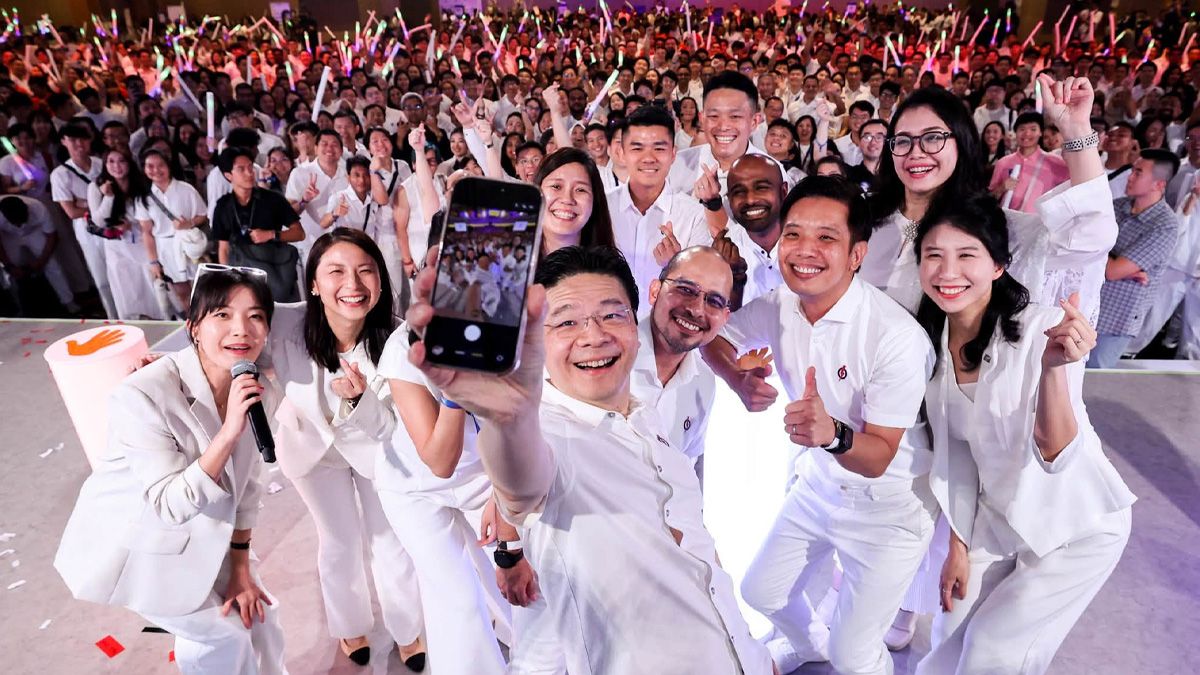
SINGAPORE: During the National Day Rally on Sunday (18 August), Prime Minister Lawrence Wong announced that parents will be granted 10 weeks of Shared Parental Leave (SPL) for infant care, set to be fully implemented by 1 April 2026.
This will replace the current SPL arrangement, which permits working mothers to transfer up to four weeks of their 16-week government-paid maternity leave to their husbands.
The implementation will occur in two phases, beginning on 1 April 2025, allowing employers time to adjust their operational and manpower needs.
PM Wong also revealed that paternity leave for new fathers will be increased from the current two weeks to four weeks of government-paid leave.
These changes are part of the government's broader efforts to provide stronger caregiving support for parents, resulting in a total of 30 weeks, or approximately 7.5 months, of paid leave—up from the current 20 weeks.
Currently, fathers are entitled to two weeks of government-paid paternity leave and can take an additional two weeks if their employers approve. Employers who grant this extra leave are reimbursed by the government.
Starting from 1 April 2025, the additional two weeks of government-paid paternity leave will become mandatory, increasing the total entitlement to four weeks.
PM Wong noted that the government had examined other countries where parental leave is more generous, often extending to a year or more.
"They adopt a different approach. They provide long durations of leave, but part of it is provided at reduced pay, or even unpaid. "
"Employees also have to be open to taking on a different role when they return to work a year later," he said.
"In Singapore our leave provisions are shorter. But most of it is fully paid. And in most cases, you can return to the same job when you come back to work."
"Because we have a different system, it is hard to make a direct comparison with other countries. "
"But having studied the matter carefully, I think we can further enhance our leave schemes," he added.
PM Wong emphasized the need for changing traditional gender roles, noting that while Singapore has made progress in women's development, outdated beliefs still persist. He stated that the view of fathers as sole breadwinners and mothers as primary caregivers must evolve.
With women increasingly pursuing careers, fathers need to take on a greater share of caregiving and household responsibilities.
PM Wong acknowledged that marriage and parenthood are deeply personal decisions.
“What the Government can and will do is to create a more family-friendly environment in Singapore. And hopefully this will motivate more Singaporeans to translate their aspirations into reality.”
“I hope this move will go some way in reassuring young couples – we are building a Singapore made for families; and we will help you keep a good balance between your working and parenting responsibilities.”
10 Weeks of Shared Paid Leave with Government Support Up to S$2,500 Weekly
The new scheme provides 10 weeks of paid parental leave, shared between both parents, with government payments up to S$2,500 (US$1,900) per week, as announced by the National Population and Talent Division (NPTD) on Sunday.
This scheme will be available to parents of Singaporean babies, including unwed mothers, while only legally married fathers will be eligible.
The scheme will be introduced in two phases:
- Parents of children born from 1 April 2025 will receive 6 weeks of shared parental leave.
- Parents of children born from 1 April 2026 will be entitled to the full 10 weeks of leave.
Initially, the 10 weeks of leave will be evenly divided between both parents: three weeks each for babies born between 1 April 2025 and 31 March 2026, and five weeks each for babies born from 1 April 2026.
However, parents can adjust the allocation of their leave according to their caregiving needs, meaning one parent can take all 10 weeks if desired.
Any adjustments to the leave-sharing arrangement must be made within four weeks of the child’s birth. Changes beyond this period will require employer approval.
The shared parental leave must be used within the first 12 months following the child's birth.
If parents and their employers cannot agree on the leave arrangements, parents can take the shared leave in a continuous block—after using their government-paid maternity and paternity leave—within the first 26 weeks of the child’s birth.
The current scheme, which allows working mothers to share up to four weeks of their maternity leave with their husbands, has seen low uptake, with only 6% of eligible working fathers utilizing the leave, according to the NPTD.
Singapore Sees 5.8% Drop in Live Births in 2023
In 2023, Singapore witnessed a significant decline in live births, reflecting ongoing demographic challenges.
The number of live births dropped to 33,541, marking a 5.8% decrease from the 35,605 births recorded in 2022.
This decline is accompanied by a crude birth rate of 7.4 per 1,000 Singapore residents, lower than the previous year’s rate.
While the improved paternity leave and Shared Parental Leave schemes are steps in the right direction for supporting parents, they also highlight the government's concern over Singapore's declining birth rate.
Whether these measures will be enough to encourage couples to have children in the increasingly demanding environment of the city-state remains to be seen.
The effectiveness of these policies will ultimately be tested by their impact on birth rates and whether they can address the deeper issues that deter couples from expanding their families in Singapore.