Who decides on nuclear? Southeast Asia's search for social licence
Across Southeast Asia, nuclear power is moving from deferred possibility to active plan. But the way governments make the case to their own populations diverges sharply, from commissioned approval surveys to five-day online hearings to a reactor agreed by a military junta with no public process at all.
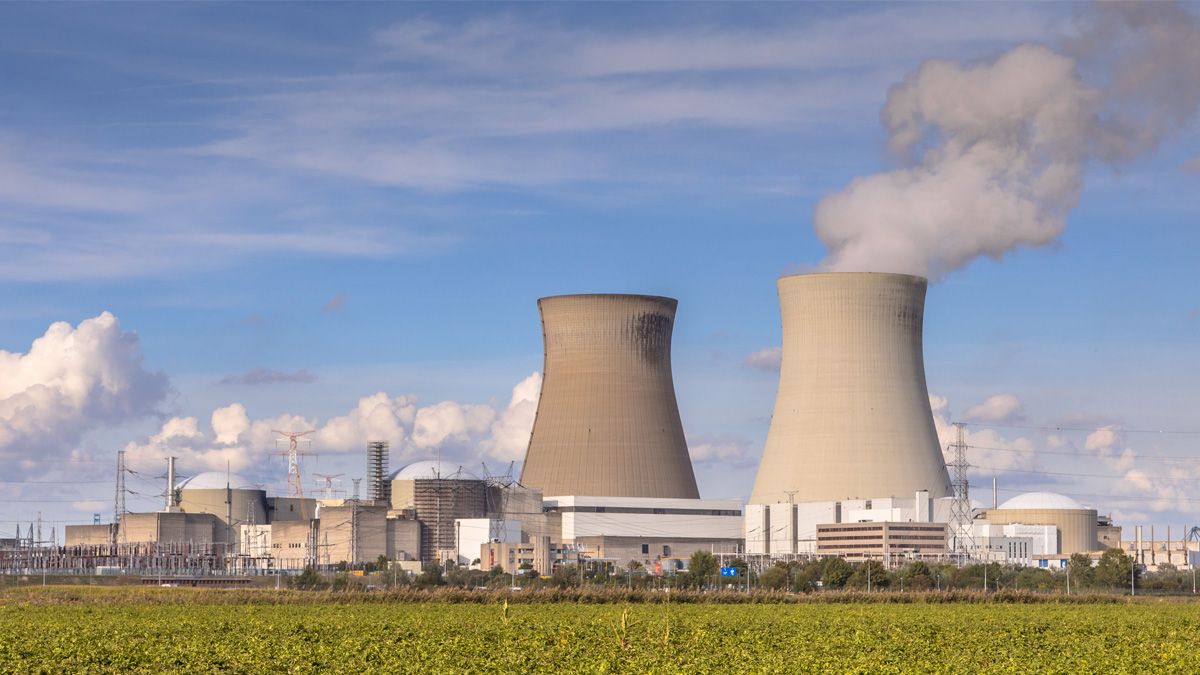

Across Southeast Asia, nuclear power is moving from a long-deferred possibility into active government planning. The International Energy Agency (IEA), in its Southeast Asia Energy Outlook 2026, counts three countries with clear development targets — Indonesia, Vietnam and the Philippines — and four more — Malaysia, Singapore, Thailand and Myanmar — weighing the option.
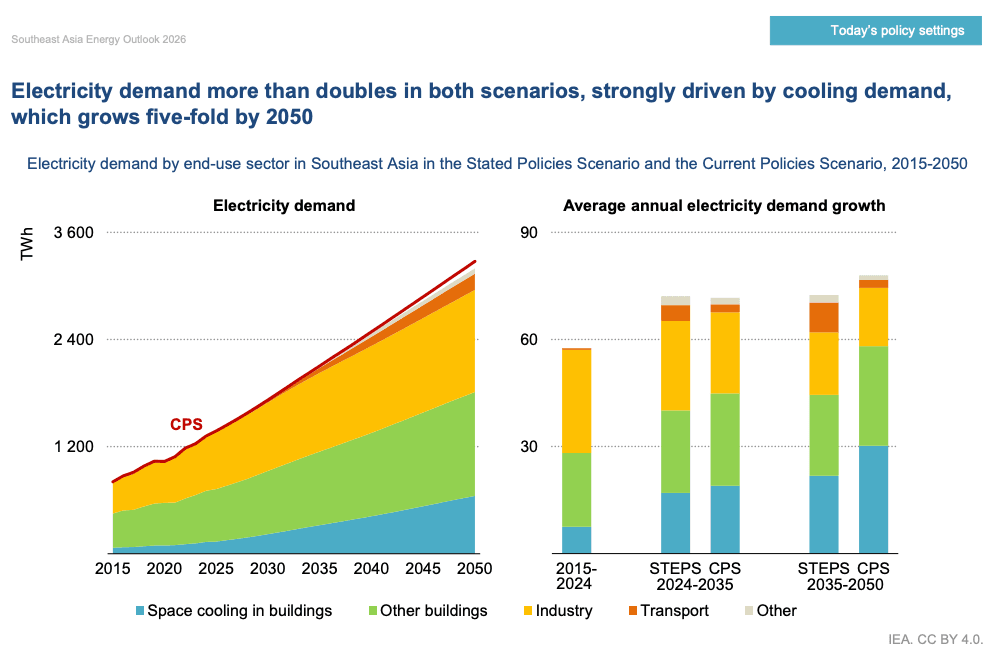
The drivers are common to the region and recur in almost every ministerial speech. Electricity demand is rising fast, fuelled by industrial growth, the spread of air conditioning across a warming region, and the rapid expansion of energy-hungry data centres.
The 2026 conflict between the United States and Iran, and the resulting volatility in gas prices, has sharpened the appetite for what officials uniformly call energy security. Even as tentative de-escalation has emerged this month, the damage to supply infrastructure and the lag before prices normalise mean energy planners across the region remain rattled, and the security argument has lost none of its political force.
The data-centre boom is the driver that most explains why this is happening now. The Associated Press, surveying the regional revival in March 2026, tied it directly to countries preparing to meet surging demand as they compete for artificial-intelligence data centres, against the backdrop of the Iran war disrupting energy supplies.
A single standard AI data centre consumes as much electricity as 100,000 households, by the IEA's measure. Malaysia alone has more than 500 operational data centres, with around 300 under construction and some 1,140 planned.
The IEA reports that Southeast Asia's data centres already consume more than 10 TWh, just under 3 per cent of global data-centre demand, a figure set to double by 2030, drawing multibillion-dollar commitments from Google, Meta, Microsoft and Amazon across Malaysia, Thailand and Indonesia.
What makes this demand decisive is not its volume but its shape. A hyperscale facility must run every hour of every day; its operators sign contracts premised on near-total availability, and the carbon-free, round-the-clock baseload that such contracts require is precisely what intermittent solar and wind cannot guarantee alone.
This is the gap into which nuclear is being marketed, and hyperscalers are among the leading corporate backers of small modular reactor development worldwide. Yet there is a timing problem that the official framing tends to elide. The demand is surging now, through the late 2020s, while the IEA's own analysis has SMRs entering the data-centre supply only after 2030.
In the near term, the agency finds, it is natural gas and coal, not nuclear, that meet most of the additional data-centre demand. The AI-nuclear pitch is, in part, a long-dated promise laid over a near-term fossil build-out, with the reactor cast as the eventual clean baseload once it finally arrives.
What the IEA's modelling does not capture is the domestic politics. Behind each national plan sits a government making a case to its own population, and the manner of that case differs sharply from country to country. The numbers, the timelines and the reactor types are matters of public record.
The question of how, and whether, citizens are being brought into decisions whose waste-management and decommissioning responsibilities may extend across generations is far less examined.
This piece sets that question at the centre. In some countries, citizens are being polled and their approval cited as a mandate. In others, they are promised education rather than consultation. In at least one, the decision has been taken by a military regime that faces armed resistance across much of its territory and answers to no electorate.
What emerges is not a single regional approach but a spectrum of strategies for securing what the energy literature calls social licence, ranging from polling and public education through local consultation to, in Myanmar's case, no discernible public process at all. The spread is the story.
A common script, locally inflected
The justifications offered by energy ministers across the region are strikingly similar, to the point where they read as a shared script. Nuclear is presented as a stable, low-carbon source of baseload power that reduces dependence on imported fossil fuels and shields consumers from price shocks.
Renewables are praised but described as intermittent and insufficient. Small modular reactors, or SMRs, are offered as a newer, safer, more flexible technology that answers the objections raised against the large plants of the past.
Malaysia's Deputy Prime Minister Fadillah Yusof, who also holds the energy portfolio, made the case directly. He told an audience that tensions in West Asia and disruptions to routes such as the Strait of Hormuz had hit global supply, and that in this context nuclear offered stable, low-carbon power and reduced reliance on fossil fuels.
He has also pointed to peers, noting that the Philippines and Vietnam have decided to include nuclear in their energy mixes and that Indonesia is exploring it, using regional momentum as its own argument.
The same logic recurs in Singapore, where Dr Tan See Leng has framed nuclear as a response to the city-state's status as what he calls an alternative-energy disadvantaged island.
It recurs in Thailand, where officials cite reliance on imported liquefied natural gas, roughly a quarter of it from the Middle East. And it recurs in Indonesia, where the pitch is tailored to an archipelago that a single centralised grid cannot serve.
The consistency is itself worth noticing. It suggests that nuclear is being marketed across the region through an increasingly standardised narrative, with public concerns addressed through a common set of themes around energy security, decarbonisation and technological progress.
This is convergence rather than demonstrable coordination: there is no evidence that ministers are orchestrating messaging with one another or with vendors. But the effect is much the same.
Across much of the region, the public is positioned less as a constituency whose answer remains genuinely in play and more as an audience to be reassured of a direction governments increasingly regard as necessary. The variations lie not in the argument but in how much room each government leaves for that audience to answer back.
Vietnam: strong public backing, and villagers in limbo
Vietnam has moved fastest and furthest. Its revised Power Development Plan, known as PDP8, envisages 4 to 6.4 GW of nuclear capacity between 2030 and 2035, rising to 10.5 to 14 GW by 2050. In March 2026, during Prime Minister Pham Minh Chinh's visit to Moscow, it formalised an agreement with Russia's Rosatom to build the first reactors at Ninh Thuan.
The programme has been revived after being approved in 2009 and suspended in 2016, and it now carries an estimated price tag of around US$22 billion, roughly 5 per cent of national output.
The official framing stresses consensus and national mission. Deputy Prime Minister Bui Thanh Son, launching the resettlement programme in January 2026, praised what he called the support and consensus of residents in Phuoc Dinh and Vinh Hai who had relocated and handed over land.
The provincial vice-chairman, Trinh Minh Hoang, said strong public backing had accelerated progress, aided by compensation and resettlement policies. State media has presented land clearance for the plants as a matter of public agreement secured through generous terms, framed around what the government describes as the highest-level compensation and resettlement policies.
The push is explicitly top-down and tied to political symbolism. Vietnam's government aims for Ninh Thuan 1 to be operational by the end of 2031, to coincide with the centenary of the Communist Party.
One analyst at the ISEAS-Yusof Ishak Institute described the revival as carrying the strong personal imprint of party chief To Lam and Prime Minister Pham Minh Chinh. The Prime Minister told the nuclear steering committee in January 2026 that working during the day was not enough, that they needed to work at night.
A very different picture emerges from the affected communities. The outlet Dialogue Earth reported from Vinh Tuong village, where the government is preparing to relocate 477 households, around 2,000 people, to make way for Ninh Thuan 1. It reported that during the Lunar New Year, while other towns decorated their streets, celebrations in Vinh Tuong were sparse, with no new furniture bought and no renovation or repainting permitted. The spotted babylon snail farms that were once the villagers' main source of income were being dismantled one by one, and most men in the village were unemployed.
When Dialogue Earth approached Vietnam Electricity and the Khanh Hoa provincial committee about the villagers' concerns, neither responded. The contrast between that silence and the official language of consensus is the heart of the matter. The state account describes agreement; independent reporting describes a population whose livelihoods are being wound down ahead of a move they did not choose.
There is one documented instance that resembles consultation. For the second plant's resettlement, the provincial committee held a meeting with more than 100 local residents to gather feedback on two proposed relocation sites, according to Nuclear Engineering International.
But that was a discussion about where displaced people would go, not whether the project should proceed, in a one-party state where organised opposition to a flagship national project is not a realistic option. The total land to be cleared exceeds 1,130 hectares and affects more than 1,150 households; even relocating 570 graves required a dedicated budget.
The Philippines: commissioning the mandate
The Philippines offers perhaps the clearest example in the region of a government using favourable polling to construct a public mandate for a direction it had already embraced.
In September 2025 the Department of Energy announced that a survey it had commissioned found that more than 70 per cent of 7,520 respondents favoured nuclear power as an additional electricity source. The survey reported net approval of plus 66 for rehabilitating the mothballed Bataan plant and plus 45 for building new plants, with support stronger among higher-income, younger and more educated Filipinos.
The sequence is instructive. The department commissioned the survey, announced the favourable result, and presented it as a mandate, days before the Philippine International Nuclear Supply Chain Forum and shortly after President Ferdinand Marcos Jr signed the Philippine National Nuclear Energy Safety Act creating the regulator PhilAtom.
Energy Secretary Sharon Garin said the strong support reflected in the survey told the government that Filipinos were ready to embrace nuclear, and that it gave the confidence to move forward with careful, calibrated steps. The poll was not a response to public demand; it was an instrument deployed to legitimise a direction already chosen.
That framing sits against an unusually deep well of public scepticism, rooted in a specific national trauma. The Bataan Nuclear Power Plant, built under the elder Marcos at a cost variously reported between US$1.9 billion and US$2.3 billion, was completed in 1984 but never loaded with fuel, mothballed after the Chernobyl disaster and a change of government, and beset throughout by corruption allegations.
It still stands, still costs money to maintain, and still, in the words of analysts writing for the Fulcrum platform, foments distrust. For many Filipinos, the plant is less a piece of infrastructure than a monument to governance failure.
The Philippines also carries a structural quirk that shapes its entire approach. The Electric Power Industry Reform Act of 2001, known as EPIRA, bars the government from engaging in power generation except in remote areas. The practical effect is that nuclear plants must be financed, constructed and operated by private entities, with the state confined to regulation.
This pushes the country towards private-sector SMR proposals and away from the state-led model seen elsewhere, and it means the question of public legitimacy is entangled with questions about which private companies, and which foreign partners, will ultimately build and profit.
Some experts have been candid that the technology choice is partly a strategy for managing public resistance. One researcher quoted by Asia News Network suggested SMRs could ease the task of winning public acceptance, because outreach could be focused on a small host community first rather than the nation at large.
The logic is revealing: rather than pursuing nationwide consensus at the outset, the strategy concentrates engagement on the communities most immediately affected by the projects.
Malaysia: a precondition with no data behind it
Malaysia has reintroduced nuclear into its long-term strategy through the 13th Malaysia Plan covering 2026 to 2030, with MyPOWER Corporation appointed as the implementing organisation.
A pre-feasibility study conducted from June to December 2024 found nuclear technically viable. What distinguishes Malaysia's public framing is that Fadillah has named public acceptance as an explicit precondition for any decision, not merely a desirable outcome.
He has said the final decision on a reactor site cannot be made until preconditions including public acceptance and a firmly established regulatory framework are satisfied, and that only after that base is finalised could an environmental impact assessment proceed and a location be confirmed. On paper, this is among the more procedurally cautious positions in the region, embedding public sentiment as a formal gate.
Yet there is a striking hollowness at the centre of it. Writers for Fulcrum note that public opinion on nuclear typically dips after accidents and recovers during incident-free periods, but that in Malaysia's case no recent polling data exists, making public sentiment a major unknown.
Malaysia has therefore made public acceptance a formal condition of proceeding while possessing almost no current evidence of where that acceptance actually stands. The gate exists, but no one has measured what is on the other side of it.
The Malaysian case also surfaces a tension that runs through the whole region but is rarely stated plainly: the collision between nuclear ambitions and the very data-centre demand used to justify them. Malaysia is courting data-centre investment aggressively, offering favourable tax treatment, and is flirting with using nuclear to power it.
But both SMRs and data centres are water-intensive, and Johor, the major data-centre host that absorbed the overflow from Singapore's 2019 moratorium, rejected up to 30 per cent of data-centre applications in 2024 over insufficient power and water efficiency, reflecting concerns about local resource strain. The clean-energy solution and the demand it is meant to serve may compete for the same scarce resource, a complication that does not feature in the reassuring public framing.
Singapore: education, not consultation
Singapore has not decided to deploy nuclear, and officials are careful to repeat that no decision has been made. But the institutional scaffolding has been built at considerable speed, which makes the relationship between the stated caution and the evident pace of preparation a live question, one this publication has examined before.
Singapore has signed civil nuclear cooperation agreements with the United States, including the so-called 123 Agreement, with Japan and with South Korea. It has formed a Nuclear Energy Office within the Energy Market Authority and a Nuclear Safety Division within the National Environment Agency, both staffing up.
It injected a further S$5 billion into its Future Energy Fund, bringing the total to S$10 billion, and is building a pool of around 100 nuclear experts. An Energy Market Authority study in 2022 concluded nuclear could eventually supply around 10 per cent of the country's needs. From 2027, Singapore will undergo an IAEA infrastructure review.
The government's language about the public is precise, and rewards close reading. Tan See Leng has said the government understands the public has many queries, and that it will engage the public regularly as it progresses on this journey together, releasing a background paper on building the country's capabilities to assess nuclear energy.
In a parliamentary reply, the Singapore Ministry of Trade and Industry described its plans in terms of public education efforts covering both the benefits and risks, and of helping the public understand how, with advances in technology, nuclear can now be deployed in a safer way, and how including it in the energy mix can enhance energy security and ultimately benefit Singaporeans.
The public-facing language currently places greater emphasis on education and engagement than on mechanisms through which public feedback would directly determine the outcome.
Singapore’s political tradition offers little precedent for direct democracy. The Republic has held only one national referendum in its history, concerning the terms of merger in 1962. Major national questions, from the Integrated Resorts decision to the Population White Paper, have ultimately been settled through executive decision-making and parliamentary processes rather than by plebiscite.
Whether this develops into a genuinely consultative process, in which public feedback could shift the outcome, or remains primarily an exercise in building support for a direction the agreements suggest is well advanced, is an open question rather than a settled one.
The point matters more given how far the groundwork has already advanced. To some observers, the pace of capability-building may appear difficult to reconcile with official assurances that no decision has yet been taken, even as the Government maintains that such preparation is necessary to preserve future options.
As one analysis circulating in Singapore's policy conversation put it, the nuclear question there is not purely technical but a test of civic trust, a question of whether a society defined by engineering competence is also willing to debate the ethical weight of a decision whose responsibilities extend across generations.
Whether the engagement to come gives citizens a meaningful ability to shape the outcome, or chiefly builds support for it, is, for now, unresolved.
Thailand: a five-day window, and local resistance
Thailand's draft Power Development Plan 2024 proposes two 300 MW small modular reactors, one in the Northeast and one in the South, to be developed towards the end of the plan period, around 2036 to 2037.
The plan has had a turbulent path, delayed by disagreement among energy experts and, as of the most recent reporting, still awaiting final approval, with a revised draft expected to revive the SMR proposal with stronger political backing. Thai officials are notably frank that nuclear is contentious and that, in their own repeated phrase, public acceptance is crucial.
The director-general of the energy policy office, Veerapat Kiatfuengfoo, has said that any nuclear plan is required to pass a public hearing because it is a very contentious issue in Thailand.
On its face, this is the strongest formal commitment to consultation in the region, a legal requirement rather than a discretionary courtesy. Thailand's history explains the caution: a 2,000 MW nuclear proposal in the 2010 plan was removed in 2011 after the Fukushima disaster, and the issue has remained politically sensitive ever since.
The practice, however, has drawn sharp criticism. The outlet HaRDstories reported that the draft plan was opened for public hearing for a mere five days, from 19 to 23 June 2024, and via an online channel only.
Critics including labour networks and the Federation of Thai Industries argued the plan lacked transparency, projected excessive demand, and would burden consumers with higher costs. A consultation compressed into five days and confined to an online portal is a thin basis on which to claim public endorsement of a generational energy decision.
Local resistance has already surfaced where specific sites are mentioned. The same reporting noted that a rumour of reviving a nuclear facility in Nakhon Nayok province in central Thailand had sparked public opposition the previous year. The pattern is familiar from elsewhere: abstract national support, real local objection the moment a community learns it might host the plant.
Thailand thus presents a formal consultation requirement undercut by an implementation so brief and so narrowly channelled that watchdogs questioned its adequacy. The government invokes public acceptance as essential while employing a consultation process that critics argue was too brief and too narrowly channelled to test that acceptance meaningfully.
Indonesia: the fullest process, and its limits
Indonesia, which the IEA places among the regional leaders with a target of 0.5 GW by 2032 scaling towards 7 GW by 2040, and which has floated far larger long-term ambitions of 44 GW or more by 2060, has the region's most developed record of actual public engagement. That engagement is real, but its limits are equally instructive.
The government's framing positions SMRs as a natural fit for an archipelago of 17,000 islands and 280 million people, suited to powering industrial hubs and remote communities that a single centralised grid cannot reach.
The pitch ties nuclear to the country's broader maritime and industrial ambition and to its net-zero commitment. The National Energy Council has identified dozens of candidate sites, and the regulator BAPETEN has repeatedly stressed that it will move forward responsibly and transparently, with safety, security and safeguards treated as absolute requirements.
The clearest test case is the proposed ThorCon molten-salt reactor on Gelasa, or Kelasa, Island in Bangka Belitung, which received site-evaluation approval from BAPETEN in mid-2025.
Here, something resembling genuine local consultation has taken place. In 2023 the regulator began a pre-licensing consultation, and in May 2024 it held a socialisation session on the impacts and benefits of the plant for residents of Batu Beriga village and fishermen in the surrounding sub-district.
According to the regulator's own account, the villagers asked to be involved in all licensing processes so that the development would not harm their activities, especially fishing. A 2025 survey of Bangka Belitung residents reported 85.7 per cent acceptance of the proposed plant.
Yet the engagement has clear boundaries. Environmental researchers at the University of Bangka Belitung, working with Mongabay Indonesia and the civil-society group WALHI, documented mangrove forests and 126 hectares of coral reef around the island, and a marine biologist warned of risks to turtles, dolphins and stingrays from the development around the plant.
WALHI has staged protests, including one outside the energy ministry in April 2024 rejecting a separate proposed plant in West Kalimantan. And in February 2026, a parliamentary commission overseeing energy raised pointed concerns, with one member reporting that the US Embassy did not recognise ThorCon as an established nuclear developer or operator and was unfamiliar with its thorium concept. BAPETEN clarified that the company had so far only submitted consultations and a site-evaluation application, with multiple further permits required.
Indonesia, then, shows both the most substantive public process and its limits. Consultation has occurred at the community level, and surveys show high local acceptance, but the concerns of environmental scientists and the doubts of legislators about the developer's credentials sit alongside that acceptance rather than being resolved by it.
Engagement is happening; it is not clear that it is decisive. Indonesia has also routed much of its broader preparation through international channels, including a trilateral workshop with the United States and Japan in March 2026 that addressed stakeholder engagement alongside regulation and workforce development, embedding the public-acceptance question within a technocratic, partner-driven framework.
Myanmar: a decision without a public
Myanmar is the outlier, and the comparison is illuminating precisely because the consultation question barely arises. In March 2025 the military junta signed an intergovernmental agreement with Rosatom to build a 110 MW small modular reactor, comprising two 55 MW units, with scope to expand to 330 MW.
The deal was signed by the junta's ministers and reinforced during junta leader Min Aung Hlaing's September 2025 visit to Moscow, where he attended Russia's World Atomic Week at President Vladimir Putin's invitation.
There is no public consent process, and the official framing of public opinion is itself revealing. Russian media reported that the September talks between Min Aung Hlaing and Rosatom's director general addressed Myanmar's progress in developing nuclear infrastructure and shaping positive public opinion regarding nuclear technologies in the country.
Public opinion, in other words, is treated as something to be engineered, discussed between a military ruler and a foreign state corporation, rather than a verdict to be sought from citizens.
Independent analysts read the project largely as political theatre and strategic alignment. The Stimson Center assessed it as a diplomatic manoeuvre demonstrating Min Aung Hlaing's reliance on Russia to project legitimacy and modernisation ahead of the junta's 2025 election, with the likely reactor site in the Mandalay region reflecting central connectivity, security and political-loyalty considerations rather than any open siting process. The inclusion of Mandalay's chief minister in the Moscow delegation reinforced that reading.
Rights organisations have gone further still. Fortify Rights argued that Rosatom's cooperation with the junta amounts to complicity with its conduct, and a separate analysis warned that the parallel nuclear and space deals could hand the military new surveillance and targeting capabilities affecting ethnic communities, in a country where the regime took power by force in 2021 and continues to face armed resistance across much of its territory.
Notably, Rosatom confirmed that a major earthquake in March 2025 did not alter its plans. In Myanmar, the public is not an audience to be persuaded or a constituency to be polled; it is simply absent from the decision.
The vendors behind the framing
Running beneath every national story is a question that the public framing rarely addresses directly: who actually builds these reactors, and what do they ask in return. The answer shapes not only the technology but the terms, the dependencies, and ultimately the room each government has to consult its own people.
The IEA is unusually blunt on this point. It notes that over the past decade most new reactor construction starts worldwide have relied on Russian or Chinese designs, reflecting those countries' sustained engagement through vertically integrated supply chains that bundle reactor technology with construction, project management, fuel supply and sometimes financing.
Such packages reduce delivery risk for newcomer states, but the IEA warns plainly that they also create long-term strategic dependencies that may expose host countries to energy security risks. A reactor is a relationship lasting 60 to 80 years, and the choice of partner is, as the agency puts it, among the most consequential strategic decisions a country can make.
The regional pattern bears this out. Vietnam and Myanmar have both turned to Rosatom. Indonesia has entertained Russian floating-reactor proposals alongside its US and Japanese partnerships. The Philippines is working with South Korea's KHNP on the Bataan study and with US firms on SMRs. Singapore has hedged across the United States, Japan and South Korea. Malaysia faces the dilemma most explicitly: analysts note that Russia holds around 44 per cent of global enrichment capacity, that Russia and China dominate the high-assay low-enriched uranium that many SMRs require, and that the two are the only countries with commercially operational SMRs, often offered at lower cost with subsidised financing. Malaysia, they argue, must walk a tightrope to secure technology without sacrificing strategic neutrality.
This matters because vendor financing and turnkey intergovernmental arrangements can compress decision-making into executive channels, reducing the political incentives for prolonged domestic deliberation.
Once capability-building, financing structures and diplomatic commitments are in place, reversing course becomes progressively more difficult. The starkest illustration is Myanmar, where the entire arrangement was concluded between a junta and a foreign corporation. But the dynamic, in softer form, is visible wherever a signed intergovernmental agreement precedes any publicly evident process of consultation.
There is a further wrinkle worth noting on the economics, because affordability is central to the public pitch and the claims are contestable. The IEA's own figures show that at investment costs of US$4,000 per kilowatt and 8 per cent financing, nuclear generation costs just below US$100 per megawatt-hour, against a regional average of around US$70; reaching that benchmark would require either much cheaper construction or far cheaper capital.
Independent analysts are more sceptical still, with some estimates putting SMR construction costs far higher and pointing to the cancelled NuScale project in the United States, whose costs rose sharply before it collapsed, as a warning. The promise of cost-competitive, affordable nuclear, repeated by ministers across the region, rests on assumptions that have not yet been demonstrated at scale anywhere.
The pattern across the region
Set side by side, the seven cases describe a spectrum of public involvement that bears almost no relation to how far advanced each programme is. The correlation one might expect, that the most committed countries have done the most to bring their publics along, simply does not hold.
At one end sits Myanmar, whose junta has committed to a reactor with no public process whatsoever, public opinion reduced to a line item in a conversation with Moscow.
At the other end, in terms of process if not of speed, sit Thailand, which has a formal hearing requirement even if its execution was criticised as cursory, and Indonesia, which has held genuine community-level consultations and conducted local acceptance surveys, even as scientists and legislators raise unresolved objections.
In the middle lie the cases where acceptance is asserted or constructed rather than openly sought. Vietnam describes strong public backing while independent reporting documents communities being displaced and their livelihoods dismantled.
The Philippines commissioned a favourable survey and presented it as a mandate, a poll that read more as confirmation of a decision than as an input to one. Singapore promises regular engagement and public education even as it invests increasing resources in preserving the nuclear option. Malaysia has made public acceptance a formal precondition while admitting it has no recent data on what the public actually thinks.
The common thread is unmistakable. Across the region, nuclear is being framed as a settled technical necessity, driven by energy security and relentless demand growth, with the public cast as an audience to be reassured rather than a party whose answer could change the outcome.
The arguments are near-identical from capital to capital. The reactor vendors are concentrated in a small group of states that prefer to deal government-to-government. And the channels through which ordinary citizens might shape, slow or halt these programmes range from narrow to non-existent.
In fairness, governments would offer a serious rebuttal. Electricity planning has always been a matter of representative decision-making rather than direct democracy; states routinely commit to long-lived infrastructure, from dams to grids, without putting it to a vote; and the long lead times of nuclear development make early capability-building and partner selection a matter of prudence rather than presumption.
On this view, demanding referendum-style consent for an engineering decision misunderstands how energy policy is made anywhere. The argument has force. Yet the scale, cost and longevity of nuclear commitments, and the depth of public memory around nuclear accidents, make the question of social licence unusually salient here, in a way it is not for a substation or a solar farm.
For a region that has no operating commercial reactor, that carries deep and specific historical scepticism about nuclear safety, from Bataan to Fukushima's long shadow, and that is contemplating commitments lasting the better part of a century, the question of how genuinely the public is being brought into these decisions is not a secondary matter.
It is, as the debate in Singapore has framed it, a test of civic trust. On the evidence so far, much of the region appears to treat public trust as something to be cultivated through reassurance and education, rather than through processes that give citizens a meaningful ability to shape or challenge the direction of policy.