Euthanasia and nuclear power referendum bills advance in Taiwan Legislative Yuan
TPP and KMT caucus proposals to legalise euthanasia and repeal Taiwan's non-nuclear homeland policy advanced to a second reading, potentially reaching voters on 28 November.
- TPP and KMT referendum proposals advanced directly to second reading.
- Euthanasia proposal cites incurable illness and unbearable suffering as conditions.
- Nuclear proposal cites AI power demand and Taipower cost data.

Taiwan's opposition alliance on Tuesday, 14 July 2026, advanced two referendum proposals — one to legalise euthanasia, another to repeal the "non-nuclear homeland" energy policy — directly to a second reading in the Legislative Yuan, bypassing further committee deliberation.
Should the legislature grant final approval, both measures could be put to a public vote alongside local elections scheduled for Saturday, 28 November 2026.
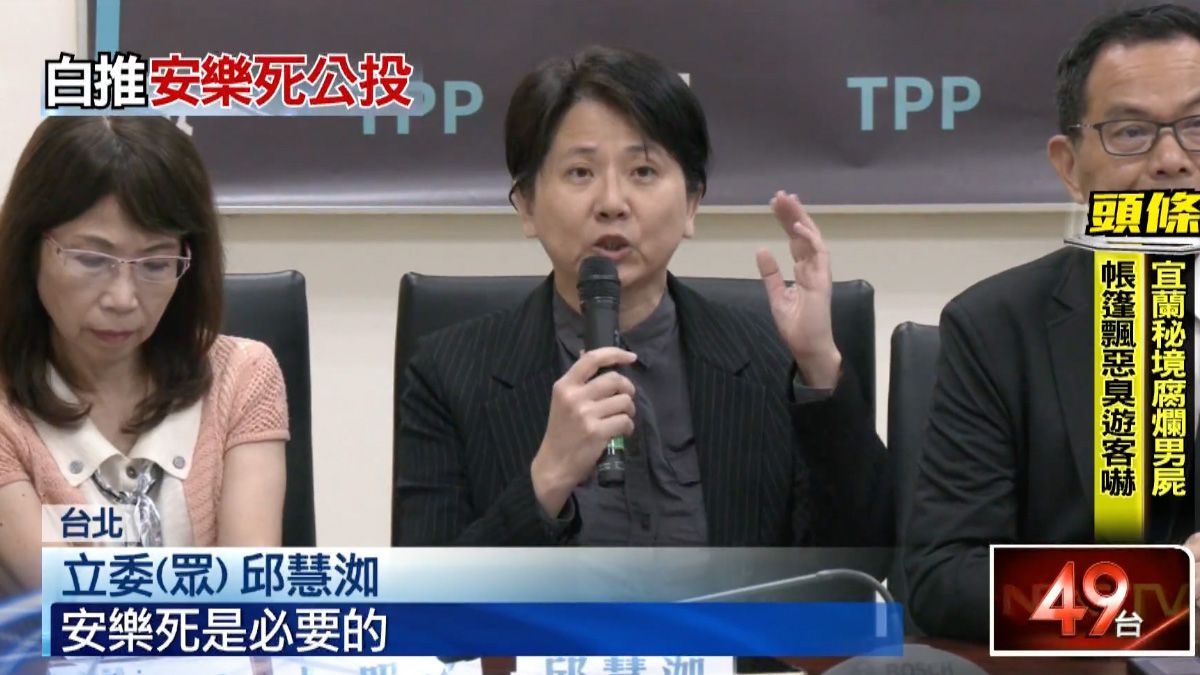
The euthanasia proposal, filed by the Taiwan People's Party (TPP) legislative caucus and led by legislators Qiu Huiru, Chen Ching-lung, Wang An-hsiang, Chen Chao-tzu, Hung Yu-hsiang, Liu Shu-bin, Tsai Chun-chou and Hsu Chung-hsin, advanced by 57 votes to 48, with TPP and Kuomintang (KMT) legislators voting in favour.
Huang Kuo-chang, chairman of the TPP, said the legislature had been slow to act on euthanasia despite lively public debate on the issue in Taiwanese society. He said the matter carried grave implications for human dignity and should be decided jointly by voters.
Asked whether holding referendums alongside local elections could overload polling stations and vote counting, Huang said ensuring efficient elections was the Central Election Commission's (CEC) responsibility.
The referendum question asks whether the government should legalise euthanasia, on the basis of protecting the right to self-determination over one's own life, for those suffering from incurable diseases or intolerable pain, within a regulated system, so as to achieve a dignified end of life.
Qiu Huiru said euthanasia had long been a social taboo in Taiwan, but rising public interest in end-of-life autonomy, driven partly by an ageing population, had shifted the debate. She noted Taiwan formally entered a "super-aged society" by the end of 2025, with those aged 65 and above surpassing 20 percent of the population, or roughly 4.67 million people.
She added that existing laws, including the Hospice Palliative Care Act and the Patient Right to Autonomy Act, apply only to terminal patients or those in irreversible comas, leaving many others without legal recourse.
The proposal's statement of reasons also cites a 2023 survey by TaiSounds and Pearson Data, of Taiwan's internet-using population aged 18 and above, finding 74.8 percent supported legalising euthanasia, 22.8 percent were neutral, and 2.4 percent opposed.
The statement further argues that pursuing euthanasia overseas, typically in Switzerland, can cost several million New Taiwan dollars (NT$), placing the option out of reach for most citizens. Liu Shu-bin said all three major parties had proposed related bills over the past nine years without any reaching committee review, prompting the push for a referendum instead.
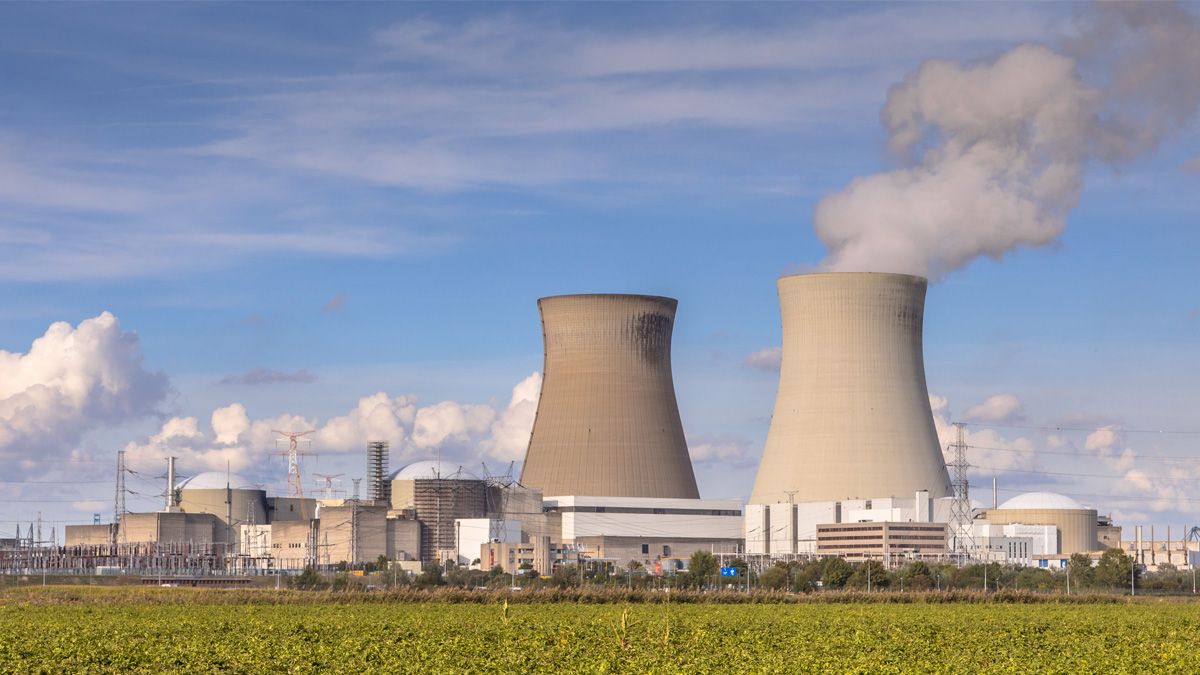
The KMT's separate nuclear proposal, led by legislators Fu Kun-chi, Lin Pei-hsiang and Hsu Yu-chen, seeks to reverse Article 23 of the Basic Environment Act, which commits the government to a non-nuclear homeland policy.
It invokes President William Lai Ching-te's recent remarks that the AI era, climate change and geopolitical shifts warrant reconsidering nuclear power, and notes Taiwan reached its non-nuclear homeland goal after the Maanshan Nuclear Power Plant's No. 2 reactor ceased operation on 17 May 2025.
Citing Taiwan Power Company (Taipower) data, the proposal states nuclear generation cost approximately NT$1.41 per kilowatt-hour in 2024 and NT$1.98 in 2025, compared with NT$2.50 and NT$2.20 for coal, NT$2.94 and NT$2.76 for gas, and NT$4.87 and NT$4.90 for solar over the same two years.
The KMT caucus said Taiwan could not afford an energy crisis that hampers economic development, arguing nuclear power should factor into public health, electricity pricing, national resilience and artificial intelligence (AI) industry growth.
If both proposals clear the legislature, they would become the fifth and sixth referendum questions on November's ballot, joining measures on legalising caning, blocking abolition of the death penalty, absentee voting, and heavier penalties for traffic offences endangering pedestrians.
Democratic Progressive Party (DPP) legislator Chen Kuan-ting said he had separately proposed a euthanasia bill that remains stuck in committee for lack of consensus. He said legalising euthanasia must be accompanied by amendments to the Criminal Code and to laws governing medical ethics and patient autonomy, and that the legislature should not defer the most difficult discussions.
DPP caucus chief executive Chuang Jui-hsiung questioned the referendum's timing, noting that even political parties lacked internal consensus on euthanasia. He said he supported the underlying bill but wanted broader legislative discussion first.
KMT legislator Lai Shih-pao said he had abstained from the vote pending further study, citing moral risk concerns, including fears that legalisation could be misused within families. KMT caucus convener Fu Kun-chi said the referendum would directly reflect public opinion, and that the party would respect differing views following internal caucus discussion.
The Ministry of Health and Welfare said it would continue strengthening hospice care and advance care planning under existing law, while the Ministry of Justice noted that Article 275 of the Criminal Code still prohibits assisted suicide, reflecting continued division on the issue.
Health and Welfare Minister Shih Chung-liang said last month that social consensus on euthanasia remains unresolved, and that the government's near-term priority is improving end-of-life care.
Internationally, the Netherlands became the first country to legalise euthanasia in 2002, with no requirement that patients be terminally ill or adults. Switzerland remains the only country permitting foreign nationals to seek assisted suicide, subject to strict medical screening.
More than 20 countries currently permit euthanasia or assisted suicide under regulated frameworks, though adoption remains limited across Asia.
Separately, the National No Nukes Action Platform criticised the KMT-TPP alliance for relitigating the nuclear energy debate through referendum for a fourth time, saying any serious proposal to reintroduce nuclear power should instead take the form of legislation backed by budget allocations, feasibility studies, safety evaluations and a plan for spent nuclear fuel.