Pritam Singh accuses PAP of a pattern of 'half-truths' in wake of political scandals
In response to Prime Minister Lee Hsien Loong's Ministerial Statement concerning the investigations into Transport Minister S Iswaran and the extramarital affair of Tan Chuan-Jin and Cheng Li Hui, Pritam Singh, Leader of the Opposition, accused the People's Action Party of presenting half-truths on crucial public matters amidst a wave of political scandals shaking the nation.
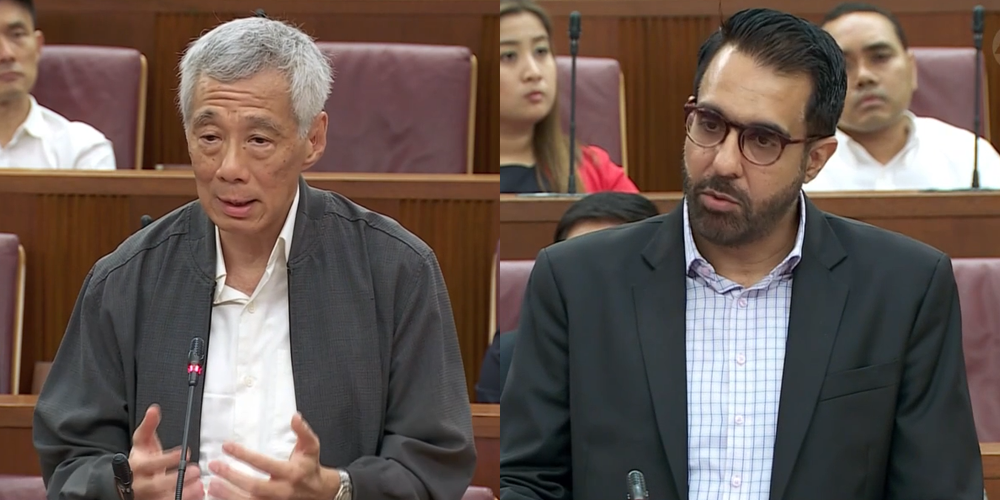

SINGAPORE: Unprecedented accusations were launched against the People’s Action Party (PAP) in Parliament when the Leader of the Opposition, Pritam Singh, alleged on Wednesday (2 Aug) that the governing party had been partaking in a “pattern of behaviour” involving “half-truths on matters of significant public interest.”
Mr Singh's comments were in response to Prime Minister Lee Hsien Loong's ministerial statement concerning several political scandals that have recently rocked the nation.
In his rebuttal, PM Lee argued that focusing on the transmission of information about the recent scandals, an action he termed "pursuing a red herring," was unproductive. He countered with his own question: "When did the Leader of the Opposition learn about problems in his party, and what action did he take in response to them?"
Emphasizing the autonomous functioning of the parties, PM Lee, also the Secretary General of PAP, stated, “But those are matters which the Workers’ Party will have to decide and will have to account to Singaporeans. And the PAP, we establish our own standards and we establish our own practices.”
Mr Singh also raised questions on the government's handling of potentially embarrassing issues, accusing it of being "slow to clear the air" or "less than upfront" with Singaporeans.
He cited examples of such controversies, including the privacy concerns of the TraceTogether app, the rental of Ridout Road state properties, an affair between former Speaker Tan Chuan-Jin and MP Cheng Li Hui, and a corruption probe involving Transport Minister S Iswaran.
Mr Singh argued, “These are not events clustered together, all coming at one go. Instead, they reveal a pattern of behaviour over a period of time of the PAP engaging in half-truths on matters of significant public interest.”
He also proposed the appointment of an ethics adviser, considering the intricacy of government affairs.
However, PM Lee, in a previous debate about the Ridout Road review in July, rejected the idea, stating that the responsibility of setting ethical standards cannot be outsourced to an ethics adviser.
The WP Secretary-General also raised queries regarding Tan and Cheng's affair, questioning why the couple was allowed to serve on the same House Committee in 2020, potentially increasing their interaction and providing official reasons for them to be together. He further questioned the number of taxpayer-funded overseas trips the couple had taken together.
In response to these queries, Leader of the House Indranee Rajah clarified the process of the House Committee nominations and the number of overseas trips Tan and Cheng had made, noting that the two had only gone on one official trip together.
Amidst these debates, PM Lee addressed questions raised by Bishan-Toa Payoh GRC MP Saktiandi Supaat about the corruption probe involving Transport Minister S Iswaran. He provided a detailed sequence of events leading to the Corrupt Practices Investigation Bureau's (CPIB) announcement and explained the differences with a similar investigation three decades ago.
The session also delved into the sensitive case of former MP Raeesah Khan, with Mr Singh accusing the PAP of selectively applying sensitivity standards.
He highlighted the contrast between the way the Prime Minister handled Tan and Cheng's affair versus the treatment of Raeesah Khan by the Committee of Privileges.
These allegations were countered by Minister for Home Affairs K Shanmugam, who argued that the focus should be on Khan's lie to the parliament, not her traumatic personal experiences.
Mr Singh retorted Mr Shanmugam, stating that it is exactly the situation that leaders of the Workers' Party faced when Ms Khan confessed that she had lied in Parliament and gave the reason for her sexual assault for not coming out with the truth earlier.
Mr Singh further raised the issue of privacy concerns with the TraceTogether app, accusing the government of "misrepresentations" on the matter that stood uncorrected for months.
This point was fiercely rebutted by Foreign Minister Vivian Balakrishnan, who is also Minister-in-charge of the Smart Nation Initiative. He insisted that at all times, he had been "upfront and clean" and objected to any insinuations of delay or obfuscation.
This back-and-forth continued with Mr Singh questioning when Dr Balakrishnan discovered that the Criminal Procedure Code (CPC) could potentially affect the assurance that TraceTogether is solely used for contact tracing.
Mr Singh pressed the point that ministers were aware of the application of the CPC to TraceTogether as early as October 2020, suggesting that there may have been attempts to suppress this knowledge.
Mr Shanmugam, also entered the fray on this matter, questioning if Mr Singh was insinuating that the Minister had deliberately kept quiet about this knowledge.
Mr Singh responded by further questioning whether the Minister or anybody in the Ministry of Home Affairs had alerted the government that section 20 of the CPC applied to TraceTogether well before October 2020.
This pointed query left both Dr Balakrishnan and Mr Shanmugam silent, failing to offer a response in the heated parliamentary session.