Indonesia official dismisses transboundary haze concerns, says forests provide neighbours with oxygen
Indonesia’s communications chief Syahganda Nainggolan has faced online criticism after saying the country sends oxygen to Singapore and Malaysia through its forests, as fires worsen cross-border haze and prompt school closures and firefighting discussions.

- Syahganda Nainggolan faced online criticism after saying Indonesia’s forests provide oxygen to Singapore and Malaysia when fires are not producing smoke.
- Malaysia extended school closures in Johor from 12 to 16 October as air pollution worsened and discussions over firefighting assistance continued.
- Singapore forecast unhealthy to low very unhealthy air quality on 10 October and issued precautions for people vulnerable to haze.

An Indonesian government official has drawn criticism from social media users in Indonesia, Malaysia and Singapore after saying that Indonesia was not only sending smoke to its neighbours from forest and land fires, but also providing them with oxygen through its forests.
Syahganda Nainggolan, head of Indonesia’s Government Communications Agency (Bakom), made the remarks on Saturday, 10 October, as Malaysia and Singapore faced worsening air pollution linked to fires in Indonesia.
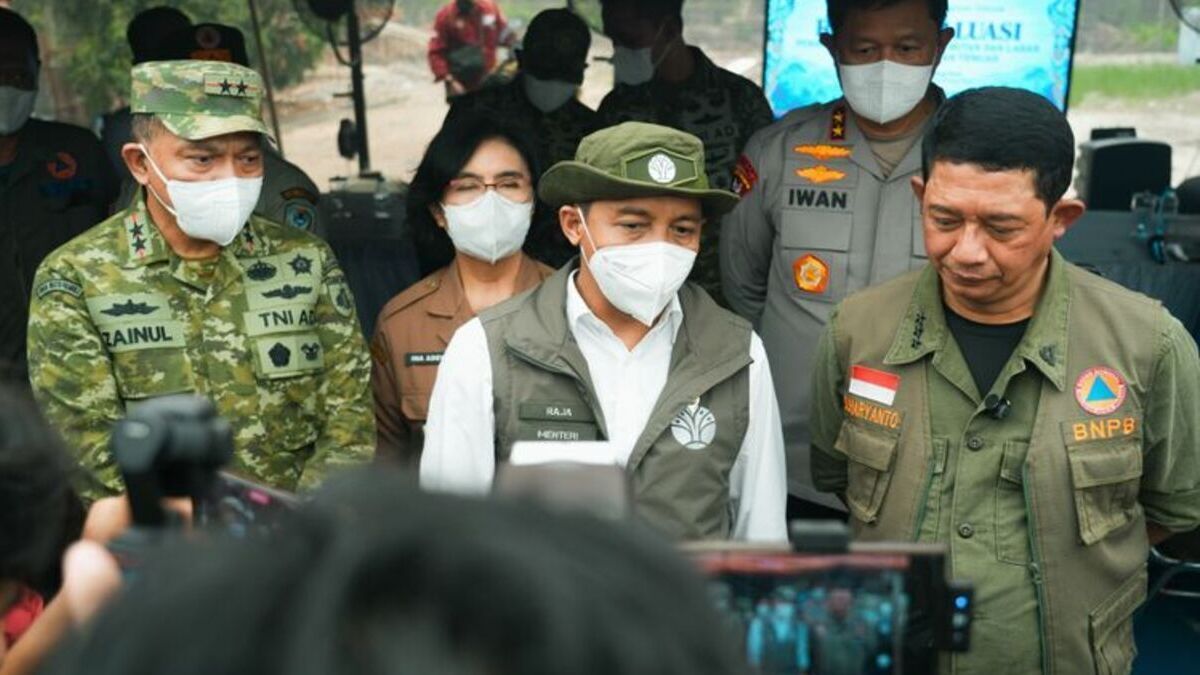
“We are not only sending smoke, but when there is no smoke, we send oxygen. Singapore’s and Malaysia’s oxygen comes from our forests,” Syahganda said at the National Resilience Institute (Lemhannas) in Jakarta.
He also asked neighbouring countries to understand that the fires were beyond human error, describing them as a natural phenomenon.
The remarks prompted a backlash online, with social media users questioning the response to the haze and the suggestion that neighbouring countries should view Indonesia’s forests as a source of oxygen while dealing with smoke pollution.
The controversy has unfolded as Malaysia seeks to send firefighting personnel to Indonesia and Singapore continues to monitor deteriorating air quality.
Syahganda said Indonesia was committed to maintaining its good relations with Malaysia and was working to explain the situation and its response to the fires to both Malaysia and Singapore.
He described the forest and land fires as a natural disaster rather than a result of human error, asking neighbouring countries to understand the circumstances.
“We also ask all our neighbours to understand that this is beyond human error. This is truly nature,” he said.
He added that President Prabowo Subianto wanted the government to respond seriously to all disasters, including forest and land fires, and acknowledged that Indonesians were suffering from asthma amid the smoke. He also expressed hope that rain would arrive soon to help contain the fires.
Syahganda said Malaysian Prime Minister Anwar Ibrahim had sent his foreign minister to engage with Indonesia’s foreign minister to discuss joint efforts to tackle the fires. The two ministries were expected to hold discussions on coordinating their responses and addressing the cross-border haze.
Malaysia seeks to send firefighting teams to Indonesia
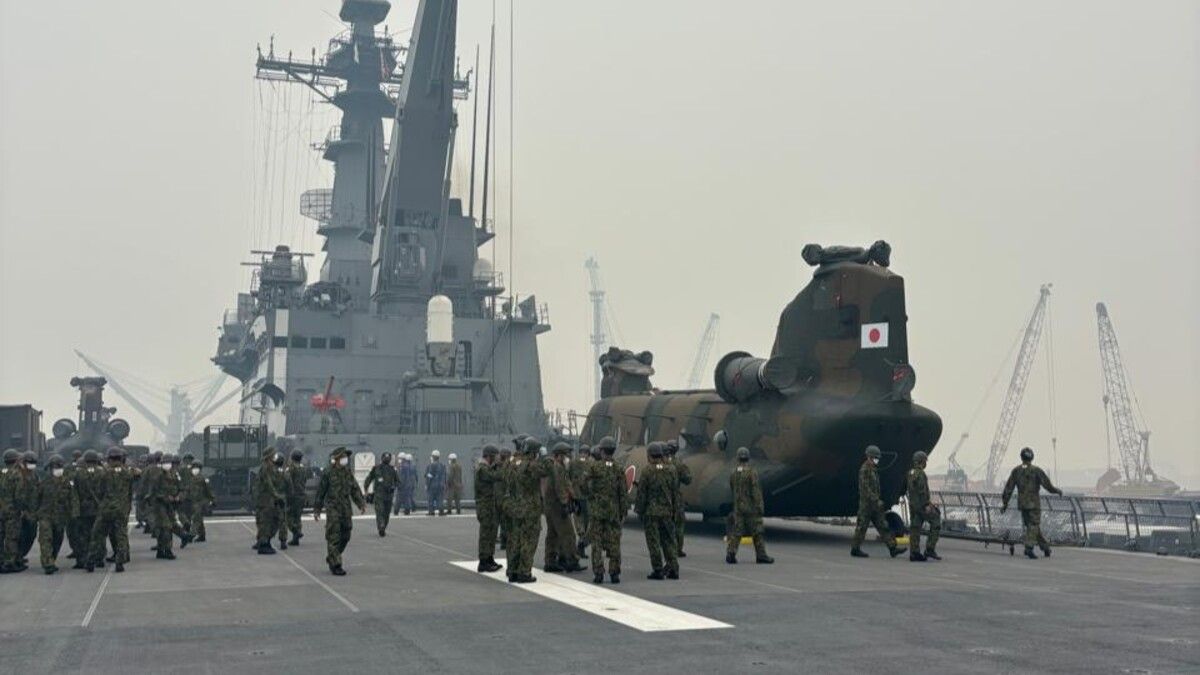
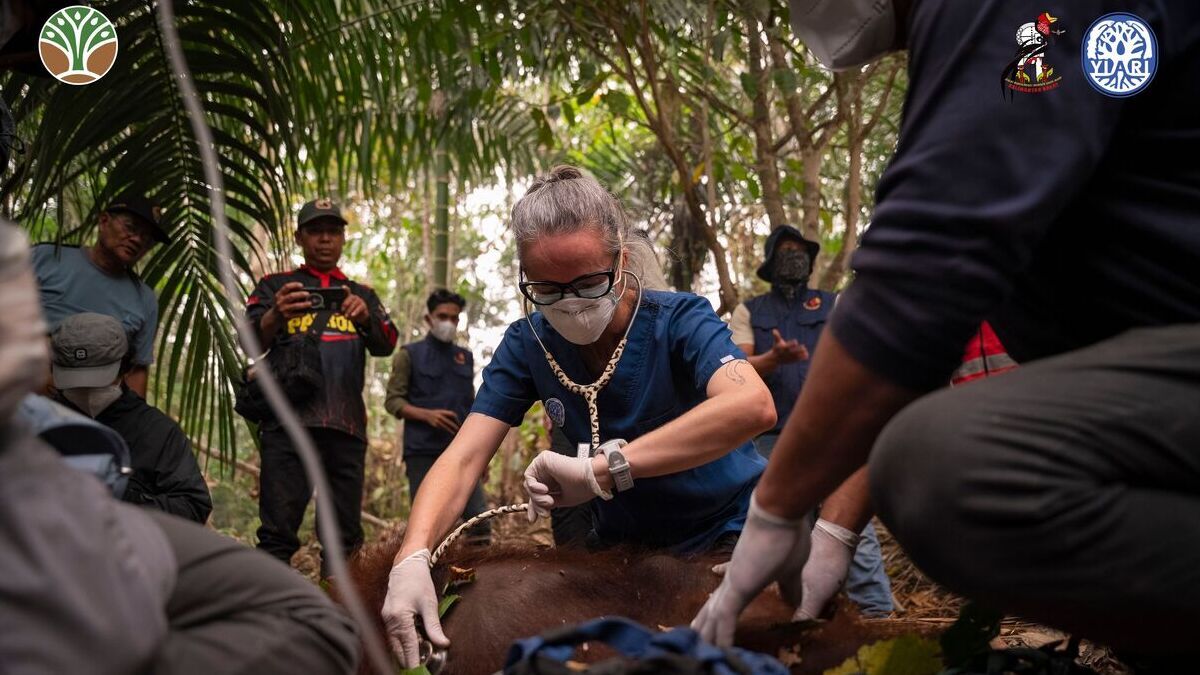
The remarks came amid diplomatic discussions between Malaysia and Indonesia over assistance to tackle the fires, particularly in Kalimantan, where smoke has contributed to cross-border haze.
Malaysian Foreign Minister Mohamad Hasan said on 7 October that Indonesian President Prabowo Subianto had agreed to Malaysia’s offer of assistance. However, the two governments were still discussing operational arrangements, including how and where Malaysian personnel could be deployed.
“I hope negotiations on the operation, including how and where the Malaysian team can help, can be concluded as soon as possible,” Mohamad said, according to Malaysian media reports.
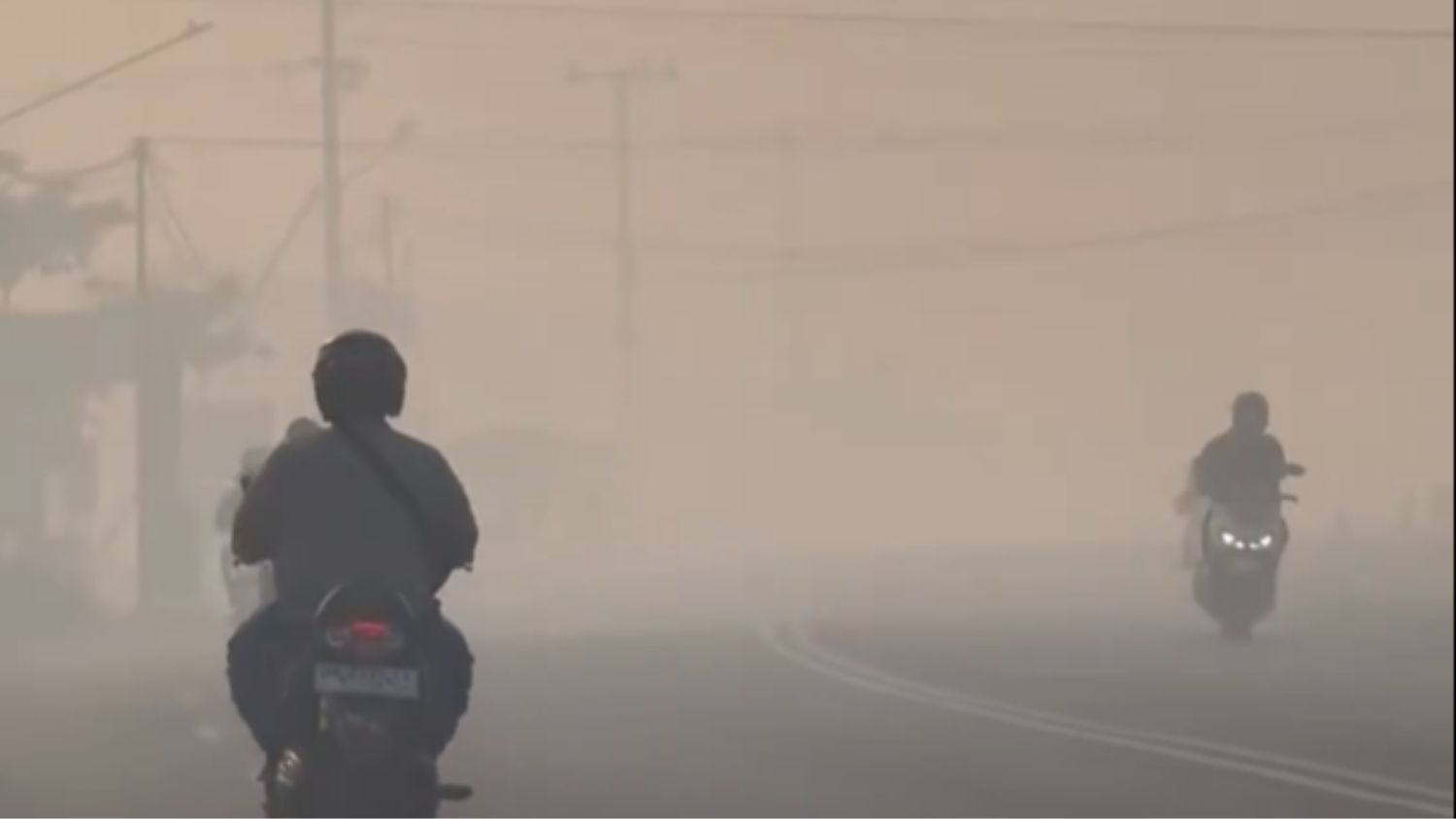
He described the haze situation in Malaysia as increasingly worrying, saying air pollution had exceeded the unhealthy category and was approaching dangerous levels.
Mohamad said Malaysia wanted the technical discussions to be resolved quickly so its personnel could help Indonesian counterparts extinguish the fires.
The proposed deployment would require agreement on the operational arrangements between the two countries. The Malaysian government has not, in the reports cited, announced that its firefighting team has begun operations in Indonesia.
Johor extends school closures as air quality worsens
The haze has had a direct impact on daily life in Malaysia, particularly in Johor, where the state government extended the closure of schools and educational institutions from 12 to 16 October.
In a statement on 10 October, Johor Education and Information Committee chairman Dr Muhammad Naqib Md Ghazali said the decision followed a directive from the Regent of Johor, Tunku Mahkota Ismail.
The extension followed an earlier two-day closure announced for 8 and 9 October.
According to the Malaysian national news agency Bernama, 36 areas recorded unhealthy Air Pollutant Index (API) readings as of 5.45pm on 9 October. Pasir Gudang in Johor recorded the highest reading, at 190.
Other affected locations in Johor included Segamat, at 187; Larkin, at 185; Tangkak, at 183; Batu Pahat, at 177; Kluang, at 176; Pengerang, at 175; and Kota Tinggi, also at 175.
Muhammad Naqib said the decision to extend school closures took into account forecasts of wind movements from Kalimantan between 13 and 15 October, which could carry transboundary air pollution into Johor.
He also cited the concentration of air pollutants and stagnant atmospheric conditions, which could prolong the haze, as well as API readings ranging from 170 to 180 in the state's assessment.
The state government said school assessments scheduled during the closure would be postponed and rescheduled in accordance with directions from the Johor State Education Department and relevant authorities. Home-based teaching and learning would continue where appropriate.
Malaysia's Meteorological Department also forecast haze in Johor on 12 October, with thunderstorms expected in some areas later in the day. Its forecast indicated that haze could persist in the mornings and evenings over the following days.
Singapore air quality remains unhealthy across all regions
Singapore has also been monitoring the impact of the Indonesian fires.
Air quality across all five regions of Singapore remained unhealthy on 12 October. At 2pm, the 24-hour Pollutant Standards Index (PSI) ranged from 106 to 148, placing every region within the unhealthy category.
The PSI measures overall air quality, while the one-hour PM2.5 reading tracks fine particulate matter in the air. Fine particles are small enough to penetrate deep into the lungs.
Singapore’s National Environment Agency (NEA) is monitoring fire hotspots and their potential contribution to the worsening haze but has not indicated whether it will pursue legal action under the Transboundary Haze Pollution Act.
The latest haze episode, which began on 5 October, is Singapore’s longest period of unhealthy air quality during the current spell, with the central region’s 24-hour PSI reaching 192 on 9 October.
The cross-border impact has renewed attention on Indonesia's efforts to control forest and land fires, known locally as karhutla.
Syahganda's comments came as authorities in Indonesia continued firefighting operations and the government discussed cooperation with Malaysia. His assertion that the fires were beyond human error was a statement made during the interview; it does not, by itself, establish the causes of individual fires.
His remarks about oxygen also became a point of contention because the immediate concern in neighbouring countries was the health impact of smoke pollution.