Indonesia allocates US$14.5 million to fight West Kalimantan forest fires as haze crisis fuels regional anger
Indonesia has allocated Rp240 billion in presidential assistance to combat forest and land fires in West Kalimantan as active blazes, public protests and diplomatic pressure intensify over the prolonged transboundary haze crisis.
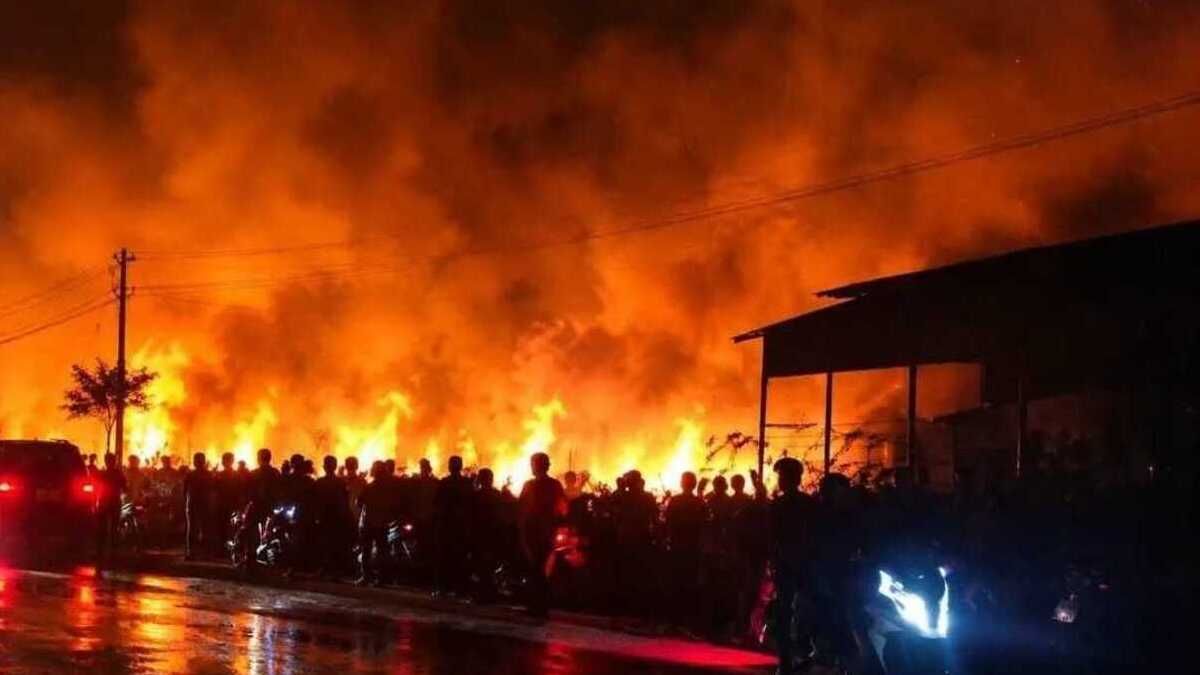
- Indonesia has allocated Rp240 billion in presidential assistance to strengthen local firefighting efforts in West Kalimantan.
- More than 481 hectares remain under firefighting operations across six priority provinces, amid continuing haze and public protests.
- Malaysia and Singapore have intensified pressure on Jakarta as Indonesia faces scrutiny over enforcement, environmental rights and its handling of criticism.

Indonesia has allocated Rp240 billion (about US$14.5 million) in presidential assistance to help local governments in West Kalimantan tackle forest and land fires, as President Prabowo Subianto’s administration faces growing criticism at home and across Southeast Asia over its handling of the prolonged haze crisis.
The initial Rp200 billion (about US$12.1 million) went to the West Kalimantan provincial government and 10 regencies and cities, while a further Rp40 billion (about US$2.4 million) was approved for Mempawah, Landak, Sekadau and Sanggau regencies.
Raja Juli Antoni, the Indonesian forestry minister, said the money had reached regional treasuries about two days before the announcement.
He urged local governments to ensure the funds were used for their designated purposes, in accordance with a circular issued by Home Affairs Minister Tito Karnavian.
The presidential assistance, known as bantuan presiden or Banpres, is managed by regional administrations.
It is separate from central government spending on weather modification and aerial water-bombing operations coordinated through agencies including the National Disaster Mitigation Agency (BNPB), the Meteorology, Climatology and Geophysics Agency (BMKG) and the Forestry Ministry.
More than 480 hectares remain under fire in six priority provinces
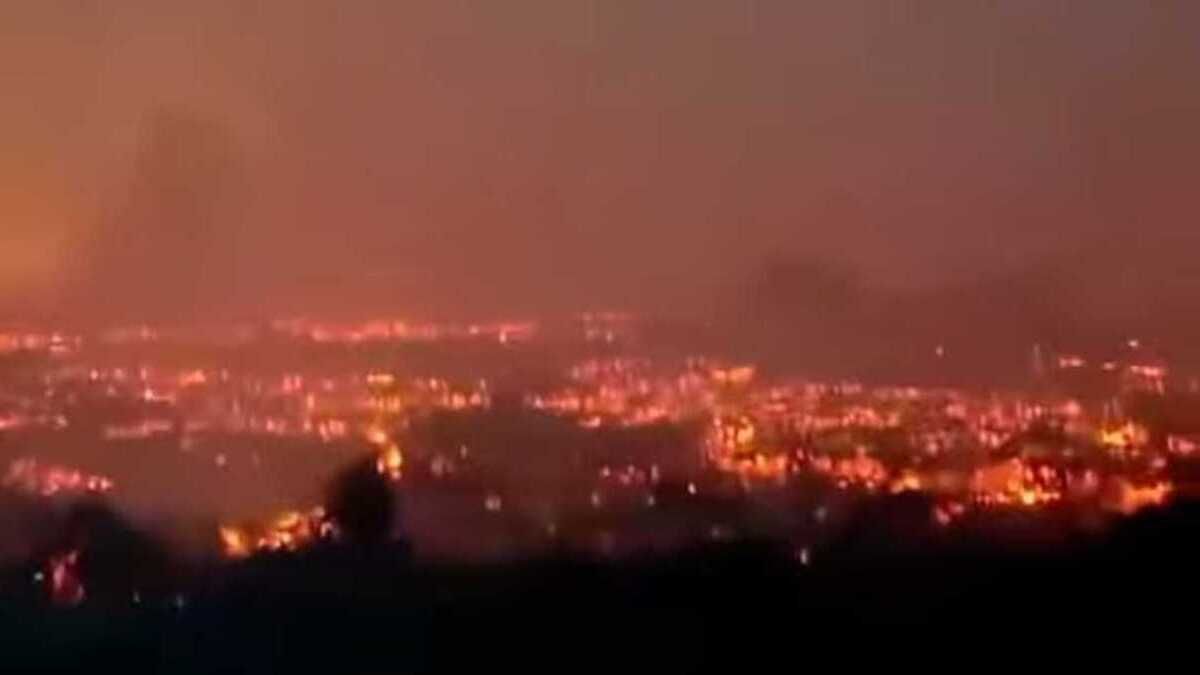
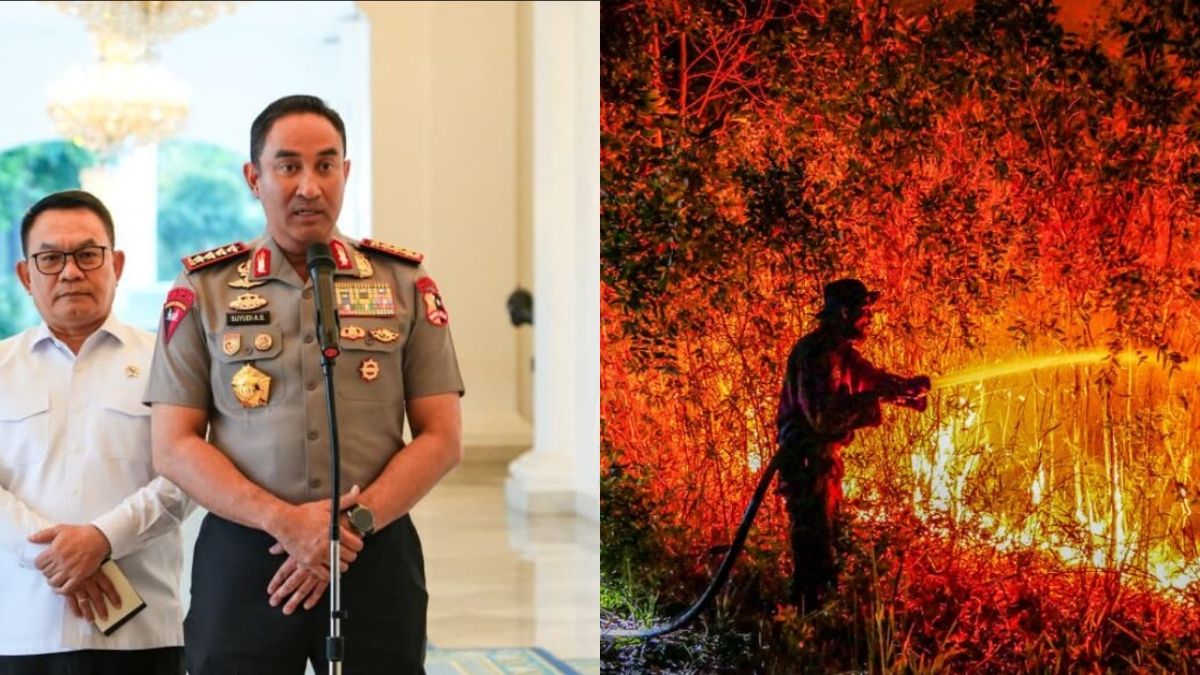
Despite the additional funding and ongoing firefighting operations, fires remain active in several parts of Indonesia.
BNPB reported on 21 October that six priority provinces — Central Kalimantan, South Sumatra, Jambi, South Kalimantan, West Kalimantan and Riau — had a combined target area of more than 983 hectares for firefighting operations. More than 502 hectares had been extinguished, while over 481 hectares remained under control efforts.
Central Kalimantan had the largest remaining area, at more than 321 hectares, followed by South Sumatra with over 84 hectares.
In areas outside the six priority provinces, fires had affected more than 1,044 hectares. Authorities had extinguished 44 hectares, leaving approximately 1,000 hectares still burning or being addressed.
The fires have generated haze that has affected communities in Indonesia and neighbouring countries.
The government has deployed firefighting personnel and aircraft for water bombing and weather modification, but the response has not prevented public anger over the duration and impact of the crisis.
Greenpeace activists protest at Jakarta landmark
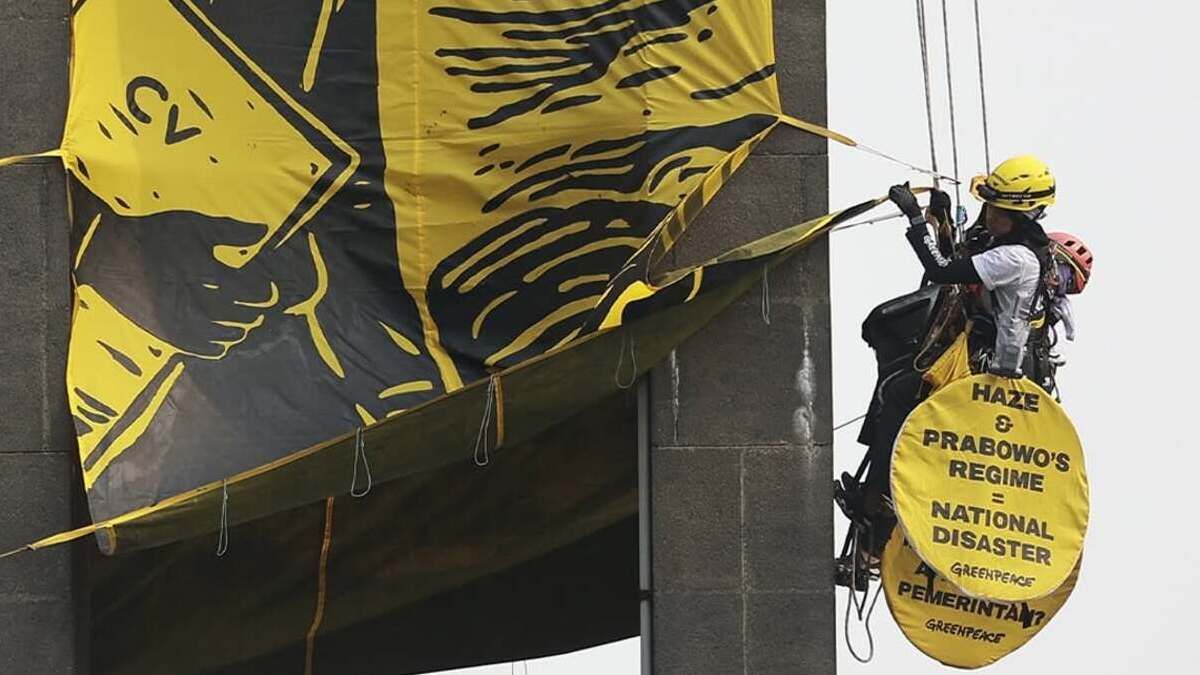
The government’s handling of the fires was among the issues highlighted by Greenpeace Indonesia activists who climbed the Welcome Statue at Jakarta’s Hotel Indonesia Roundabout on 20 October, the second anniversary of Prabowo’s administration.
The activists unfurled two large banners. One read, “Take Action on the Climate Crisis, Bring Down the Cost of Living”, while the other asked, “Disasters Are Rising, People Are Struggling, What Is the Government Doing?”
Greenpeace said the peaceful protest called on the Prabowo-Gibran administration to take the climate crisis more seriously, pointing to prolonged haze from forest and land fires and other disasters affecting people’s health and livelihoods.
Police, military personnel and Jakarta administration officers evacuated six activists from the monument. One woman required medical attention. Eleven people were taken to police headquarters in connection with the protest, according to The Jakarta Post.
The six activists were released after medical examinations and questioning, and police said they had not been named suspects and would not face further questioning.
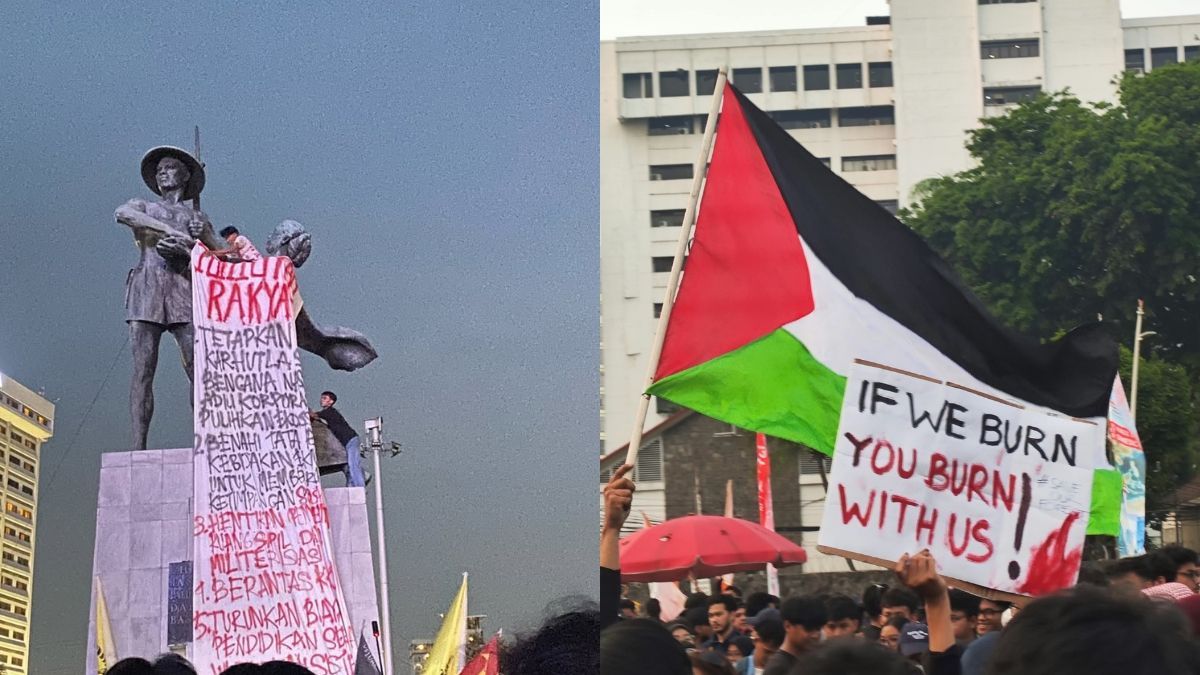
The banner action coincided with demonstrations in several Indonesian cities, including Jakarta, Bandung and Yogyakarta. Protesters called for the government to declare the fires a national disaster, hold companies accountable for environmental damage and improve public-health protections.
The administration has resisted declaring a national disaster, maintaining that the situation can be handled through existing resources and response measures.
Government rejects allegations of online censorship
The public backlash has also extended to social media, where users have raised concerns that posts criticising the government’s response to the fires have been removed or had their visibility restricted.
Communications and Digital Minister Meutya Hafid denied that the government had requested the removal of such content or interfered with its visibility.
She said the government was open to information that was factual, credible and accountable. Digital rights group SAFEnet has reported complaints concerning content moderation during the crisis.
Human Rights Minister Natalius Pigai, meanwhile, said environmental protection was a human-rights issue. After a team visited Jambi, he said local officials had been reminded of the importance of respecting environmental rights.
Pigai also pointed to a proposed provision on human rights and the environment in the ongoing revision of Law No. 39 of 1999 on Human Rights.
Malaysia presses Indonesia as Singapore targets companies
The crisis has intensified regional pressure on Jakarta. Malaysia’s Natural Resources and Environmental Sustainability Minister Arthur Joseph Kurup said on 22 October that Indonesia needed to take “firm and effective action” against transboundary haze. Malaysia has offered assistance, although coordination over deployment has remained under discussion.
Singapore has under its Transboundary Haze Pollution Act.
The National Environment Agency has issued notices to 10 Indonesian companies, requiring them to submit plans to suppress and prevent fires on land associated with their operations.
Singapore’s Senior Minister K. Shanmugam has also criticised remarks by Indonesian official Syahganda Nainggolan, who described oxygen as a form of assistance Singapore received from Indonesia. Shanmugam said haze caused by companies breaking the law was preventable.
Officials say efforts are continuing
The diplomatic pressure comes as smoke from Indonesian fires has affected air quality and disrupted daily life across the region, including school closures in Malaysia.
Prabowo’s administration has defended its response, citing firefighting deployments and enforcement against suspected violators.
On 21 October, Prabowo said investigations were under way and threatened licence revocations against companies found responsible for fires.