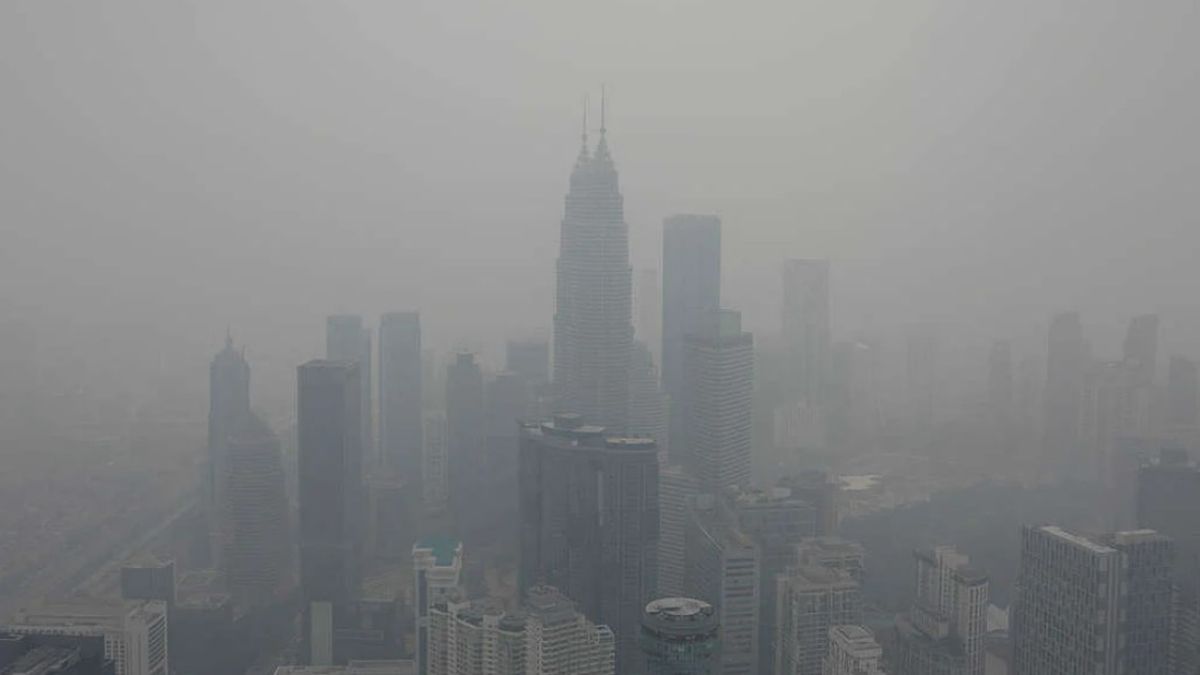
Japan deploys Chinook helicopters to support Indonesia’s forest fire response in West Kalimantan
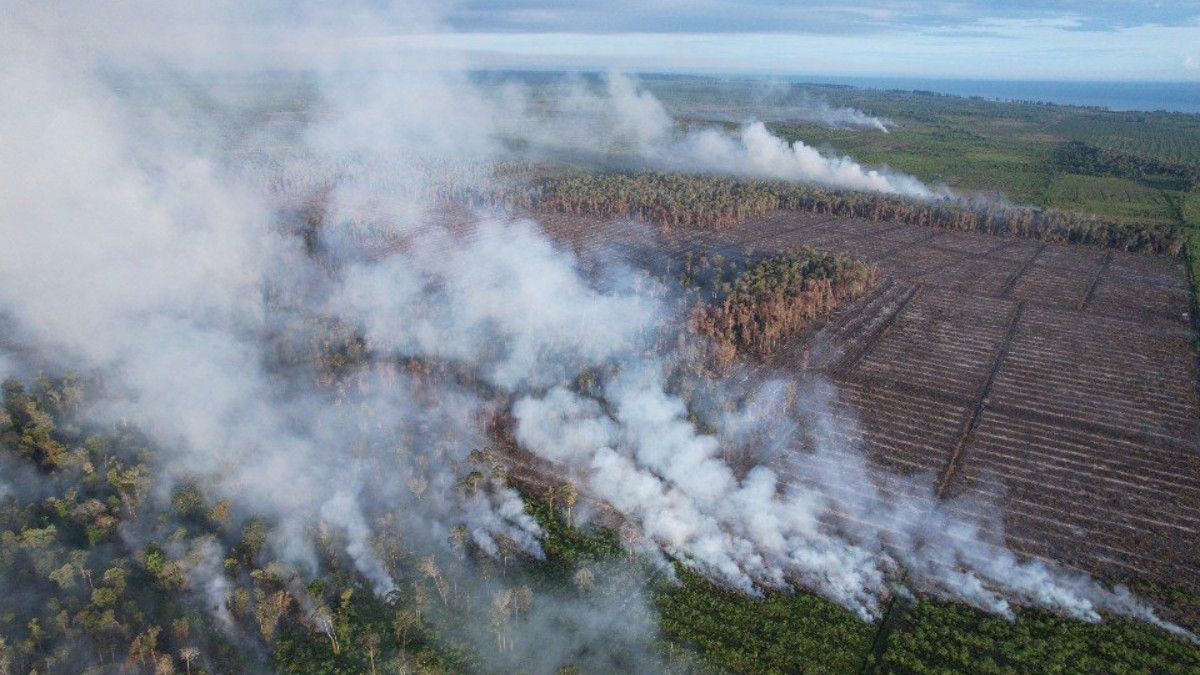
Japan has expanded its assistance to Indonesia’s forest-fire response, deploying CH-47 Chinook helicopters to support firefighting operations in Ketapang, West Kalimantan, amid prolonged dry conditions.
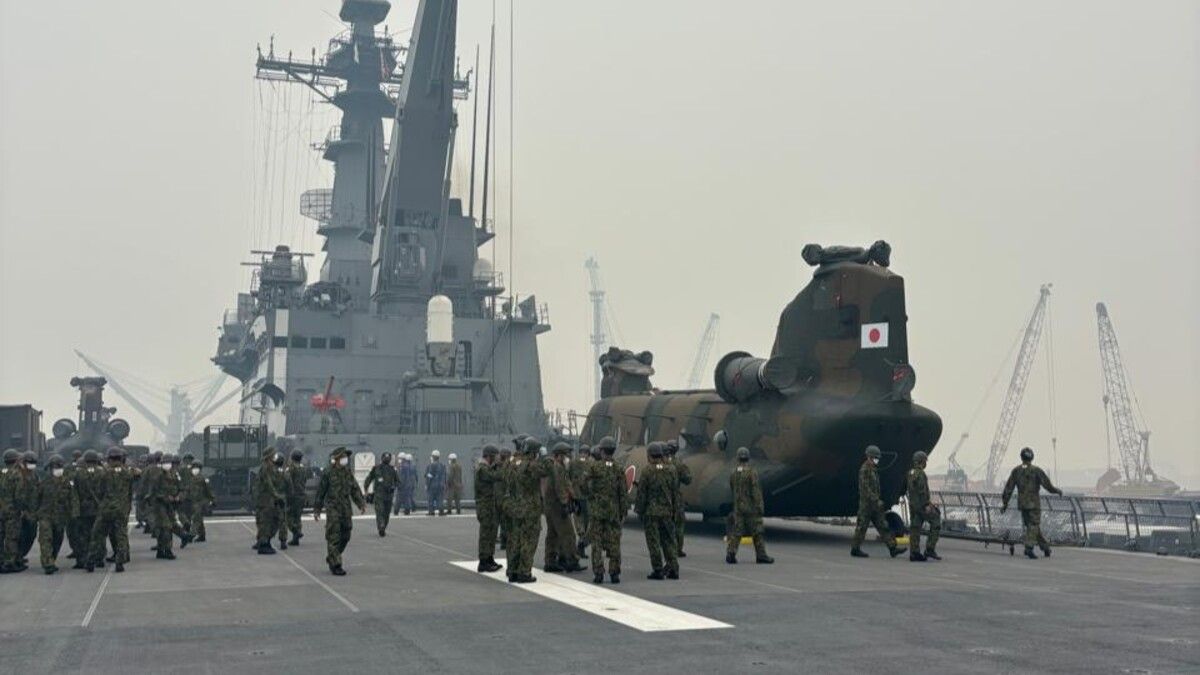
- Japan has deployed CH-47 Chinooks to support firefighting in Ketapang.
- Around 180 Japanese personnel are involved.
- Indonesia is combining aerial and ground firefighting efforts.

Japan has been assisting Indonesia’s efforts to fight forest and land fires in West Kalimantan for nearly two weeks, with the Japan Self-Defense Forces (JSDF) now deploying CH-47 Chinook helicopters to strengthen aerial firefighting operations in Ketapang Regency.
The Japanese support began earlier in September, when the Japan Maritime Self-Defense Force (JMSDF) vessel JS Kunisaki transported three Ground Self-Defense Force CH-47 Chinook helicopters to West Kalimantan.
The aircraft were deployed under Japan’s international disaster-relief mission following a request from the Indonesian government. Japan’s Ministry of Defence said the helicopters were intended to help prevent further damage from forest fires in the region.
The JS Kunisaki arrived at Kijing Terminal in Mempawah Regency on 10 September, carrying the three helicopters. Indonesia’s Defence Ministry said the deployment was part of bilateral humanitarian assistance and disaster-relief cooperation under the Indonesia-Japan Defence Cooperation Arrangement. Around 180 Japanese personnel were involved in the mission.
Chinooks deployed towards Ketapang
The Japanese helicopters began supporting firefighting operations in West Kalimantan earlier this month.
On 21 September, Japan’s Ministry of Defence said the JS Kunisaki, carrying a CH-47 helicopter, had arrived off Ketapang and that firefighting operations would be conducted from both Kijing Port and the vessel’s position off Ketapang.
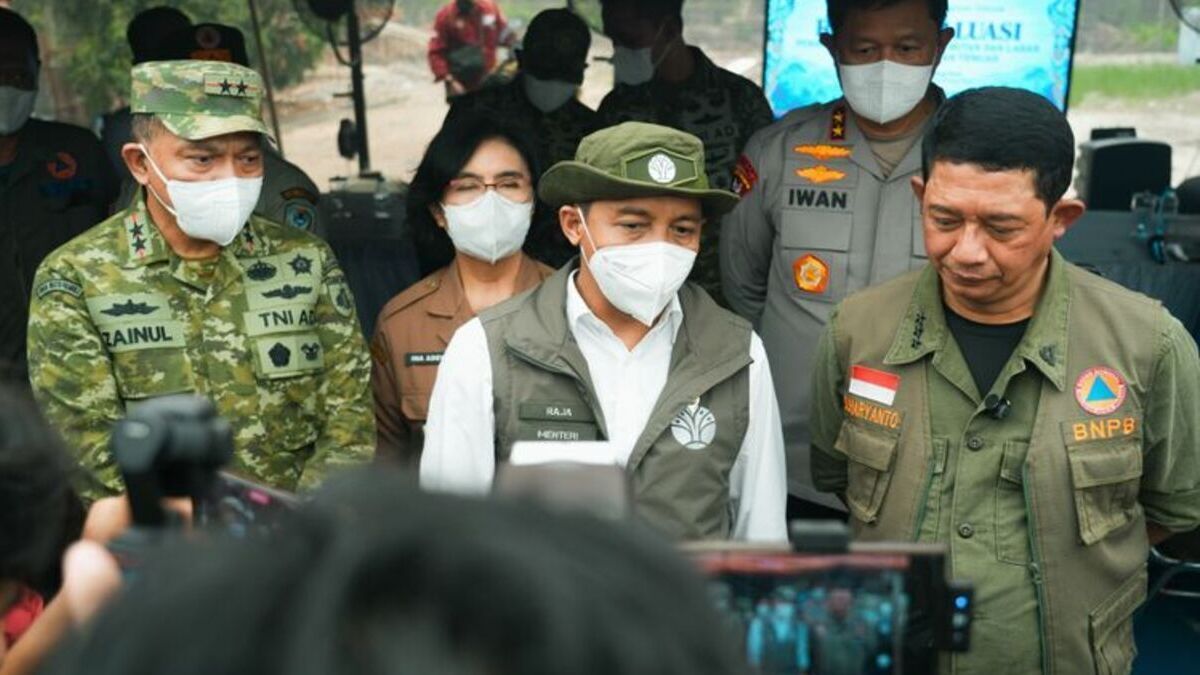
On Wednesday, 23 September, Major General Budi Irawan, Deputy III for Emergency Management at Indonesia’s National Disaster Management Agency (BNPB), said Japan had been working alongside Indonesian authorities for almost two weeks.
“On behalf of the Government of the Republic of Indonesia, I convey my gratitude and appreciation to the Government of Japan, which has spent nearly two weeks working alongside the Indonesian government to extinguish forest and land fires in the West Kalimantan region,” he said, according to ANTARA.
Mr Budi said Ketapang had become a priority because the area had experienced prolonged dry conditions, contributing to the spread of hotspots.
Indonesian authorities have been using water-bombing and aerial-patrol helicopters, while the Japanese CH-47s provide additional capacity for firefighting in areas that are difficult to reach by land.
A Japanese representative said the JSDF was carrying out the operation as a humanitarian mission alongside the Indonesian military and National Police.
Indonesia combines aerial and ground operations
The Japanese helicopters are being integrated into Indonesia’s wider firefighting operation rather than operating independently.
Indonesia’s Defence Ministry said the TNI is responsible for operational supervision, security and flight clearances, while flight missions are coordinated with the BNPB. A TNI safety officer is assigned to each helicopter.
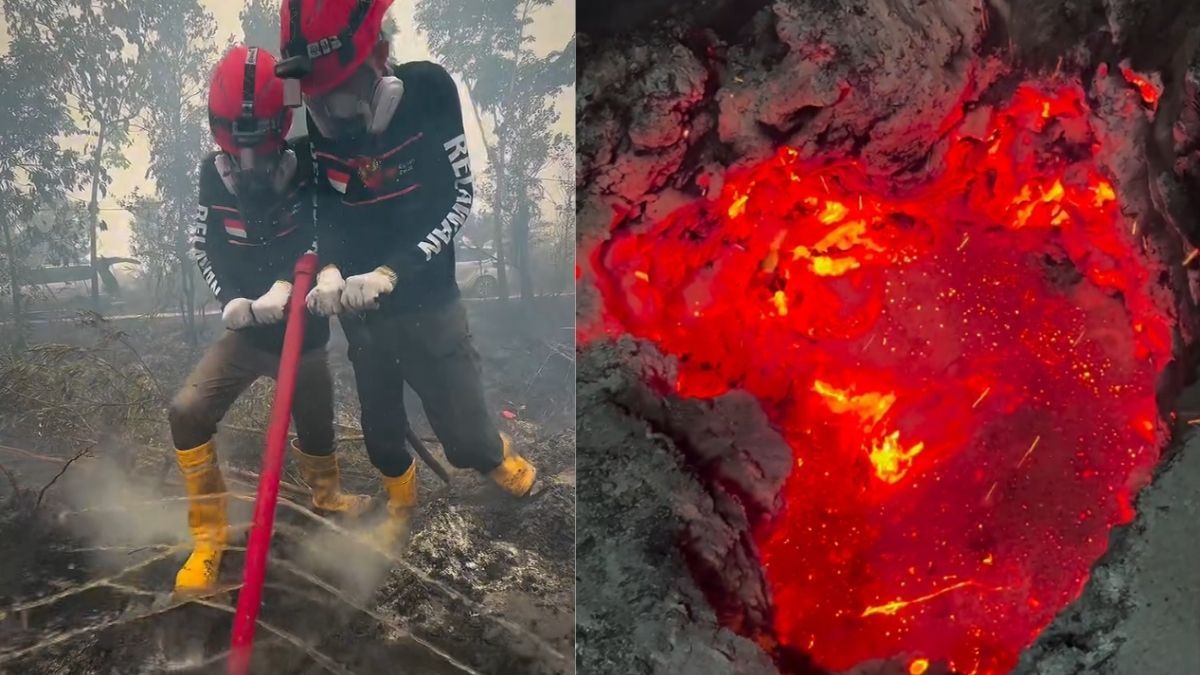
Mr Budi said aerial firefighting was only one part of the response. The BNPB, TNI, National Police, regional disaster-management agencies, Manggala Agni forest-fire crews and community fire brigades are also conducting ground operations to contain fires and prevent them from spreading.
The combination of aerial and ground operations is intended to reach fires in areas where access by road is difficult and to strengthen containment in drought-affected locations.
Dry season increases fire risk
West Kalimantan is one of six provinces prioritised by the Indonesian government for forest and land-fire response in 2026. The others are Central Kalimantan, South Kalimantan, Riau, Jambi and South Sumatra.
BNPB said Indonesia was facing a dry season that was expected to be drier than normal in many areas, with the peak occurring in August and continuing into September. The agency said the conditions increased the risk of forest and land fires in vulnerable areas.
The government has been using a combination of ground patrols, early detection, fire suppression, aerial monitoring, water bombing and weather-modification operations as part of the national response.
Japan’s deployment adds an international component to those efforts. The Defence Ministry said the CH-47 mission was designed to strengthen Indonesia’s existing firefighting capabilities, particularly by providing additional aerial capacity in locations where fires are difficult to tackle from the ground.
BNPB officials travelled from Supadio Air Force Base in Pontianak to Ketapang on Wednesday to inspect the progress of the firefighting operation directly.
Indonesian and Japanese personnel are continuing to coordinate the use of the Chinooks with Indonesia’s wider response as authorities work to contain fires in the affected areas.