Trump drowned out at helipad launch as CNN, MS NOW and Politico sue over press ban
Donald Trump's remarks at a White House helipad ceremony were inaudible after TV networks withdrew from pool coverage in solidarity with CNN, MS NOW and Politico, which have sued to overturn his ban on their reporters.
- CNN, MS NOW and Politico sued on 21 September 2026, alleging the ban breaches the First Amendment.
- Trump's helipad ribbon-cutting remarks were inaudible after five networks refused to supply pool cameras.
- Judge Timothy Kelly, a Trump appointee, will hear the restraining order request on 23 September 2026.

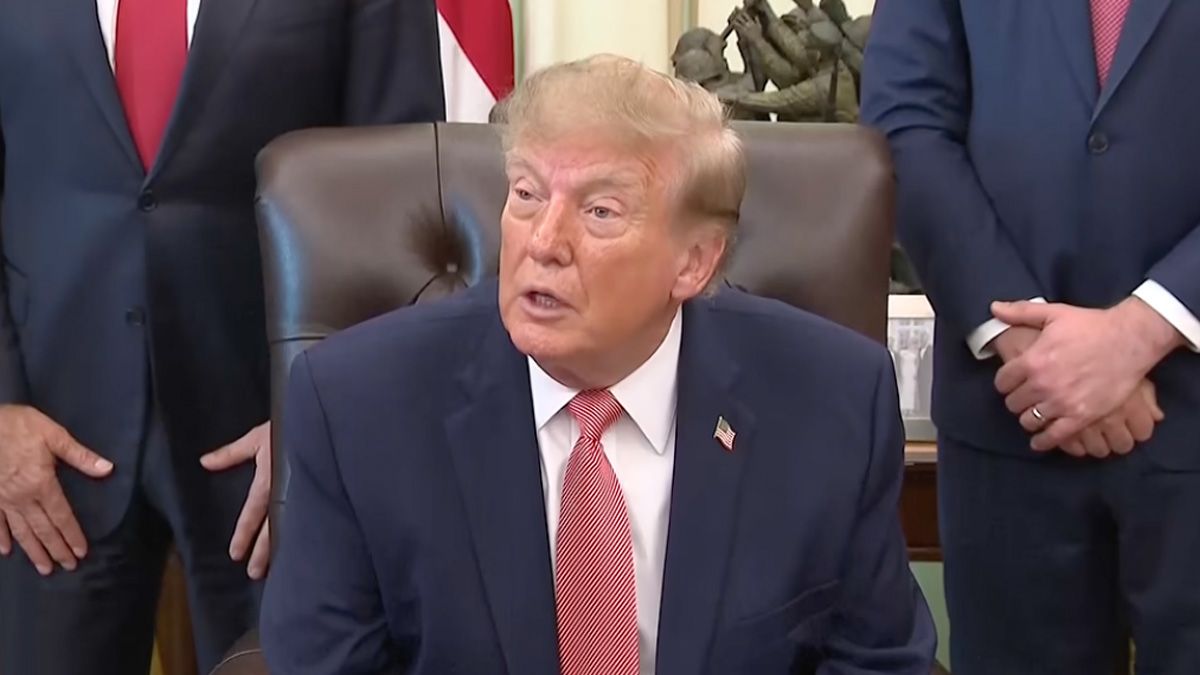
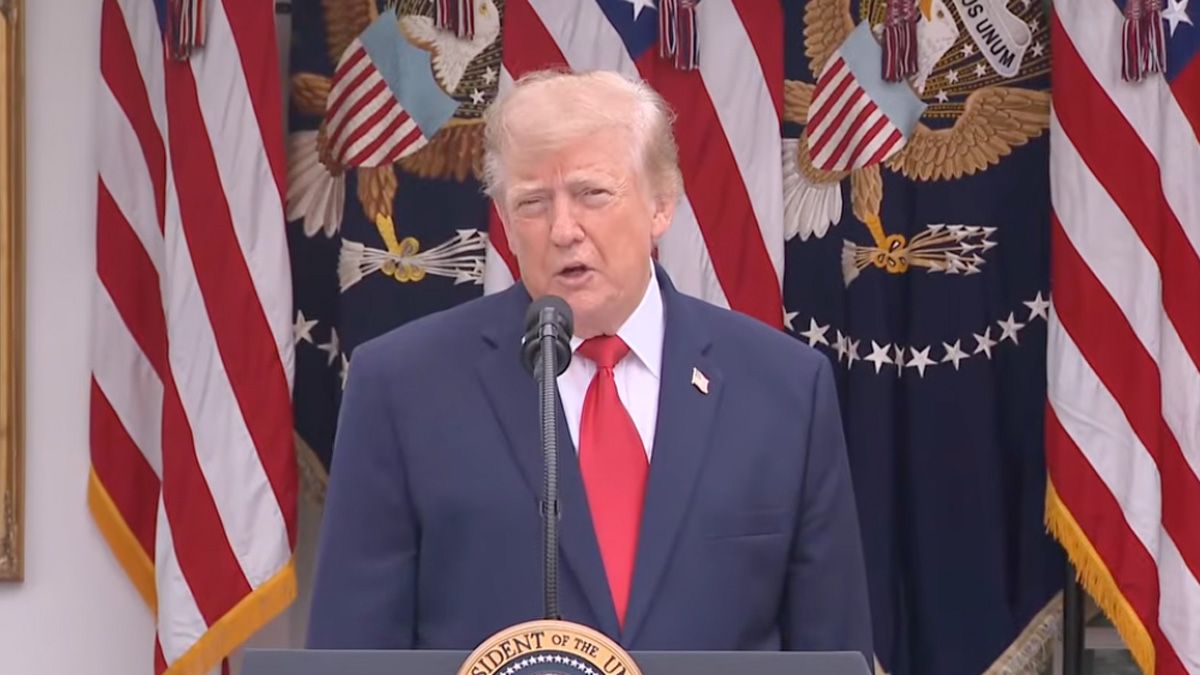
US President Donald Trump's first event without a television press pool ended with his words drowned out by helicopter noise on Monday, 21 September 2026, hours after CNN, MS NOW and Politico sued over their White House ban.
The lawsuit, filed in the US District Court for the District of Columbia, seeks a temporary restraining order restoring the outlets' access. Judge Timothy Kelly has ordered the Department of Justice to respond by Tuesday and scheduled a hearing for Wednesday afternoon.
Remarks lost at helipad ceremony
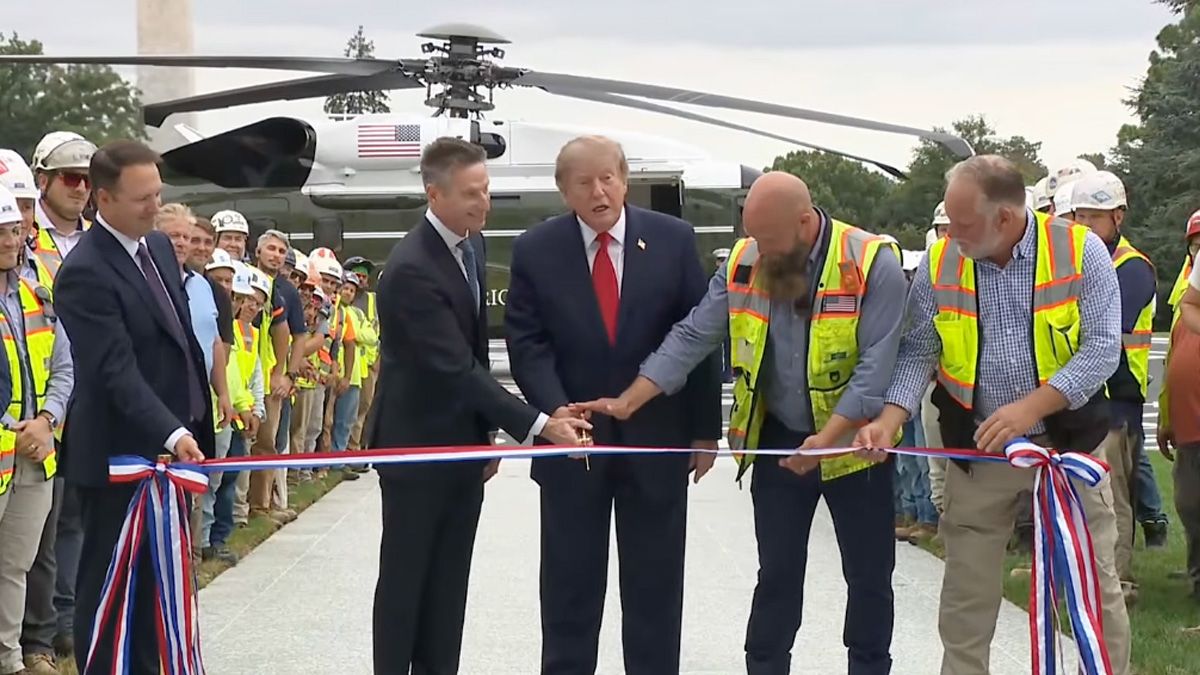
Trump gathered on the South Lawn on Monday afternoon to open a new helipad, which the White House says will accommodate newer and more powerful Marine One helicopters.
According to reports by The Daily Beast and The Hill, Trump cut a red, white and blue ribbon with gold scissors and spoke with construction workers and officials at the site.
With the television pool absent, the event was carried only on the White House's own livestream. Trump was not speaking into a network microphone, and a helicopter parked behind him rendered his remarks indiscernible throughout the broadcast.
A microphone belonging to NewsNation also failed to pick up clear audio, The Hill reported.
Bianca de la Garza, covering the event for the pro-Trump network Newsmax, told viewers: "There's no microphone because the pool cameras aren't there." A Newsmax host remarked that the ban appeared to be "backfiring just a little bit".
Networks and photographers stand with banned outlets
The helipad episode followed a decision by ABC, CBS, CNN, Fox News and NBC to suspend television pool coverage of the president until further notice.
CNN had been scheduled for pool duty on Monday, including travel with Trump to New York for the United Nations General Assembly. On Sunday night, the White House removed the network from that rotation.
Bryan Boughton, Fox News' Washington bureau chief and chair of the White House television pool, informed news organisations in an internal notice that no substitute network would take CNN's place, according to Politico.
In a joint statement, the five networks said: "No administration should restrict a news organisation because it objects to its reporting."
Still photographers joined the action. According to CNN, photographers from The New York Times, The Associated Press (AP), Agence France-Presse (AFP), Reuters and Getty Images withheld images of Trump's appearances until the end of Monday.
The boycott left Trump without an assigned television crew as he travelled to New York, where he is due to address the General Assembly on Tuesday.
Lawsuit alleges viewpoint discrimination
The named plaintiffs are the three outlets and three White House reporters: Betsy Klein of CNN, Akayla Gardner of MS NOW and Cheyenne Haslett of Politico.
According to the suit, the three journalists were denied entry on Saturday, 19 September 2026, and a Secret Service officer took their hard passes. Trump, White House Communications Director Steven Cheung and Secret Service leadership are among the named defendants.
"This ban could not be a more direct assault on the First Amendment," the 27-page filing states.
The complaint advances three main claims, according to ABC News. It argues that the ban denies the reporters due process, unlawfully retaliates against protected speech, and bars them from a nonpublic forum for unconstitutional reasons.
In a joint statement, the outlets said they were acting to defend the principle that "the government does not decide what the press reports or publishes".
They added that the White House had revoked their journalists' credentials without notice or process because it objected to their reporting.
CNN reported that the three outlets' reporters remain locked out of their workspaces inside the White House. CNN and MS NOW are also barred from their television equipment and camera positions on the grounds.
Trump predicts defeat and appeal
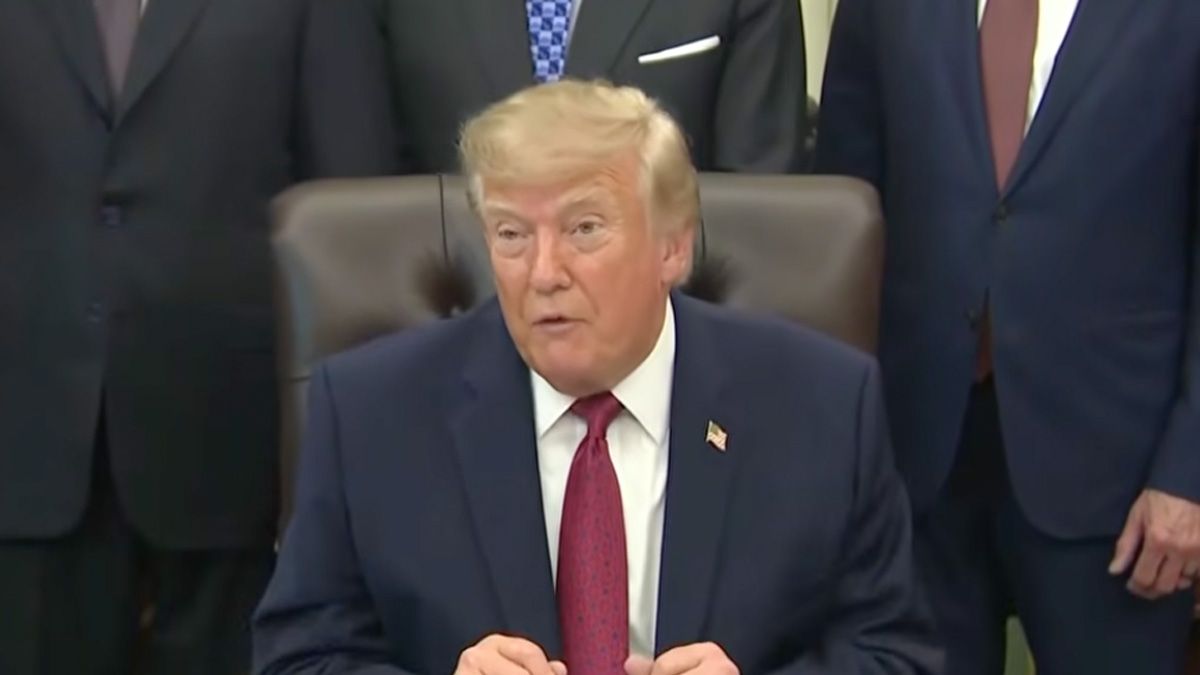
Trump announced the ban on Friday, 18 September 2026, on Truth Social, citing what he called the outlets' "FAKE NEWS". Speaking in the Oval Office that day, he said he did not have to let such reporters "into the people's house".
"Something is wrong with a country that can allow people to write purposely negative stories," he said at the time.
On Monday, Trump wrote that his administration was not attacking the free press but mounting "an assault on the FAKE NEWS", which he described as a threat to national security.
After the case was assigned to Judge Kelly, Trump posted that the outlets had drawn a favourable judge and signalled that his administration would appeal any adverse ruling.
"Why should I have to give 'access' to such people? Perhaps Judge Kelly could explain that," he wrote.
The White House has maintained that access is "a privilege – not a right", according to Just the News. Asked by NBC News to comment on the lawsuit, the White House press office pointed to Trump's Truth Social post.
Vice President JD Vance also defended the ban on Monday, arguing that it did not amount to an attack on free speech because the affected outlets could still report on the president.
Legal precedent favours outlets, experts say
Judge Kelly, nominated by Trump in 2017, presided over CNN's 2018 lawsuit over the revoked credentials of then chief White House correspondent Jim Acosta.
In that case, he ordered the temporary restoration of Acosta's pass on due process grounds. The administration later restored the pass permanently.
Speaking on CNN's "State of the Union" on Sunday, US Ambassador to the United Nations Mike Waltz argued that the president was "absolutely within his rights" to limit journalists' access to government facilities.
Waltz cited the 1965 Supreme Court ruling in Zemel v. Rusk, in which Chief Justice Earl Warren wrote that the right to publish "does not carry with it the unrestrained right to gather information".
Legal experts counter that the dispute turns on viewpoint discrimination, which courts have repeatedly prohibited. Trump's own explicit statements about "negative" coverage are expected to feature in the outlets' arguments.
In 2025, when Trump restricted AP's access to some events, Judge Trevor McFadden, also a Trump appointee, ruled that the White House could not exclude journalists from facilities opened to the press generally based on viewpoint.
According to CNBC, an appeals court panel voted 2–1 in June 2025 to pause that ruling pending appeal. The panel heard arguments in November but has yet to rule.
Political reactions split along party lines
Republican lawmakers largely avoided the legal questions on Sunday's political talk shows. On ABC's "This Week", Republican Steve Scalise said of Trump: "I've never seen him turn a question down from anybody."
Maryland Governor Wes Moore, a Democrat, told CNN: "The president seems to have a real problem with the Constitution."
Press groups warn of wider precedent
National Press Club President Mark Schoeff Jr said the First Amendment "does not permit the government to pick and choose" which journalists may work.
Adam Rose, deputy director of advocacy at the Freedom of the Press Foundation, had predicted on Sunday that the outlets would seek an injunction or temporary restraining order within days.
Conor Fitzpatrick, chief supervising attorney at the Foundation for Individual Rights and Expression (FIRE), warned on ABC that the ban could set a precedent for future administrations. "Once you open the Pandora's box of censorship, you can never close it again," he said.
Rival news organisations have shown rare solidarity. The Washington Post described the ban as "a clear form of intimidation to silence coverage".
The White House Correspondents' Association (WHCA), led this year by Fox News correspondent Jacqui Heinrich, said the ban violates the First Amendment and called for the outlets' access to be restored.
Heinrich's predecessor, Weijia Jiang of CBS, said on "Fox News Sunday" that when the government selects who may cover the president, "the viewpoint shrinks".