Japanese shop exposes fake iPhone 18 boxes after man tries to sell weighted replicas in Tokyo
A Tokyo second-hand phone shop reportedly foiled an attempted sale of fake iPhone 18 Pro boxes after staff used a magnetic viewing sheet to detect the absence of the MagSafe magnetic pattern.
- A Shin-Okubo phone shop reportedly detected fake sealed iPhone 18 Pro boxes using a magnetic viewing sheet.
- The boxes allegedly contained weighted filler materials instead of genuine iPhones.
- The footage circulated online as Hong Kong separately reported large-scale credit-card fraud linked to iPhone 18 pre-orders.

A second-hand mobile phone shop in Tokyo’s Shin-Okubo district reportedly foiled an attempted sale involving several apparently unopened iPhone 18 Pro boxes after staff detected that the packages did not contain genuine phones.
A Vietnamese man brought multiple boxes to the shop and reportedly said he wanted to sell the newly released devices. The boxes appeared sealed, making the contents difficult to inspect without breaking the packaging.
The shop’s staff reportedly suspected something was wrong and used a magnetic viewing sheet to examine the boxes before proceeding with the transaction.
The incident was later filmed and uploaded to X by the shop.
The footage subsequently circulated on social media, including X and Facebook, around 19–20 September 2026.
Magnetic test reveals missing MagSafe pattern
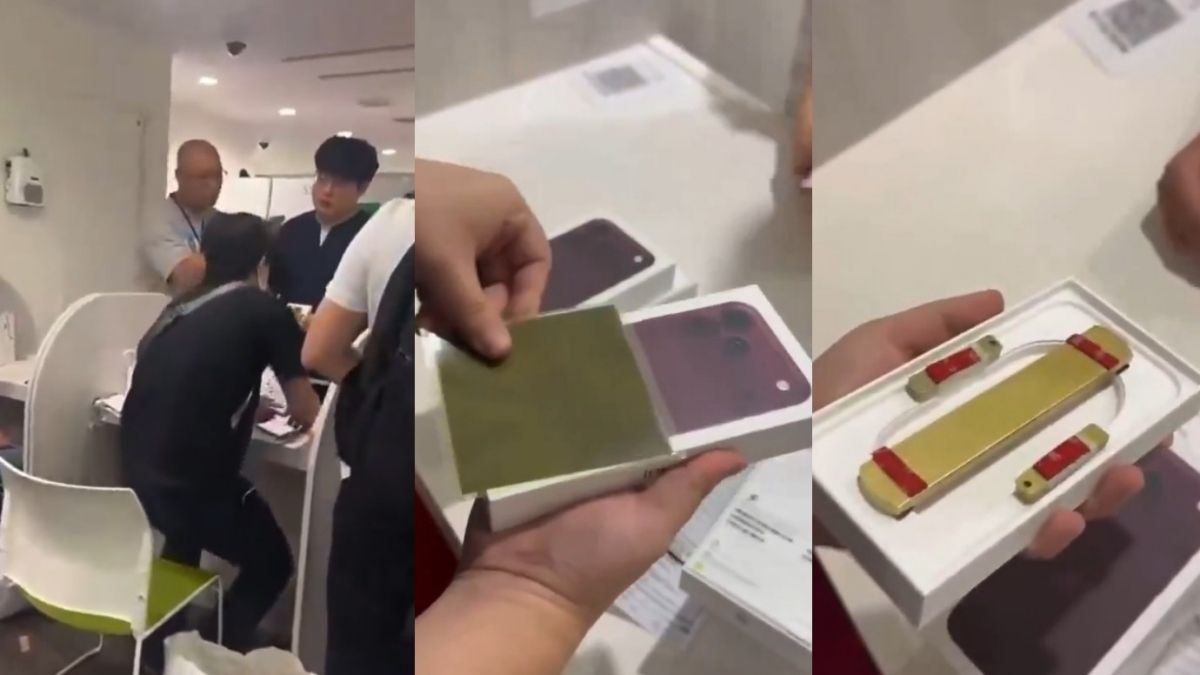
The staff placed the magnetic viewing sheet against the relevant area on the back of a box. The method was intended to identify the magnetic structure expected inside a genuine iPhone.
According to Apple specifications cited in reports about the incident, the iPhone 18 Pro and iPhone 18 Pro Max feature built-in MagSafe wireless charging, supporting wireless charging of up to 25W, as well as Qi2 wireless charging.
The devices also feature an integrated magnet array, an alignment magnet and a magnetometer, according to Apple. The system allows compatible accessories to attach securely to the phone.
When a genuine iPhone is inside its packaging, the magnetic viewing sheet should respond to the magnet arrangement and display a recognisable circular magnetic pattern.
In the boxes brought to the shop, however, the sheet reportedly showed no magnetic reaction. Staff then proceeded to open one of the packages to verify what was inside.
Weights used to imitate genuine phones
Inside the packaging, staff reportedly found flat pieces of material and a long, gold-coloured strip rather than an iPhone.
The objects appeared to have been placed inside the boxes to increase their weight and imitate the physical feel of a genuine phone. The apparent purpose was to make the sealed packages seem more convincing during a resale transaction.
Footage shows the man appearing embarrassed after the contents were exposed. He can also be seen taking out his own phone and appearing to avoid eye contact with the shop staff.
The video does not establish what happened afterwards. It also does not state whether police attended the shop or whether any arrest was made.
Social media users discuss possible scam
The shop reportedly suspected the boxes before opening them and filmed the inspection process as evidence. Some social media users said the shop appeared to have recognised the potential fraud early in the transaction.
Other commenters noted that scams involving newly released smartphones could emerge soon after a new model reaches the market.
The footage has also prompted speculation that the man may himself have obtained the devices from another party before attempting to resell them. That possibility was mentioned in reports circulating with the video, but the available footage does not establish how he obtained the boxes.
Similar methods have been used in other phone scams, where offenders allegedly use empty packaging, resealed boxes or replacement materials designed to imitate the weight of an actual handset.
Hong Kong reports separate iPhone-linked fraud
The incident emerged as the iPhone 18 series was being offered for pre-order in multiple markets from 12 September 2026.
Hong Kong simultaneously reported a large increase in credit-card fraud complaints linked to iPhone 18 pre-orders. The Hong Kong Police Force’s electronic reporting centre received more than 700 reports on the day after sales opened, before the reported number rose to 1,209 within a single day.
The total reported amount involved was approximately HK$25 million (about US$3.18 million), with the largest reported individual case involving about HK$114,000.
Hong Kong police said preliminary investigations indicated that the incident did not involve a hacking attack. Instead, the investigation pointed to the absence of SMS verification during the pre-order process as a factor that allegedly allowed fraudsters to exploit the system.
Consumers purchasing newly released smartphones are generally advised to inspect packaging for signs of opening or resealing and to verify serial numbers associated with the device and packaging.
Warranty information can also be checked through the manufacturer's official systems where available. Such checks can help establish whether a device corresponds with an authentic product and whether its warranty status is consistent with a legitimate purchase.