Healthcare workers dance as final Ebola patient leaves treatment centre in DR Congo
Healthcare workers and community members celebrated as the last Ebola patient left a treatment centre in Mongbwalu, northeastern Democratic Republic of Congo. The milestone marks the facility’s first period without confirmed patients under treatment since May, but the wider outbreak continues.
- The final Ebola patient at the Mongbwalu treatment centre recovered and was discharged, prompting celebrations among healthcare workers and community members.
- The Bundibugyo virus outbreak declared in May 2026 has spread across multiple provinces in the Democratic Republic of Congo.
- Health officials have cautioned that the treatment centre's lack of active cases does not mean the wider outbreak has ended.

Healthcare workers and humanitarian aid staff celebrated as the final Ebola patient at a treatment centre in Mongbwalu, in northeastern Democratic Republic of Congo (DR Congo), recovered and left the facility, marking a milestone in efforts to contain the outbreak.
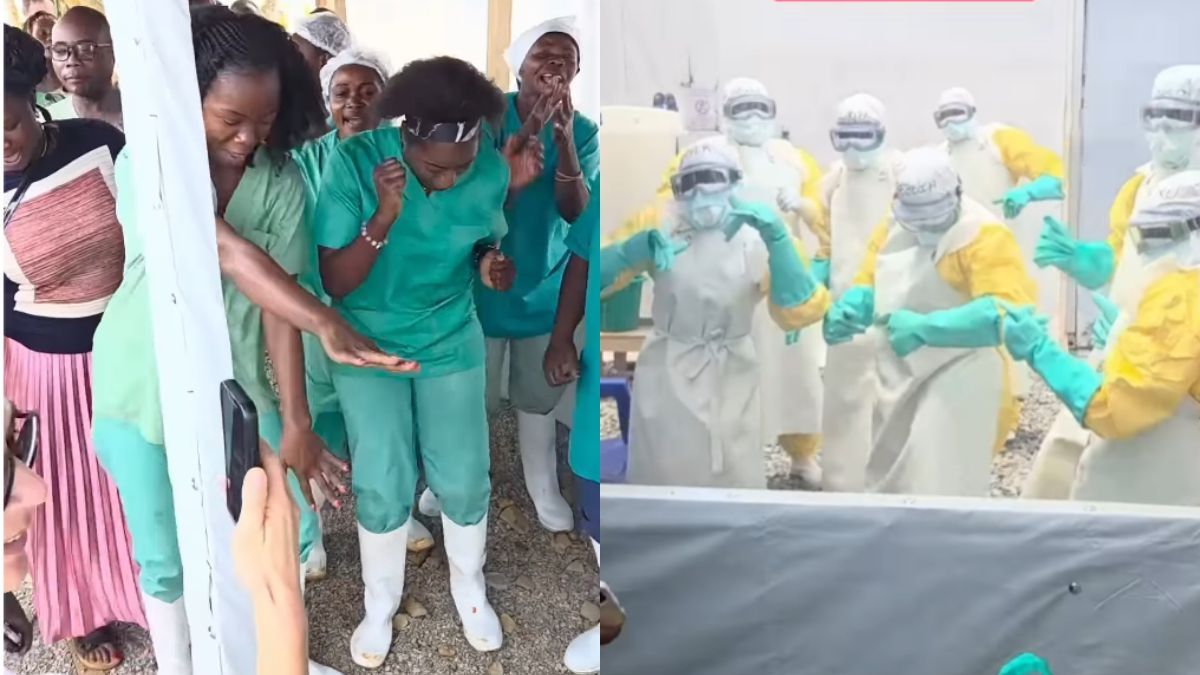
Footage published by Médecins Sans Frontières (MSF), also known as Doctors Without Borders, on 28 October showed a woman dancing as she walked out of the centre, while medical staff and community members sang and celebrated around her.
Some healthcare workers danced alongside the woman, while others joined from the opposite side of a partition separating them from the treatment area. Staff inside the high-risk zone wore protective suits, masks, gloves, boots and face shields or goggles, while others outside the partition wore green medical uniforms.
The footage showed workers waving their hands and dancing to music accompanied by percussion instruments, including drums. One person recorded the celebration on a mobile phone.
The Associated Press reported that healthcare workers, humanitarian aid staff and the last Ebola patients danced and sang on 20 October to mark the absence of active Ebola cases at the centre.
According to Euronews, the facility had no confirmed Ebola patients under treatment for the first time since May.
Recovery offers relief amid a prolonged outbreak
The celebration offered a rare moment of joy for healthcare workers and communities that have faced months of illness, deaths and efforts to contain the virus.
The recovery of patients can also help reassure communities that survival is possible and encourage people experiencing symptoms to seek medical attention promptly.
At least 2,600 patients had recovered from Ebola in DR Congo, according to the Associated Press, although the disease continued to affect communities across the country.
The Mongbwalu centre is located in Ituri province, where the latest outbreak was first identified. Healthcare teams have been treating infected patients while supporting efforts to prevent further transmission.
The response has faced challenges beyond medical care, including population movement, insecurity and difficulties reaching some affected communities. Misinformation and mistrust of treatment facilities have also complicated efforts to respond to the outbreak.
Earlier in the outbreak, treatment facilities in Mongbwalu and nearby Rwampara were attacked and set on fire.
Health officials have stressed the importance of seeking medical attention promptly when Ebola is suspected and following public health guidance.
Bundibugyo virus outbreak declared in May
DR Congo declared the latest Ebola outbreak on 15 May 2026, after cases caused by the Bundibugyo virus were identified in Ituri province.
The World Health Organisation (WHO) confirmed that the outbreak was caused by the Bundibugyo virus, a distinct species of Ebola virus. The declaration marked the country's 17th Ebola outbreak.
The initial affected areas included the Mongbwalu, Rwampara and Bunia health zones before transmission spread to other parts of the country.
By August, the WHO had reported that transmission had expanded to 54 health zones across six provinces, making it the largest Ebola outbreak reported in the country at that time.
The Bundibugyo virus presents particular challenges for the response. In an assessment dated Oct. 12, the European Centre for Disease Prevention and Control said there was no licensed vaccine or specific treatment for Bundibugyo virus disease.
Early detection, supportive clinical care and infection-prevention measures therefore remain important in managing the disease and limiting further transmission.
Ebola is a severe viral disease that can cause life-threatening illness. It spreads through direct contact with the bodily fluids of infected people.
Empty treatment centre does not mean outbreak is over
The discharge of the final patient marks an important milestone for the Mongbwalu medical team, but it does not mean the wider outbreak has ended.
The Congolese news agency ACP reported on 26 October that the treatment centre had gone seven days without a confirmed case. Health teams continued to test suspected cases and monitor contacts.
The centre's medical director, Dr Richard Lokudo, cautioned that the absence of confirmed patients at the facility did not mean the epidemic was over.
On 27 October, Congolese health authorities reported that the outbreak had surpassed 10,000 confirmed cases, with the vast majority recorded in DR Congo.
The figure reflects the wider outbreak rather than the situation at the Mongbwalu centre alone.
Public health authorities must continue surveillance and other response measures to identify possible new cases. An outbreak can only be officially declared over once the required period without new cases has been met under established public health protocols.
The departure of the final patient from Mongbwalu therefore represents progress for the facility and its medical teams, while the broader response continues across affected areas.