UK, France and Canada to ban imports from Israeli settlements in occupied West Bank
Britain announced a ban on goods produced in illegal Israeli settlements in the occupied West Bank on 8 September 2026, with France and Canada acting in parallel and 11 other states pledging support. Israel responded by closing the British consulate in East Jerusalem.


Britain announced on Tuesday, 8 September 2026, that it would ban the import of all goods produced in illegal Israeli settlements in the occupied West Bank, with France and Canada announcing parallel measures the same day.
Foreign Secretary Ed Miliband made the announcement to a packed House of Commons, telling MPs that France and Canada would join Britain in barring goods originating from illegal settlements. The statement drew cheers from the chamber.
Miliband told Parliament that the three countries were not acting alone. He said the Netherlands, Ireland, Belgium, Spain and Norway had either banned settlement goods or were in the process of doing so.
He added that Denmark, Finland, Iceland, Poland, Portugal and Sweden had pledged the same day to support further action against continued Israeli settlement expansion in the occupied West Bank.
What the ban covers
The measure is expected to take effect within six to nine months and will target settlement exports including dates, olive oil, citrus fruits, herbs, wine and other agricultural produce.
Miliband said he did not believe the British public wanted the country to support the occupation by accepting settlement products in its shops. He said Britain could no longer simply call out injustice and suffering, but had to act.
Beyond the trade ban, Miliband said Britain would act against specific companies and individuals providing construction, infrastructure, financing or real estate services for settlement expansion. He warned that they would face the full force of UK sanctions.
He also said he was immediately sanctioning a number of extremist settlers, ahead of the legislation. Separately, he announced sanctions on the Hezbollah-linked financial institution Al-Qard Al-Hassan and the reimposition of economic sanctions on Iran, in line with the European Union and the United States.
Why now
Miliband said Britain was acting because Israel had crossed a long-term red line, referring to the opening of tenders for construction in the E1 area of the occupied West Bank. Reports of the tender size ranged from 1,000 to 1,200 homes.
The E1 project lies close to Jerusalem and would cut across land Palestinians seek for a future independent state.
A sharp rise in reported settler violence was cited as a second reason. Miliband told MPs that the British government agrees there is ethnic cleansing of Palestinians in areas of the West Bank, perpetrated by what he described as settler terrorists.
France cited what it called the frenzied expansion of settlements and a flare-up of violence as its reasons for acting.
Joint statements
In a joint statement, Prime Minister Andy Burnham, French President Emmanuel Macron and Canadian Prime Minister Mark Carney said the day marked a further turning point in their approach to protecting the two-state solution. They said the time had come to take further action.
The three leaders affirmed an unwavering commitment to Israel's security, saying they support a safe and secure Israel living alongside a safe and secure Palestine. They said they would promote their efforts at the United Nations General Assembly later in September.
Foreign ministers from nine further countries issued a separate joint statement, declaring themselves resolute that the two-state solution must be protected.
Canadian Foreign Minister Anita Anand said Canada would introduce restrictions on trade in goods with West Bank settlements that are illegal under international law, writing that illegal settlements significantly undermine long-term peace objectives.
Israeli countermeasures
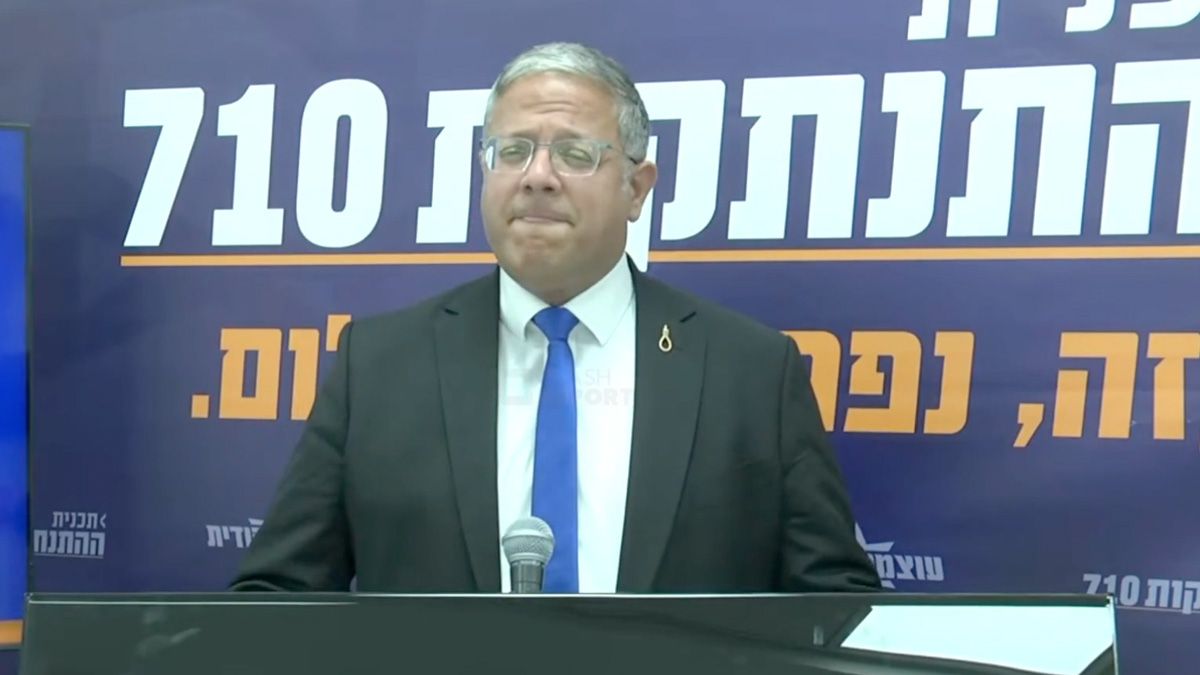
Israeli Foreign Minister Gideon Sa'ar described Miliband's remarks on ethnic cleansing as outrageous lies and called the British move morally distorted and blatant interference in a sovereign state and its electoral process.
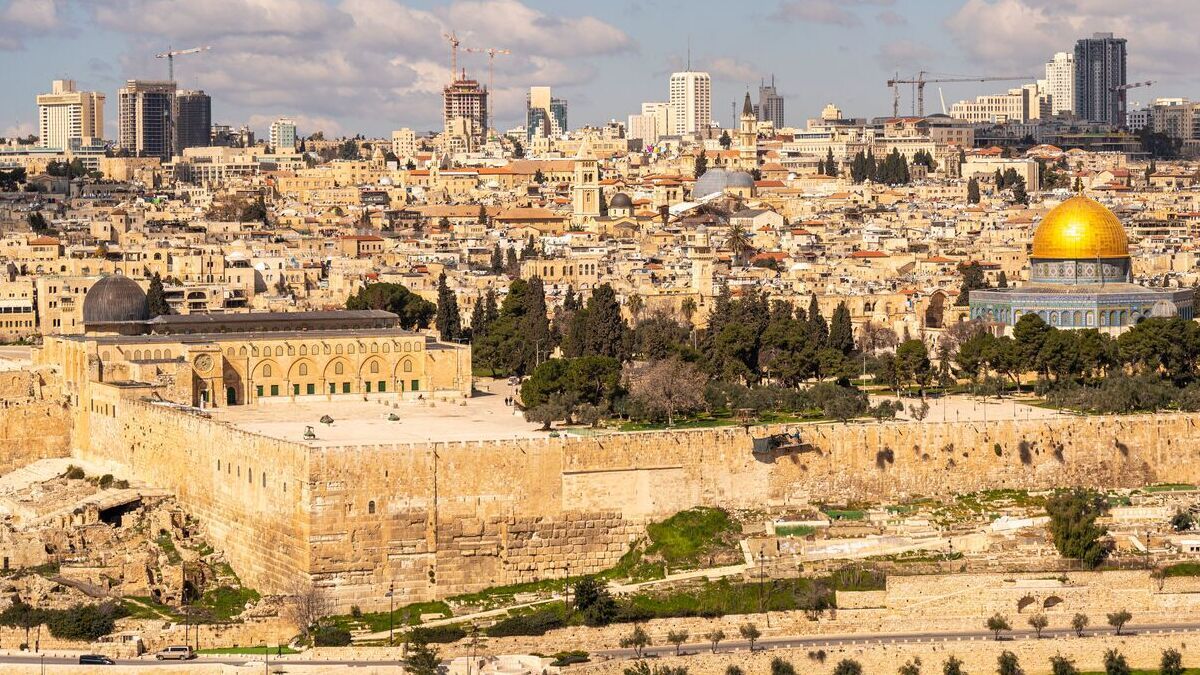
Sa'ar announced the immediate closure of Britain's consulate in East Jerusalem, which is accredited to the Palestinian Authority. He said he had coordinated the response with Prime Minister Benjamin Netanyahu.
Other announced countermeasures include expelling British representatives from a US-led joint military centre monitoring the Gaza ceasefire, and ending British training of Palestinian Authority security forces in the West Bank.
Israel will also bar 12 elected British officials, including former Labour leader Jeremy Corbyn, along with other British citizens Sa'ar said were involved in antisemitic and anti-Israel activity. Israeli elections are due in late October.
Trade impact
The main produce from West Bank settlements is agricultural and makes up only a tiny fraction of Israel's total exports, meaning the bans are largely symbolic rather than economically significant.
According to the European Commission, the European Union accounted for 31.7 per cent of Israel's total trade in goods in 2025, worth 43.3 billion euros, or about US$50.4 billion.
UK Comtrade figures put UK-Israel bilateral trade at US$3.73 billion in 2025. Ireland led European trading partners now banning or introducing bans, at US$5.36 billion, followed by the Netherlands at about US$4.8 billion, France at US$3.62 billion and Spain at US$2.79 billion.
A 2026 report by the Global Echo Litigation Center, a Palestinian rights legal advocacy group, found that roughly 5,900 shipments from Israel were headed to Europe, with more than 17 per cent containing settlement products.
Reaction
Israeli President Isaac Herzog said the sanctions would prove to be a grave miscalculation, a gross interference in the democratic elections of a sovereign nation, and a decision that would fall on the wrong side of history.
Britain's chief rabbi, Sir Ephraim Mirvis, called it a dark day for British Jews and accused the government of gesture politics, writing that the measures would succeed only in bolstering the extremism they seek to target.
The Board of Deputies of British Jews expressed concern over communal security as the Jewish New Year festival of Rosh Hashanah approaches. Labour MP Peter Prinsley, vice-chair of Labour Friends of Israel, warned of a real risk of increased attacks on the British Jewish community.
Noah Shack, chief executive of the Centre for Israel and Jewish Affairs, said the Canadian government had chosen to follow Britain's lead in a move reportedly driven by domestic political considerations.
The official Palestinian news agency welcomed the determination of the countries involved, describing the escalation of Israeli settlements as a flagrant violation of international law.
United States Secretary of State Marco Rubio said the sanctions could be destabilising for the West Bank and that Washington would not block imports from Israeli settlements.
The foreign ministries of Saudi Arabia, Jordan, the United Arab Emirates, Indonesia, Pakistan, Turkey, Qatar and Egypt issued a joint statement welcoming Britain's decision to ban imports from illegal Israeli settlements in the occupied Palestinian territory, and to restrict services linked to those settlements.
The eight ministries said they hoped the decision would help mobilise the international community to adopt similar measures consistent with international law.
They also called for settlement organisations and individuals engaged in illegal settlement activity to be held accountable.
Background
The United Nations, Palestinians and most countries regard the settlements as illegal under Article 49 of the Fourth Geneva Convention, which bars an occupying power from transferring its population into occupied territory. Israel disputes this, viewing the area as disputed rather than occupied.
The International Court of Justice in July 2024 described Israel's occupation of Palestinian territory as unlawful. Months later, the United Nations passed a resolution calling for an end to the occupation within a year.
At the time of the 1993 Oslo Accords, about 270,000 settlers lived across the occupied territory. That figure has since more than doubled to between 600,000 and 750,000, spread across some 250 settlements in the occupied West Bank and East Jerusalem.
September 2026 marks a year since Britain, France and Canada recognised the state of Palestine. Britain had already issued sanctions over West Bank settlements in June 2026.
Within the European Union, some member states have pushed for a bloc-wide response but have failed to secure the qualified majority needed, largely because of opposition from countries including Germany.