Macron rejects interior minister’s resignation after violent protests expose security failures
Emmanuel Macron has refused Interior Minister Laurent Nuñez’s resignation after violent protests over living costs left nearly 2,400 people arrested and almost 1,000 security officers injured, prompting questions over intelligence, planning and police preparedness.
- Macron rejected Laurent Nuñez’s resignation while ordering greater transparency over intelligence and operational failures.
- Nearly 2,400 people were arrested and almost 1,000 police officers and gendarmes were injured during Saturday’s unrest.
- Political divisions deepened as opposition leaders disputed responsibility for the violence and the government faced scrutiny over its response.

French President Emmanuel Macron acknowledged failures in intelligence and planning after nationwide protests over the cost of living descended into violence, but refused to accept the resignation of Interior Minister Laurent Nuñez, the Élysée Palace said on Monday.
Nearly 2,400 people were arrested and almost 1,000 police officers and gendarmes were injured during Saturday’s unrest, according to the Interior Ministry, in some of the worst urban violence France has seen in years.
Macron instructed Nuñez to ensure transparency over the failures that preceded the violence and to introduce new operational methods for security forces dealing with the crisis, including violent looting.
“The interior minister submitted his resignation to the president on Sunday,” the Élysée said in a statement. “Given the necessity for continued leadership of law enforcement at this time, the president refused.”
Nuñez had acknowledged a lack of preparation and said he had offered to resign because he felt responsible for what happened. On Monday, he said police across the country had “lost control” of the situation over the weekend.
Paris businesses assess damage as tensions persist
The consequences of the unrest remained visible in Paris on Sunday, where shopkeepers cleared debris and tried to assess their losses as tensions returned to the Place de la République.
Groups of young people gathered in the square under the watch of riot police. An officer warned that the situation could deteriorate again as the crowd grew, according to Euronews.
Scuffles broke out among groups that had initially appeared peaceful. Chants of “ACAB”, an acronym for “All Cops Are Bastards”, were heard as officers detained a boy who appeared to be in his early teens. Other youths shouted for his release.
Police fired several tear gas grenades before withdrawing from the square, clearing people from their path. Rumours of renewed clashes later spread through nearby streets, prompting groups to run as tear gas grenades exploded.
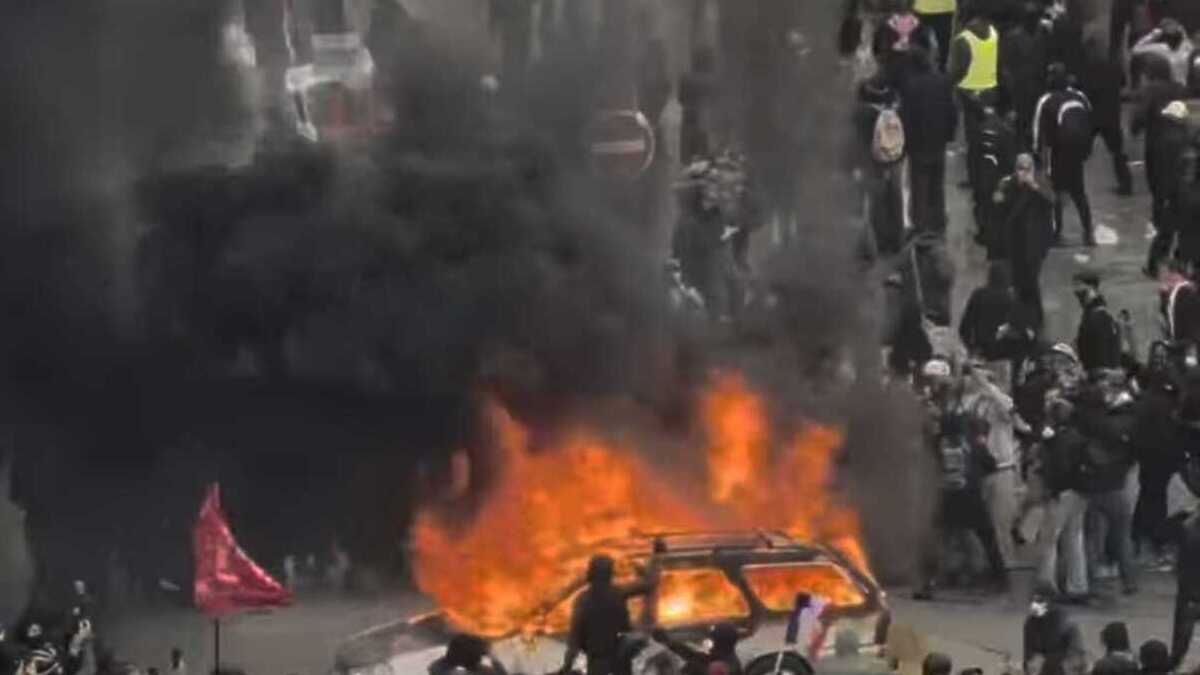
The previous night’s violence had included looting and fires across the country. In Paris, shop windows were smashed and businesses ransacked, leaving owners worried about further damage.
Across the road, a restaurant had been burned out and ransacked. Nearby, tear gas fumes drifted past Le Carillon, a bar targeted in the November 2015 Paris attacks, as hooded youths ran past its windows with riot police in pursuit. Staff hurried to close the premises.
Paris Mayor Emmanuel Grégoire said entire streets in the capital “have been devastated”. He distinguished between the fundamental right to protest and violence, which he described as unacceptable.
Authorities face questions over security preparations
The scale of the police deployment has come under scrutiny following the violence. Initial reports indicated that 10,000 police officers and gendarmes had been deployed nationwide, but the Interior Ministry subsequently corrected the figure, saying 60,000 had been mobilised ahead of the protests, including 5,000 in Paris.
The capital had deployed 14,000 police and gendarmes during a recent high-profile visit by Pope Leo XIV, when as many as 700,000 people gathered in central Paris to attend a Mass.
The protests brought tens of thousands of people onto streets across France to express anger over rising living costs and social inequality. France’s CGT trade union estimated nationwide turnout at 500,000.
The mobilisation sought to revive the momentum of the 2018-2019 Yellow Vest movement, which challenged Macron during his first presidential term. Organisers called on students, workers, retirees, farmers, climate activists and anti-fascists to take part, six months before France is due to elect his successor.
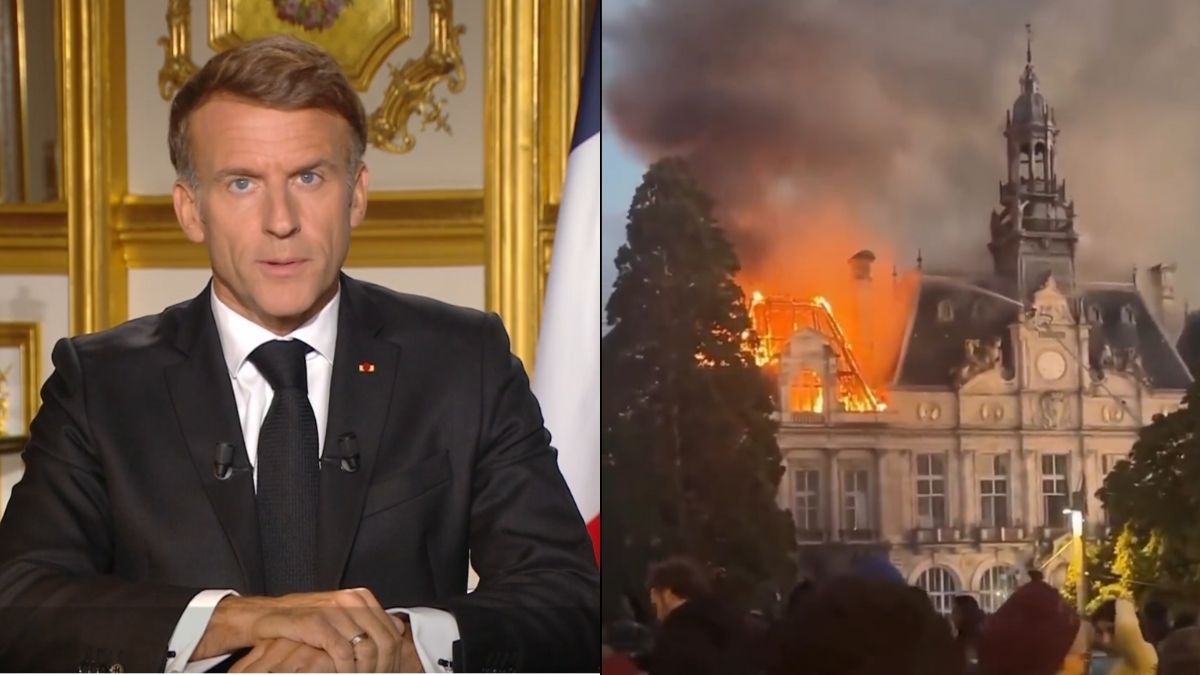
Although much of the mobilisation was peaceful, groups of predominantly masked young men clashed with police, looted shops and set fire to public and private property, including the historic city hall in Limoges.
Prime Minister Sébastien Lecornu condemned what he called “violence of extreme intensity” late on Saturday. At that point, he reported 1,200 arrests and 150 officers injured, before the Interior Ministry released the higher figures on Sunday.
Political rivals trade accusations over the unrest
The violence has intensified pressure on Macron and his government, with opposition politicians calling for Nuñez to be removed from office.
Jean-Luc Mélenchon, leader of the far-left France Unbowed party, attended Saturday’s rally in Paris and criticised media coverage of the unrest, arguing that most demonstrations had been peaceful.
Marine Le Pen of the far-right National Rally accused Mélenchon of “legitimizing violence” and seeking to “plunge the country into chaos”.
Jordan Bardella, Le Pen’s political ally and successor as National Rally leader, described those responsible for the violence as “professionals of chaos”. He also accused the far left of discrediting legitimate social demands.
Benoît Payan, the left-wing mayor of Marseille, criticised protesters who used the demonstrations as an opportunity to destroy property and attack police.
“It is unacceptable to use this type of claim to enter, break and destroy the foundations that unite us as a nation,” he told French broadcaster BFMTV.
Payan also described violent protesters as “useful idiots of the far right”.
Macron’s decision to retain Nuñez leaves the interior minister responsible for addressing the security failures identified by the president, while the government faces continued pressure over the handling of the protests and the damage inflicted on businesses and public property.