Indonesia names fourth suspect in alleged illegal wiretapping of Prabowo
Indonesia has named a fourth police officer as a suspect in an alleged illegal wiretapping operation targeting President Prabowo Subianto and other prominent figures. The investigation has exposed differing government views over possible treason charges.
- Indonesian police have named four officers as suspects in an alleged illegal interception operation targeting prominent figures.
- Government ministers Yusril Ihza Mahendra and Prasetyo Hadi have expressed differing views over potential treason charges.
- Police have not disclosed the alleged motive or identified businesspeople and companies whose communications were reportedly intercepted.

Indonesia’s investigation into alleged illegal telephone interception has widened, with police naming a fourth suspect on 5 November and saying the operation allegedly targeted President Prabowo Subianto, government officials, political figures, journalists, civil society representatives and businesspeople.
The case has also prompted differing public characterisations from senior officials.
Coordinating Minister for Law, Human Rights, Immigration and Corrections Yusril Ihza Mahendra said investigators had found no indication of treason, while State Secretary Minister Prasetyo Hadi said the alleged interception of the president’s communications could potentially fall within the scope of treason offences.
As of 6 November, police had not publicly disclosed the alleged motive or identified the businesspeople and companies whose communications were reportedly targeted.
Police identify four suspects
The National Police’s Criminal Investigation Agency (Bareskrim) initially named three senior officers as suspects on 3 November. They were identified as LSP, ASN and EH.
The suspects were subsequently identified in Indonesian media reports as former National Police chief General Listyo Sigit Prabowo, Inspector General Ahrie Sonta Nasution, who headed the police legal division, and Inspector General Eko Hadi Santoso, a senior instructor at the National Police Education and Training Institute.
Listyo had been appointed head of the Presidential Staff Office in October 2026. President Prabowo dismissed him from that position on 4 November, following the announcement of his suspect status.
On 5 November, police announced that Inspector General Slamet Uliandi, identified initially by the initials SU, had also been named a suspect.
Brigadier General Suhermanto, director of cybercrime investigations at Bareskrim, said Slamet had previously served as head of the agency’s monitoring section from 2010 to 2019 and later held a supervisory role in its Monitoring Centre.
According to Suhermanto, Ahrie and Eko had to obtain Slamet’s approval before carrying out the interception operations. He also said Ahrie had sought Slamet’s permission in early October to delete files containing the results of previous interceptions, and that Slamet had approved the request.
Slamet has not been detained because he is recovering from a stroke, police said.
The three other suspects are being held at the National Police headquarters detention facility in Jakarta.
What investigators say happened
Bareskrim chief Commissioner General Asep Safrudin said the alleged unauthorised interception took place between 2025 and 2026.
Investigators allege that telephone numbers were entered into the police’s Lawful Interception Management System (LIMS) without the required verification and without a formal request from an investigator or an accompanying police report.
Asep said the interceptions were not connected to any lawful criminal investigation or prosecution.
He also alleged that, in October 2026, the suspects ordered the deletion of files containing intercepted communications from the LIMS computer system to remove traces of the activity.
The case came to light after a police officer who became aware of the alleged irregularities filed a report on 30 October.
At an initial press conference, Asep said investigators had questioned 10 witnesses and three expert witnesses. They had also seized 11 mobile phones, an iPad and four flash drives.
Police have not publicly released the contents of the seized devices or provided a detailed account of the intercepted communications. The materials and allegations remain subject to the investigation and judicial process.
Businesspeople among alleged targets, but companies not identified
Police said the alleged targets included the president, state officials, political figures, media representatives, community organisation leaders, non-governmental organisations and businesspeople.
However, authorities have not publicly identified the businesspeople involved or named any companies whose executives or employees may have been targeted.
The allegations therefore do not establish that any particular company was involved in the interception operation. Nor have police announced corporate suspects in the case.
There is also no publicly confirmed list of businesses affected by the alleged surveillance. Further information about the identities of the targets and the scope of the operation will depend on disclosures from investigators.
Government officials differ over possible treason charges
The investigation has triggered a debate within the government over whether the alleged interception could amount to treason.
On 3 November, Yusril Ihza Mahendra said the suspects were being investigated for unlawful interception, unauthorised access and the deletion of electronic information. He said there was, at that stage, no indication of treason.
Yusril explained that treason under Indonesian law involved specific offences, including attempts against the safety of the president, efforts to overthrow the legitimate government and armed rebellion intended to separate territory from Indonesia.
He said the case was being handled as an alleged illegal wiretapping operation and that the police were responsible for explaining the intercepted material and the investigation’s findings.
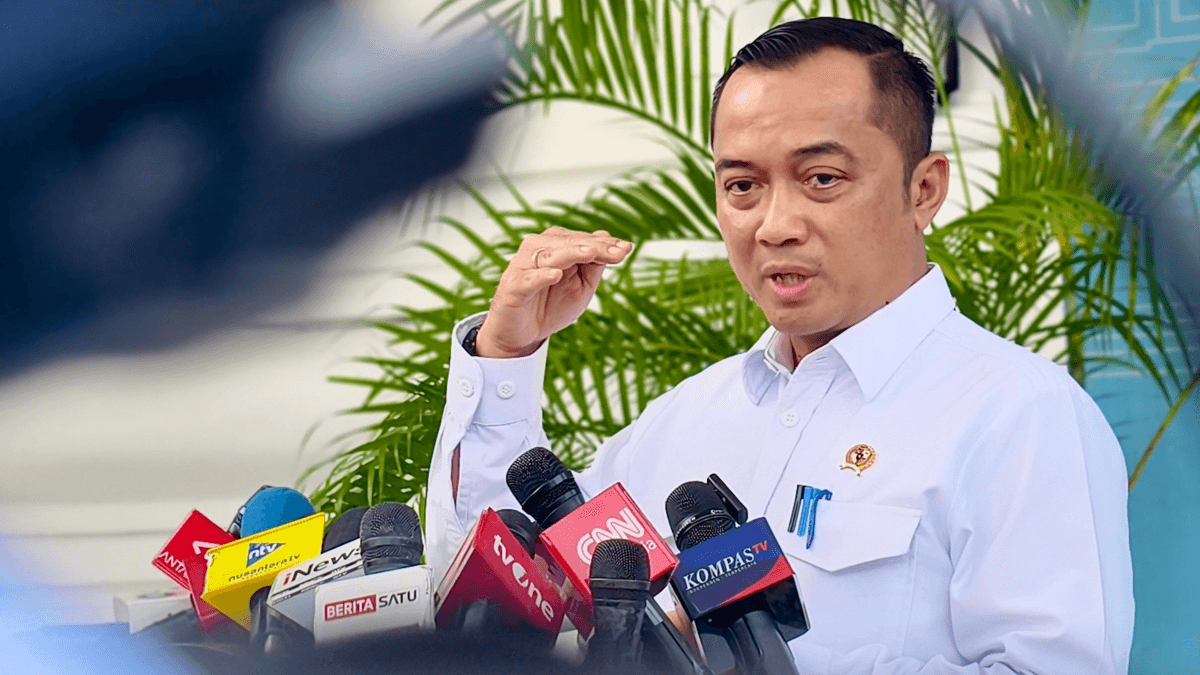
The following day, Prasetyo Hadi gave a different assessment. Speaking at the Presidential Palace in Jakarta on 4 November, the State Secretary Minister said the alleged interception of communications involving the president and other state officials could potentially constitute treason.
He said the alleged activities, including the destruction of electronic evidence and unauthorised access to communications, could threaten state interests and national sovereignty.
Prasetyo also said the government had not established the motive behind the alleged operation because the police investigation was continuing.
He confirmed that Prabowo had instructed National Police Chief General Suyudi Ario Seto to ensure that the investigation was conducted objectively and in accordance with the law.
In a statement published by the Indonesian National Police on 5 November, Prasetyo said the president had called for a thorough investigation without any cover-up.
Legal provisions and possible penalties
The three original suspects face charges under Indonesia’s Criminal Code, Law No. 1 of 2023, and the Electronic Information and Transactions Law.
The provisions cited by police include:
-
Article 258 of the Criminal Code, which concerns unlawful interception, recording, diversion, alteration, obstruction or monitoring of non-public electronic communications. The offence carries a maximum prison sentence of 10 years.
-
Article 332 of the Criminal Code, which concerns unauthorised access to another person’s computer or electronic system. The relevant offence carries a maximum prison sentence of six years.
-
Article 32 of the Electronic Information and Transactions Law, which covers unlawful alteration, destruction, deletion, transfer or concealment of electronic information. The provision carries a maximum prison sentence of eight years.
Police said Slamet was also charged under these provisions, alongside Article 20 of the Criminal Code concerning participation in a criminal offence.
The charges are allegations and do not amount to convictions. The suspects are entitled to due process and a determination of their criminal responsibility by the courts.
Previous surveillance controversy involving Indonesia
The current investigation has renewed attention to an earlier surveillance controversy involving Indonesia.
In 2013, reports based on documents leaked by former US National Security Agency contractor Edward Snowden revealed that Australian intelligence had attempted to monitor the mobile phones of then-President Susilo Bambang Yudhoyono, his wife Kristiani Herrawati and several senior Indonesian officials in 2009.
The disclosure prompted a diplomatic dispute between Jakarta and Canberra.
Indonesia sought an explanation from Australia, while then-President Yudhoyono called for a review of bilateral cooperation.