Israeli lawmakers advance October 7 inquiry bill opposed by Netanyahu
The Knesset gave preliminary approval on 25 November 2026 to an opposition bill for an independent state commission of inquiry into the October 7 attack. Caretaker Prime Minister Benjamin Netanyahu's government has long rejected such a probe.
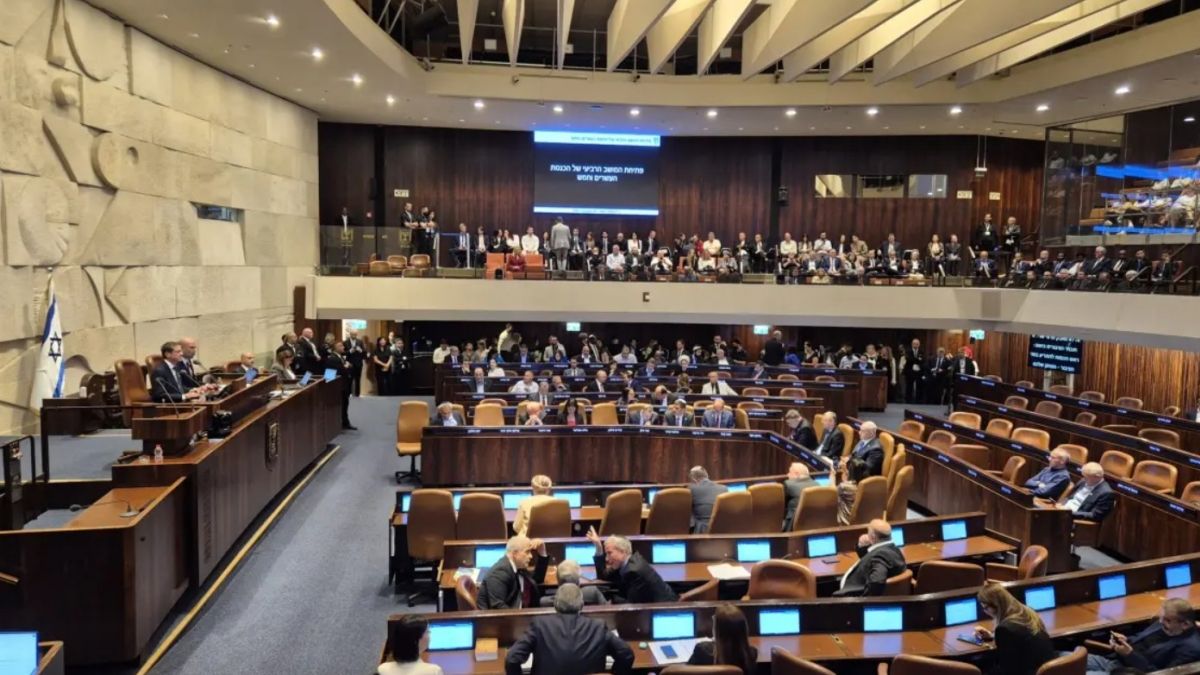
- The Knesset voted 65 to 50 to advance a bill for a state commission of inquiry into October 7.
- The five-member commission would have to publish an interim report within a year and would receive seven million shekels.
- Netanyahu's caretaker government opposes the probe and has pushed for a commission appointed by politicians.

Israeli lawmakers on Wednesday, 25 November 2026, gave initial approval to a bill that would set up a state commission of inquiry into the security failures that led to the Hamas attack of 7 October 2023.
The bill passed its preliminary reading in the Knesset by 65 votes to 50. Caretaker Prime Minister Benjamin Netanyahu, whose government was in office at the time of the attack, opposes it.
The attack killed more than 1,200 people. It was the deadliest day in Israel's history, and many Israelis have since demanded an independent investigation into how it happened.
What the bill proposes
The legislation was submitted by a lawmaker from Yashar, the party led by former military chief and prime ministerial hopeful Gadi Eisenkot.
The bill would create a state commission of inquiry with five members. The commission would have to publish an interim report within one year of the announcement that it had been set up.
The bill sets aside ₪7 million (about US$2 million) to establish the commission.
In a statement, Yashar called the legislation "essential to uncovering the truth" and said it was needed so that Israel could learn lessons for its security.
Eisenkot pledged during the election campaign to set up an independent state commission quickly. His party has made the inquiry one of its main legislative priorities.
The next steps
The bill now goes to a Knesset committee. It must pass three more readings in the plenum before it becomes law.
It was among a set of bills that Yashar filed on Tuesday, 10 November 2026, the day Israel's 26th Knesset opened, according to Ynet News.
Ynet News reported that the opposition to Netanyahu holds a majority in the new Knesset. No new government had been formed at the time of the vote, and coalition negotiations were still under way.
Under current law, the government has the main authority to establish a state commission of inquiry. The Knesset's State Control Committee has a more limited mechanism.
According to Ynet News, the anti-Netanyahu bloc is also considering legislation that would let the Knesset set up a commission without a government decision. That route might require the support of at least 61 lawmakers.
Netanyahu's opposition to a state inquiry
Netanyahu's government has rejected calls for a state commission of inquiry. It has instead proposed a commission whose members would be appointed by politicians, which it describes as bipartisan.
Netanyahu has argued that a state commission's members would be chosen by the President of the Supreme Court, whom he has described as biased against him.
In a Knesset debate in November 2025, Netanyahu said his government wanted an inquiry that "will be balanced and that will earn the broadest possible public trust".
The government's alternative bill
The outgoing coalition's alternative bill was sponsored by Likud lawmaker Ariel Kallner. It passed a preliminary reading on 24 December 2025 by 53 votes to 48.
It passed its first reading on 6 July 2026 with 59 votes in favour and none against. Opposition lawmakers boycotted that vote, as they had boycotted the committee debates on the bill.
Before the July vote, the High Court of Justice had given the government until 1 July to put forward a "suitable framework" to investigate the attack. It did not order a state commission of inquiry.
Critics of the coalition's proposal, including bereaved families organised as the October Council, argued that it would let politicians shape the investigation into their own conduct.
Ynet News reported in July that the coalition's bill was not expected to advance further in the previous Knesset.
Calls from families and the opposition
A state commission of inquiry is considered the most authoritative and independent investigative body under Israeli law. It is usually headed by a retired judge.
Opposition leaders, including Eisenkot, Naftali Bennett and Yair Lapid, have repeatedly promised to set up such a commission if they form the next government.
Families of the victims have kept up pressure through protests and appearances at the Knesset, demanding a state inquiry rather than a panel chosen by politicians.