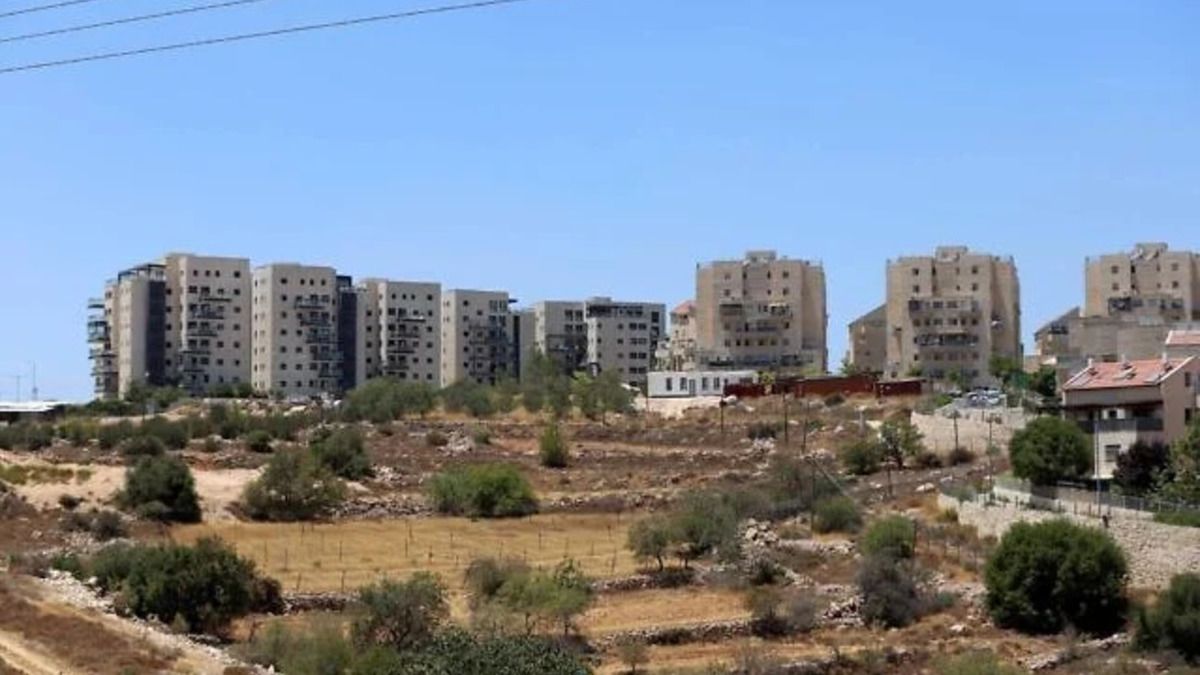
European leaders condemn Israel’s E1 settlement plans, warning they threaten prospects for a two-state solution
France, Germany, Italy, the Netherlands, Norway and the UK have urged Israel to withdraw E1 settlement tenders, warning the project could undermine Palestinian territorial continuity and the two-state solution.

- Six European governments say the E1 project threatens Palestinian territorial continuity and the two-state solution.
- The UN says more than 3,400 settlement units have been approved in plans covering the E1 area.
- The governments urged businesses not to bid for tenders, citing potential legal and reputational consequences.

The leaders of France, Germany, Italy, the Netherlands, Norway and the United Kingdom have condemned Israel’s decision to publish construction tenders for the E1 settlement project in the occupied West Bank, saying the development would undermine the prospect of a two-state solution.
In a joint statement, the six leaders said the international community had repeatedly opposed settlement expansion and warned that the E1 project would “drive a wedge through the West Bank” and damage the territorial contiguity of the Palestinian territories.
They called on the Israeli government to withdraw the plans immediately and urged businesses not to bid for the construction tenders, warning of potential legal and reputational consequences.
The statement was issued as Israel moved forward with construction tenders for the E1 area, a strategically located tract of land between East Jerusalem and the Israeli settlement of Ma’ale Adumim.
Leaders warn E1 project threatens two-state solution
The six governments said the E1 development would make it more difficult to establish a contiguous Palestinian state alongside Israel.
“The Israeli Government’s decision to publish construction tenders for the E1 settlement project is unacceptable,” they said, adding that the international community had expressed concerns about the project both privately and publicly.
The leaders said the planned settlement would affect the territorial continuity of the Palestinian territories and undermine the prospect of a two-state solution.
They also reaffirmed their commitment to a negotiated settlement under which Israel and Palestine would exist as two states living alongside each other in peace and security.
The statement follows a broader international campaign against the E1 development. In May, a larger group of Western governments, including the six countries that issued the latest statement, warned that construction in E1 would divide the West Bank and called on companies not to participate in settlement construction.
What is the E1 settlement project?
E1, meaning “East 1”, refers to an area of land east of Jerusalem between the city and Ma’ale Adumim, one of the largest Israeli settlements in the occupied West Bank.
The development has been planned for years and is intended to create a built-up area connecting Ma’ale Adumim with East Jerusalem.
United Nations records have described previous versions of the plan as including about 3,500 housing units, alongside commercial and tourism facilities. Earlier UN assessments said implementation could affect Palestinian Bedouin communities living in the area.
More recently, Israeli authorities approved more than 3,400 housing units in the E1 area. A UN humanitarian update in August 2025 said the plan would create a continuous built-up area between Ma’ale Adumim and Jerusalem.
The UN Secretary-General's latest reporting on Security Council Resolution 2334 said that more than 3,400 housing units had been approved in two plans within the area designated for E1, while Israeli authorities also published tenders for housing units in Ma’ale Adumim and other settlements.
Why E1 is strategically important
The E1 area lies between East Jerusalem and Ma’ale Adumim, close to the centre of the West Bank.
The United Nations has repeatedly warned that construction there could affect the geographic connection between the northern and southern parts of the West Bank.
A September 2025 UN briefing described advancement of the E1 plan as a development that, if implemented, would “effectively sever the connection” between the northern and southern West Bank, further undermining the territorial contiguity of a future Palestinian state.
The UN Commission of Inquiry has likewise described the E1 construction plans as intended to reinforce settlements around Ma’ale Adumim and split the West Bank into two geographical entities.
The concern is linked to the location of E1 between East Jerusalem and the rest of the West Bank. Construction of a large settlement bloc in the area would place Israeli-controlled built-up areas and associated infrastructure across a significant part of the territory separating the two areas.
Palestinian communities face displacement concerns
The E1 plan also affects Palestinian Bedouin and herding communities living in the area.
Among them is Khan Al Ahmar, a Bedouin community located east of Jerusalem. The United Nations Office of the High Commissioner for Human Rights said in May 2026 that the community was home to hundreds of Palestinians and was among communities directly affected by the E1 plans.
The UN said Israeli authorities had approved plans for 3,401 settlement units in E1 and that the planned construction would affect 18 Palestinian communities, including Khan Al Ahmar.
According to the UN Office for the Coordination of Humanitarian Affairs, those communities comprise about 4,000 people. Humanitarian agencies have warned that the E1 plan could further fragment the West Bank, separate East Jerusalem from the rest of the occupied Palestinian territory and increase the risk of forced displacement of Bedouin communities.
Khan Al Ahmar has faced demolition orders for years. UN human rights officials said Israeli authorities had repeatedly denied the community building permits and subsequently issued demolition orders because of the absence of those permits.
In May 2026, Israeli Finance Minister Bezalel Smotrich directed the Israeli Civil Administration to evict the community “as soon as possible”, according to the UN human rights office. The UN said the order placed residents at risk of forcible transfer.
UN Security Council has opposed settlement activity
The six European governments said international law was clear that Israeli settlements in the West Bank are illegal and referred to the position of the international community as reaffirmed by the UN Security Council.
The central UN measure is Security Council Resolution 2334, adopted in December 2016. The resolution called on Israel to immediately and completely cease settlement activity in the occupied Palestinian territory, including East Jerusalem.
It also stated that Israeli settlements in territory occupied since 1967 had no legal validity and constituted a “flagrant violation” under international law, while describing settlement activity as one of the major obstacles to achieving a two-state solution.
The UN Secretary-General's June 2026 report said settlement activity had continued despite the resolution and recorded the advancement or approval of more than 6,000 housing units in the occupied West Bank during the reporting period.
International Court of Justice ruling cited by UN
The international legal debate over settlements has also been shaped by the International Court of Justice's advisory opinion of July 2024 concerning Israel's presence in the Occupied Palestinian Territory.
In its subsequent reporting on Resolution 2334, the UN said the court had concluded that Israel was under an obligation to cease immediately all new settlement activities, evacuate settlers and bring its unlawful presence in the Occupied Palestinian Territory to an end as rapidly as possible.
The six European leaders similarly stated that Israeli settlements in the West Bank were illegal under international law.
Leaders warn businesses against bidding
The joint statement also directly addressed companies that could participate in the E1 construction programme.
The leaders urged businesses not to bid for construction tenders and said companies should consider the potential legal and reputational consequences of participating in settlement construction.
They warned that involvement could expose businesses to the risk of becoming involved in what they described as serious breaches of international law.
The warning echoes the position expressed by a broader group of governments in May. That statement specifically urged businesses not to bid for E1 or other settlement construction tenders and warned of legal and reputational consequences.
The UK government subsequently said in June that it had strengthened its business-risk guidance, advising British citizens and businesses against economic and financial activities in Israeli settlements.
E1 plans have advanced despite years of opposition
The E1 project has been under international scrutiny for more than a decade.
UN reports have repeatedly identified the area as particularly significant because of its location between Jerusalem and Ma’ale Adumim and the potential consequences for Palestinian territorial continuity.
In 2009, a UN report described an Israeli plan for about 3,500 housing units in the area, together with commercial and tourism facilities, and said the project could affect thousands of Jahalin Bedouins.
The plans advanced significantly in 2025. In August that year, Israeli authorities approved more than 3,400 housing units in the E1 area. The UN said the development would create a continuous built-up area between Ma’ale Adumim and Jerusalem.
UN reporting in 2026 said more than 3,400 units had been approved in plans within the E1 area and that settlement activity continued despite international objections.
European governments call for plans to be withdrawn
In their latest statement, the leaders of France, Germany, Italy, the Netherlands, Norway and the UK urged Israel to retract the E1 plans immediately and end settlement expansion in the West Bank.
They said the project would move the parties further away from peace and undermine Israel's international standing.
They also linked their concerns to what they described as unprecedented levels of settler violence against civilians in the West Bank and restrictions affecting the Palestinian economy.
The leaders concluded by reaffirming their commitment to a “comprehensive, just and lasting peace” based on a two-state solution and said they would continue to act in support of that objective.