Prabowo given 14 days to nominate Gibran’s vice-presidential successor
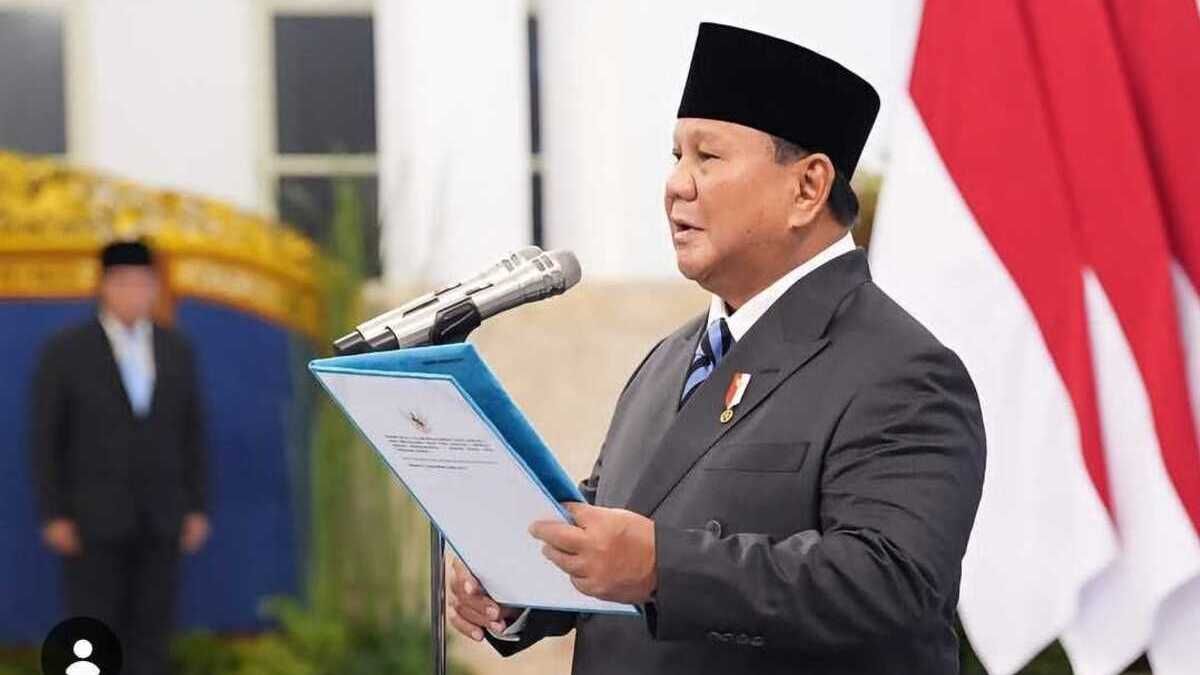
Indonesian President Prabowo Subianto will have 14 days to nominate two candidates to replace Gibran Rakabuming Raka, but the deadline will begin only after the MPR formally requests nominations.
- Prabowo’s 14-day nomination period begins only after the MPR formally requests two replacement candidates.
- The MPR must elect a new vice-president within 60 days under Article 8(2) of the Constitution.
- Gibran may qualify for a pension and other benefits if his departure is classified as honourable.

Indonesian President Prabowo Subianto has been given 14 days to nominate two candidates to replace Gibran Rakabuming Raka as vice-president, although the countdown will begin only after the People’s Consultative Assembly (MPR) formally sends him a request for nominations.
MPR Speaker Ahmad Muzani said on 12 November that the assembly would first discuss Gibran’s resignation before sending the letter to Prabowo. The 14-day period therefore does not start from the date Gibran submitted his resignation.
Gibran personally delivered his resignation letter to the MPR leadership on 12 November.
The assembly will hold an internal leadership meeting, followed by a joint meeting involving leaders of political party factions and representatives of the Regional Representative Council (DPD), before deciding on the next steps.
Under Article 8(2) of Indonesia’s 1945 Constitution, the president must nominate two candidates for vice-president. The MPR then elects one of them within 60 days of the vacancy.
Muzani said the assembly had up to 60 days to complete the process.
No replacement candidates had been publicly announced as of 12 November.
Gibran’s resignation and the political dispute
Gibran’s resignation followed months of controversy over his eligibility and educational credentials, as well as calls from several political party factions in the House of Representatives (DPR) for his impeachment.
The DPR had been scheduled to discuss an impeachment motion on 12 November, but the planned plenary discussion was cancelled after Gibran submitted his resignation.
State Secretary Minister Prasetyo Hadi said on 10 November that Gibran had informed Prabowo of his intention to resign during a meeting lasting about two and a half hours. Prabowo did not reject the request and advised Gibran to pursue legal clarification concerning questions about his educational qualifications.
Prabowo subsequently accepted the resignation with regret, according to Reuters.
In a public statement, Prabowo thanked Gibran for his work during their administration. He said the vice-president had visited 35 provinces and 149 regencies and cities, and inspected or reviewed 303 government projects.
Pension and state-funded facilities after resignation
Gibran’s departure from office would not necessarily mean the end of state-funded benefits. Under Law No. 7 of 1978 on the financial and administrative rights of the president and vice-president and former holders of those offices, a president or vice-president who leaves office honourably is entitled to a pension equivalent to 100 per cent of their last basic salary.
The law also provides former presidents and vice-presidents with additional pension-related allowances, household expenses for water, electricity and telephone services, and healthcare costs for themselves and their families.
They are also entitled to a suitable residence with its furnishings, a state-owned vehicle and a driver. Former presidents and vice-presidents may also have staff drawn from the civil service.
The benefits are payable from the month after the individual’s honourable departure from office, under Article 9 of the law.
Based on the vice-president’s basic salary, which is set at four times the highest basic salary for state officials other than the president and vice-president, Gibran’s basic pension has been reported at approximately Rp20.16 million (about US$1,250) a month.
The entitlement is conditional on his departure being formally classified as an honourable termination. Government Regulation No. 5 of 1978 defines leaving at one’s own request as one of the circumstances that qualify as leaving office honourably.
The law does not set out a minimum period of service before the pension entitlement applies. Gibran took office on 20 October 2024, meaning he would have served for just over two years if his resignation is formally approved in November 2026.
The provisions have drawn attention because the benefits would continue after Gibran leaves the vice-presidency, despite his relatively short time in office.
Criticism on social media has focused on the prospect of a former vice-president continuing to receive a pension and state-funded facilities after resigning.
What happens next
The MPR must first process Gibran’s resignation before the presidential nomination period begins. Once it sends the formal request, Prabowo will have 14 days to submit two names.
The MPR will then have up to 60 days under the Constitution to elect a replacement. The process will determine who serves as vice-president for the remainder of the current presidential term.
The immediate next step is therefore the MPR’s formal communication to Prabowo. Until that letter is issued, the 14-day nomination deadline has not begun.