Indonesia wants palm oil and mineral exports to bypass neighbours, saying middlemen are eroding its revenue
Indonesian ministers say palm oil, nickel and tin should be shipped directly to final buyers, not through neighbouring countries that resell them at higher prices. The push comes amid friction with Singapore over gas supplies, electricity exports and haze.
- Indonesian ministers want palm oil, nickel and tin exported directly to buyers, bypassing neighbouring intermediary countries.
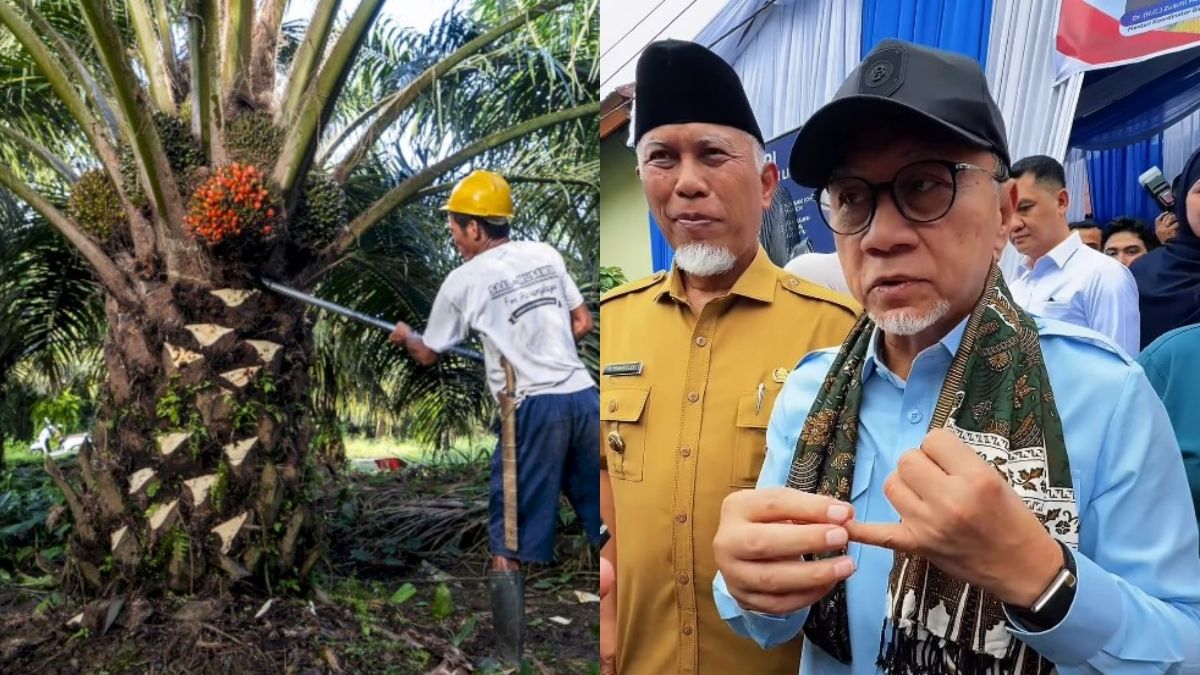
- Zulkifli Hasan says Indonesia sells palm oil to a neighbour at 15,000 rupiah, below its 27,000-rupiah market price.
- Bahlil Lahadalia says electricity exports to Singapore depend on price, despite leaders’ earlier cross-border power agreements.

BATAM, INDONESIA : Indonesia wants its palm oil, minerals and other natural resources shipped directly to final buyers, senior ministers have said.
They no longer want these goods sold through neighbouring countries that later resell them at higher prices.
Coordinating Food Minister Zulkifli Hasan said routing exports through third countries costs Indonesia billions of rupiah in potential revenue. He said it also weakens the country’s control over trade in commodities it dominates globally.
“Indonesia is the world’s largest CPO, nickel and tin producer, yet our exports go through neighbouring countries. That sometimes frustrates me,” Zulkifli said in Batam on 4 November 2026, as quoted by the state news agency Antara.
CPO, or crude palm oil, is the unrefined oil used in food, cosmetics and biofuels.
Batam is an Indonesian island a short ferry ride south of Singapore.
The remarks come amid renewed friction between Jakarta and Singapore over natural gas supplies, electricity exports and transboundary haze. Neither minister named the country they were referring to.
Minister points to a 12,000-rupiah gap between selling and market prices
Zulkifli pointed to a significant gap between two prices.
One is what Indonesia receives for CPO sold to neighbouring countries. The other is the price at which the commodity is eventually traded in its destination market.
“CPO is priced at 27,000 rupiah (approx. S$1.91), but we sell it to our neighbour for 15,000 rupiah. That means we lose 12,000 rupiah (S$0.85),” he said.
“This has gone on for years. We no longer want to turn a blind eye,” he continued. “We want direct exports.”
Zulkifli presented the issue as Indonesia losing control over its natural-resource supply chains. He said intermediary countries were taking potential gains even though Indonesia is a leading producer.
“Whenever something goes wrong, Indonesia is the one that loses,” he said. He listed forest fires, fuel shortages in Bali and pressure on financial markets as other cases where he felt Indonesia bore the costs.
Energy minister says transit countries can claim Indonesian goods as theirs
The push follows an earlier call by Energy and Mineral Resources Minister Bahlil Lahadalia to end exports of natural resources through intermediary countries.
Bahlil warned that transit countries could claim the commodities as their own exports.
He said they would then benefit from the trade through tax revenue and export reporting.
“It is no longer permissible for our natural resources from the energy and mineral sector to be shipped this way,” Bahlil said on 3 November 2026.
“If we are sending goods to China, they should go directly from Jakarta to China, not stop over in that ‘particular’ country.”
The government has previously argued that cutting out intermediaries would let South-east Asia’s largest economy capture more value from its natural resources. It also said the change would strengthen the country’s bargaining power in international markets.
The National Energy Council (DEN) has backed the push. Council member Satya Widya Yudha said direct exports could reduce margin losses to intermediaries, improve transaction transparency and strengthen Indonesia’s hand with final buyers.
However, the council has not yet put a figure on the potential gain in state revenue. It said further calculations are needed to assess the policy’s economic benefits.
Jakarta says electricity sales to Singapore depend on price and domestic supply
Bahlil has also set conditions on a separate plan to export electricity to Singapore. On 2 November 2026, he said such exports were possible, but only if the price met Jakarta’s terms.
“As long as the price is right, as long as it follows our pricing, it is possible. But if the price is not right, we will prioritise our domestic needs,” he said, according to the Indonesian news outlet Kompas.
“We must first meet our own requirements,” he added.
At another event on the same day, Bahlil said export decisions must put national interest and sovereignty first.
“I have announced that Indonesia cannot export electricity in the near future. We still need electricity. There is not enough,” he said.
He said the authority to issue export permits lay with his ministry, not with the Daya Anagata Nusantara Investment Management Agency (Danantara), Indonesia’s sovereign wealth fund. He added that the agency should not entertain lobbying over the country’s natural resources.
“The sovereignty of the state comes first, the dignity of the nation comes first. The honour of the nation represents the 280 million souls in this country,” he said.
Bahlil has repeatedly linked exports to pricing. On 11 May 2026, he said Indonesia remained open to supplying electricity to Singapore, provided the terms benefited both sides.
“We will also export to Singapore, but the price must be fair. As long as we have not reached a win-win arrangement, I think it is important to conduct a more thorough assessment,” he said.
Leaders reaffirmed cross-border power deal months before latest remarks
His remarks contrast with commitments made at the highest levels of both governments over the past 18 months.
In June 2025, Bahlil and Dr Tan See Leng, then Singapore’s Minister-in-charge of Energy and Science and Technology, signed three memorandums of understanding in Jakarta.
The agreements covered cross-border electricity trade, carbon capture and storage, and a sustainable industrial zone in Indonesia’s Riau Islands. Riau Islands is the Indonesian province closest to Singapore.
At the Singapore-Indonesia Leaders’ Retreat in July 2026, Prime Minister Lawrence Wong and President Prabowo Subianto reaffirmed their commitment to speeding up cross-border electricity trade.
The two leaders watched the exchange of agreements on electricity offtake and transmission infrastructure. They also witnessed the exchange of a roadmap to advance the trade.
At a meeting with Wong at the State Palace in Jakarta on 6 July 2026, Prabowo said Indonesia had chosen Danantara to lead the initiative.
“Indonesia has appointed BPI Danantara for the implementation of cross-border electricity trade cooperation,” he said.
Prabowo also described economic cooperation as a key pillar of relations between the two countries. He said this cooperation covered trade and connectivity across nearly all sectors.
Singapore’s Energy Market Authority (EMA) has granted conditional licences for 2 gigawatts (GW) of electricity imports from Indonesia. It has also given conditional approvals for a further 1.4GW, bringing total planned capacity to 3.4GW.
The trade is meant to help Singapore reduce its reliance on fossil fuels. It is also expected to attract investment in renewable energy generation and supporting infrastructure in Indonesia.
Singapore says domestic needs and cross-border energy trade are not a binary
Singapore has rejected the idea that energy security requires a choice between the two.
During a visit to Jakarta on 28 October 2026, Singapore’s Minister for Foreign Affairs Dr Vivian Balakrishnan said governments had a responsibility to secure essential supplies, including energy, for their people.
He argued, however, that meeting domestic needs and pursuing cross-border cooperation could go together. He said cross-border energy contracts could attract investment, expand infrastructure and lower costs through economies of scale.
“Working together and looking after your own needs. It’s not either or. It’s not a binary,” he told reporters.
On 30 October 2026, Singapore’s Ministry of Energy, Trade and Industry spoke about liquefied natural gas (LNG) traded by Singapore-based companies. It said this gas usually moves directly from its source to the destination country, without physically passing through Singapore.
The ministry said more than 50 Singapore-based companies buy, market and trade LNG sourced globally, including from Indonesia. It added that piped natural gas imported from Indonesia is used domestically and is not exported.
Gas supply cut and haze add to strain in an important trading relationship
Indonesia cut piped natural gas exports to Singapore from 24 October 2026 to prioritise domestic demand.
According to the EMA, importers reported a reduction of 17 billion British thermal units (BTU) per day over 18 days. The EMA said this was equal to less than 2 per cent of Singapore’s daily gas demand.
The latest exchanges also come amid tensions over transboundary haze. Haze is the smoke from land and forest fires that periodically blankets parts of the region.
The stakes are high for both sides. Singapore is Indonesia’s largest foreign investor and a major trading partner. It imports Indonesian natural gas, metals and jewellery, petroleum products, electronic components and processed foods.
Indonesia, in turn, relies on the city-state for fuel, industrial machinery and specialty chemicals.