Herzog taps Eisenkot to form Israel’s next government as Netanyahu pushes unity bid
Israeli President Isaac Herzog has given Yashar leader Gadi Eisenkot the first chance to form a government after the 27 October election. Eisenkot had 67 recommendations to Benjamin Netanyahu’s 46, but divisions over Arab and ultra-Orthodox partners cloud his path.
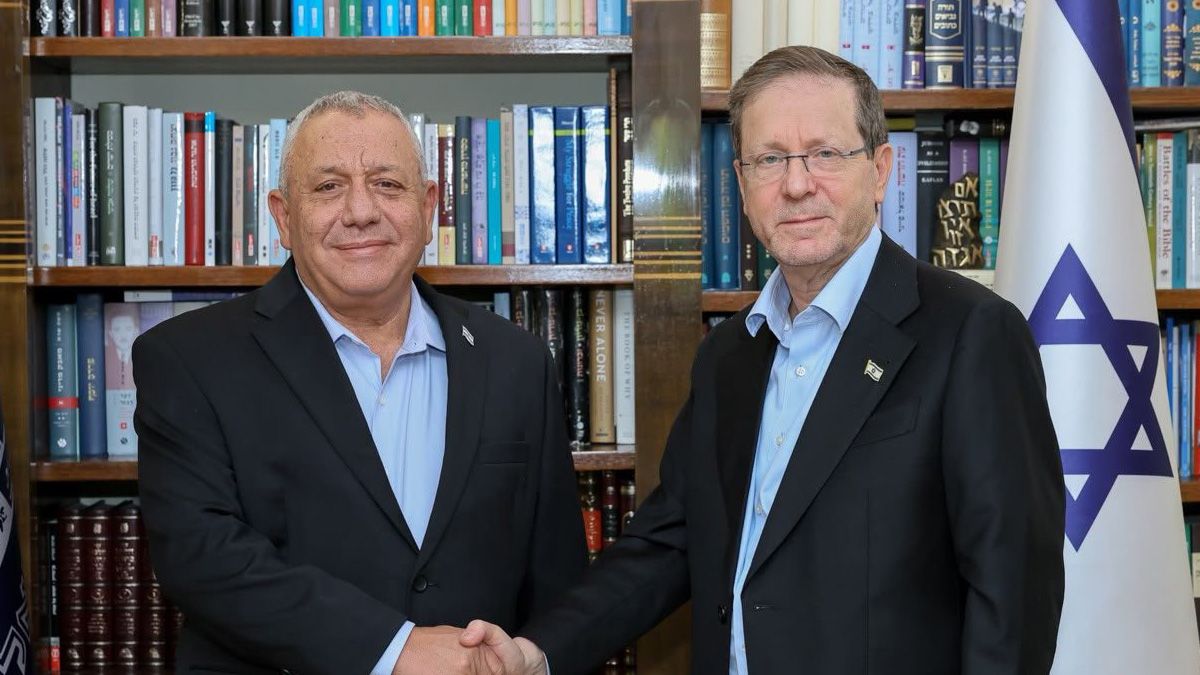
- Herzog has given Eisenkot the mandate after he won 67 recommendations to Netanyahu’s 46.
- Hawks in Eisenkot’s bloc oppose relying on Arab-led parties, so ultra-Orthodox partners are being courted.
- Netanyahu wants a “unity government” that keeps all his allies; Yashar says he must leave public life.

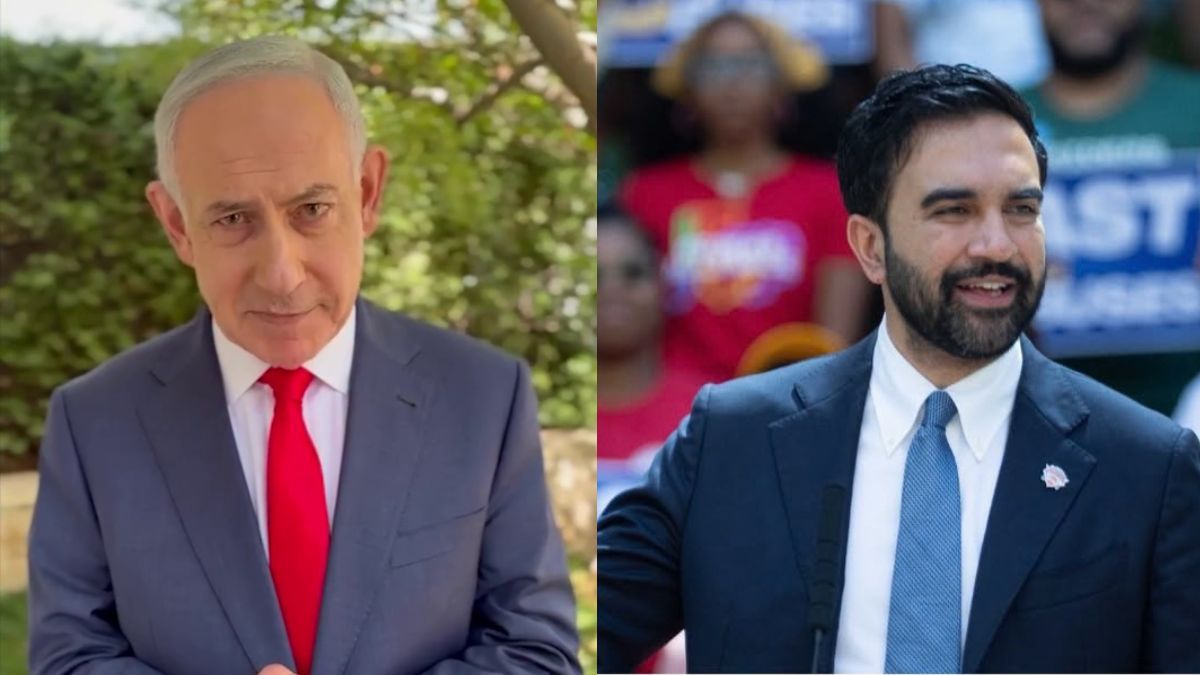
Israeli President Isaac Herzog announced on Saturday, 7 November 2026, that he would task Gadi Eisenkot, chairman of the Yashar party, with forming the country’s next government.
Netanyahu’s rivals see the decision as a first step towards removing Benjamin Netanyahu, Israel’s longest-serving prime minister, from office.
Eisenkot, a former military chief of staff and political newcomer, will formally receive the mandate at a ceremony at the President’s Residence in Jerusalem at 5pm on Sunday, 8 November 2026.
Neither bloc won a majority in the 27 October election. It was Israel’s first election since the Hamas-led attack of 7 October 2023, held in a country deeply polarised by Netanyahu’s hard-right rule and worn down by three years of war.
Recommendations and consultations
Herzog said he had told Eisenkot and Netanyahu of his decision earlier on Saturday evening. He had held consultations with all Knesset parties on Wednesday and Thursday, followed by weekend talks with figures across the political spectrum, including the two rivals.
During the consultations, parties representing 67 lawmakers recommended Eisenkot for the premiership. That is a majority in the 120-seat parliament. Netanyahu received 46 recommendations. The seven-seat United Torah Judaism (UTJ) party made no recommendation.
AFP reported that Eisenkot’s recommendations included members of Israel’s Arab minority. Arab parties won far more seats than before, helped by anger against Netanyahu.
Responding on X, Eisenkot said that “now is the time for the formation of a national emergency government,” adding: “I will do everything to make us worthy.”
Timeline for coalition talks
After his appointment, Eisenkot will have 28 days to put together the 61 votes needed to form a government. If he falls short, Herzog may grant an extension of up to 14 days.
If Eisenkot fails, the mandate may pass to someone else, and The Times of Israel reported that Netanyahu could be next. If neither side succeeds, Israel will go to fresh elections. The country held five elections between 2019 and 2022 because of repeated deadlocks.
A fraught path to a coalition
Eisenkot’s path to a governing coalition is far from straightforward. Hawkish members of his own bloc publicly oppose any reliance on the Arab-led Ra’am and Joint List parties.
At the same time, many bloc members campaigned on sending both Netanyahu and the ultra-Orthodox parties into opposition.
Opposition bloc member Avigdor Liberman, leader of Yisrael Beytenu, has said he will not sit in an Eisenkot government that relies on Arab votes. Liberman is a former Netanyahu aide turned fierce critic who nonetheless shares his hawkish views on the Palestinians.
Liberman’s U-turn on the ultra-Orthodox
On Friday, 6 November 2026, Liberman reversed years of opposition to sitting with the ultra-Orthodox parties. He said he was prepared to accept what he called “painful compromises” on Haredi military enlistment to avoid another election.
According to AFP, Liberman said he was open to discussing a law that would enshrine the exemption of ultra-Orthodox Jews from mandatory military service. He is a staunch secularist whose support base was initially Russian-speaking immigrants.
The Times of Israel reported that the head of UTJ had voiced openness to discussing such a partnership.
Liberman and another opposition leader, Naftali Bennett, had made closing the exemption a core campaign promise. Both had harshly criticised ultra-Orthodox Jews as burdens on the state.
That stance reflected wide resentment among other Israelis at a time when reservists are serving multiple tours in Gaza and Lebanon.
Reports of a secret backchannel
Channel 13 reported on Saturday that Liberman and the Haredi parties had kept a secret backchannel for months. According to the broadcaster, it began long before the election, even as the two sides campaigned aggressively against each other.
The network said, without citing sources, that Jerusalem Mayor Moshe Lion and Haredi political adviser Avi Abuhatzeira ran the backchannel for Liberman. It said the channel was kept secret even from most Yisrael Beytenu members.
Channel 13 quoted an unnamed ultra-Orthodox official as saying Liberman had “paid upfront” by publicly abandoning a position on which he had built his political identity.
The broadcaster also reported that Netanyahu is putting heavy pressure on UTJ not to join a government with Liberman.
Liberman was once a close ally of the ultra-Orthodox parties. That changed in 2019, when he fell out with Netanyahu. He has refused to join Netanyahu’s governments since and became a vocal opponent of draft exemptions for most ultra-Orthodox men.
Shas signals and denials
A source from the Council of Torah Sages, the rabbinic authority that makes decisions for the Haredi Shas party, spoke to Channel 12 news. The source said that if UTJ’s spiritual leader approved joining an Eisenkot-led government, Shas would not oppose it or vote against it.
“There is no scenario in which Shas rabbis will act against United Torah Judaism rabbis,” the source was quoted as saying, warning that this would cause a huge split in the Haredi community.
Channel 13 quoted an unnamed UTJ official making a similar point. The official said that if the rabbis approved the deal being worked out, Shas would have no choice but to fall into line.
According to The Times of Israel, the 48-strong change bloc together with UTJ’s seven lawmakers and the non-opposition of Shas’s six could produce a razor-thin majority of 61. That would block opposition attempts to topple such a government.
Shas called the reports “total fake news,” although the reports had said only that the party might not oppose such a government, not that it would join it. The party added that it remained part of the right-wing bloc.
Draft service remains a sticking point
Forming a change bloc government with the ultra-Orthodox would require considerable persuasion and compromise. Besides Liberman, the other three bloc parties all campaigned on ending sweeping military exemptions and cutting state benefits to families of draft evaders.
Those parties are Eisenkot’s Yashar, Bennett’s B’Yachad and Yair Golan’s Democrats. B’Yachad has stayed silent since Liberman’s announcement. The other two have signalled less flexibility on the enlistment law.
In a statement on Friday, Eisenkot repeated his condition that any coalition partner must back mandatory military, national or civilian service. AFP noted that allowing a civilian option opens the door to bringing in the ultra-Orthodox.
Democrats chairman Golan said on Saturday evening that he was open to a government with the Haredim, but set out several demands.
“Unlike Netanyahu, we won’t go to Bnei Brak or Mea Shearim,” Golan said, naming two heavily Haredi areas. He said anyone seeking a partnership should meet his party in Ramat Gan, a largely secular Tel Aviv suburb.
Golan called for young Haredim to be conscripted and brought into the workforce. He said that “the middle class alone can no longer continue to carry the economic and security burden.”
He also demanded respect for secular life, including the ability to go out and use public transport on Shabbat. He said he opposed giving the ultra-Orthodox “a blank check.”
Netanyahu calls for national unity
In a video statement on Saturday evening, Netanyahu urged the change bloc parties to form what he called a “national unity government.”
He made clear that it would have to include all his partners from the last coalition: the ultranationalist Religious Zionism and Otzma Yehudit parties and the ultra-Orthodox parties. The Times of Israel described this as a likely non-starter.
He did not say who should lead such a government.
“I call for the establishment of a government of national unity which will include all the parties of the national camp, and all the Zionist parties which want to protect our country,” Netanyahu said.
Netanyahu and his allies use the term “national camp” for the pro-Netanyahu bloc of far-right and ultra-Orthodox parties.
He also claimed that such a government would “permanently remove the nuclear threat from Iran.”
Shifting language since the election
The Times of Israel reported that the call marked another shift in Netanyahu’s language. Hours after polls closed on 27 October, he pledged a “strong, national, right-wing coalition.” On 2 November, he called for a “broad national government” under his leadership.
In the video, Netanyahu claimed he had called for a unity government before the election. In pre-election interviews with Channel 14, however, he said he had meant a “broad right-wing government.” In one appearance, he said there would be “no unity government.”
According to the Kan public broadcaster, an unnamed Netanyahu associate estimated that he would agree to discuss a power-sharing rotation if unity talks took place. Kan also reported that a Netanyahu envoy to Eisenkot was “rejected out of hand.” Yashar said it was unaware of any such approach.
Warnings over Arab parties
Netanyahu again warned against a government formed with the Arab parties, whom he called “terror supporters” and Islamists. He claimed such a coalition would “dismantle the State of Israel from within.”
He also alleged that “a government dependent on Hamas supporters won’t fight Hamas.” He warned that recent riots in Europe, which he blamed on Islamists, would be repeated in Israel if such a government were formed.
AFP noted that Israel’s Arab citizens are descendants of Palestinians who remained after Israel was created in 1948.
Yashar’s response and four principles
Yashar called the video “hysterical.” It accused Netanyahu of hypocrisy and of dividing Israeli society and undermining earlier unity governments he had formed.
The party said that if Likud and its allies wanted unity, they should publicly dissolve their alliance with “the extremists,” accept Eisenkot’s four principles and enter a government under Eisenkot as prime minister.
The invitation did not include Netanyahu. Eisenkot has said repeatedly that Netanyahu, along with anyone who held a major position of power on 7 October 2023, must leave public life.
Yashar said the government Eisenkot forms will include only lawmakers who accept his four principles. These are recognising Hamas as a terrorist organisation and committing to destroy its military and governing power, and recognising Israel as a Jewish and democratic state.
The other two are accepting the values of the Declaration of Independence and mandatory service for all.
In a message on Friday before the Sabbath, Eisenkot said Netanyahu must be replaced urgently, calling him a threat to the “very existence of Israeli democracy.” He called for a government to be formed quickly, which could initially rely on outside support before more parties join.
Herzog and the wider context
Herzog originally came from Israel’s now-defunct Labour Party. He holds a non-partisan role and has built a working relationship with Netanyahu. He has signalled interest in a national unity government that brings together Jewish Israelis from across the political spectrum.
AFP reported that pressure for a unity government could grow if Netanyahu carries out threats to resume war with Iran. US President Donald Trump has not approved such a move, and Trump’s party took a heavy defeat in the US midterm elections on Tuesday, 3 November 2026.
Netanyahu has led Israel on and off for nearly two decades. He faces corruption charges and could go to prison if he leaves office.
He also faces an arrest warrant from the International Criminal Court (ICC) over the Gaza war. He rejects the court’s authority.