Nepal flash floods kill at least 165 as more than 1,000 people remain missing
At least 165 people have died after a powerful landslide-triggered flash flood swept through Nepal’s Rasuwa district and neighbouring Tibet, while more than 1,000 people remain unaccounted for in the two areas, including hundreds of foreign nationals.
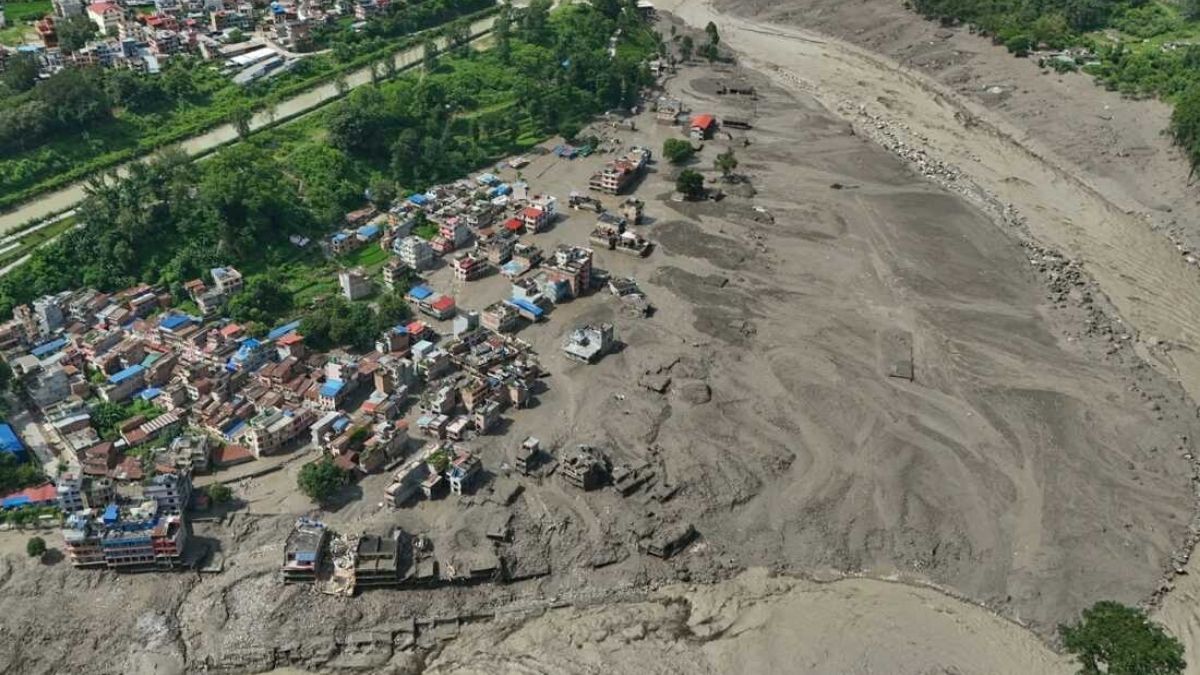
- At least 165 people have been killed in Nepal and Tibet after a landslide triggered catastrophic flooding.
- More than 1,000 people are reported missing or out of contact, although figures may overlap.
- Floodwaters destroyed hydropower projects, roads, bridges, vehicles and buildings across several Nepalese districts.

At least 165 people have been killed and hundreds remain missing after a massive landslide-triggered flash flood swept through Nepal’s Himalayan border region with Tibet on Wednesday, destroying homes, roads, vehicles and border crossings as rescuers searched for survivors and bodies.
Nepal’s disaster agency said 823 people remained out of contact on Thursday, including at least 579 tourists, while Chinese state media reported a further 558 people missing in Tibet’s Gyirong county.
Nepal police have recovered 157 bodies, while three people were killed on the Tibet side of the border, according to Chinese state media. Authorities have warned that the death toll could rise as search and rescue operations continue.
A huge mass of rock, ice and mud collapsed into the Lhende River, triggering a torrent that crossed from Tibet into Nepal and surged through the Bhote Koshi River at about 9 a.m. local time.
The Lhende Khola is a tributary of the Bhote Koshi that flows from China into Nepal. An initial analysis of Planet Labs satellite imagery indicated that the landslide occurred about 20 km (12 miles) northeast of the Rasuwagadhi border crossing.
The United States Geological Survey (USGS) initially reported seismic activity along the Nepal-China border as a 4.4-magnitude earthquake. It later clarified that the event was not an earthquake but a glacial collapse and debris flow.
The agency said the seismic activity "was instead a glacial collapse and debris flow" that "caused subsequent catastrophic impacts downstream". The collapse was later registered as equivalent to an earthquake measuring 5.2.
More than 1,000 people unaccounted for
The scale of the disaster remained unclear as Nepal and China reported large numbers of missing people, with authorities unable to immediately establish whether some individuals had been counted in both countries' figures.
Chinese state broadcaster CCTV reported that 558 people were missing in Tibet's Gyirong county, including 260 foreign nationals. The reported death toll there remained at three.
Separately, Nepal's tourism authorities said 468 tourists and travellers remained out of contact on Thursday, including 393 foreigners and 75 Nepalis.
"About 468 tourists and travellers are out of contact, among them 75 are Nepalis," Nepal tourism department spokesperson Suraj Ghimire told Agence France-Presse.
Earlier figures from Nepal said at least 403 tourists were unaccounted for, including 341 foreigners. The apparent combined number of missing people reported by the two countries was therefore more than 1,000, although it was not immediately clear whether the figures were entirely separate.
The Nepal Tourism Board said 93 Nepalis were missing in addition to the foreign nationals reported out of contact.
Foreign nationals among those missing
Officials said people from several countries were among those believed to be missing in Nepal.
The Nepal Tourism Board said 142 Indian nationals were missing. They were travelling with three agencies: Samrat Tours + Travels, Leaf Holiday and Himalayan Glacier.
Ukraine's foreign ministry said Nepal's tourist police had informed it that 53 Ukrainian nationals were believed to be missing. The ministry said they included a group of 46 Ukrainian tourists with whom Nepalese authorities had lost contact.
Japanese Prime Minister Sanae Takaichi said she was "concerned" by media reports that five Japanese nationals were missing.
Four South Africans travelling with the Alpine Eco Trek agency, the same agency linked to missing British citizens, were also reported missing.
The Nepal Tourism Board said three US citizens travelling with Fishtail Tours + Travels were unaccounted for.
Portugal's foreign ministry said a Portuguese woman and man had gone missing in the floods.
A Dutch citizen travelling with the same company as a missing Australian was also unaccounted for, according to the Nepal Tourism Board.
Italy's foreign ministry said two Italian nationals and their guide were stranded upstream from a landslide but were receiving assistance. The ministry said it was aware of 90 Italian citizens in Nepal and Tibet but did not know whether any had been affected.
Several tour groups also reported missing foreigners whose nationalities had not been confirmed. They included 77 people with Trekkers Society, 26 with Kailash Journey and eight with Richa Tours + Travels.
The reported figures included nationals from Australia, Britain, Malaysia, South Korea and other countries, according to Nepal's tourism authorities.
Rescue operations continue amid widespread destruction
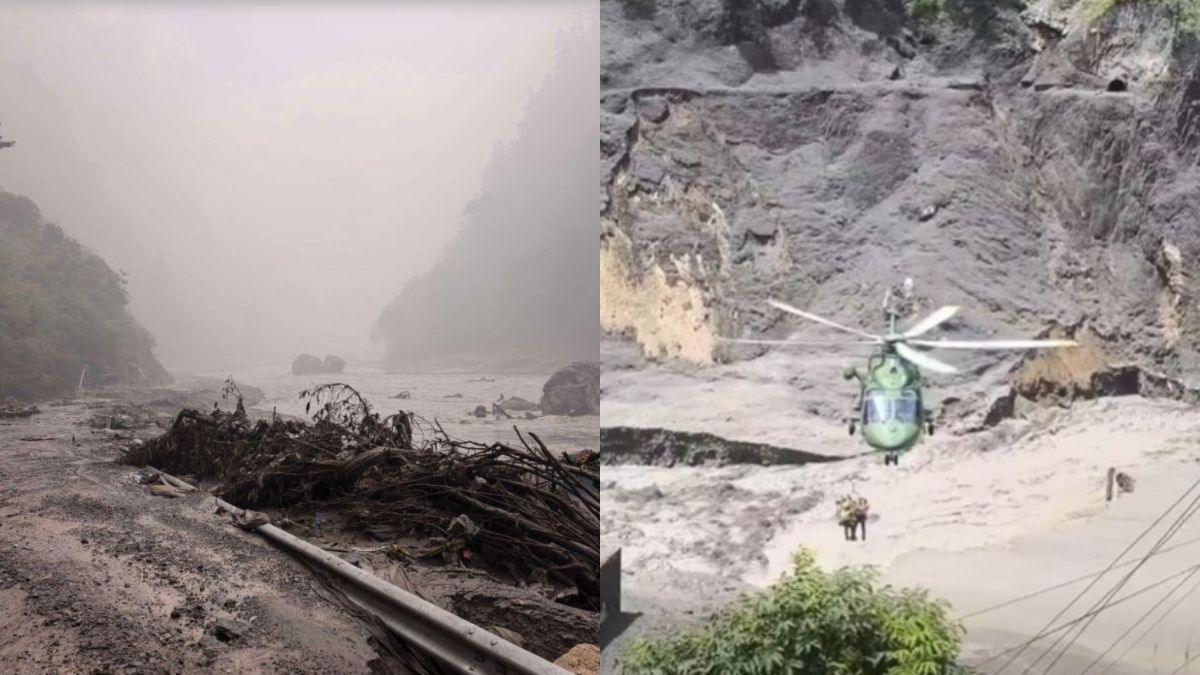
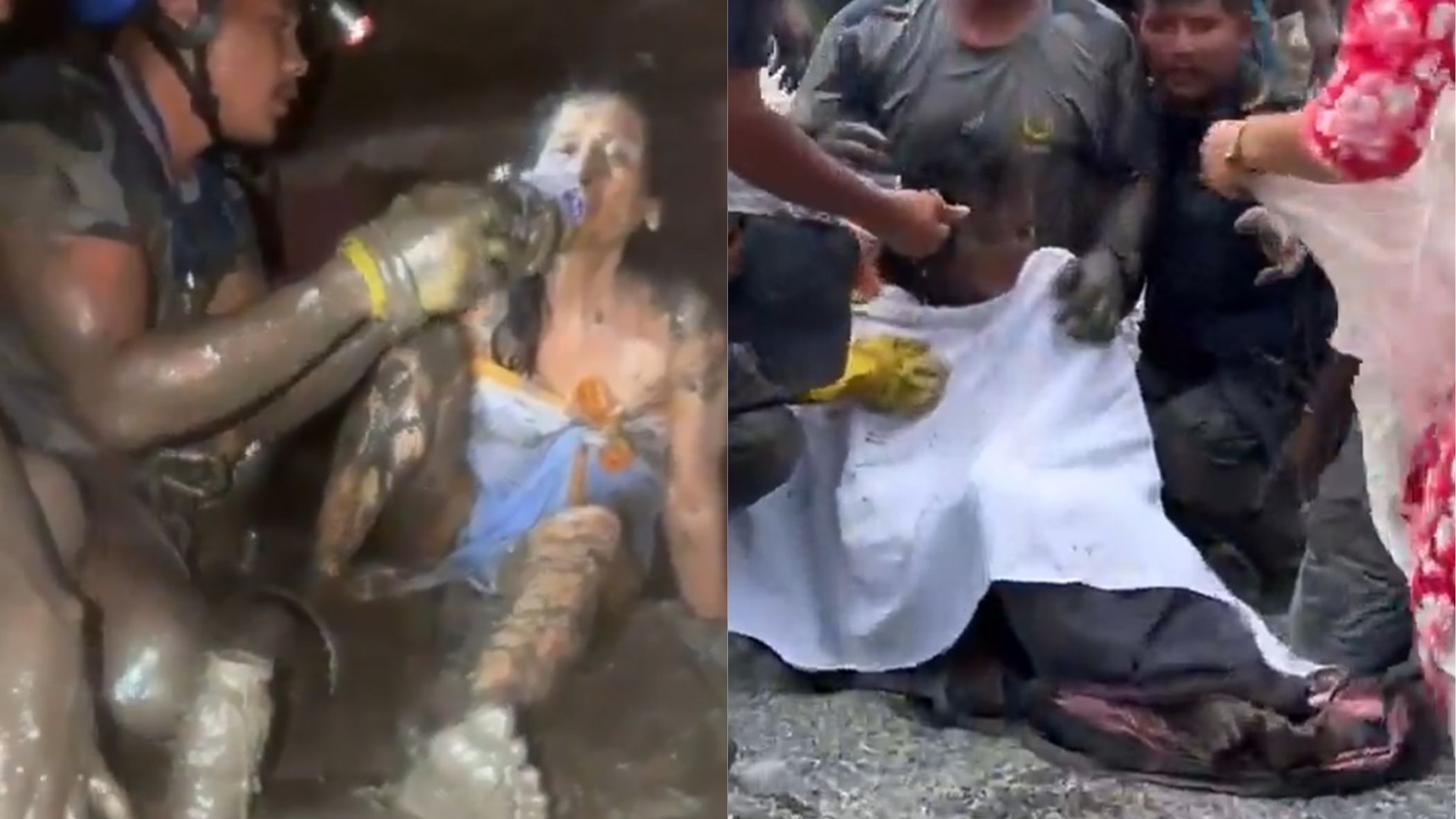
Relief and rescue operations were under way in Rasuwa and other affected areas, with helicopters being used to evacuate survivors and search for people missing in the floods and landslides.
Rasuwa and Dhading, both bordering Tibet, as well as Nuwakot, were among the affected districts.
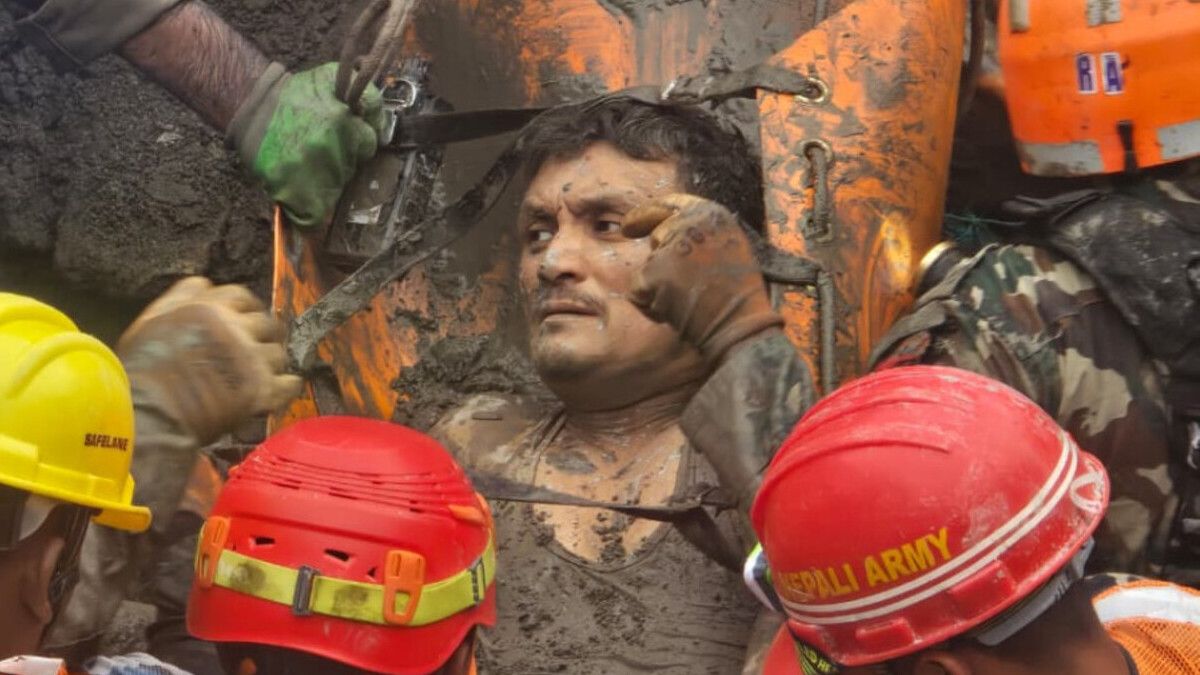
Rescuers were searching through mud and debris for survivors and bodies as authorities worked to move families away from areas at risk of further flooding.
Security footage from the Tibetan side of the Nepal-Tibet border showed people fleeing before a torrent of rock, mud and water swept through the area, destroying buildings and vehicles.
In Nepal's affected areas, houses, trees and vehicles were submerged or buried under mudslides, while helicopters operated throughout the day to bring survivors to safety.
Locals from Nuwakot and Dhading gathered outside a Nepalese army training centre serving as a base for helicopter rescue operations, seeking information about missing relatives.
Police recorded the names of missing people outside the barracks using mobile phone flashlights, as damaged hydropower infrastructure left the area without electricity.
Nepalese Prime Minister Balendra Shah pledged all government resources to relief efforts.
Hydropower projects and infrastructure destroyed
Nepalese government estimates said the floods destroyed 13 hydropower projects and about 25 miles (40 km) of roads.
Around 200 trucks and 19 bridges were also swept away by surging water and mud.
The destruction added to the challenges facing emergency teams as they attempted to reach affected communities and establish the full scale of the disaster.
UN pledges support for response
United Nations Secretary-General António Guterres expressed condolences to those affected by the flooding in Nepal and China and said the UN was supporting the government-led response in Nepal.
"I am saddened by the severe flooding in Nepal & China, which has claimed many lives, left people missing, and caused widespread destruction," Guterres said on X, according to Anadolu Agency.
He extended his condolences to victims' families and wished those injured a speedy recovery.
The UN said its teams and humanitarian partners were assessing the scale of the disaster and mobilising supplies and personnel to assist affected communities.
Guterres also commended emergency responders working to save lives and reiterated the UN's readiness to provide further support.