Rubio and Bessent stayed on decoy Air Force One as Trump took secret flight over Iran threat
US Secretary of State Marco Rubio and Treasury Secretary Scott Bessent remained aboard a decoy Air Force One on 8 July while President Donald Trump secretly switched planes amid a reported Iran assassination threat.
- Rubio and Bessent knowingly stayed on the decoy Air Force One, sources from US media say
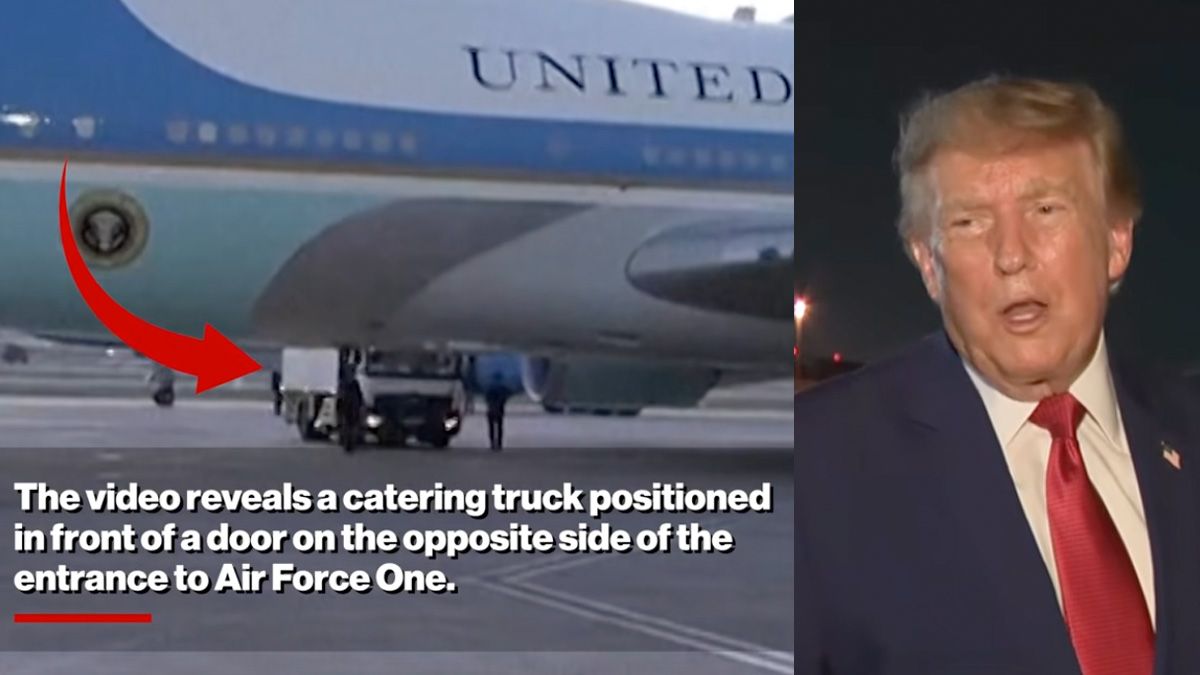
- Trump used a catering truck to switch planes secretly on 8 July
- Democratic lawmakers have criticised the ruse as reckless and non-transparent

UNITED STATES 一 Secretary of State Marco Rubio and Treasury Secretary Scott Bessent knowingly remained aboard a decoy Air Force One last month while President Donald Trump covertly boarded a separate aircraft, according to CBS News, citing sources familiar with the matter.
The pair separated to preserve the presidential line of succession, both aware that Trump had switched planes amid a reported security threat linked to Iran. Defence Secretary Pete Hegseth flew with Trump on the undisclosed flight out of Turkey.
White House aides Natalie Harp, Walt Nauta and Dan Scavino also travelled with Trump. Several other officials, including Stephen Miller, Will Scharf, Steven Cheung, Mike Needham, Ross Worthington and Monica Crowley, remained on the publicly identified Air Force One.
Background to the switch
The episode occurred on 8 July as Trump departed Ankara following a North Atlantic Treaty Organization (NATO) summit. He told reporters at the time he would leave on the older Air Force One rather than the newer Qatari-donated jet, citing sentiment and a planned inspection by US forces at a British refuelling stop.
CBS News has reported that the Secret Service in fact advised the switch for security reasons. Using a catering truck as cover, Trump moved from the publicly identified Air Force One to a separate US government aircraft, reported by the Washington Post to be an Air Force C-32A.
Cabinet members, White House staff and members of the press pool remained aboard the original plane, unaware they were travelling without the president. Reporters were told to keep the press cabin's window shades closed during the Ankara departure.
Trump later rejoined the newer, Qatari-donated Air Force One after a refuelling stop in the United Kingdom, from where he flew on to Washington, D.C. and spoke with journalists en route.
Assessing the threat
According to the New York Times and other outlets, the National Security Agency (NSA), the Central Intelligence Agency (CIA) and Turkey's National Intelligence Organisation had learned of a possible plot to target Air Force One with a surface-to-air missile.
The Israeli government also passed intelligence to the CIA regarding a potential threat to Trump's life, the Washington Post reported. Two unnamed US intelligence officials, however, described the warning as Israeli-derived rather than US-generated, and characterised it as low confidence.
A person briefed on the matter told Reuters that officials had little time to prepare once the threat emerged on the final day of the Ankara trip, describing a scramble to address what was seen as a credible, imminent risk.
Speaking to reporters this week, Trump said the decision was made by the military and the Secret Service, adding that he did not press for details beyond acknowledging that "any consequential president has a lot of threats". He said the plane he had originally boarded was, in his assessment, "at greater risk".
Political and press reaction
The disclosure has prompted criticism from congressional Democrats. Senate Minority Leader Chuck Schumer called the manoeuvre unacceptable and accused the administration of leaving Congress in the dark, linking it to what he described as an unnecessary conflict with Iran.
Senator Chris Coons, a member of the Senate Foreign Relations Committee, described the switch as disrespectful to the press and to Cabinet officials, questioning how Rubio, Bessent and Stephen Miller might feel about having been left as decoys. Senator Richard Blumenthal separately called the episode downright scary.
At least one reporter aboard the decoy plane, speaking to the Washington Post, objected to being placed at potential risk without consent, saying covering the president does not extend to shielding him from danger.
The White House Correspondents' Association (WHCA) has not issued a public statement. Its president, Jacqui Heinrich, said in an internal memo that she had met with administration officials to press the case for independent press coverage and an accurate historical record of the president's movements, and had requested a protocol for future security-related disruptions to press access.
Historical precedent
Decoy manoeuvres by the Secret Service, sometimes called "shell games", are not unprecedented, extending to duplicate presidential limousines and helicopters used during motorcades and air travel.
A more elaborate precedent occurred in March 2000, when then-President Bill Clinton flew to Islamabad aboard an unmarked jet trailing a decoy aircraft bearing Air Force One livery. Journalist Susan Page, then head of the WHCA, said this week that the White House had briefed her in advance of the extraordinary security measures, including the use of a decoy plane, given the risks facing both Clinton and travelling journalists.
It remains unclear what danger, if any, faced those aboard the decoy plane during the Ankara-to-Mildenhall leg of the July trip. The White House has not issued a detailed public account of the incident beyond Trump's own remarks to reporters.