US Navy sailors attempt to jump overboard amid record USS Abraham Lincoln deployment
Family members and lawmakers say sailors aboard the USS Abraham Lincoln have tried to jump overboard during a record nine-month deployment tied to the war with Iran, amid reports of exhaustion and poor conditions.
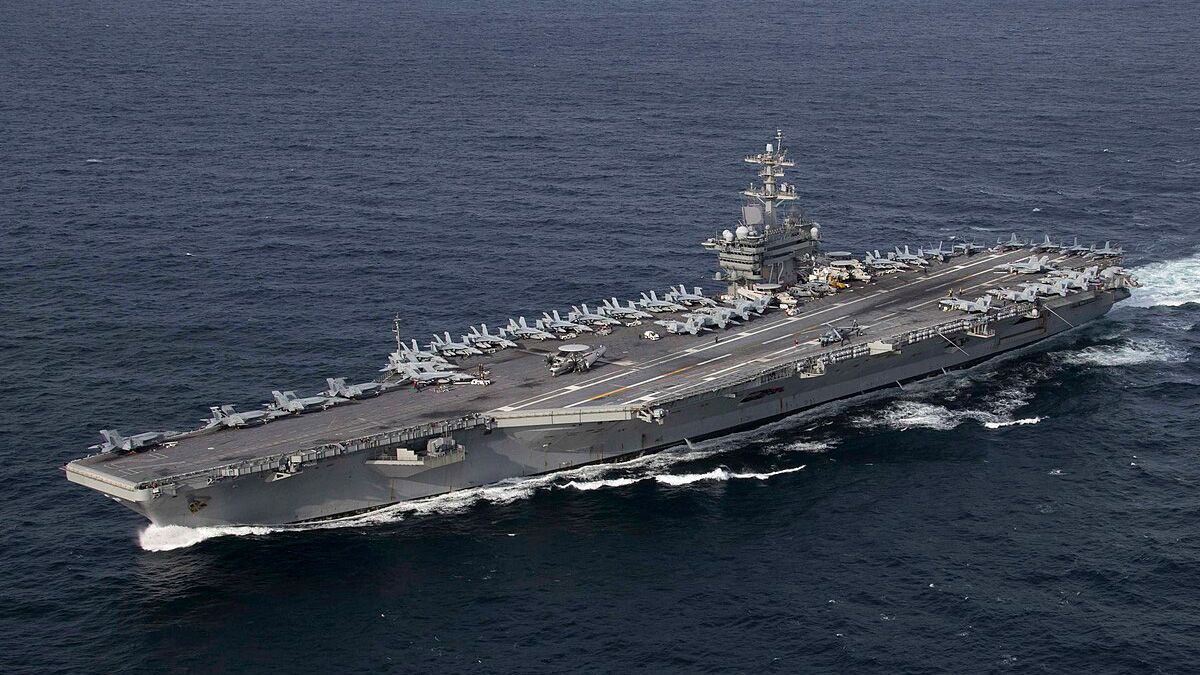
- Sailors on the USS Abraham Lincoln reportedly tried to jump overboard during a nine-month deployment.
- Families cite exhaustion, supply shortages and mental health concerns tied to the Iran war.
- The Navy says it has identified no rise in reported suicidal ideation aboard the carrier.

At least two sailors aboard the USS Abraham Lincoln have attempted to jump overboard during an extended deployment linked to the war against Iran, according to family members cited in reports by Newsweek, the Guardian and Military Times.
The Nimitz-class aircraft carrier left San Diego on 21 November 2025, originally bound for the Indo-Pacific. It was redirected to the Middle East as the United States and Israel prepared for military action against Iran.
By the end of July, the carrier had spent roughly 250 consecutive days at sea, a modern record for a US aircraft carrier, the Guardian reported. Its roughly 5,000 sailors and Marines have had only two brief periods on land, in Guam in December and Oman in July.
Family members describe strain
Annabelle Loma, whose husband is serving aboard the Lincoln, said he attempted to jump overboard after repeated extensions to his deployment. He is now on medical hold, according to Military Times.
Loma said her husband feared a dishonourable discharge over the incident. "That's not fair, that's not right," she told Military Times.
In a separate incident, a sailor identified by his wife, Maria Rodriguez, intervened to stop a shipmate from going overboard, pulling the individual back onto the deck before other crew arrived to help.
Stars and Stripes separately reported that watchstanders had stopped another crew member from jumping, an incident that was relayed to the ship through a shipwide announcement.
More than 200 family members met acting Secretary of the Navy Hung Cao in San Diego last week, Stars and Stripes reported. A subsequent virtual meeting addressed concerns over sailors' mental health and safety, according to recordings reviewed by MS NOW.
Vice Admiral Joseph Cahill, commander of Naval Surface Forces, told families during that meeting that the Navy recognised the strain on service members and their long-term readiness.
Conditions and congressional response
Democratic Representative Mike Levin described conditions aboard the Lincoln as including mouldy showers, broken toilets and prolonged shortages of hot water and hygiene supplies, in remarks reported by Newsweek and the Guardian.
Democratic Representative Jason Crow said the pressure on service members and their families had been building for months.
Complaints about shipboard conditions first surfaced in April, when Defence Secretary Pete Hegseth dismissed the accounts as unfounded, according to the Guardian.
Levin later said sailors deserved basic amenities, adding that Hegseth had called their families liars without justification, the Guardian reported.
Navy response
A Navy official told the Guardian that extended deployments placed significant strain on service members and their families, and that no increase in reported suicidal ideation or attempts had been identified aboard the Lincoln.
The official said counselling, chaplaincy and medical support remained available, and that recent reports from the ship confirmed access to clean water and adequate meals.
The Pentagon declined to comment when approached by Newsweek, referring queries to the Navy.
Retired Vice Admiral Robert Murrett, now at Syracuse University, said deployments of this length placed considerable pressure on ships and crews, with long-term effects on personnel and future deployment cycles.
Cao told families that the USS Theodore Roosevelt carrier strike group was being prepared to relieve the Lincoln, though officials have not given a timeline, citing operational security.
A study published last year found sailors on extended deployments often lacked adequate mental health support, concluding that improved access to care aboard ships was urgently needed.