US strikes on Iranian bridges and power grid enter seventh day as Tehran hits Gulf states
The US launched a seventh consecutive night of strikes against Iran on Friday, hitting bridges, power infrastructure and a port tower near the Strait of Hormuz. Iran retaliated against Kuwait, Bahrain, Qatar, Jordan and Oman, as an IRGC adviser warned of a "full-scale offensive".
- US strikes on Iran enter seventh day, targeting bridges, power grid and Chabahar port tower.
- Iran retaliates against Kuwait, Bahrain, Qatar, Jordan and Oman; Kuwaiti soldiers injured.
- Only six vessels transited the Strait of Hormuz in 24 hours, MarineTraffic data shows.

The United States launched a fresh wave of airstrikes against Iran on Friday, 17 July 2026, marking the seventh consecutive night of its renewed bombing campaign, as Tehran widened retaliatory attacks on American allies across the Gulf.
US Central Command (CENTCOM) announced via social media that it had launched a round of strikes beginning at 3pm Eastern Time, stating the operation aimed to continue degrading Iranian military capabilities. CENTCOM did not disclose further details on targets or scale.
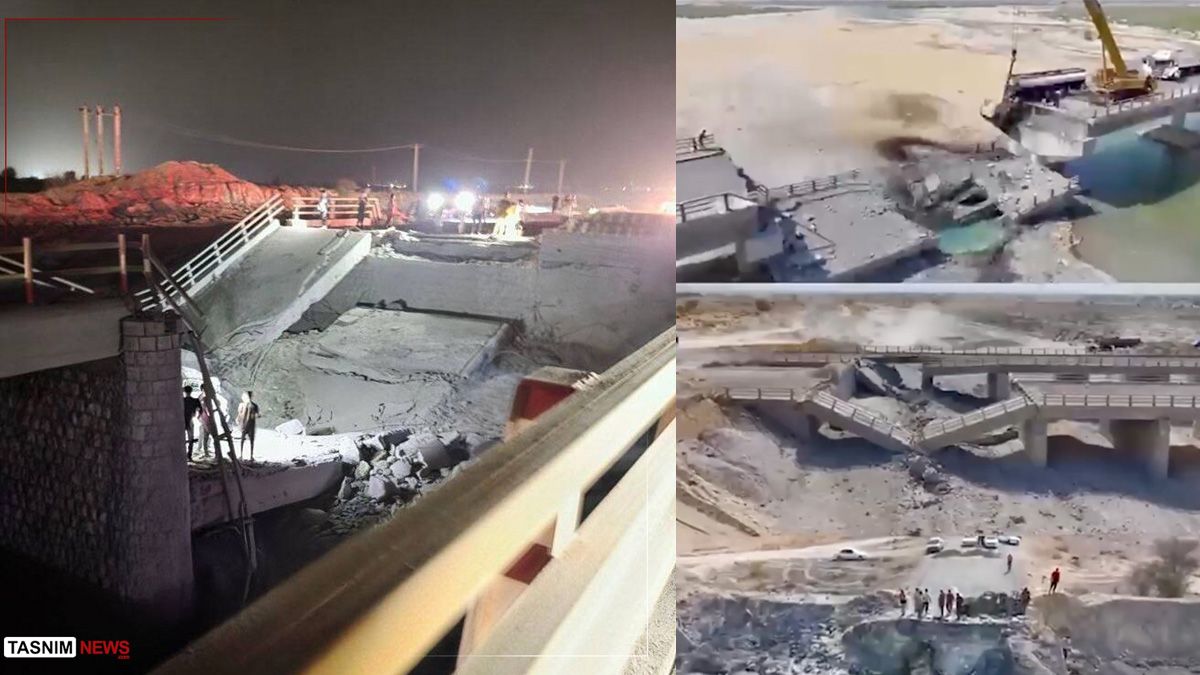
The strikes hit bridges, energy facilities and a key Iranian port. Iranian state television reported that US airstrikes on bridges in the southern province of Hormozgan killed at least seven people. Iran's state-run news agency put the toll at eight killed and 20 injured in overnight attacks on bridges in the province.
The bridges served as a key transit point for Bandar Abbas, Iran's main port, which overlooks the Strait of Hormuz. The US targeted six bridges connecting several cities near the southern Iranian coastline.
A photograph released by state broadcaster Islamic Republic of Iran Broadcasting (IRIB), geolocated by CNN, showed the damaged Kahurestan Bridge. Video footage from Reuters showed the aftermath of strikes on bridges in the coastal city of Bandar Khamir.
Further US airstrikes brought down a tower at Chabahar port on the Gulf of Oman. The US military said the Islamic Revolutionary Guard Corps (IRGC) had used the surveillance tower to facilitate attacks on vessels in the Strait of Hormuz. The US also targeted electrical infrastructure and Iranshahr airport.
Strikes on power supply
Iran's energy ministry told citizens to reduce their use of electricity and air conditioning after the power grid came under strain from US strikes on energy facilities. The ministry said southern areas were experiencing extreme heat alongside attacks on power infrastructure as temperatures soared.
Human rights experts have said that strikes on civilian infrastructure not being used for military purposes could constitute a war crime.
Hossein Kermanpour, a spokesperson for Iran's health ministry, said renewed US strikes had killed at least 38 people and wounded more than 400 in Iran by Friday morning.
The attacks appeared to follow through on a promise by US President Donald Trump to expand strikes against Iran, including the targeting of infrastructure and power plants. Trump reportedly met senior department heads this week to discuss an expanded aerial campaign intended to force Iran to reopen the Strait of Hormuz.
The pattern of strikes on bridges, railway junctures and power lines connecting coastline cities appears to suggest a wider effort by Washington to seize control of the strait from Tehran.
Tehran warns of full-scale offensive
Mohsen Rezaei, a senior IRGC official and military adviser to Supreme Leader Mojtaba Khamenei, warned the United States on Friday of a full-scale offensive should strikes persist.
"If US attacks continue for another two or three days, we will enter a phase of full-scale offensive operations," IRIB quoted Rezaei as saying in an interview.
"No political border will be secure against Iran's offensive forces," Rezaei said. He added that the United States should be required to pay financial reparations for what Iranian officials have characterised as attacks on civilian infrastructure. Washington has denied those characterisations.
The IRGC separately threatened what it called a devastating price for countries hosting US bases if attacks on infrastructure continued.
"The American enemy and the hosts of its bases in the region should know that crossing red lines and attacking civilians and civilian infrastructure will have a very severe and devastating price to pay," the IRGC said in a statement.
Tehran has also threatened key ports in Persian Gulf states in response to the destruction of the surveillance tower near the strait, according to Iran's semi-official Fars news agency.
Gulf states under fire
The Iranian military responded to US strikes by targeting Bahrain, Kuwait, Jordan, Oman and Qatar late on Thursday through early Friday.
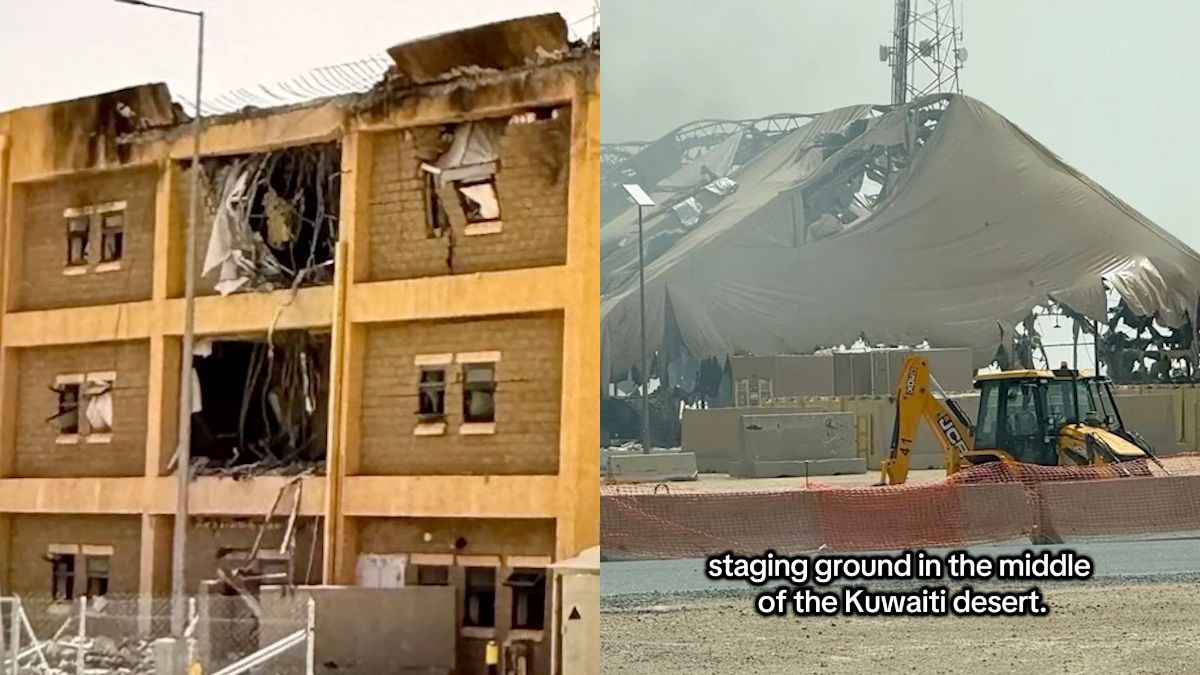
The Kuwaiti Army said Iranian missiles and drones injured a number of military personnel on Friday. Kuwaiti forces intercepted a salvo after detecting hostile ballistic missiles and drones in the country's airspace, the army said in a statement.
Iran also targeted army facilities and military camps with drones, injuring Kuwaiti Land Forces personnel while they were carrying out their duties, the statement said. All those injured were in a stable condition.
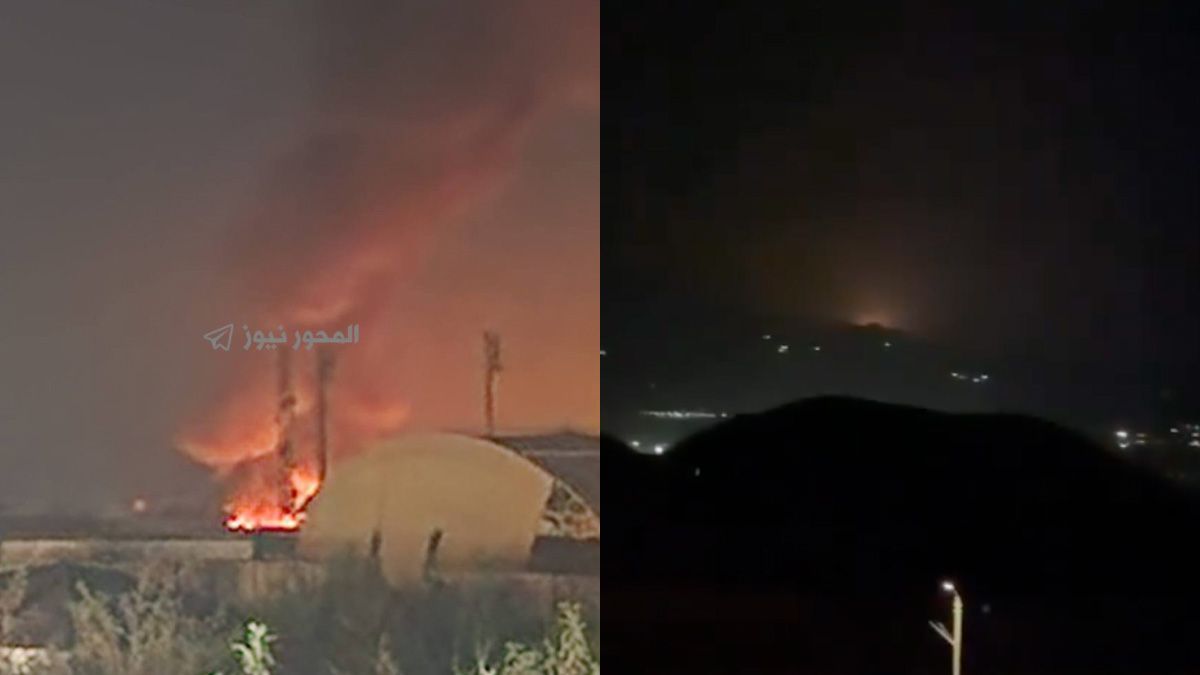
A blaze erupted at a power generation and water desalination plant in Kuwait following the attacks, according to Kuwaiti authorities. Kuwait relies on desalinated water for about 90 per cent of its drinking water. Officials said they were assessing damage and working to restore the plant.
In Qatar, one of the mediators between Washington and Tehran, authorities said falling debris from an intercepted missile wounded a child.
Strikes in Iraqi Kurdistan killed members of armed Kurdish opposition groups, which blamed Iran. An official from one Iranian-Kurdish group said nine of its fighters were killed in a missile and drone attack. Tehran also claimed to have struck the al-Tanf military base in Syria, although Syrian authorities denied this to Agence France-Presse.
Several Gulf kingdoms appeared to come under fire early on Saturday. The Kuwait army posted on X that its air defences were responding to hostile drone threats, adding that any explosions heard were the sounds of interceptions.
Bahrain's Ministry of Interior said sirens had been activated and urged the public to seek safety. Saudi Arabia briefly issued warnings in the Yanbu and Al-Kharj governorates before lifting them minutes later.
Arab response
Several Arab nations criticised Tehran's strikes and renewed calls for diplomacy.
Qatar's foreign ministry urged a serious return to dialogue and negotiations, and to understandings reached through diplomatic efforts.
The United Arab Emirates' foreign minister criticised the Iranian strike in Iraq, warning it presented a flagrant violation of the sovereignty of the Republic of Iraq and Iraqi Kurdistan.
Jordan's foreign minister denounced what he called brutal Iranian attacks as a blatant breach of international law and cautioned against dangerous escalation in the wider region.
The Kuwaiti foreign minister expressed strong denunciation of what he described as reprehensible Iranian aggressions against Bahrain, Qatar and Jordan, calling the attacks a direct threat to the security of their people.
Shipping under strain
Six vessels transited the Strait of Hormuz in the 24 hours to Friday, according to MarineTraffic data, illustrating the strain on one of the world's busiest maritime passageways.
Among them were two cargo ships and a tanker exiting the strait, and two tankers and one cargo ship entering. The figures align with crossing rates over recent days, as numbers have diminished.
Before the war, about 20 per cent of the world's oil was transported through the strait, which handled roughly a fifth of global oil and gas supply.
Iran has shut the strait, and the US reimposed its blockade of Iranian ports and ships on Wednesday. The IRGC described the waterway as highly unsafe and completely closed.
Iran's state-run news agency reported early on Saturday that two oil tankers had caught fire after hitting mines while attempting to pass through the strait, citing the IRGC. CENTCOM rejected the account, writing on X that like most IRGC claims, this is false.
A tanker travelling through the strait, on the route closest to Oman, came under attack on Friday, according to the British military. The tanker sustained minor damage and no crew were hurt. Iran did not claim responsibility. Iranian state media also said the US struck an empty oil tanker docked at Kharg Island, Iran's main oil export terminal.
American forces boarded the M/T Wen Yao in the Gulf of Oman on Thursday to ensure full compliance with the ongoing US naval blockade, CENTCOM said in a post on X. CENTCOM said it had redirected three commercial vessels attempting to run the blockade since it took effect at 8pm GMT on Tuesday. The previous day, a US aircraft fired on and disabled an unladen oil tanker that tried to break the blockade.
Week-to-week cargo shipments through the strait dropped by almost a quarter at the beginning of the month, according to maritime data firm Lloyd's List Intelligence, before the recent rise in tit-for-tat attacks.
Given the risks, some oil shippers are transiting the strait with their location devices switched off, while many are staying put, Lloyd's said on Thursday. A growing share of the region's energy is moving through pipelines, but not nearly enough to offset the decline in shipping.
The strait has also seen increasing GPS spoofing — interference causing ships' locations to appear falsely — which had declined until US-Iran negotiations unravelled earlier this month.
Earlier this month, Trump announced a plan to impose a 20 per cent fee on all cargo moving through the waterway.
Wider impact
The cities currently under attack are among Iran's poorest and most ethnically diverse, home to large minority populations distinct from Persian-majority centres such as Tehran. Despite hosting much of Iran's energy industry and commercial ports, these provinces have historically suffered from underinvestment, high unemployment and weaker infrastructure.
An Indian seafarer who went missing after an Iranian attack on his ship on Sunday has been confirmed dead, the Forward Seamen Union of India said in a statement. India this week ordered shipowners and operators not to deploy Indian seafarers on vessels travelling through the strait. India is the world's third-largest supplier of seafarers, with more than 300,000 sailors working across global shipping fleets, according to the government.
Iran has asked its allies in Yemen, the Houthis, to prepare to close the oil route through the Red Sea if the US targets Iranian energy infrastructure, Reuters reported. Houthi leader Abdul Malik al-Houthi threatened that all Saudi oil and other critical facilities could be targeted if Riyadh intervened in Yemen. The threat followed a Saudi strike on Sana'a airport and retaliatory Houthi missile strikes on Saudi Arabia.
Background
The current round of fighting follows a US-Israeli attack in late February that set off violence in the region. The two nations signed a tenuous ceasefire deal about a month ago, alongside a memorandum of understanding intended to keep the strait open and give room for negotiations towards a permanent truce. Both sides interpreted the deal differently, advancing competing plans for ships to transit the strait, with Iran attacking some vessels that took the US route.
Trump declared the fragile ceasefire and memorandum over as the US launched new strikes.
Pakistan's foreign ministry said on Thursday that efforts were still under way to bring the US and Tehran to the negotiating table, but acknowledged this was becoming increasingly difficult.
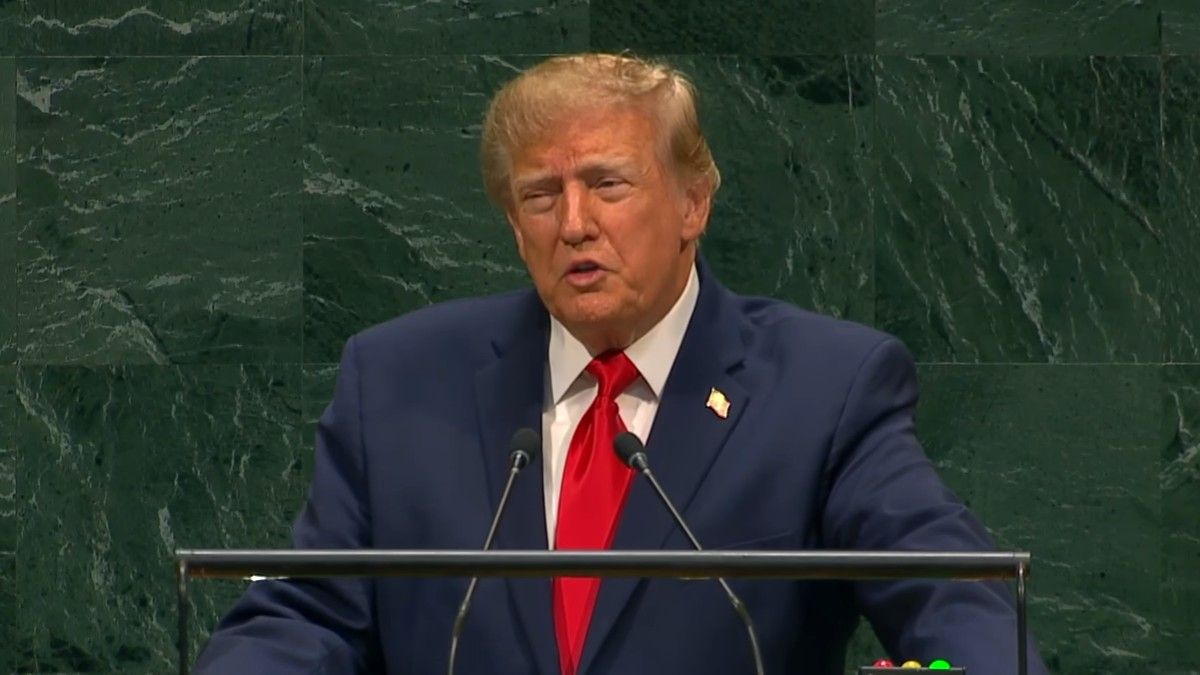
Despite the escalating conflict and interruption of trade, Trump said the war was going well for the United States. "We are likewise winning big in Iran, and you will see the fruits of that labour very, very shortly," Trump said in an address to the American public.