12 Bitcoin bounty surfaces after Guangdong boys burn stray mother dog and puppies to death
Public anger continues to mount after four boys under 14 allegedly tortured and burned a stray mother dog and her three puppies to death in Guangdong. An online bounty reportedly offering 12 Bitcoin has emerged as petitions and global calls for stronger animal welfare laws gather momentum.

- Four boys under 14 allegedly tortured and burned a stray mother dog and her puppies to death in Guangdong.
- Authorities said the boys cannot face criminal prosecution and were instead sent to specialised schools.
- The case has fuelled international outrage, online campaigns and renewed calls for animal cruelty legislation.

GUANGDONG, CHINA: Public outrage has continued to escalate following allegations that four boys aged under 14 brutally abused and killed a stray mother dog and her three puppies in Jieyang (揭阳), Guangdong, with the case fuelling widespread calls for stronger animal protection laws in China.
The alleged incident occurred on 28 June 2026 in Pingpu Village (坪埔村), Xinheng Town (新亨镇), Jiedong District (揭东区).
Graphic videos circulating online purportedly showed the boys attacking the nursing stray dog, known locally as Wang Wang (旺旺), together with her puppies before uploading footage of the alleged abuse to social media.
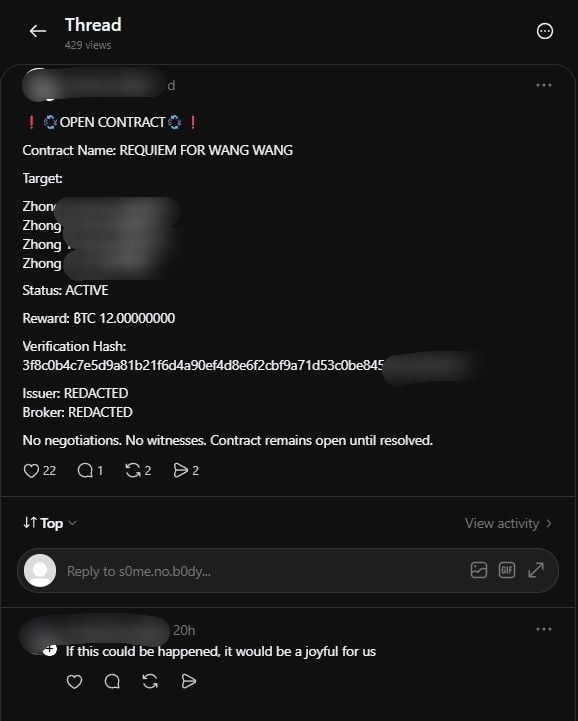
The case has since drawn international attention after social media users shared claims that a black market bounty worth 12 Bitcoin, equivalent to approximately US$774,700, had been offered for information relating to the four boys.
The claim has circulated widely on Threads, although it has not been independently verified.
Alleged abuse sparks nationwide anger
According to accounts widely shared online, the four boys allegedly beat Wang Wang repeatedly with wooden sticks before attacking her three puppies, which were about two weeks old.
The puppies were allegedly beaten to death before the injured mother dog was doused with petrol and set alight.
Witness accounts shared online alleged that Wang Wang ran through the streets while engulfed in flames before eventually dying from her injuries.
Videos of the alleged abuse reportedly lasted more than an hour. Social media users claimed the boys laughed throughout the incident, filmed the attacks and later shared the footage online.
The videos prompted widespread condemnation across Chinese social media, with many users demanding tougher punishment and stronger legal protections for animals.
Authorities order education measures
A statement issued by the Xinheng Town government on 30 June said the education department had instructed schools to strengthen student education following the incident.
Authorities also said the parents of the four boys had been ordered to fulfil their guardianship responsibilities.
Because all four boys are under the age of 14, they are below China's age of criminal responsibility for the alleged offences. Officials said the boys had instead been sent to specialised education schools.
The official announcement failed to calm public anger.
Many online users criticised what they described as inadequate consequences, while others questioned whether the specialised education facilities referenced by authorities actually existed.
Some social media users accused local authorities of failing to impose meaningful punishment and called for consumer boycotts targeting factories and businesses linked to Jieyang.
Local media quoted villagers as saying some of the boys came from families affected by divorce, while others had parents working away from home.
One villager said Wang Wang had long been cared for by residents.
"It was raised by villagers and nobody really chased it away," the villager said. "She had three puppies that were only about half a month old."
International campaign gathers momentum
The incident has also prompted growing overseas support.
A petition launched on Change.org on 11 July 2026 calls for justice for Wang Wang and her puppies while urging Chinese authorities to introduce comprehensive animal welfare legislation.
Within five days, the petition had attracted more than 28,300 signatures.
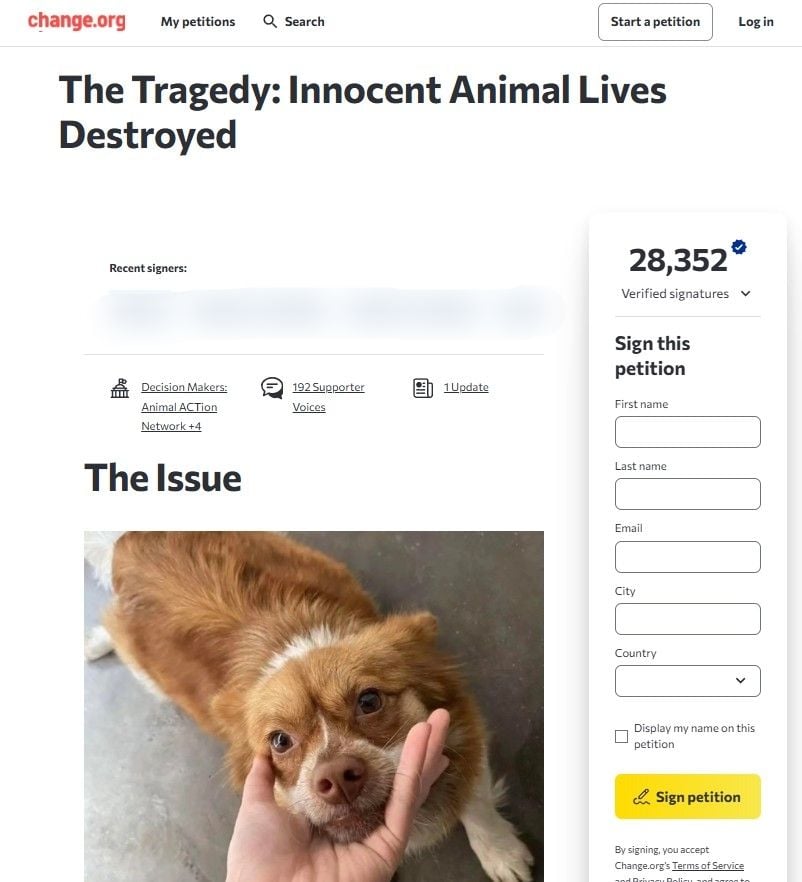
The petition also urges international companies with suppliers or manufacturing links in the Jieyang region to review their supply chains and reconsider business partnerships where serious animal abuse is not adequately addressed.
"Wang Wang and her puppies suffered in agony, but their story can be the catalyst for lasting change," the petition states.
The petition's Canada-based creator has also published an open letter calling on international animal welfare organisations to condemn the alleged abuse and advocate stronger animal protection laws.
The letter argues the case exposed "a systemic legal gap" because China does not have a national law specifically criminalising animal cruelty.
Supporters across mainland China, Hong Kong and Taiwan have also organised public displays commemorating Wang Wang and her puppies.
Large digital displays and posters have appeared near Hangzhou's West Lake and the IN77 shopping district, while similar banners have been displayed in Hong Kong.
Other supporters have organised bicycle rides carrying banners bearing Wang Wang's name to raise awareness of the case.
Earlier Chongqing protests renewed scrutiny over China's lack of animal cruelty laws
The Jieyang case follows another high-profile animal abuse controversy in Chongqing in June 2026.
That case centred on allegations that a man fraudulently obtained pets through adoption before abusing and killing them, triggering days of protests and confrontations between animal welfare supporters and police.
Hundreds of volunteers and residents gathered outside the suspect's residential compound demanding stronger legal protections for animals.
Authorities later opened a criminal investigation, although available charges were limited because China does not have a national animal cruelty law.
Animal welfare advocates have argued that existing legislation offers few legal avenues to prosecute deliberate abuse of companion animals, particularly stray animals that have no legally recognised owner.
The Jieyang case has further intensified calls for legislative reform, with campaigners arguing the latest incident demonstrates the urgent need for comprehensive animal welfare laws and stronger protections against deliberate cruelty.