Leong Mun Wai advocates for public asset disclosure among key office holders
Progress Singapore Party NCMP Leong Mun Wai questions the Prime Minister on public asset disclosure for politicians, key personnel in the Civil Service and Government-linked corporations.
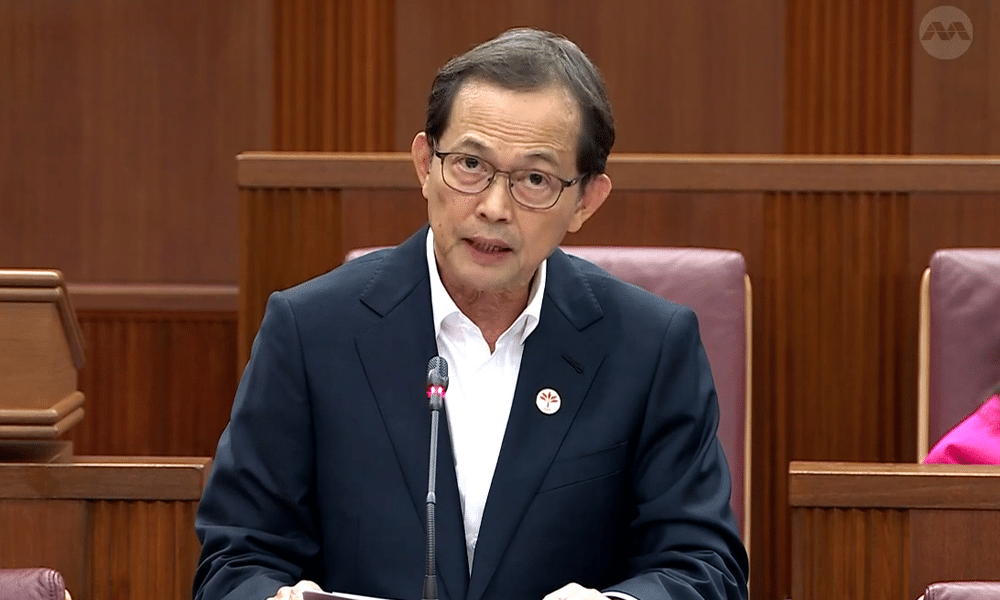

During the Parliament sitting on Monday (26 Feb), Mr Leong Mun Wai, a Non-constituency Member of Parliament from the Progress Singapore Party, raised a pivotal question regarding the transparency of asset disclosure within Singapore's political and civil service sectors.
Mr Leong inquired whether the government would consider introducing public disclosure of assets for political office holders, key personnel in the Civil Service, and Government-linked corporations to enhance transparency and bolster public trust.
In response, Mr Chan Chun Sing, the Minister in Charge of Public Service, elucidated the existing procedures for asset declaration among Political Office Holders (POHs) and civil servants.
"The Code of Conduct for Ministers requires POHs to declare their sources of income, assets, and financial liabilities to the President through the Prime Minister upon their appointment to office," said Mr Chan, who also serves as the Education Minister.
Likewise, civil servants must annually declare interests in investments and properties to their Agency Heads, as well as upon acquiring significant assets. However, Mr. Chan noted that Government-linked companies, being private entities, autonomously determine their stance on such matters.
Despite these established processes, Mr Leong's query underscored a broader concern regarding the public disclosure of such assets, similar to practices in countries like the United States, South Korea, India, and Japan. Currently, the information is retained within the government or the Prime Minister's office, and Singapore lacks a freedom of information law that would allow the public or press access to such information.
The United Nations Convention Against Corruption (UNCAC) recommends that public officials declare their outside activities, employment, investments, assets, and any substantial gifts or benefits that might lead to a conflict of interest.
Moreover, the UNCAC, alongside Article 52.5, highlights the critical role of asset declarations in enhancing transparency and accountability within the public sector and in the recovery of crime proceeds.
A 2011 report by the Organization for Economic Cooperation and Development (OECD) revealed that 86% of OECD countries require their top leaders to disclose private assets, indicating a global trend towards greater transparency.
Advocates for the public disclosure of assets by key officials argue that it serves as a fundamental mechanism for combating corruption and maintaining a corruption-free country.
Public disclosure promotes transparency, allowing the financial affairs of public officials to be scrutinized by the electorate and the media.
This scrutiny is crucial for detecting conflicts of interest and acts as a deterrent against corruption, facilitating investigations into corruption allegations and fostering public trust in governance. The public nature of these declarations also invites active engagement from civil society and the media, promoting a culture of accountability and aligning with international anti-corruption standards.
The collective effect of these measures is a stronger, more corruption-resistant public administration framework, underpinning democratic values and economic development.