Will EZ-Link cards still be phased out despite a S$40 million expenditure?
After reversing the EZ-Link phase-out and proposing a S$40 million investment to maintain it as a payment mode, questions emerge: Is phasing out necessary, or was LTA pushing a shift to SimplyGo?
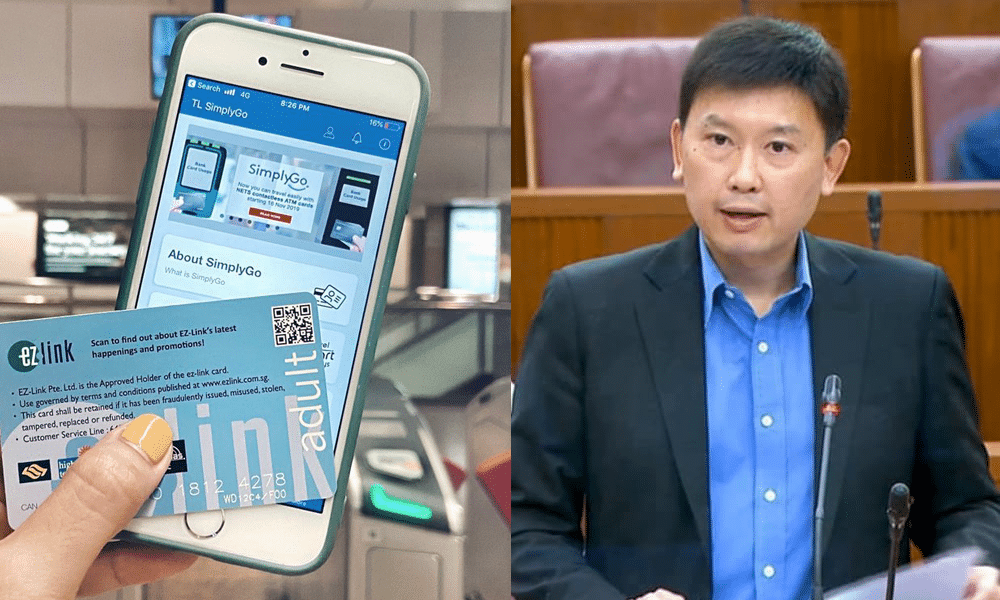

In a recent turn of events, Transport Minister Chee Hong Tat announced an embarrassing U-turn in the Land Transport Authority's (LTA) plan to transition from the EZ-Link card system to the SimplyGo platform, at least for 2024.
This decision, which reverses the phase-out of the existing EZ-Link card in Singapore's public transport payment system, initially planned for June this year, emerged amidst public backlash and followed a prolonged silence from the transport minister and civil servants, perhaps in hopes that the public backlash would cool down.
The abrupt announcement to phase out the EZ-Link cards on 9 January, a system deeply ingrained in Singapore’s public transport fabric for over two decades, was met with considerable resistance from the general public.
This raises the question: Was the move to remove the EZ-Link cards necessary in the first place, given how swiftly LTA could reverse its decision?
In a Facebook post on Monday (22 Jan), Chee announced that the government will spend S$40 million (US$29.8 million) to extend the use of EZ-Link and Nets FlashPay cards for adult commuters, and not to “sunset” the system in 2024 as originally planned.
According to LTA, responding to media queries, the figure is for hardware replacements and systems maintenance. But this raises the question: Why is that so? Rather than saying S$40 million is spent to enable the use of existing cards, should it not be more logical to assume that funds have been allocated to transition the system to one that is SimplyGo-centric?
Alternatively, is the figure a sum quoted by the contracted company to reintegrate the existing EZ-Link into the new system set for June, as LTA had announced that the EZ-Link cards would be phased out and rendered unusable?
If this is the case, it is baffling why LTA opted for a new system that does not accommodate old cards, choosing instead to completely delink them from the system, even though they have functioned well since its introduction in 2002.
Without detailed explanations, Chee's announcements leave more room for speculation and concern than they provide clarity.
We must also question Chee regarding whether the S$40 million is a one-off expenditure or merely for the transitional period of 2024, as he did not explicitly state that the cards would not be phased out after 2024. It's important to approach Chee's statements with caution, especially given his history of being called out for questionable numbers and logic when debating policies in Parliament.
But if an additional S$40 million is to be spent to cater for the existing EZ-Link cards to be used together with SimplyGo, is there a need to later phase out the cards, and shouldn't this have been the approach LTA took from the beginning, instead of phasing out the EZ-Link cards outright?
In his Facebook post, Chee also addressed concerns raised by commuters about SimplyGo, including that they would no longer be able to see their stored-value card balance and fare deduction at MRT fare gates and bus card-readers.
He also acknowledged the delays commuters faced when trying to upgrade their current EZ-Link cards to SimplyGo-compatible cards over the past two weeks. “I apologize on behalf of MOT and LTA for the delays commuters experienced when they tried to convert their existing EZ-Link cards,” Chee said. “This could have been avoided with better preparation.”
He added that LTA has worked to address this issue and has updated the SimplyGo app and sped up the card conversion process.
LTA said adult commuters who have bought SimplyGo EZ-Link cards or converted their EZ-Link cards to SimplyGo since 9 January can exchange their cards for the old-style cards free of charge if they wish to do so. Concession cardholders who obtained a SimplyGo-compatible card or converted their cards to SimplyGo on or before Monday will also have the option to exchange their card for their original concession card free of charge if they do not wish to keep using their SimplyGo cards.
“We seek commuters’ understanding that we require some time to prepare our operations for the card exchange, to minimize inconvenience to commuters,” LTA said.
This acknowledgement by Chee and LTA suggests that LTA was pushing a decision with ramifications for the public that it could not handle or was unprepared for. Some netizens also pointed out that LTA failed to consider the amount of money involved in refunding card owners, given many users have deposited significant amounts into their EZ-Link cards for easy access over a long period, which might explain why the initial plans for the refunding were scrapped suddenly.
While some may view the reversal on the EZ-Link card phase-out as evidence of the government's willingness to listen to public opinion, it should also be seen as opening Pandora's box of questions about financial prudence, technological foresight, lack of consultation, and policy transparency by the People's Action Party government.
LTA claimed to have conducted market testing and focus group sessions with adult commuters and concession cardholders before finalizing the SimplyGo transition plan. However, considering the public outcry that led to the U-turn, several scenarios emerge: perhaps the market testing and focus groups did not occur, the groups might have consisted of individuals who readily agreed with government proposals, or LTA possibly ignored the results and proceeded with their decision to phase out the cards, compelling everyone to switch to SimplyGo.
Given the lack of government transparency and the absence of a Freedom of Information Act, more in-depth discussions and scrutiny are needed in Parliament regarding the abrupt phasing out of the EZ-Link card and the rationale behind the S$40 million expenditure.
Parliamentarians must ask hard questions: Why can't the new system integrate old and new systems? Is there a need to phase out EZ-Link cards as LTA had earlier announced, or is LTA trying to muscle its way through by forcing everyone to accept its decision, underestimating the response from the general public?
This is not the first time, at least in recent times, that LTA has had to reverse its decision. Take bus service 167, for example. LTA initially planned to discontinue Service 167 but reversed its decision following strong opposition from affected commuters and residents, marking a remarkable turnaround within a fortnight.
The Singaporean public deserves a thorough explanation and reassurance that their interests are being thoughtfully considered in the implementation of nationwide policies and not ad-hoc decisions, with the expectation that the population will just accept whatever the government decides.