Workers' Party files Parliamentary motion to debate Singapore's cost of living crisis
Amidst mounting cost of living pressures, the Workers' Party (WP) is set to confront the issue head-on in the upcoming Parliamentary session via a motion filed by the Leader of the Opposition Mr Pritam Singh and Mr Louis Chua, Member of Parliament for Sengkang GRC. \n \nWP's focus on this critical matter underscores the public's persistent concerns about the escalating expenses.
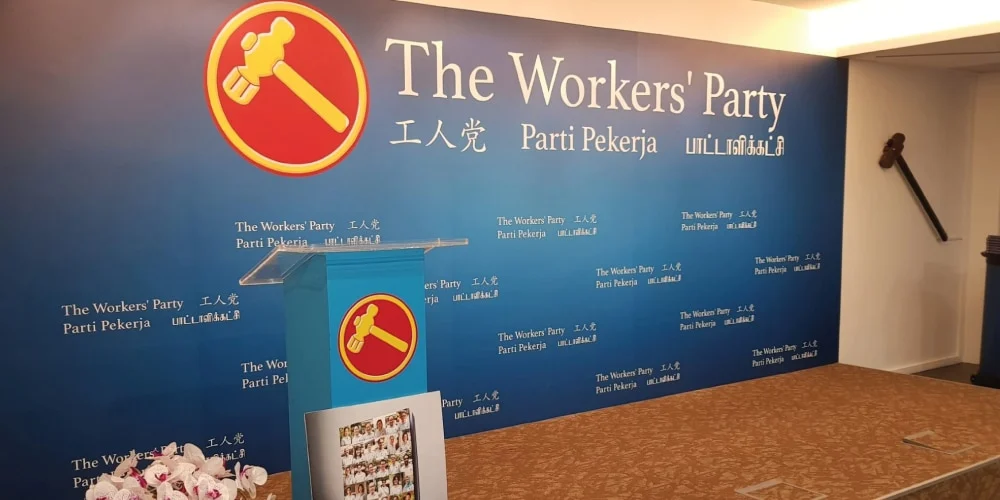

SINGAPORE: Singapore's persistent cost of living pressures have prompted the Workers' Party (WP) to take an assertive stand, as the Leader of the Opposition, Mr Pritam Singh, and Mr Louis Chua, Member of Parliament for Sengkang GRC, have filed a motion to debate the issue during the upcoming Parliamentary sitting on next Tuesday (7th November).
In a recent press release on Friday (3 Nov), the WP emphasized the recurrent concerns raised by the public during their numerous grassroots interactions, with the cost of living consistently at the forefront.
"Many have expressed their concerns to us around the concurrent price increases for food, water, housing and both public and private transport, among others."
"With the Goods & Services Tax (GST) scheduled to increase yet again to nine per cent in 2024, the WP believed that this could add further pressures to the cost of living crisis faced by many Singaporeans and their families."
The motion filed by the WP, titled "𝐂𝐎𝐒𝐓 𝐎𝐅 𝐋𝐈𝐕𝐈𝐍𝐆 𝐂𝐑𝐈𝐒𝐈𝐒: 𝐓𝐡𝐚𝐭 𝐭𝐡𝐢𝐬 𝐇𝐨𝐮𝐬𝐞 𝐜𝐚𝐥𝐥𝐬 𝐨𝐧 𝐭𝐡𝐞 𝐆𝐨𝐯𝐞𝐫𝐧𝐦𝐞𝐧𝐭 𝐭𝐨 𝐫𝐞𝐯𝐢𝐞𝐰 𝐢𝐭𝐬 𝐩𝐨𝐥𝐢𝐜𝐢𝐞𝐬 𝐬𝐨 𝐚𝐬 𝐭𝐨 𝐥𝐨𝐰𝐞𝐫 𝐜𝐨𝐬𝐭 𝐨𝐟 𝐥𝐢𝐯𝐢𝐧𝐠 𝐩𝐫𝐞𝐬𝐬𝐮𝐫𝐞𝐬 𝐨𝐧 𝐒𝐢𝐧𝐠𝐚𝐩𝐨𝐫𝐞𝐚𝐧𝐬 𝐚𝐧𝐝 𝐭𝐡𝐞𝐢𝐫 𝐟𝐚𝐦𝐢𝐥𝐢𝐞𝐬," underscores the urgency of the matter and aims to initiate a substantive debate in Parliament.
On the reason for the party's decision to bring up this matter in Parliament, the WP indicated that since the conclusion of the Covid pandemic, coupled with the crisis triggered by Russia's invasion of Ukraine, inflationary pressures have engulfed Singaporeans and their families, emanating from both domestic and global realities.
In characterizing the situation as a "crisis," the WP emphasized the tangible impact of escalating costs and prices of essential public goods and services on Singaporean households.
Amidst speculations about the motion being part of their manifesto for the next General Election, the Workers' Party clarified that the party is cognisant of the struggles and challenges in the daily lives of Singaporeans and their families, and mindful that many feel voiceless, hopeless and helpless as they brace for ever more belt-tightening.
Furthermore, the party reiterated their commitment to engaging in robust debate with the government during the Parliamentary session.
They expressed their confidence in presenting viable measures that could potentially alleviate the current crisis and ensure a better standard of living for all Singaporeans.
Singaporeans disappointed as Government's Forward SG Report neglects rising cost of living concerns
On 27 October, the Singapore government released a comprehensive 180-page "Forward Singapore (Forward SG)" report, consolidating feedback from over 200,000 citizens and stakeholders across a 16-month period.
Positioned as a likely successor to the role of Singapore’s Prime Minister, Deputy Prime Minister Lawrence Wong aptly described this endeavour as a guiding “roadmap” for Singapore’s future, under the stewardship of the nation’s fourth-generation leaders.
Anticipating a series of detailed announcements in the upcoming months, including during Budget 2024, the report outlines various policy adjustments and recommendations. These adjustments will be focused on critical areas such as education, employment, family support, assistance for seniors and vulnerable groups, sustainability, and the cohesive strength of society.
Outlined in the report are seven pivotal shifts that aim to enhance the quality of life for the majority of society, including their children, while ensuring continued support for the most vulnerable segments of the population.
The report emphasized the need for collective participation from all sectors of society — individuals, communities, and businesses — to facilitate the realization of these objectives.
The government's endeavours in tackling socio-economic challenges have garnered a mixed response. While some commend proactive measures, others highlight unaddressed issues.
A section of the community expressed disappointment over the report's apparent neglect of pressing concerns, especially the escalating cost of living, which significantly affects everyday Singaporeans.
National Wages Council calls for 5.5% to 7.5% wage hike for lower-income workers amid living cost surge
Separately, on 31 October, Singapore’s National Wages Council (NWC) recommended that employers grant a one-off special lump sum payment to their employees, prioritizing those in the lower to middle-income brackets, In a move to combat the pressures of rising living costs.
The council issued these guidelines for the period from December 2023 to November 2024, echoing similar advice from past high inflation periods in 2008 and 2011.
NWC’s chairman, Mr Peter Seah, highlighted the importance of this move, particularly for lower-wage and middle-wage workers, to help them cope with the current inflationary pressures. While no specific amount was mandated, the emphasis was on a collective positive action across the board.
In a detailed strategy to uplift lower-wage workers, the NWC has outlined a wage increase recommendation of 5.5 to 7.5 per cent in gross monthly wages, or a monetary increase of at least S$85 to S$105, whichever is higher.
The extent of these increases is suggested to correlate with the companies’ performance and future prospects, urging well-performing businesses with positive outlooks to aim for the upper bound of the recommended range.
The council also stressed the need for wage growth to align with productivity growth and for wage structures to be resilient and adaptable, encouraging the adoption of a flexible wage system. This system would include a substantial variable component, allowing companies to reward employees during prosperous times and manage costs during downturns.