Euthanization of Marina East Drive crocodile sparks debate on public safety and wildlife welfare
A 3-meter saltwater crocodile in Marina East Drive has been euthanized by NParks due to public safety concerns. \n \nThe internet community is divided, with some proposing alternatives like relocation to a zoo, while others express confidence in NParks' thorough deliberations.
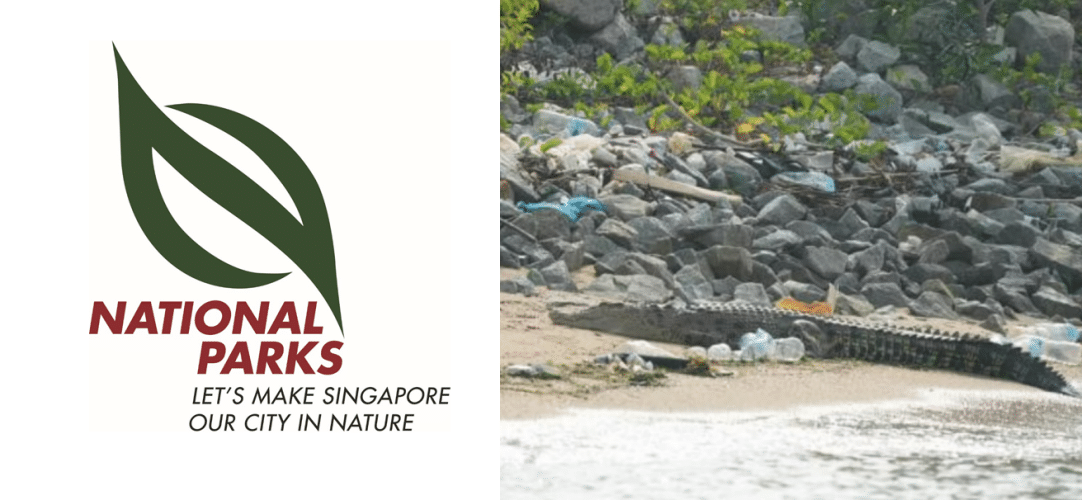

SINGAPORE: A nearly 3-meter-long saltwater crocodile that was spotted on a beach in Marina East Drive has raised concerns over public safety, leading authorities to make the difficult decision to euthanize the reptile.
Mr. How Choon Beng, the director of wildlife management and outreach at the National Parks Board (NParks), confirmed that the crocodile was successfully trapped and removed from East Coast Park, a popular seaside destination.
He explained, "In view of this, the captured crocodile will be humanely put down to safeguard public safety."
NParks had received reports of the crocodile sighting on Tuesday, Oct 10.
The decision to euthanize rather than relocate the crocodile was based on the risk of it returning to the area where it was initially captured.
Saltwater crocodiles, also known as estuarine crocodiles, are known to feed and rest in brackish and freshwater areas.
Typically, they are found in the water or on mudflats away from visitor routes.
Concern over euthanizing crocodile: calls for relocation
Mr Shivaram Rasu, a scientific officer from the Herpetological Society of Singapore, expressed concern over the decision to euthanize the crocodile.
"Given that the locally critically endangered species is an apex predator, it is without a doubt an important cornerstone of the ecosystem it is part of.
"We would like to suggest relocation as a better alternative to euthanization instead," he said.
Mr Shiwaram said saltwater crocodiles are known to frequently venture out to sea, travel along coastlines, and even move between islands, they do not usually stay in one place for too long.
In a similar incident in 2021, a smaller crocodile was caught and relocated to the Sungei Buloh Wetland Reserve, as it was assessed to be of lesser risk to public safety.
However, Mr How explained that, “today, the Wetland Reserve has a large population of crocodiles and is no longer a suitable release site.”
In Singapore, crocodiles are typically found in the Sungei Buloh Wetland Reserve but have been sighted in other areas like Changi, Pasir Ris, and West Coast Park.
The crocodile seen in Marina East Drive may have strayed from its home in Sungei Buloh or areas in southern Johor or the Riau archipelago.
Public safety remains a top priority in dealing with these situations.
Debate erupts over NParks' decision to euthanize crocodile
The internet community has generated a mixed response to NParks' choice to euthanize the crocodile.
In the Facebook page 'Singapore Wildlife Sightings,' some individuals are raising questions about the necessity of euthanizing the crocodile and suggesting alternatives, such as relocating it to a zoo.
These individuals believe that euthanization is an excessive step for a wildlife creature that is otherwise innocent, and they are expressing concerns about the perceived lack of humanity in such measures.

Nevertheless, responses indicate that placing the crocodile in a zoo may no longer be a feasible option due to its size and the already high population of its species in the zoo.
Some individuals also pointed out that the resources required to care for the crocodile should be taken into account.

Some are also of the opinion that people should just leave the crocodile alone, and be "more respectful of the wild."
"The more we encroach into their area, the more they will encroach into "ours," the user said.
They also emphasized that anyone imprudent enough to venture near crocodile habitats, regardless of whether it's a well-known fishing spot, should take responsibility for the consequences of their actions.

Although there are critics of NParks' choice, there are also individuals who support it, believing that prioritizing public safety is important.
The user asserted that "NParks is most certainly not incompetent," but "they are severely lacking in public communication."
They expressed confidence that NParks must have engaged in extensive deliberations regarding the decision, meticulously evaluating all conceivable scenarios and weighing the pros and cons of each option.
However, "the problem is they don't articulate their process," the user said.
Instead of seeking to educate the public about their decision, they merely announce the outcome, which is why everything appears to be shrouded in secrecy.
Acres expresses disappointment over crocodile euthanasia, urges exploration of alternatives
According to the Straits Times, Kalai Vanan Balakrishnan, Animal Concerns Research and Education Society’s (Acres) co-chief executive also expressed disappointment over NPark's decision to euthanise the nearly 3m-long crocodile.
“There are alternatives that can be looked into. Relocation is one of them,” he said, adding that NParks could also have considered tracking the crocodile’s movements with telemetry, and deploying staff to ensure public safety should the crocodile appear in populated areas.
“Such measures are not new in Singapore, and authorities have deployed these for other animals like otters and macaques,” he added.