Police block anti-IMF, World Bank march in Bangkok as protesters allege excessive force
Bangkok police stopped a march by the People’s Network Against the World Bank and IMF near the IMF-World Bank meetings venue on 15 October 2026. Protesters accused officers of using force over a banner, while the city’s police chief blamed miscommunication.
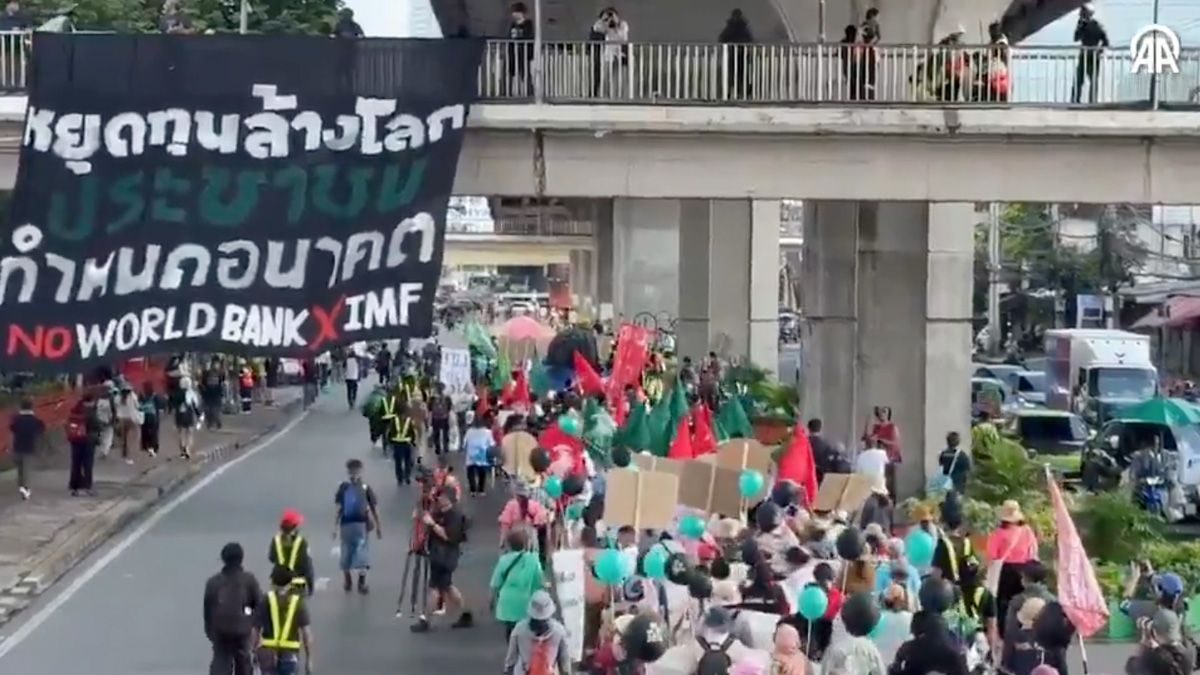
- Police blocked hundreds of protesters at the Rama IV intersection, short of the IMF-World Bank meetings venue.
- Protesters say officers kicked and dragged them over a banner; police chief blames miscommunication.
- The network has asked the National Human Rights Commission to investigate and is camping near the venue.

Bangkok police blocked a march by the People’s Network Against the World Bank and IMF on 15 October 2026, stopping protesters short of the venue hosting the International Monetary Fund (IMF) and World Bank Group annual meetings.
A brief scuffle broke out on a pedestrian bridge near the Rama IV intersection when demonstrators tried to hang a banner. The group accused officers of excessive force. Bangkok’s police chief said the clash resulted from miscommunication.
The Bangkok Post put the turnout at about 600 people. The Associated Press (AP) described it as dozens. AP reported that more than 15,000 officials and experts had gathered for the meetings.
March route and police cordon
According to the Bangkok Post, demonstrators gathered near the Customs Department at 8am. They marched along Sunthorn Kosa Road to the five-way Na Ranong intersection, then turned towards the Rama IV intersection beside the convention centre.
There, police with batons stopped them from continuing along Ratchadaphisek Road to the Queen Sirikit National Convention Center. Thai Post reported that officers from Tha Ruea police station declared the gathering unlawful and refused to let the procession pass.
AP reported that some marchers wore masks of US President Donald Trump, IMF Managing Director Kristalina Georgieva and other leaders. They dragged a float of a large pink pig with dollar signs for eyes, briefly blocking traffic.
After negotiations with police, the protesters agreed to withdraw to a designated area nearby. Rally representative Supaporn Malailoy, 50, told the Bangkok Post that the group planned to stay until Friday night to follow the meetings.
Thai Post reported that the network planned to camp at the intersection until 6pm on 16 October. It pledged to protest immediately if Prime Minister Anutin Charnvirakul’s government struck deals affecting people’s livelihoods and rights.
The group set up at the designated spot near the Rama IV intersection, within sight of the convention centre. Supaporn said protesters would monitor the proceedings throughout the day and try to engage meeting participants to express their concerns.
AP’s account differed, reporting that the marchers disbanded after reaching the area near the convention centre.
Scuffle on the pedestrian bridge
The confrontation began when some protesters climbed the pedestrian overpass at the Rama IV intersection to unfurl a banner. Thai Post reported that the two sides grappled for almost 10 minutes.
Pranom Somwong of Protection International, acting as a legal representative for the group, told the Bangkok Post that a police officer identified as “Manun” had agreed to let protesters hang the banner.
“However, just as we were about to put it up, police climbed onto the pedestrian overpass to stop them,” she said.
Pranom said officers were “kicking, grabbing, dragging and pulling them away from the banner despite the prior agreement and their pledge to hold a peaceful protest”.
She said the protesters were exercising their right to freedom of expression under Section 34 of the Constitution. “The police action therefore constituted a violation of the Constitution,” Pranom said.
She added that the group did not intend to disrupt the meetings. “We wanted to convey the perspectives of people affected by the meeting,” she said.
According to Thai Post, protesters used loudspeakers to urge officers to stop using violence and said people had been injured. Once police stood down, the group hung a banner reading “Stop world-destroying capital, the people determine the future”.
Network says it followed the law
At about 2pm, the network read a statement saying the march fully complied with the Public Assembly Act 2015. It said it had notified Tha Ruea police station in advance and negotiated its route from the Customs Department.
The statement said police had acknowledged the plan, permitted the activity and been told beforehand of the symbolic forms of expression the protesters intended to use.
It argued that the main duty of police under the Act was to facilitate assemblies and manage traffic, not to use violence or obstruct free expression. The network described the officers’ conduct as excessive and a clear violation of rights.
The group called on the Royal Thai Police to state formally which legal provisions authorised officers to block the march, seize banners and arrest protesters, in order to set a standard and prevent further violence.
It also petitioned the National Human Rights Commission of Thailand (NHRC), which had sent observers, to issue a statement and form an independent inquiry. It urged the government to compensate those injured.
Police blame miscommunication
Police Lieutenant General Siam Boonsom, commissioner of the Metropolitan Police Bureau, visited the site with a medical team from the Police General Hospital and volunteers distributing drinking water, Thai Post reported. Most of the protesters were elderly.
Siam said the Prime Minister and the national police chief had ordered the support after learning that many participants were older people.
He said protesters had been uneasy about officers stationed on the overpass, so police decided to withdraw. As officers pulled back, protesters climbed up to hang the banner, causing confusion that led to the clash.
“There was no order for officers to use force or violence. It was merely a request for cooperation to maintain order,” Siam said.
He said anyone who believed an officer had acted excessively or unlawfully and caused injury could file a criminal complaint immediately or approach the NHRC observers present. No charges had been filed against protesters, he said.
Siam said the protest area had been clearly marked out to keep traffic moving on Rama IV Road. He said the meetings had drawn more than 19,000 participants from over 190 countries, and IMF staff had requested strict security.
National police spokesman Police Major General Siriwat Deephor said officers had acted within the law and with regard for protesters’ rights. He noted that the Act bars marches between 6pm and 6am without permission from the supervising officer.
Grievances against the lenders
Before the march set off, network representative Lertsak Kamkongsak said Thailand faced household debt, poverty and an environmental crisis, while the IMF and World Bank shaped its development through loan conditions, Thai Post reported. He also criticised the government over corruption.
“Our country is facing a crisis of household debt. Our people are growing poorer. Our environment is deteriorating. Climate disasters are intensifying,” the network said in a written declaration cited by AP.
AP reported that the group was also protesting against what it called the “vile abuses” of the Thai government and financial institutions.
Supaporn told the Bangkok Post that IMF and World Bank policies favoured big businesses and projects such as the Eastern Economic Corridor (EEC). Protesters said the government had allowed foreign investment to damage the environment and deepen public debt.
Allegations of surveillance before the meetings
The network had warned of state pressure before the meetings opened. On 9 October 2026, it issued a position statement at a forum at the Bangkok Art and Culture Centre (BACC), co-organised with the NGO Coordinating Committee on Development (NGO-COD).
According to the statement, reported by iLaw, security officials visited an activist’s home in Chiang Mai on 22 September. Special Branch police visited another Chiang Mai activist on 24 September, asking about plans to join the protest.
The network said police in Khon Kaen visited an activist’s home on 7 October and questioned the activist’s mother about where her child worked. Six investigating officers visited a villager at work in Nong Bua Lamphu the next day, it said.
It also cited a Facebook page linking activists in Patani to foreign backing, and said Internal Security Operations Command (ISOC) officials had pressed a village headman in Nong Bua Lamphu for information about protesters.
“When there is a global meeting, the state often cites security, order and the country’s image. The question is: whose security, and order for the benefit of which group?” Supaporn said at the forum.
She said the pattern resembled the run-up to the 2022 Asia-Pacific Economic Cooperation (APEC) summit in Bangkok. The network’s statement noted that police dispersed a protest then, leaving several people seriously injured and one with permanent loss of sight.
Assembly controls around the venue
According to Thai Post, Anutin signed an announcement on 9 October under Section 8(5) of the Public Assembly Act. It designates the convention centre, 22 hotels housing foreign delegates, the One Bangkok Forum and surrounding roads as controlled sites.
Published in the Royal Gazette on 10 October and in force until 20 October, the order requires assemblies in those areas to comply with the Act. It tasks the Royal Thai Police with setting rules and boundaries.
Police closed Ratchadaphisek Road in both directions between the Asok Montri and Rama IV intersections. MRT trains were scheduled to skip the Queen Sirikit National Convention Centre station from 9am to 4pm on 15 and 16 October.
Economic backdrop
AP reported that growing inequality, climate-related disasters and war are among the issues leaders are discussing. Thailand is the most income-unequal country in the region, according to the World Bank.
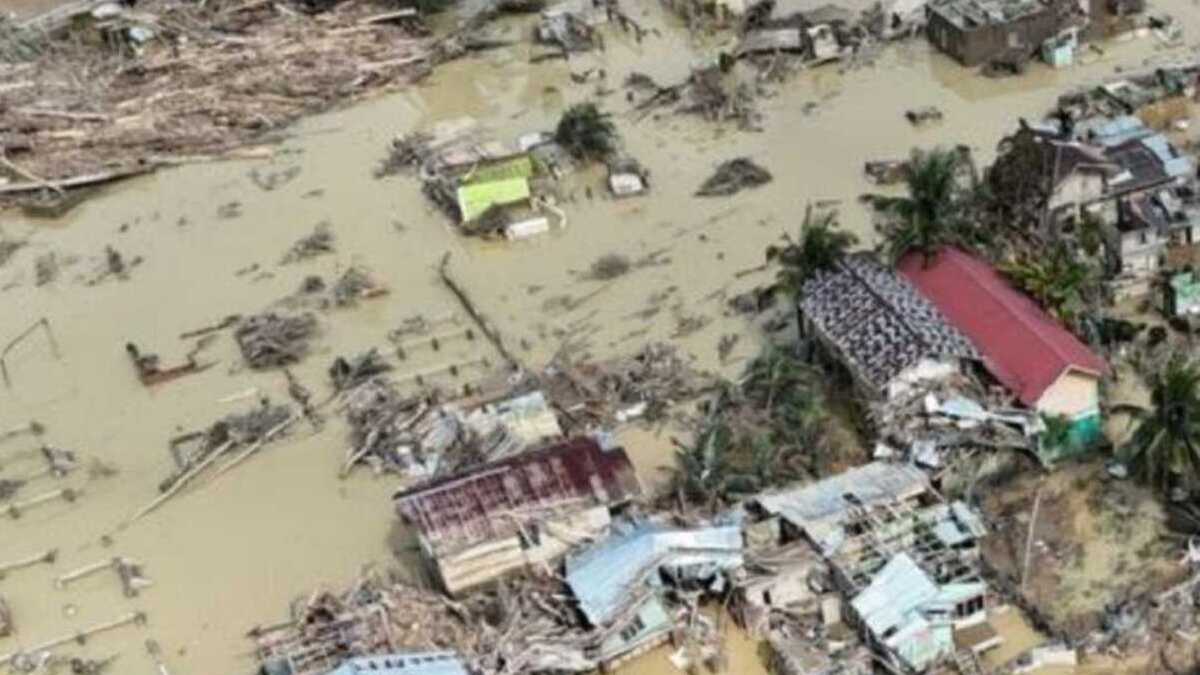
Thailand is among the low- and middle-income economies, particularly net energy importers, that have struggled as the Iran war kept oil prices above US$100 a barrel for much of 2026. Recent severe floods have also damaged crops, homes and businesses.
The IMF projects that growth in Asia will slow to 4.8 per cent this year from 5 per cent in 2025, then to 4.4 per cent in 2027.
It has warned that rising prices and debt are worsening inequality across many of its 191 member economies.
Georgieva and other senior economists have urged governments, including Thailand’s, to control debt by directing spending towards targeted, temporary assistance for the most vulnerable.