Italy plans school face-covering ban and limit on foreign pupils
Prime Minister Giorgia Meloni says Italy will introduce legislation banning burqas and niqabs in schools and creating a legal limit on foreign pupils per class.
- Giorgia Meloni says legislation will ban full-face coverings in Italian schools.
- The government plans a legal limit on foreign pupils in individual classes.
- Critics question whether restrictions could conflict with Italy’s constitutional guarantee of access to education.

Italy is preparing legislation to ban face coverings in schools and introduce a legal limit on foreign pupils per class, Prime Minister Giorgia Meloni said on Sunday.
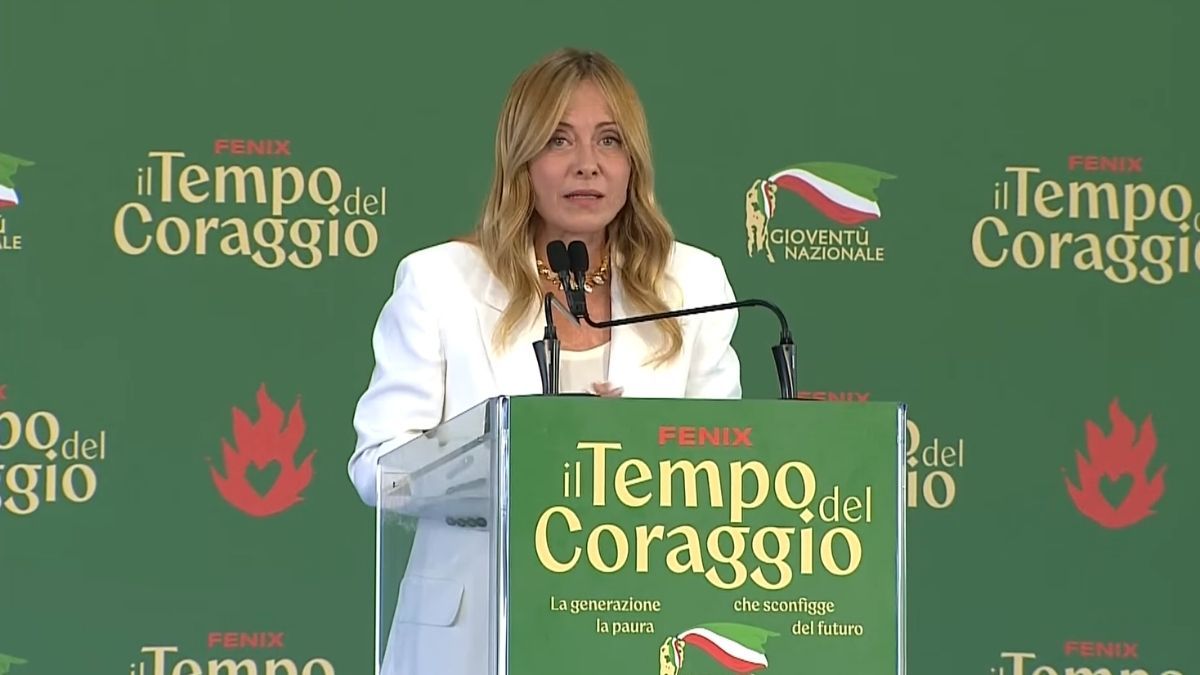
Speaking at an annual youth gathering organised by Gioventù Nazionale, the youth wing of her Brothers of Italy party, Meloni said the measures would soon be presented to the Council of Ministers.
The package would also require parents of foreign pupils facing serious difficulties integrating into the Italian school system to learn Italian. Meloni did not specify the proposed pupil quota.
"If the number of children who don't understand the language becomes large - or even the majority - that is no longer integration; it is neglect," Meloni said, according to Reuters.
Face-covering ban
The proposed legislation would prohibit burqas and niqabs in schools. Meloni said young women should attend school with their faces uncovered, regardless of tradition.
"You must go to school with your face uncovered, and in Italy no one, in the name of a real or supposed tradition, can decide that a young woman must hide herself, " Meloni said.
Several European countries already restrict full-face coverings. France and Belgium have nationwide bans in public places, while Austria introduced further restrictions on Islamic head coverings in schools for girls up to 14 from September 2026.
Foreign pupils in classrooms
Italy already has a 30% limit on non-Italian pupils under a 2010 ministerial circular, although Euronews reported that it has often gone unenforced because of local demographic conditions.
According to Fondazione ISMU, cited by Reuters, non-Italian citizens account for 11.6% of pupils enrolled in Italian schools.
Euronews reported that Italy would become the first European country to introduce a statutory maximum for foreign pupils in individual classes if the proposed measure is enacted.
Other countries use different approaches. Denmark allows some upper secondary schools to impose limits of up to 50% for pupils of "non-Western origin" or from disadvantaged areas, while France uses school catchment zones rather than quotas based on origin.
Earlier proposals and criticism
The announcement follows several recent initiatives. Education Minister Giuseppe Valditara proposed action on full-face veils in August, while Vannacci's Futuro Nazionale party tabled a resolution against them in July. The League also introduced a Senate bill in March proposing tougher penalties for forcing someone to conceal their face.
The new proposals have drawn criticism from opposition politicians and legal experts. Constitutional law professor Salvatore Curreri told ANSA that restrictions affecting where children and their families could live could conflict with Article 34 of Italy's Constitution, which states that "school is open to everyone".
The legislation is expected to go before the cabinet in the coming weeks before being submitted to parliament.