Indonesia sends more firefighting equipment to Kalimantan as haze risk persists
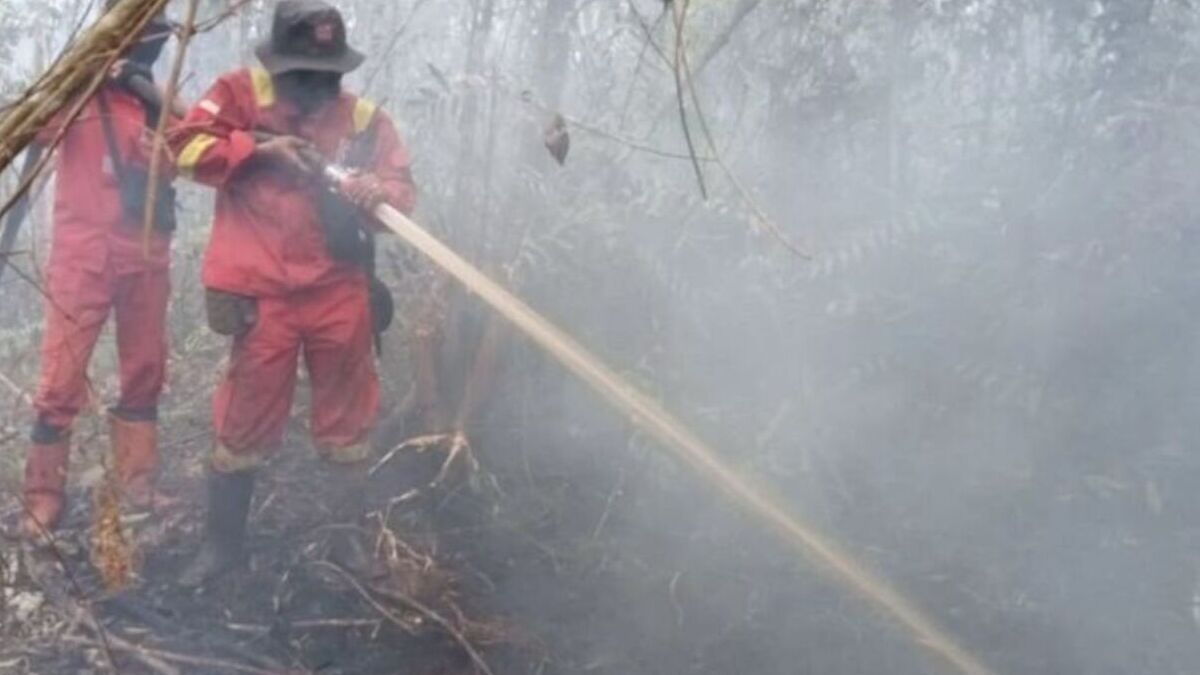
Indonesia is sending 13 additional firefighting units to five Kalimantan provinces as authorities respond to forest and land fires and transboundary smoke haze affecting Malaysia and Singapore.
- Indonesia is sending 13 additional firefighting units to five Kalimantan provinces.
- Smoke haze has affected Kalimantan, Malaysia, Singapore and southern Vietnam.
- Dry conditions and El Niño are keeping regional fire and haze risks elevated.

Indonesia's Ministry of Public Works is sending additional firefighting equipment to five provinces on Kalimantan as authorities strengthen efforts to contain forest and land fires that have generated smoke haze across parts of Borneo and neighbouring countries.
The ministry said on Tuesday (15 September) that 13 additional pieces of equipment were being dispatched to West, Central, South, East and North Kalimantan. The equipment is being transported by sea from Tanjung Priok Port in Jakarta and will be distributed through the ministry's River Basin Agencies.
Public Works Minister Dody Hanggodo said the ministry would adjust its response according to conditions on the ground and had instructed officials to remain on alert and mobilise equipment where required.
"The Ministry of Public Works will continue to take action based on conditions on the ground," Dody said in a statement. "For us at the Ministry, the priority is to respond quickly to field requirements."
The deployment comes as Indonesian authorities continue to monitor fires, hotspots, smoke concentrations and visibility across Kalimantan.
Equipment sent to five provinces
West, Central and South Kalimantan will each receive a 5,000-litre water tanker, a mobile pump with a capacity of 250 litres per second and a six-inch centrifugal pump capable of moving 41.6 litres of water per second.
East Kalimantan and North Kalimantan will each receive a 4,000-litre water tanker and a six-inch centrifugal pump.
The Ministry of Public Works said the equipment would supplement resources already available in Kalimantan. Individual River Basin Agencies will also procure additional equipment according to local requirements, including three-inch centrifugal pumps, jet sprinklers, backpack pumps, extension hoses and water storage tanks.
Arnold A.P. Ritiauw, director general of water resources, said the equipment was intended to accelerate firefighting operations and support water supply requirements in affected areas.
The ministry said its River Basin Agencies would continue coordinating with local authorities to ensure the equipment was ready for deployment according to conditions on the ground.
The government has also been using other resources to fight the fires, including ground operations, water bombing, aerial patrols and weather modification operations.
Fire activity remains concentrated in Kalimantan
Indonesia's Ministry of Forestry said on 14 September that 592 high-confidence hotspots had been detected nationally as of 13 September, compared with 567 the previous day.
Central Kalimantan recorded 89 high-confidence hotspots, down from 197, while South Sumatra had 49, down from 62. The ministry said hotspot numbers in West Kalimantan had also fallen significantly.
Earlier in September, fire activity was considerably higher. On 1 September, the Ministry of Forestry recorded 1,370 high-confidence hotspots nationally, including 570 in West Kalimantan and 488 in Central Kalimantan.
The ministry's figures are based on data from NASA's Terra and Aqua satellites, SNPP and NOAA-20 through Indonesia's SiPongi monitoring system.
Fire conditions remain dynamic, particularly in peatland areas where fires can continue below the surface after visible flames have been extinguished. The Ministry of Forestry has said firefighting teams are continuing ground checks, suppression, cooling and mopping-up operations in affected areas.
The government has also used weather modification operations to support rainfall and increase moisture in parts of Kalimantan. Japan has provided three CH-47 Chinook helicopters to support water-bombing operations in West Kalimantan.
Smoke has crossed into Malaysia and Singapore
The fires have also generated transboundary smoke haze affecting other parts of Southeast Asia.
The ASEAN Specialised Meteorological Centre (ASMC), a regional haze monitoring body, reported that moderate to dense smoke haze was observed over Kalimantan, Sarawak, Peninsular Malaysia, Singapore and southern Vietnam in its latest update on 14 September.
It also reported scattered hotspots in Kalimantan and southern Sumatra, while air-quality stations in affected areas recorded moderate to unhealthy conditions. Some monitoring stations in Kalimantan and Sumatra recorded unhealthy to hazardous air quality.
The regional situation has been closely monitored since August. On 26 August, ASMC activated Alert Level 3 for the southern ASEAN region, citing prolonged dry conditions, clusters of hotspots in Kalimantan and moderate to dense smoke haze drifting northwards from West Kalimantan.
The agency recorded 287 and 190 hotspots in Kalimantan on 24 and 25 August respectively, based on NOAA-20 satellite observations.
West Kalimantan is particularly relevant to Malaysia because smoke from fires in the province can move north-westwards across the border into Sarawak.
ASMC's July review had already documented moderate smoke plumes from West Kalimantan drifting into western Sarawak on several days.
Singapore records unhealthy air quality
Singapore has also been affected by the transboundary haze.
Smoke haze from Indonesia pushed air quality in all five regions of Singapore into the unhealthy range on 15 September 2026. At 6am, the 24-hour Pollutant Standards Index (PSI) was 154 in the central region, 128 in the east and west, 111 in the south and 104 in the north.
The National Environment Agency (NEA) classifies PSI readings of 101 to 200 as unhealthy. Channel NewsAsia reported that this was the first time since September 2019 that all five regions had simultaneously entered the unhealthy range, while The Straits Times reported that it was the first time since October 2023 that haze had pushed Singapore's PSI into unhealthy territory.
The deterioration began on 14 September, when the east and west crossed into the unhealthy range at about 4pm, followed by the other regions. NEA said moderate to dense smoke plumes from forest fires in Kalimantan were drifting towards Singapore, with additional smoke observed over southern Sumatra.
The agency attributed the worsening conditions to a shift in prevailing winds towards the east-south-east and forecast continued dry conditions, with south-east to east-south-east winds likely to keep Singapore exposed to haze.
NEA advises people to reduce outdoor activities when the 24-hour PSI is unhealthy. The current haze episode began on 4 September, when the central region's PSI first exceeded 100 since 2023.
Authorities had earlier warned of an increased haze risk between June and October amid warmer and drier conditions associated with El Niño and the Indian Ocean Dipole. Singapore's PSI classifies 201 to 300 as very unhealthy and above 300 as hazardous; no region reached those levels on 15 September.
The haze episode has also affected visibility and aviation in Indonesia. The Ministry of Forestry reported on 10 September that Pontianak had visibility of about 1.2 kilometres with smoky conditions, while Palangka Raya had visibility of about three kilometres.
Earlier, on 2 September, Pontianak's visibility fell to about 200 metres in the morning because of dense smoke, according to the Ministry of Forestry, before improving as atmospheric conditions changed.
Dry weather keeps regional haze risk elevated
The current fire and haze episode is occurring during the Southwest Monsoon, which typically brings drier conditions to the southern ASEAN region.
ASMC's September-November outlook says below-normal rainfall is expected across much of the Maritime Continent, while El Niño conditions are present and forecast to be strong during the September-November period.
The agency said the combination of prolonged dry conditions and El Niño could increase the likelihood of fires and transboundary haze, particularly when winds carry smoke from Indonesia towards neighbouring countries.
For 14-27 September, ASMC forecasts drier-than-usual conditions over most of the southern ASEAN region.
The Indonesian Ministry of Public Works said its latest equipment deployment forms part of its wider responsibility for water-resource infrastructure, with the equipment being made available for emergency use when required.
The Ministry of Forestry continues to monitor hotspots, fire conditions, air quality, weather, rainfall, smoke distribution and visibility to determine where firefighting resources should be deployed.