Philippines foreign ministry warns officials over conflicting statements on China
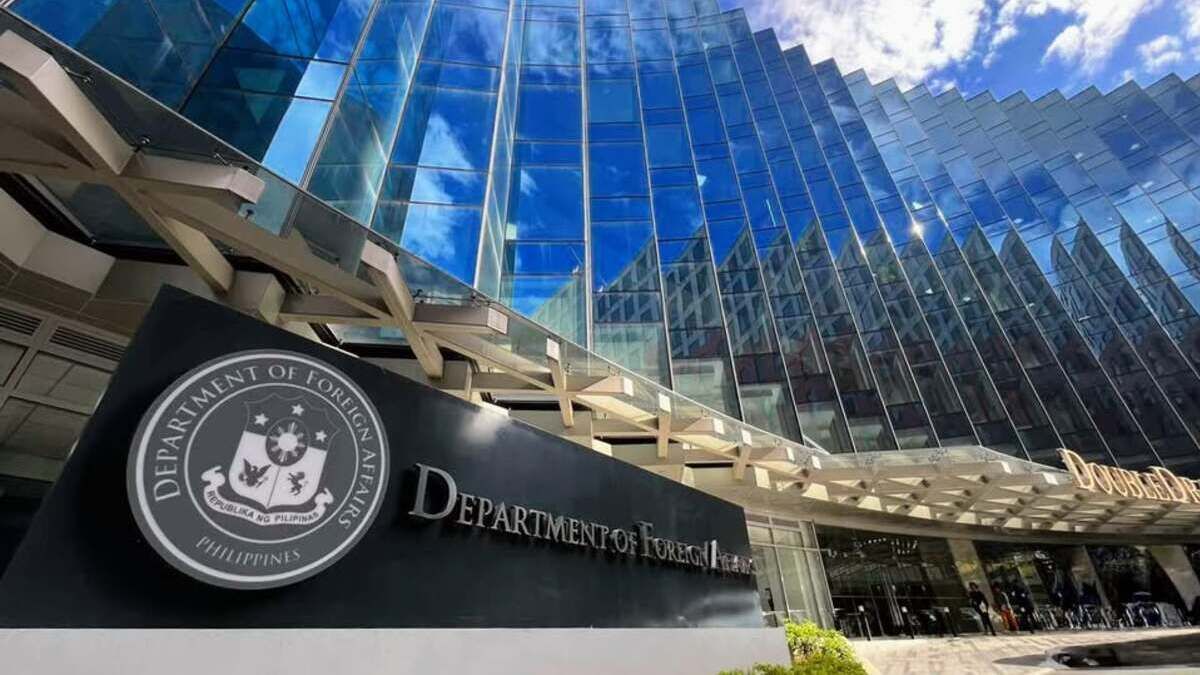
The Philippines' Department of Foreign Affairs has warned government officials against making conflicting public statements on China, saying inconsistent messaging could undermine diplomatic credibility and weaken Manila's negotiating position ahead of the 49th ASEAN Summit.
- The Philippine foreign ministry warned officials that conflicting statements on China could undermine diplomatic credibility.
- The department reaffirmed President Ferdinand Marcos Jr.'s constitutional authority to direct the country's foreign policy.
- The warning comes ahead of the 49th ASEAN Summit, which the Philippines will host from 16 to 18 November.

The Philippines’ Department of Foreign Affairs (DFA) has issued a rare public rebuke to government officials and agencies over their statements about China, warning that conflicting messages could weaken the country’s diplomatic position ahead of a major regional summit.
In a statement on Sunday, 8 November 2026, the DFA criticised recent public commentary by Philippine officials concerning China’s actions in the South China Sea, saying it had blurred the distinction between documenting maritime incidents, public rhetoric and official diplomatic policy.
The department did not name the officials concerned or identify individual statements. However, the warning followed months of public exchanges involving Defence Secretary Gilberto Teodoro Jr., Philippine Coast Guard spokesperson Rear Admiral Jay Tarriela, lawmakers and the Chinese Embassy in Manila.
“Public statements that undermine the government’s diplomatic approach do more than complicate the work of our diplomats,” the DFA said.
“They risk eroding the country’s credibility in international affairs and project an image of internal division that external parties can exploit. Such actions can ultimately weaken the Philippines’ negotiating position.”
What statements prompted the DFA warning?
One prominent exchange followed comments by Chinese Ambassador to the Philippines Jing Quan on 15 October. Jing said China could “easily win” if it chose to use force, although he added that Beijing would not do so and wanted peace.
Tarriela, the Philippine Coast Guard’s spokesperson for the West Philippine Sea, described the ambassador’s remarks as a direct threat.
“That is not reassurance. That is a direct threat, and wrapping it in ‘We love peace’ does not change what it is,” Tarriela said.
He also referred to Filipino fishermen being driven away from Bajo de Masinloc, and Philippine Coast Guard personnel allegedly being subjected to water cannons, ramming and laser targeting in the country’s exclusive economic zone.
Tarriela said the Philippines measured its maritime rights by international law rather than the military strength of its neighbour.
Teodoro also publicly criticised China. On 14 October, he rejected Vice-President Sara Duterte’s description of the Philippines as a regional troublemaker, saying the description applied instead to China because of its actions against Filipino personnel at sea.
The defence secretary’s comments formed part of a wider exchange between Philippine officials and the Chinese Embassy over the handling of maritime confrontations.
The dispute intensified after Chinese Foreign Minister Wang Yi urged Manila to control politicians whose statements he said had crossed Beijing’s “red lines”. Teodoro subsequently described Wang’s remarks as “a threat of censorship”.
Several Philippine senators also called for Jing to be declared persona non grata after his comments about China’s ability to win a confrontation.
The DFA did not say whether any one of these remarks was the specific subject of its warning. It referred more broadly to recent commentary by government officials.
DFA says civilian authorities direct foreign policy
The department said the Philippine Constitution established President Ferdinand Marcos Jr. as the principal authority responsible for the country’s foreign policy.
“Under the Constitution, the President is the chief architect of Philippine foreign policy,” it said.
“Individual officials, agencies or sectors do not independently determine the direction of our international relations.”
The DFA said all government officials, whether civilian or military, were expected to align their public positions with the President’s policy directions.
It acknowledged that the national security establishment and uniformed services played an important role in documenting developments in the West Philippine Sea. Their work, it said, had helped establish facts, counter disinformation and raise international awareness.
However, the department warned against treating public exposure as a substitute for diplomatic engagement.
“Releasing footage or shaping an online narrative does not, by itself, act as a physical deterrent at sea or a legal strategy,” it said.
The DFA added that professional advice and internal disagreements should be handled through established inter-agency channels rather than public exchanges.
China and the Philippines exchange diplomatic protests
The latest dispute follows repeated confrontations between the two countries over competing claims in the South China Sea.
On 19 October, the DFA summoned Jing over his comments about the possible use of force. Foreign Affairs Secretary Ma. Theresa Lazaro conveyed Manila’s serious concern and strong objection, describing the remarks as provocative and unacceptable.
The department said foreign diplomats should not publicly intimidate or taunt Philippine officials and lawmakers carrying out their duties.
China also criticised Manila over the ASEAN Defence Ministers’ Meeting-Plus held in Cebu in late October. Beijing accused the Philippines of creating obstacles to its participation and said it had “erected multiple obstacles” to the meeting.
China sent its defence attaché in Manila rather than Defence Minister Dong Jun.
Philippine officials denied that Beijing had been barred from participating. Teodoro said China’s criticism did not represent the position of ASEAN.
Foreign ministers discuss the tensions
The DFA statement came after Lazaro held a telephone conversation with Wang on 3 November.
Lazaro described the discussion as “frank and constructive”, saying both sides had emphasised the importance of continued diplomatic dialogue and the proper management of differences based on mutual respect.
China’s account said Wang had urged the Philippines to exercise caution in the words and actions of its officials and issue a rational, unified position on China policy.
Wang accused certain Philippine politicians of interfering with bilateral relations and damaging China’s interests. He did not identify the politicians.
The DFA said Manila remained committed to maintaining stable and predictable relations with Beijing while upholding its positions on maritime issues.
South China Sea ruling remains central
In July 2016, constituted under the United Nations Convention on the Law of the Sea ruled in a case brought by the Philippines that China’s claim to historic rights within the area covered by its nine-dash line had no legal basis beyond the maritime entitlements permitted under the convention.
The tribunal also found that certain Chinese activities had violated the Philippines’ sovereign rights in its exclusive economic zone. The ruling did not decide sovereignty over land features or delimit a maritime boundary.
China rejected the award and maintains that it does not accept or recognise the decision.
The Philippines continues to invoke the ruling in its diplomatic position on the South China Sea.
Manila prepares to host ASEAN leaders
The Philippines will host the 49th ASEAN Summit and Related Summits in Metro Manila from 16 to 18 November. The meetings will bring together leaders from ASEAN member states and dialogue partners, including expected attendance by US President Donald Trump.
The DFA said its engagement with China was part of an effort to maintain bilateral relations before, during and after the regional meetings.
Its latest statement called for government officials to maintain a consistent position, with foreign policy directed by the President and implemented through civilian authorities.