Gaza declares highest emergency level as storms flood 70,000 displacement tents
Gaza declared its highest emergency level on 7 November after severe storms flooded around 70,000 tents sheltering displaced Palestinians, overwhelming rescue teams and exposing critical shortages of winter shelter and emergency supplies.
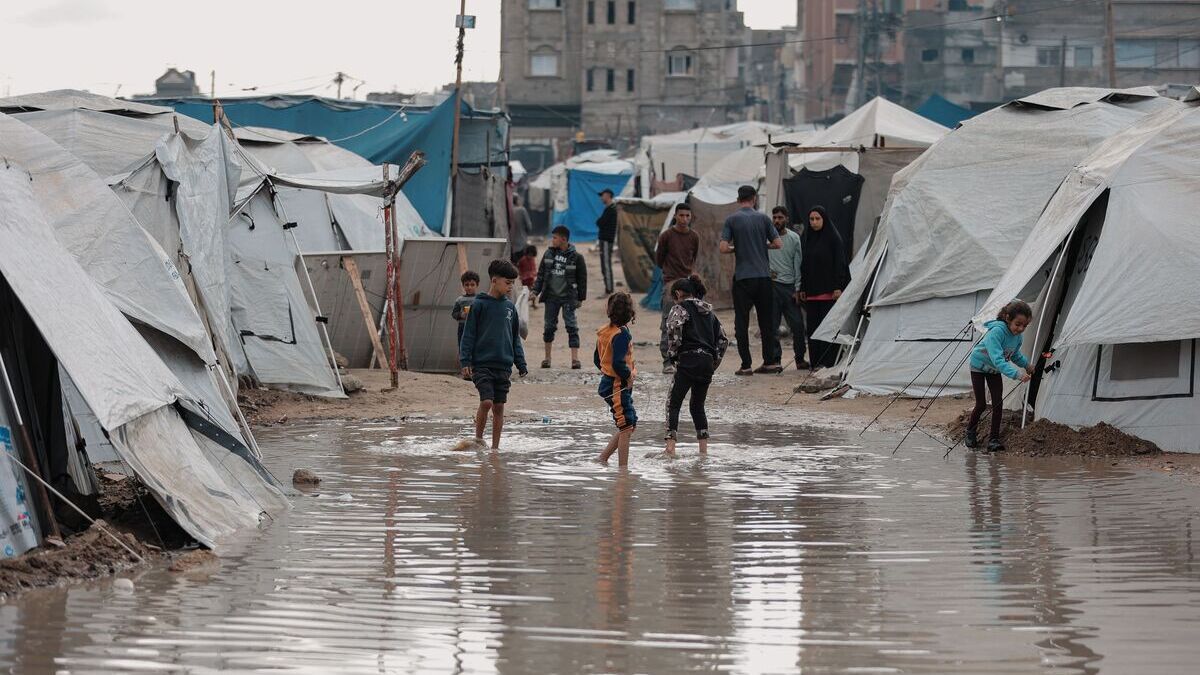
- Severe storms flooded approximately 70,000 tents, prompting Gaza's Civil Defence authorities to declare their highest emergency level.
- Rescue teams received 2,166 distress calls but responded to only 218 because of limited resources.
- The United Nations warned that Gaza faced substantial shortages of tents, tarpaulins and other essential winter shelter supplies.

Gaza’s Civil Defence authorities declared the highest level of emergency on Saturday, 7 November 2026, after severe storms flooded around 70,000 tents sheltering displaced Palestinians, leaving rescue teams struggling to respond to thousands of requests for assistance.
Floodwaters reached depths of up to 1.5 metres in some displacement camps, according to the Civil Defence authorities.
Their emergency operations centre received 2,166 distress calls after the storm began, but rescue teams were able to respond to only 218 because of limited resources and the scale of the emergency.
The authorities called on the international community to pressure Israel to allow specialised rescue equipment and vehicles, tents, plastic tarpaulins and mobile housing units into the Gaza Strip to provide emergency shelter for affected families.
The flooding followed heavy rain and strong winds that began on Friday evening, marking the first major winter storm of the season.
Displaced families living in makeshift shelters faced flooded sleeping areas and damaged belongings, while emergency workers struggled to reach affected locations.
Rescue teams overwhelmed by distress calls
The scale of the emergency was reflected in the gap between the number of calls received and the number of cases that rescue teams could attend.
Civil Defence spokesperson Mahmoud Basal said the agency had received requests from residents, administrators of displacement camps and shelters, and families whose homes had been damaged during the war.
With rescue teams unable to reach most callers, authorities said they had resorted to providing instructions remotely to families dealing with flooding.
The Civil Defence authorities also warned that the storm had affected displacement camps, shelters and residential areas across the territory. Water levels in some locations reached 1.5 metres, according to their statement.
In a separate statement, Gaza’s Hamas-run Government Media Office reported that dozens of walls had collapsed across the Strip, causing injuries of varying severity, including several serious cases.
The office put preliminary estimates of direct damage from the storm at approximately US$3 million. The figure was an initial estimate and was not presented as a comprehensive assessment of all damage.
Health minister warns of disease risks
Palestinian Health Minister Majed Abu Ramadan warned on 7 November that worsening cold weather and successive storms could push the humanitarian and health situation in Gaza to a more dangerous level.
In a statement carried by the Palestinian news agency WAFA, Abu Ramadan appealed to the international community, the United Nations and humanitarian organisations to intervene to protect displaced Palestinians.
He said flooding, inadequate shelter and deteriorating health and sanitation conditions were increasing risks for vulnerable groups, particularly as winter was only beginning.
The minister identified several factors compounding the situation, including damage to water and sewage networks, accumulating waste, shortages of clean water and hygiene supplies, overcrowding in displacement centres, malnutrition and limited access to essential healthcare.
He warned that continued exposure to cold and damp conditions inside damaged tents, combined with poor ventilation and overcrowding, could increase respiratory infections, including influenza and pneumonia. Children, infants, older people and patients were among those particularly at risk.
Abu Ramadan also cautioned that sewage contamination, accumulated waste and inadequate sanitation and pest-control services could increase the risk of food and water contamination and infectious diseases.
He said Gaza’s healthcare system had been severely weakened by damage to medical facilities and shortages of medicines, medical supplies, fuel and healthcare workers, limiting its ability to respond to rising needs.
The minister called for the urgent provision of weather-resistant tents and temporary shelters, insulation materials, heating supplies, blankets and winter clothing.
He also urged assistance with clean drinking water, hygiene supplies, waste removal, pest control and repairs to sewage networks and rainwater drainage systems.
UN warns of shortages ahead of winter
The United Nations had already warned that Gaza’s shelter needs substantially exceeded the supplies available before the latest storm.
In its humanitarian situation report published on 5 November, the UN Office for the Coordination of Humanitarian Affairs (OCHA) cited Shelter Cluster estimates that, as of 1 November, people in Gaza needed approximately 121,000 tents, 561,000 tarpaulins, 57,000 emergency shelter kits and 1.7 million mattresses ahead of the cold and rainy season.
The supplies available inside Gaza were considerably lower. Stocks included approximately 2,800 tents, 76,000 tarpaulins and 4,993 mattresses, while no emergency shelter kits were available, according to the report.
The report also identified restrictions on the entry of materials, funding shortfalls and delays in procurement as obstacles to winter preparations.
Even when supplies had been procured or were in the pipeline, their delivery could be delayed by approval and access constraints.
OCHA said the estimated funding requirement for winterisation was US$267.9 million, with a funding gap of US$186.5 million at the time of its report.
Humanitarian partners had been carrying out flood-prevention work at displacement sites, including improving drainage and maintaining access routes. The report said sandbagging was under way at 503 sites, alongside ground-levelling work.
However, the latest flooding demonstrated the scale of the challenge facing humanitarian agencies and local emergency services as the rainy season began.
Previous warnings over deteriorating shelters
The latest emergency follows earlier warnings from Palestinian authorities and humanitarian organisations about the condition of temporary shelters used by displaced families.
In September, the Palestinian Ministry of Social Development warned that many tents had deteriorated after prolonged exposure to sunlight, heat, wind and rain, as well as repeated dismantling and relocation.
The ministry said structures originally intended as short-term emergency accommodation had been used for much longer periods and could no longer provide adequate protection.
OCHA’s September assessment also identified 451 displacement sites at high risk of flooding, hosting an estimated 464,402 people.
The UN report described inadequate drainage, deteriorating shelters, unsafe latrines and overcrowding as persistent problems at displacement sites. It warned that limited funding and restrictions affecting the entry of materials were slowing efforts to prepare for winter.
The latest storm has therefore struck an already strained shelter and emergency-response system, with thousands of families facing further damage to the temporary accommodation on which they depend.
No private company identified as responsible for the emergency response
The statements and reports available from Gaza’s Civil Defence authorities, the Palestinian Health Ministry and OCHA identify government bodies, UN agencies and humanitarian coordination structures involved in the response.
They do not identify a private company as responsible for operating the rescue response or supplying the emergency equipment requested by Civil Defence.
OCHA’s reporting refers to the work of humanitarian partners and the Shelter Cluster, a coordination mechanism involving organisations providing shelter assistance.
These should not be confused with private contractors or companies responsible for the emergency response.
The immediate requests from Gaza’s Civil Defence authorities remain the entry of specialised rescue vehicles and equipment, together with tents, tarpaulins and mobile housing units.
With further cold weather and storms expected during the winter season, Abu Ramadan has urged international organisations and governments to provide shelter, health and sanitation assistance before conditions deteriorate further.