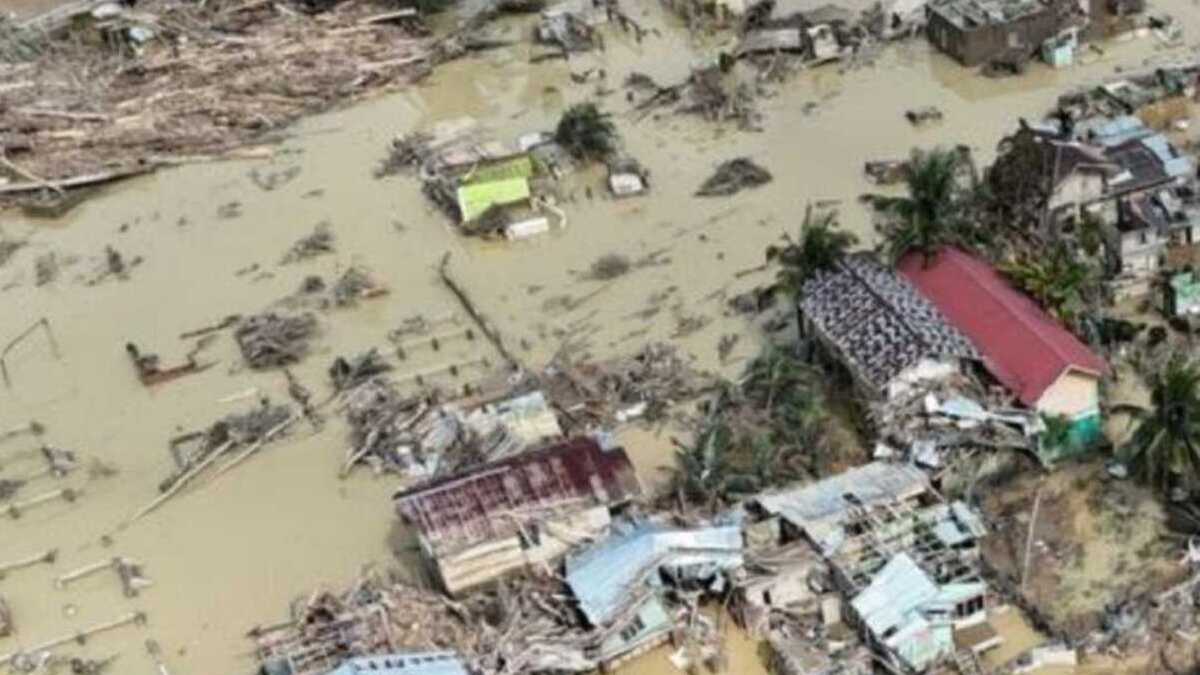
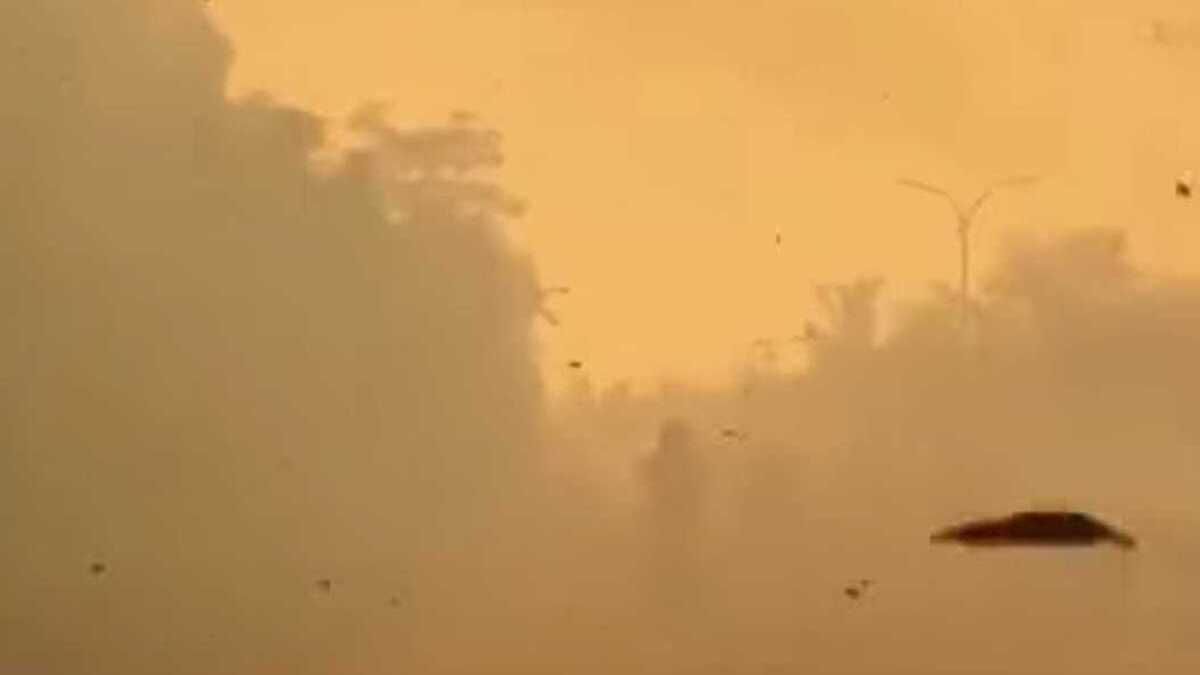
Singapore warns citizens as Anak Krakatau ash disrupts Indonesian flights
Singapore has advised citizens in Indonesia to prioritise safety as volcanic ash from Mount Anak Krakatau disrupts flights, despite the end of a 25-hour continuous eruption.
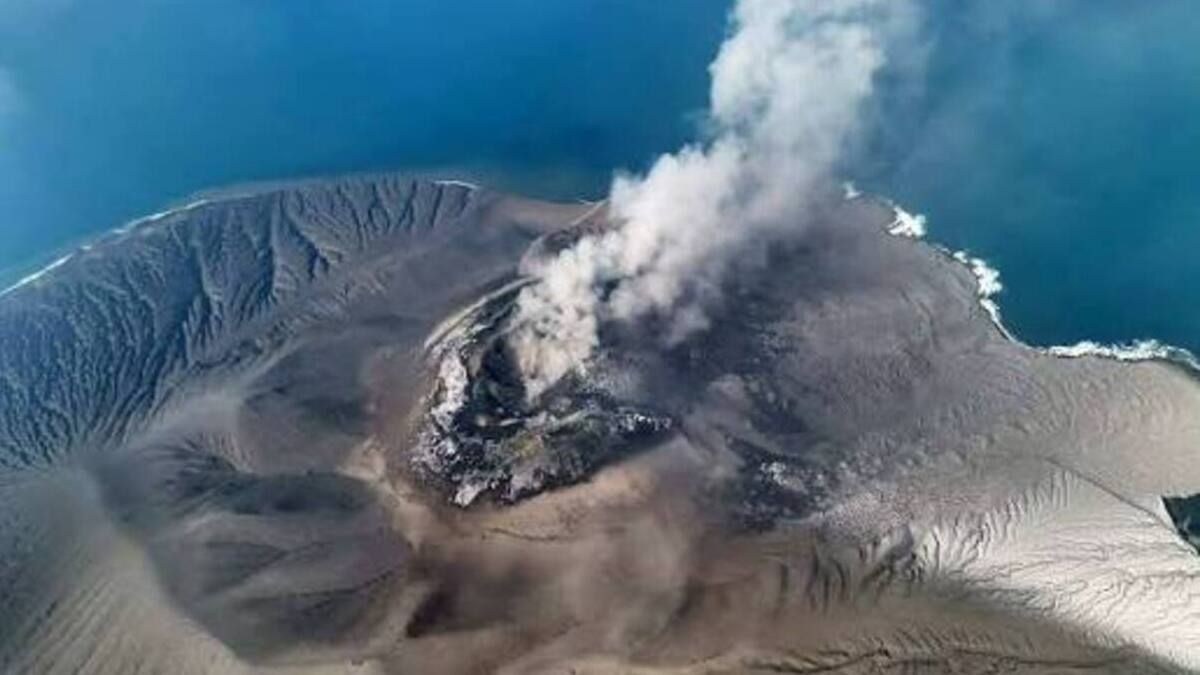
- Singapore urged citizens in affected Indonesian areas to minimise outdoor activity and monitor official safety updates.
- Anak Krakatau’s 25-hour continuous eruption has ended, but authorities say further eruptions remain highly probable.
- Volcanic ash has disrupted more than 2,300 flights and affected over 270,000 travellers across Indonesia.

Singapore has advised its citizens in Indonesia to prioritise their safety and monitor official updates after volcanic ash from Mount Anak Krakatau disrupted flights at several Indonesian airports.
In an advisory issued on 7 September, Singapore's Ministry of Foreign Affairs (MFA) said the eruption had affected parts of Indonesia and disrupted flight operations at Soekarno-Hatta International Airport and other airports. It warned that further disruption could occur because the situation remained fluid.
The advisory urged Singaporeans in affected areas to minimise outdoor activities and remain indoors where possible, while following instructions from Indonesian authorities and monitoring local news and official sources.
The warning came after Indonesia's Geological Agency confirmed that the volcano's 25-hour continuous eruption had ended, although Anak Krakatau remained on Alert Level III, or Siaga, and the possibility of further eruptions remained high.
The continuous eruption lasted about 25 hours
The continuous eruption began at 11.07pm local time on Friday, 4 September, and officially ended at 12.04am on Sunday, 6 September, according to the Geological Agency under Indonesia's Ministry of Energy and Mineral Resources.
The agency said the eruption episode was followed by three Strombolian eruptions, a type of explosive activity characterised by relatively short eruptions involving lava, volcanic gases and ash.
Although the prolonged eruption has ended, monitoring between 6 and 7 September continued to record high seismic activity. The Geological Agency recorded three eruption earthquakes, nine emission earthquakes, 93 low-frequency earthquakes, 98 hybrid or multi-phase earthquakes, four episodes of continuous tremor and one shallow volcanic earthquake.
The agency said the return of Strombolian activity was provisionally interpreted as the end of the prolonged eruption episode, rather than the end of volcanic activity at Anak Krakatau. The volcano therefore remains at Level III, with the probability of further eruptions still considered high.
The latest Geological Agency observation at 5.47am on 7 September found no visible eruption from the Pasauran observation post. However, authorities continue to monitor the volcano because of the elevated seismic activity and the potential for further eruptions.
People, tourists and other visitors have been told not to approach within 3 kilometres of the volcano's active crater. The main hazards identified by authorities include incandescent rock fragments and heavy ashfall, while lava flows could become a hazard if another continuous eruption occurs.
Volcanic ash continues to affect Indonesian airspace
Although the prolonged eruption has stopped, ash from Anak Krakatau continues to affect airspace over western Indonesia.
The Meteorology, Climatology and Geophysical Agency (BMKG) said on Monday that volcanic ash had directly affected the operations of eight airports on Java and Sumatra.
The agency said ash at altitudes of up to 15,000 feet, or about 4.57 kilometres, was moving westwards at about 15 knots.
At lower levels, ash extended towards parts of Banten, western and southern West Java, Lampung and Bengkulu, as well as surrounding waters and the Indian Ocean.
At higher levels, from the surface to approximately 50,000 feet, or 15.24 kilometres, ash was detected further over the Indian Ocean west and south-west of Bengkulu, Lampung and Banten.
BMKG said it had issued 39 Significant Meteorological Information, or SIGMET, advisories since the first eruption on 4 September.
SIGMETs are aviation weather warnings used to alert aircraft operators and flight crews to hazards such as volcanic ash.
The continued presence of ash in the atmosphere means that the end of the continuous eruption does not immediately allow all affected airports to resume normal operations.
More than 2,300 flights affected
The eruption has caused extensive disruption to air travel.
Reuters reported on Monday that more than 2,300 flights had been disrupted and more than 270,000 travellers affected. Seven Indonesian airports remained closed, including two serving Jakarta, while one airport in South Sumatra had reopened.
Soekarno-Hatta International Airport was scheduled to remain closed until 6pm local time on Monday because of the continuing presence of volcanic ash.
The disruption followed the closure of eight airports on Sunday as ash moved across Java and Sumatra.
Indonesia's Directorate General of Civil Aviation reported that Soekarno-Hatta alone had 209 affected flight movements during an initial closure period on Sunday, affecting 22,798 passengers.
Airport authorities used aircraft inspections and other tests to determine whether volcanic ash was present around the airport.
The disruption has also extended beyond Jakarta. At Komodo Airport in Labuan Bajo, eight flights between Jakarta and Labuan Bajo were cancelled on Monday, affecting 1,154 passengers.
The affected airlines included Batik Air Indonesia, Indonesia AirAsia, Garuda Indonesia and Super Air Jet.
Airlines have continued to advise passengers to check individual flight status before travelling, as operations can change according to ash movement and airport conditions.
Singapore warns travellers to contact airlines and insurers
The Singapore MFA advised Singaporeans whose travel plans have been affected to contact their airlines directly for information on cancellations, delays and alternative arrangements.
Travellers were also advised to contact their travel insurance providers to establish what assistance and coverage may be available for disruption caused by the volcanic eruption.
The ministry encouraged Singaporeans in Indonesia to register their presence through its eRegister system if they had not already done so.
For consular assistance, Singaporeans can contact the Singapore Embassy in Jakarta, the Singapore Consulate-General in Medan or the Ministry of Foreign Affairs Duty Office in Singapore.
The advisory also urged Singaporeans to continue monitoring updates from Indonesia's Centre for Volcanology and Geological Hazard Mitigation (PVMBG), which is responsible for monitoring volcanic activity and issuing recommendations around active volcanoes.
No tsunami detected in the Sunda Strait
The eruption has raised concerns because Anak Krakatau was responsible for the 2018 Sunda Strait tsunami, which killed more than 400 people after part of the volcano collapsed into the sea.
However, Indonesia's BMKG said its multi-sensor Indonesian Tsunami Early Warning System (InaTEWS) monitoring had not detected sea-level anomalies indicating a tsunami associated with the latest eruption as of 7.30am on 6 September.
On 7 September, BMKG said monitoring of the Sunda Strait continued. Its high-frequency radar observations indicated a low probability of a tsunami, below 50 per cent, while surface currents were moving predominantly south-west towards the Indian Ocean. Wave heights in the Sunda Strait were forecast at between 0.5 and 2 metres for 8–13 September.
Authorities have nevertheless continued to monitor the sea around the volcano alongside the volcanic activity.
Several other Indonesian volcanoes remain on alert
Anak Krakatau is not the only Indonesian volcano currently experiencing elevated activity.
Indonesia's Geological Agency currently lists five volcanoes at Level III, or Siaga, alongside Anak Krakatau. They are Mount Semeru in East Java, Mount Lewotobi Laki-laki in East Nusa Tenggara, Mount Ili Lewotolok in East Nusa Tenggara, Mount Ibu in North Maluku and Mount Sinabung in North Sumatra.
Several of these volcanoes have also recorded eruptions in recent days.
Mount Semeru erupted on the morning of 6 September, producing an ash column approximately 1,000 metres above its summit.
Mount Ili Lewotolok erupted at about 6.11am local time on the same day, producing an ash column around 400 metres above the summit, while Mount Ibu recorded an eruption at about 4.55am, with an ash column also reaching around 400 metres above its summit.
The Geological Agency has stressed that the eruptions are independent volcanic events rather than evidence of a single geological process affecting the six volcanoes simultaneously. Each volcano has its own volcanic and magma system.
Anak Krakatau remains under close monitoring
Anak Krakatau is located in the Sunda Strait between the Indonesian islands of Java and Sumatra. It emerged from the remains of the Krakatau volcanic system following the catastrophic 1883 eruption.
The volcano has remained intermittently active in the decades since its formation. After the deadly 2018 tsunami, relatively low-level eruptions continued as the volcano rebuilt itself before a longer period of reduced activity. A new series of eruptions began on 2 July 2026, when its status was raised to Level III.
The latest prolonged eruption has now ended, but Indonesian authorities have made clear that this does not mean the volcano has become inactive.
For Singaporeans travelling in Indonesia, the immediate advice remains to monitor official information, limit exposure to volcanic ash, follow local safety instructions and check directly with airlines before travelling.
The Singapore MFA has also advised citizens to remain prepared for further flight disruptions because volcanic activity and ash movement can change at short notice.