China rejects claims it failed to warn Nepal before deadly Rasuwagadhi floods
China has rejected allegations that it failed to warn Nepal before deadly floods and landslides struck the Rasuwagadhi-Kerung border, as the death toll reached 392 and more than 1,400 people remained missing.
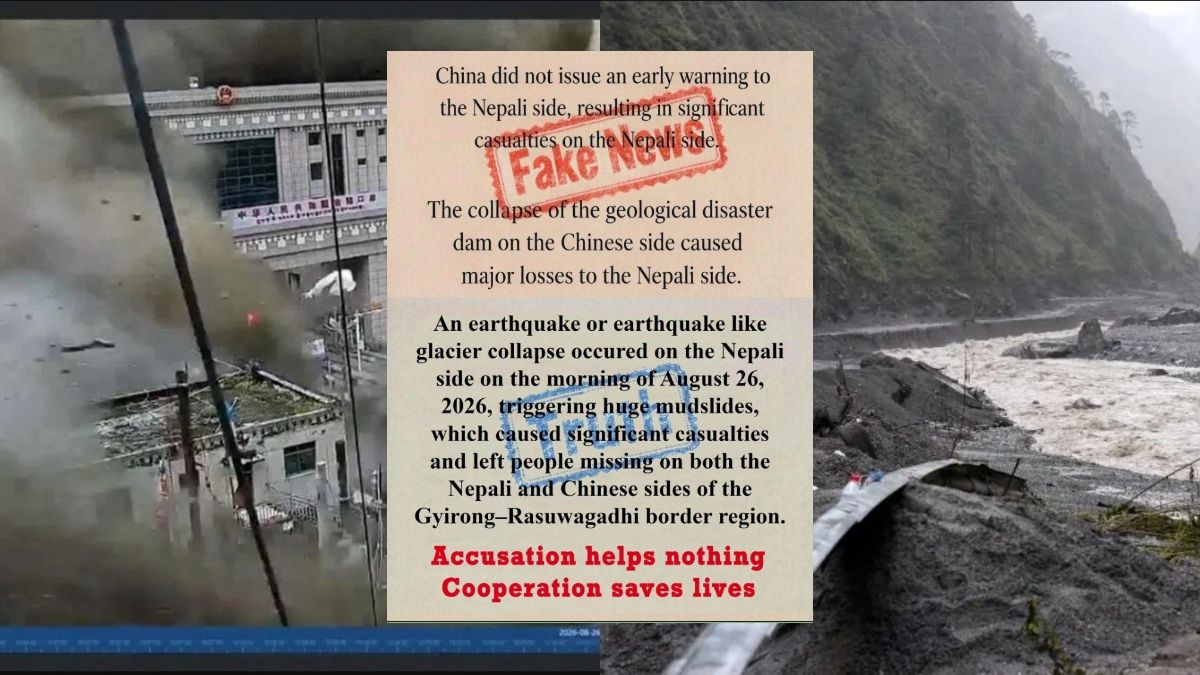
- China rejected allegations that a lack of warning contributed to deaths and damage in Nepal.
- The disaster killed 392 people and left more than 1,400 missing across Nepal and Tibet.
- Rescue teams faced another flood threat from a debris-blocked river and barrier lake.

The Chinese Embassy in Nepal has rejected allegations that China failed to provide an early warning before devastating floods and landslides struck the Rasuwagadhi-Kerung border area.
The embassy described the allegations as “fake news” and misleading, while Chinese and Nepalese authorities continued rescue operations following the disaster on 26 August 2026.
Two allegations circulating in Nepal were specifically rejected by the embassy.
The first was that the absence of a Chinese warning caused significant loss of life. The second was that Nepal suffered extensive damage after a geological disaster dam on the Chinese side collapsed.
China’s account of the disaster
According to China’s account, an earthquake or earthquake-like tremor occurred on the Nepali side on the morning of 26 August.
The tremor was said to have triggered an ice avalanche and subsequent mudslides, causing significant casualties and leaving people missing on both sides of the Gyirong-Rasuwagadhi border.
Chinese Ambassador to Nepal Zhang Maoming told NTV World that China was “deeply saddened” by the disaster and expressed condolences to those affected.
Zhang said China would continue providing support to Nepal as rescue and relief operations continued.
He also said Chinese President Xi Jinping had ordered authorities to prioritise search and rescue, shelter for people at risk, medical treatment and measures to prevent secondary disasters.
The Chinese Embassy said it had activated its emergency response mechanism and sent a working team to the affected area.
It also said Chinese authorities were coordinating with Nepalese officials on rescue operations.
Despite losses on the Chinese side, Beijing had begun arranging emergency supplies and cash assistance for Nepal, according to the embassy.
The embassy called for stronger cross-border cooperation on disaster monitoring, information sharing and early-warning systems.
“Blame solves nothing; cooperation saves lives,” it said, urging both countries to concentrate on rescue and relief efforts rather than assigning blame during the crisis.
Nearly 100 Chinese nationals missing
Nearly 100 Chinese nationals remained missing on the Nepalese side after the mudslide, Chinese Foreign Ministry spokesperson Lin Jian said at a regular press briefing on Thursday, 27 August 2026.
Lin said the Chinese embassy in Nepal was continuing to verify the information with Nepalese authorities.
China separately reported that 260 foreign nationals remained unaccounted for in affected areas on the Chinese side.
“For Chinese rescuers, all lives are precious, regardless of their nationalities,” Lin said.
He added that Chinese authorities were communicating with foreign embassies to provide updates about their nationals.
China expands rescue operation
China stepped up its rescue response after the mudslide left people dead and missing on both sides of the China-Nepal border.
Lin said Chinese authorities had activated a national Level-II emergency response, while Xizang had launched a Level-I natural disaster response.
Military, armed police, border inspection and firefighting teams were sent to affected areas.
Vice Premier Zhang Guoqing also travelled to the site to oversee rescue and disaster-response operations.
Lin said China and Nepal were maintaining close communication and coordinating search and rescue efforts.
He added that Beijing was ready to provide emergency assistance to Nepal.
Death toll reaches 392
The death toll from massive flash floods along the Nepal-Tibet border reached 392 on Thursday, while rescue teams searched for more than 1,400 people reported missing.
According to figures cited from disaster authorities on both sides of the border, 389 people had died in Nepal and three in neighbouring Tibet.
Nepal’s National Disaster Risk Reduction and Management Authority said 389 bodies had been found as of 10pm on 27 August.
More than 900 people remained missing, according to the authority’s update.
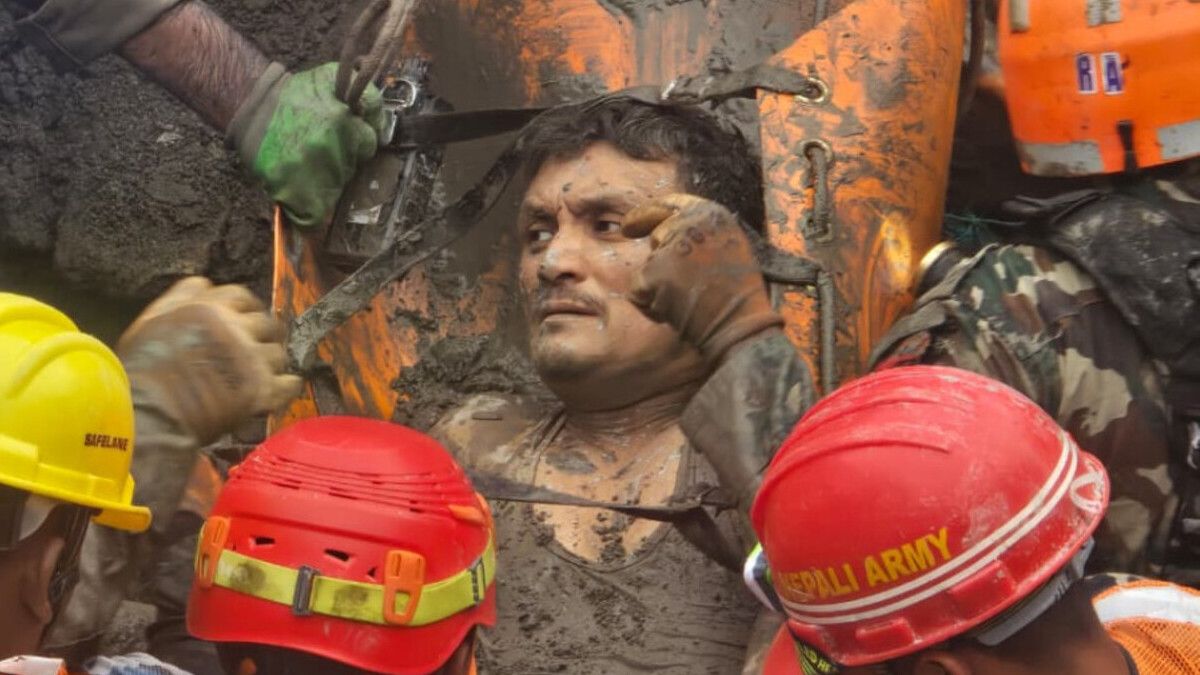
Nepal Police said 796 people, including 50 foreigners, had been rescued by helicopter from affected areas.
A further 796 people had been evacuated by land.
Foreign nationals among missing
Nepal Tourism Board statistics at 5.40pm on 27 August showed that more than 540 foreigners, including nine Singaporeans, remained uncontactable more than 24 hours after the deadly flooding struck the border region.
Another figure in the latest information received by tourism authorities put the total number of people reported missing at 667, including 127 Nepali nationals.
The same information said 31 foreign nationals had been rescued.
Those rescued included 11 Indians, four South Koreans, two Americans, two Russians, two Italians, one Bulgarian and one Swiss national.
The nationalities of eight other rescued people had not been confirmed.
India had the largest reported number of missing foreign nationals, with 178.
The figures also included 53 missing Ukrainian nationals, 51 Malaysians, 65 Americans, 35 Australians and 33 British nationals.
Questions over the disaster's cause
The disaster was triggered near the Nepal-Tibet border after an ice-rock avalanche, according to the material released by authorities.
However, accounts of its precise cause differed.
A preliminary assessment by Nepalese authorities and a revised US Geological Survey analysis identified glacial collapse and debris flow rather than an earthquake as the cause.
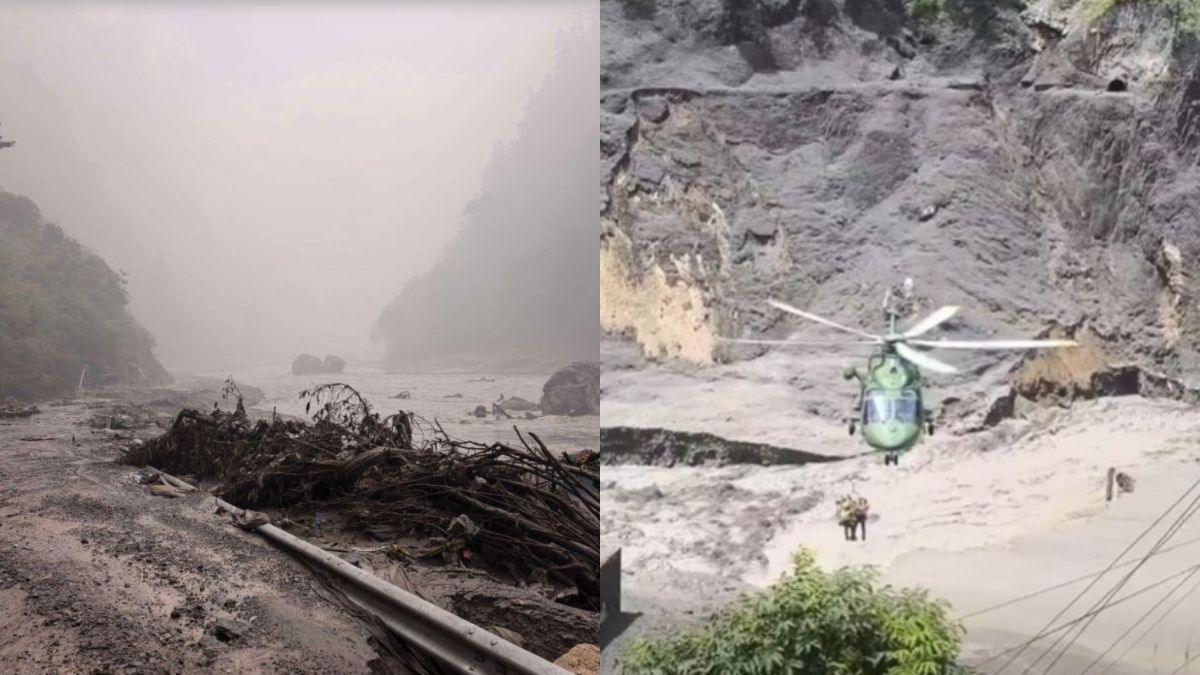
The torrent carried water, mud, rocks and debris downstream through central Nepal.
It devastated towns and villages while damaging homes, vehicles, roads, bridges and hydropower projects.
Warnings of another flood surge
A fresh flood threat remained after debris created a new barrier lake near the source of the Bhote Koshi river system.
Authorities warned that a breach of the lake could send another surge downstream.
Large quantities of debris also continued to block parts of the valley.
Qianggong Zhang, head of climate and environmental risks at the Kathmandu-based International Centre for Integrated Mountain Development, warned of the continuing danger.
“With a blockage still lodged upstream on the Nepal-China border river, authorities warn a second flood may occur,” he said.
Nepal’s Flood Forecasting Division issued a special notice on Thursday, warning of a growing lake behind debris left by the landslide.
The division urged people to exercise extreme caution as authorities monitored the developing threat.
Tibet mobilises emergency teams
Chinese authorities said on Thursday that 558 people remained missing in Tibet, taking the combined number reported missing on both sides of the border to 1,468.
Authorities in China were monitoring the barrier lake and conducting flood simulations and risk assessments to determine the possibility of another surge.
A Chinese rescue team equipped with communications and detection equipment reached Gyirong to assess the upstream blockage.
Officials feared the blockage could trigger a secondary disaster and further complicate rescue operations.
According to Xinhua news agency, Chinese government officials in Tibet mobilised nearly 800 emergency workers, alongside sniffer dogs and speed boats, to support rescue efforts.
Nepalese security personnel had evacuated more than 800 people from affected districts.
Helicopters, drones and ground teams continued searching isolated settlements, riverbanks and downstream areas.
Rasuwa among the worst-hit areas
The floods first devastated Nepal’s Rasuwa district, about 160 kilometres from Kathmandu, following the ice-rock avalanche and debris flow near the Nepal-Tibet border.
The resulting torrent swept through settlements including Timure and Rasuwagadhi before moving downstream through the Bhote Koshi and Trishuli river system.
Entire villages were swept away as freezing water and mud engulfed homes.
Bridges and dams were damaged, while vehicles were carried downstream by the torrent.
Many of those reported missing were foreign tourists, including scores of Hindu pilgrims travelling towards Tibet’s sacred Mount Kailash.