UN warns violence against humanitarian workers must not become normalised
UN humanitarian chief Tom Fletcher has warned that violence against aid workers is becoming normalised, calling for investigations and accountability as drone warfare intensifies in Ukraine and other conflicts.
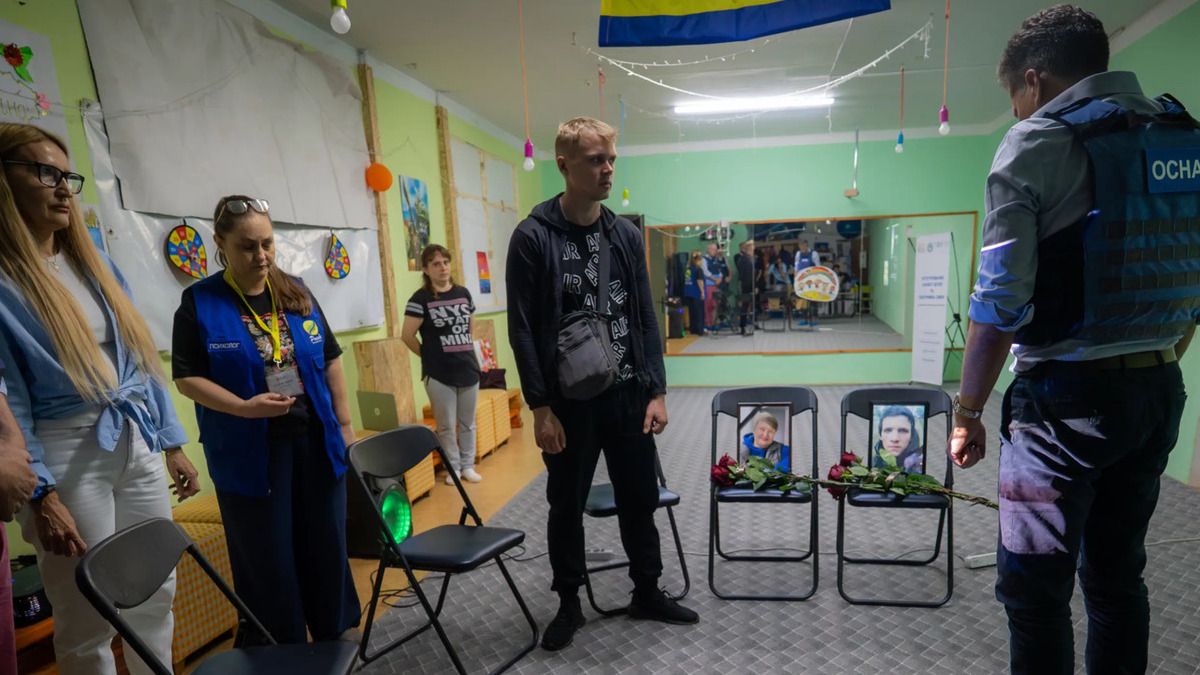
- Tom Fletcher said nearly 1,000 aid workers had been killed, injured or kidnapped amid growing attacks on humanitarian personnel.
- He warned that cheap and increasingly sophisticated drones are changing risks for civilians and aid workers.
- Fletcher called for investigations, accountability and stronger safeguards as weapons technology develops faster than humanitarian protections.

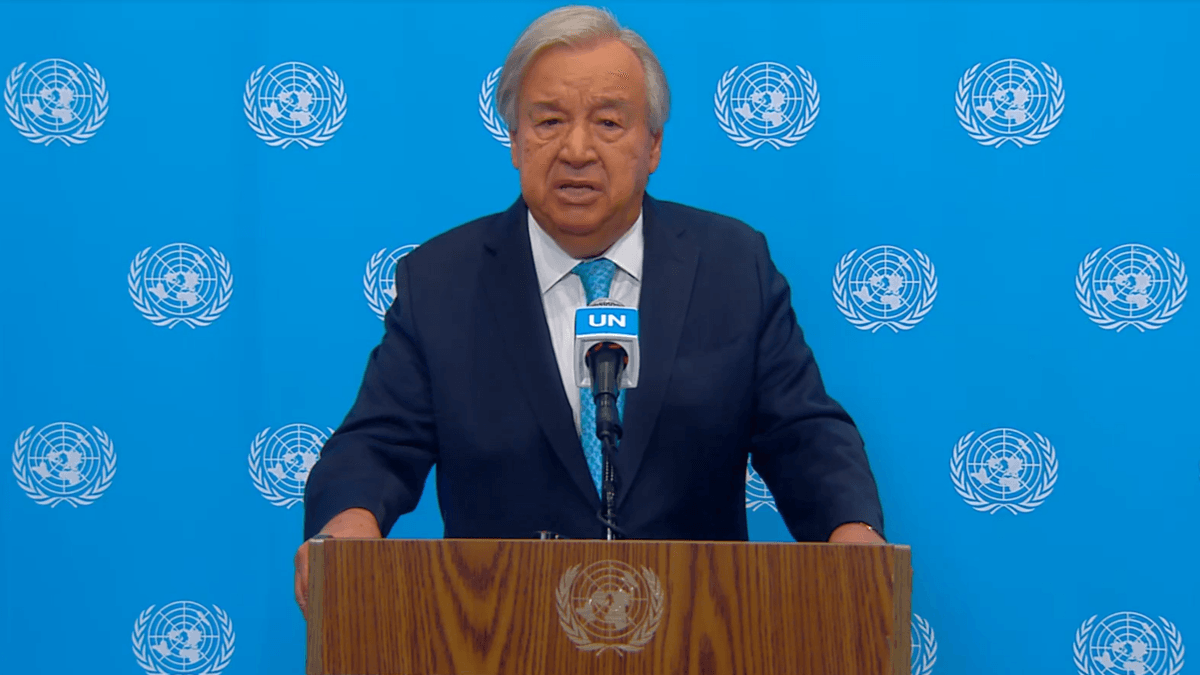
United Nations Under-Secretary-General for Humanitarian Affairs and Emergency Relief Coordinator Tom Fletcher has warned that violence against humanitarian workers must not become normalised, as he paid tribute to aid workers killed, injured or kidnapped while carrying out relief operations around the world.
Speaking at the UN daily press briefing on World Humanitarian Day on 19 August 2026, Fletcher said nearly 1,000 aid workers had been killed, injured or kidnapped, with States responsible for much of the violence against humanitarian personnel.
He said the figures represented the names of colleagues, friends and family members, and called for investigations and accountability for those responsible for attacks.
"This is not a temporary spike that we're seeing. This is a stain," Fletcher said. "It is the normalization of violence against our community, and we will not accept it."
Fletcher was speaking from Ukraine, where he had spent two days in Kherson, a city he described as an epicentre of the use of drones against civilian areas.
Humanitarian workers face growing drone threat
Fletcher said the risks faced by humanitarian workers were increasingly being shaped by the use of drones and other modern weapons.
He travelled along the road between Mykolaiv and Kherson, known locally as the "Road of Death", where sections of the route have been covered with netting intended to limit the threat from drones.
He described a constant sense of danger, with alerts repeatedly sounding on people's phones.
Fletcher said drones had become an integral part of daily life and conversation in Kherson, with civilians, children in shelters and humanitarian workers able to distinguish between different types of drones.
These included first-person-view drones, fibre-optic drones, medium-range drones and loitering munitions.
"These weapons have become part of life and part of the language of people here," he said.
Fletcher met civilians who had lost limbs in attacks involving first-person-view drones. He said the operators of such drones could observe people before carrying out attacks.
"If they fly around the person selling fruit and vegetables in the market, or the humanitarian delivering food, they have a good look at them before they take the shot that will kill or maim them for life," he said.
Hospital reports drone-related blast injuries
During his visit, Fletcher visited a hospital where doctors told him that around 70 per cent of wounded patients had blast injuries from drones.
He said hospital wards and operating theatres were being moved underground to reduce exposure to drone attacks.
Fletcher also described handling a drone that had caused significant damage to Kherson Hospital, saying it had cost about US$300.
He said the increasing availability of relatively cheap weapons was changing the risks faced by civilians and humanitarian personnel.
Fletcher also met families attempting to continue their lives despite the threat of attacks, including people sleeping underground and children learning online.
He met Serhii, a humanitarian worker who delivers hot meals for a local humanitarian organisation. Fletcher said a drone attack had cost Serhii his leg, but that he had returned to work within weeks after asking doctors to reattach it.
He also met doctors working in dangerous conditions and volunteers evacuating people from communities near the front lines.
Fletcher said local organisations and civilians were playing a central role in helping people affected by the conflict.
UN calls for investigations and accountability
Fletcher said the growing use of drones was increasing the distance between those carrying out attacks and their victims, while accountability and justice remained difficult to achieve.
He said international humanitarian law must continue to apply regardless of how sophisticated weapons become.
"The law is meant to protect us, meant to protect civilians from all weapons, however sophisticated they are," he said.
"We need those investigations. We need accountability. We need the international community to uphold the law."
Fletcher said he had been in his position for almost two years and struggled to identify meaningful investigations into the killings of humanitarian workers.
He said responsibility extended beyond those who physically carried out attacks to those who gave orders, supplied weapons or created conditions in which weapons could be used against civilians and humanitarian personnel.
Drone warfare extends beyond Ukraine
Fletcher stressed that the threat was not limited to Ukraine.
He said armed drones were transforming warfare in countries including Somalia, Sudan, Gaza and Lebanon.
During a visit to Somalia several weeks earlier, he said women had told him they were fleeing not only famine or violence but drones that were following them.
He also referred to 1,000 civilians killed in Sudan during the first five months of the year, saying the number of civilian deaths was increasing, including among children.
Fletcher called on States to uphold international humanitarian law and urged companies involved in manufacturing and supplying weapons to understand how they were being used and their responsibilities under international law.
He warned that without action, the death toll associated with such weapons could continue to rise.
"Concern from Member States is not enough. We need action right now," he said.
Drones also have humanitarian uses
Fletcher acknowledged that drones could be used for humanitarian purposes.
He said they could deliver vaccines to communities that humanitarian workers could not otherwise reach.
In Venezuela, he said, drones had been used after an earthquake to locate survivors among rubble.
However, he said many of the current uses of armed drones in warfare were "inhumane and reckless".
Fletcher called for measures to ensure that technological development did not move faster than accountability and humanitarian protections.
"If the global economy is being put, as it is, on a war footing, that we are also training these weapons in the right way, and that we're also ensuring that technology does not outpace humanity and that technology does not outpace accountability," he said.
UN humanitarian operations continue in Gaza
Asked about the impact of the war in Gaza on the UN humanitarian system, Fletcher rejected the description of the system as having been dismantled.
He said the UN remained active in Gaza, the occupied West Bank, Lebanon and other crisis areas.
"We're still here, and we're still doing our work in Gaza and elsewhere," he said.
Fletcher said humanitarian operations had made progress in addressing hunger in Gaza, including the provision of more than one million hot meals a day.
He said further work was required, including bringing shelter materials into Gaza ahead of winter, opening all crossings, enabling NGO partners to operate fully and improving protection for civilians from airstrikes.
He said the UN humanitarian system had absorbed the shocks it had faced and continued to operate globally.
The organisation was seeking to reach 87 million people with life-saving assistance in 2026, he said.
Fletcher describes drone attacks during Kherson visit
Fletcher said he had encountered drone attacks during his two days in Kherson and had twice had to run for cover because of drones nearby.
He said a drone had struck a building where a meeting was taking place.
He declined to attribute individual attacks to specific parties, saying he was not in a position to determine who had launched particular attacks.
He said he had seen Russian drones and Ukrainian forces firing at them, while emphasising that attribution should be determined by others.
Fletcher also referred to an increase in the use of fibre-optic and first-person-view drones in the region.
UN coordinator's reports on attacks
Asked about accusations by UN humanitarian officials regarding attacks on humanitarian infrastructure in Ukraine, Fletcher defended his colleagues.
He praised UN Resident and Humanitarian Coordinator Matthias Schmale and said Schmale had documented and spoken about attacks on civilian infrastructure.
Fletcher said he had personally seen destroyed fuel stations while travelling through the country.
He declined to suggest that UN humanitarian officials had breached the UN Charter by reporting attacks against civilian infrastructure.
Independent investigations needed
Fletcher said independent media, organisations documenting attacks and Member States all had roles to play in establishing accountability.
He said information about attacks should be documented and shared with investigators, while governments should follow up on incidents and challenge countries believed to be involved.
He also said governments should be held accountable by their own citizens.
Fletcher described speaking to the families of humanitarian workers killed while carrying out their duties as one of the most difficult aspects of his work.
He said relatives frequently asked whether their loved ones had died in vain and whether those responsible would be brought to justice.
He said he could assure families that their relatives had not died in vain because humanitarian work continued, but acknowledged that he could not promise that those responsible would be brought to justice.
"And that breaks my heart, actually," he said.
UN urges dialogue with weapons manufacturers
Fletcher also called for dialogue with companies involved in designing and supplying new weapons technology.
He said such discussions were needed to ensure that manufacturers understood the risks created by their products and their obligations under international humanitarian law.
He raised particular concerns about artificial intelligence-controlled loitering munitions.
According to Fletcher, such weapons can remain in conflict areas while waiting for targets to emerge.
He said the risks could increase as the weapons approached the end of their battery life and potentially selected civilian targets.
He warned that removing humans from decisions involving the use of weapons could increase the risks to civilians and humanitarian workers.
"The risk is that the algorithm that powers these weapons may turn out to be even less humanitarian than we humans are, and that is chilling," he said.
Fletcher calls on States to uphold humanitarian law
Fletcher said Member States remained central to efforts to enforce international humanitarian law and hold those responsible for attacks accountable.
He acknowledged that some States were themselves involved in conflicts or hosted companies manufacturing weapons used in warfare.
Nevertheless, he said governments had to uphold their responsibilities under the international system.
"If the world has become so transactional and selfish and inward-looking that Member States are no longer able or prepared to do this work, then we really are in a grim dystopian reality," Fletcher said.
He called on the public to demand that governments manage the risks associated with modern weapons before they become more difficult to control.
Fletcher ended his remarks by paying tribute to humanitarian workers, including local organisations, non-governmental organisations, UN humanitarian agencies and local partners working in dangerous environments.
"An attack on any one of us in our humanitarian movement is an attack on all of us," he said.