South Korea proposes peace talks with North Korea on Liberation Day
President Lee Jae Myung has called for talks between the two Koreas to formally end the Korean War and discuss halting North Korea's nuclear programme, in a speech marking Liberation Day.
- Lee proposed talks to formally end the Korean War and replace the armistice with a peace regime.
- He suggested discussing practical measures to halt North Korea's nuclear weapons development.
- Pyongyang has not responded to Seoul's reconciliatory gestures since Lee took office.

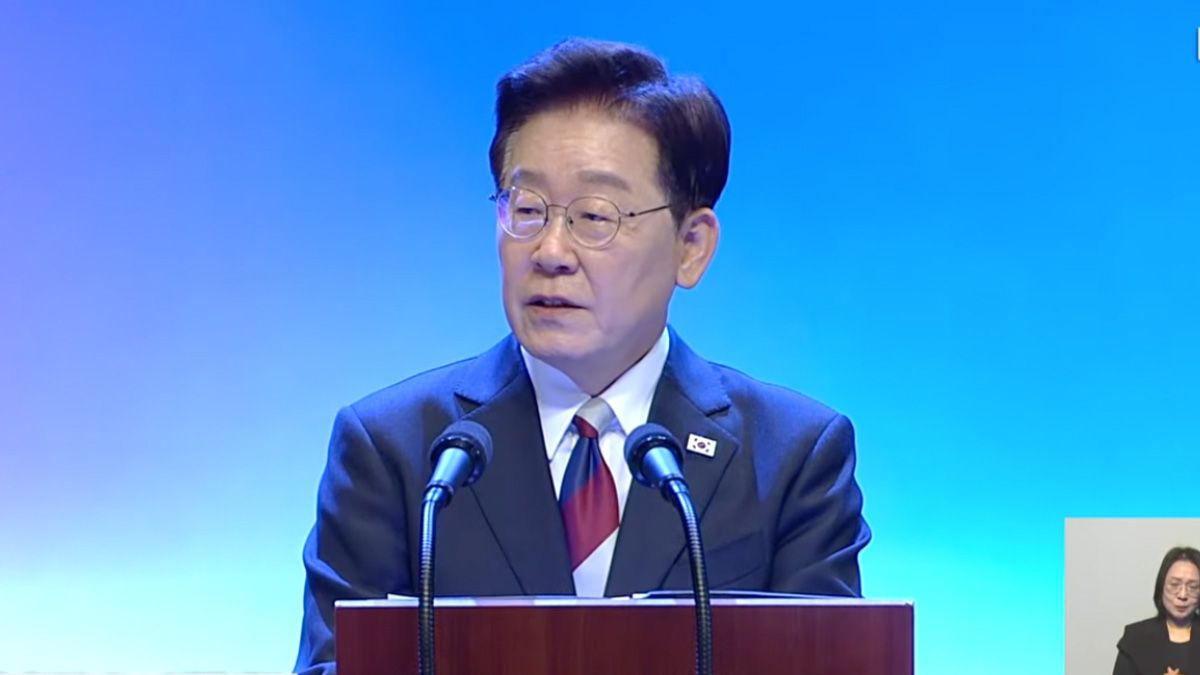
South Korean President Lee Jae Myung has proposed that the two Koreas begin talks aimed at formally ending their long-running war and discussing practical measures to halt Pyongyang's nuclear weapons programme.
Lee made the proposal on Saturday, 15 August 2026, during a speech at a ceremony marking the 81st anniversary of Liberation Day, which commemorates Korea's liberation from Japan's 1910 to 1945 colonial rule.
"Let us put down our intentions to threaten each other and begin discussions to end the long-running war as the directly involved parties," Lee said. He added that the two sides "may also discuss effective ways to halt the advancement of the North's nuclear capabilities."
The two Koreas have technically remained at war since the 1950 to 1953 Korean War ended in an armistice rather than a peace treaty. Lee said he intends to pursue a journey towards ending the war and replacing what he called the "unstable armistice system" with a peace regime.
Background and North Korea's silence
Lee's overture comes despite North Korea having remained unresponsive to repeated reconciliatory gestures from Seoul since he assumed office in June last year.
In his Liberation Day speech last year, Lee had pledged to respect North Korea's current political system and to refrain from pursuing unification by absorption or engaging in hostile acts towards Pyongyang. His administration has since said it will continue pursuing dialogue with North Korea in the interest of peaceful coexistence.
Repeating that message on Saturday, Lee said the two Koreas should respect one another and halt unnecessary confrontation, beginning with what he described as "reducing hostility in the perceptions, norms and systems."
"I hope South and North Korea will sit face-to-face for peaceful coexistence and mutual growth," he said.
Security posture and regional stability
Lee stressed the need for what he termed a "multilayered security system" to manage tensions and prevent crises on the peninsula. He pledged to take "preemptive and consistent measures for peace" in line with the evolving security situation.
"By inducing a positive response from the North, I will create a stable Korean Peninsula," Lee said, adding that peace on the peninsula could help promote stability and cooperation across Northeast Asia and contribute towards a world free of nuclear weapons.
"I will turn the energy of hostility and confrontation into momentum for peaceful coexistence and mutual growth," he said.
Relations with Japan
On relations with Japan, Lee highlighted what he described as active "shuttle diplomacy" between Seoul and Tokyo over the past year, saying it had strengthened trust and expanded cooperation in supply chains, energy and advanced technology.
"Going forward, our government will expand the scope of cooperation (with Japan) for mutual interests and address shared challenges by mustering wisdom," Lee said, expressing hope for a new era of peace and prosperity with the Japanese government.
Domestic priorities
Lee also reiterated his vision of building "an irreplaceable South Korea" that leads the world in advanced technologies. "In the face of the (industrial) upheaval and a transformation of the international order, we should create possibilities instead of counting impossibilities," he said.
He pledged government support for young people, describing plans to build a "sturdy ladder of opportunities." Lee also said his administration would investigate and confiscate unjustly accumulated assets held by collaborators of Japan's colonial rule and hold them accountable.
Saturday's ceremony in Seoul was attended by around 3,000 people, including independence fighters and their families, government and party officials, foreign ambassadors, and members of the public. First lady Kim Hea Kyung also attended the event.