WHO monitors PJ.2.1 COVID-19 lineage as cases rise in Canada and Hong Kong
The WHO is monitoring the PJ.2.1 coronavirus lineage after surveillance agencies in Canada and Hong Kong detected its circulation, while urging testing to distinguish COVID-19 from other respiratory infections.
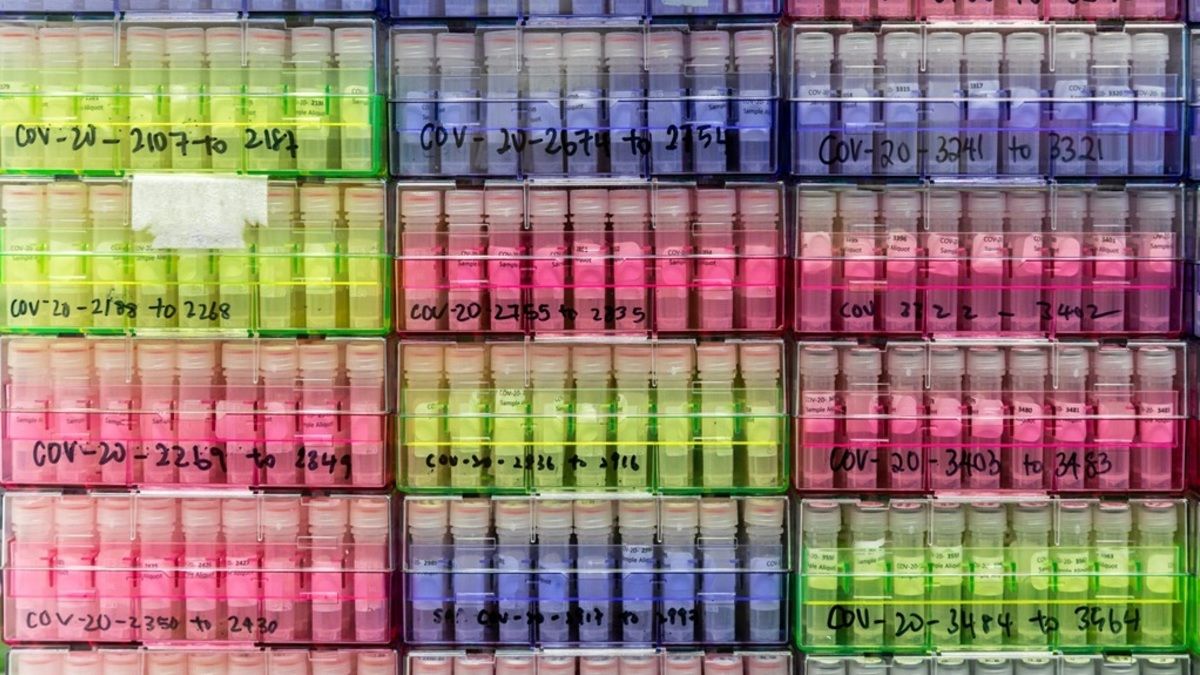
- PJ.2.1 accounted for 25.2 per cent of sequenced COVID-19 cases in Ontario during the latest reporting period.
- Hong Kong authorities have also detected the lineage through respiratory specimen and wastewater genomic surveillance.
- The WHO says testing may be necessary because COVID-19, influenza and other respiratory infections have overlapping symptoms.

The World Health Organization (WHO) is monitoring the spread of the PJ.2.1 coronavirus lineage as surveillance authorities in Canada and Hong Kong report its circulation among COVID-19 cases.
The UN health agency has urged people and healthcare professionals to use diagnostic testing when necessary, warning that symptoms of COVID-19, influenza and other respiratory infections can be similar.
In comments reported by the Emirates News Agency (WAM) on 9 November 2026, the WHO said symptoms alone could not reliably establish which respiratory virus had caused an infection.
"Symptoms of COVID-19, influenza and other respiratory infections can overlap. Therefore, based on symptoms alone, it is impossible to determine with certainty which respiratory virus caused the infection," the organisation said.
The WHO explained that testing might be necessary when identifying the cause of an illness could influence treatment decisions or public health measures.
The organisation also said it was closely monitoring PJ.2.1 and its international spread. Its office in Russia had previously informed Russian news agency RIA Novosti that the risk of the variant spreading globally was increasing.
What is the PJ.2.1 variant?
PJ.2.1 is a sublineage of JN.1, which belongs to the Omicron family of SARS-CoV-2, the virus responsible for COVID-19.
It is therefore not a separate virus or a new respiratory disease, but a genetic branch of the coronavirus that can be identified through genomic sequencing.
SARS-CoV-2 continues to evolve as it circulates among populations. Genetic mutations can produce new lineages and sublineages, although not every mutation results in a significant change in how the virus spreads or causes illness.
According to the WHO's official variant-tracking system, JN.1 is classified as a variant of interest (VOI). The organisation's list of variants under monitoring (VUMs), updated on 27 July 2026, includes PQ.16.1.1, NB.1.8.1, XFG and BA.3.2.
PJ.2.1 is not separately listed as a variant of interest or variant under monitoring.
The WHO's classification system is intended to identify lineages that require additional monitoring and research based on their potential public health implications.
PJ.2.1 accounts for 25.2 per cent of sequenced cases in Ontario
Public Health Ontario, the provincial government's public health agency in Canada, reported that PJ.2.1 had become the most prevalent SARS-CoV-2 lineage in its latest four-week genomic surveillance period.
In its report published on 2 November 2026, the agency said 523 COVID-19 cases were sequenced between 20 September and 17 October.
PJ.2.1 accounted for 25.2 per cent of the sequenced cases, followed by ST.1 at 12.8 per cent and SW.2.1 at 8.2 per cent.
The proportion of PJ.2.1 increased from 16.9 per cent during the preceding four-week period, covering 23 August to 19 September.
The report was based on whole-genome sequencing conducted by the Ontario COVID-19 Genomics Network.
Public Health Ontario explained that genomic sequencing enables scientists to identify different SARS-CoV-2 lineages and monitor changes in their prevalence.
It also cautioned that the results might not represent the entire provincial population because only eligible positive samples were included in the surveillance programme.
The agency noted that mutations can sometimes affect a virus's transmissibility, virulence or ability to evade immunity acquired through previous infections or vaccination. However, the identification of a new lineage does not automatically mean that it causes more severe disease.
Hong Kong detects PJ.2.1 in genomic surveillance
Hong Kong's Centre for Health Protection (CHP), under the Department of Health, has also identified PJ.2.1 in its COVID-19 surveillance data.
In its COVID-19 & Flu Express, published on 5 November 2026, the CHP reported that JN.1 and its descendant lineages, including PJ.2.1, accounted for a substantial proportion of SARS-CoV-2 samples detected through sewage surveillance.
Data collected up to 23 October showed that JN.1 and its descendant lineages represented 48.7 per cent of characterised sewage samples. PQ.16.1.1 accounted for 36.7 per cent, while XFG represented 13.8 per cent.
The CHP also conducted genetic analysis of positive respiratory specimens collected between 14 and 17 October.
Among samples from non-severe COVID-19 cases, JN.1 and its descendant lineages, including PJ.2.1, accounted for 40 per cent of characterised specimens. PQ.16.1.1 represented 50 per cent.
The agency noted that no specimens from reported severe or fatal cases were collected for this particular genetic analysis.
The findings demonstrate that PJ.2.1 was circulating in Hong Kong, although the agency did not provide a separate percentage for the sublineage.
Severe sore throat and prolonged fatigue reported as possible symptoms
On 7 November, Elena Malinnikova, a Doctor of Medical Sciences specialising in infectious diseases and virology, told RIA Novosti that PJ.2.1 infections could involve severe sore throats and longer-lasting fatigue following illness.
She identified these symptoms as possible differences between PJ.2.1 and other coronavirus variants.
However, the WHO has emphasised that respiratory symptoms overlap and cannot independently establish whether someone has contracted PJ.2.1.
The organisation's position is that testing should be considered when identifying the specific virus could affect patient treatment or public health decisions.
There is currently insufficient official evidence to establish that PJ.2.1 causes more severe illness or a distinct set of symptoms compared with other circulating SARS-CoV-2 lineages.
WHO continues global coronavirus surveillance
The WHO maintains its global surveillance system to monitor SARS-CoV-2 mutations and identify emerging lineages.
In March 2024, the organisation launched the WHO Coronavirus Network (CoViNet), a global network designed to strengthen the detection and monitoring of coronaviruses, including SARS-CoV-2.
The network brings together laboratories and experts to improve surveillance, genomic sequencing and risk assessment.
The WHO has explained that changes in a virus's genetic material can potentially affect its transmissibility, disease severity and the effectiveness of vaccines, treatments and diagnostic tools.
However, the impact of individual mutations must be assessed through scientific research and epidemiological surveillance.
The organisation continues to encourage countries to share genomic information to support international monitoring and the early identification of potentially significant variants.