Massie forces House vote on impeaching US Defence Secretary Pete Hegseth over Iran war
Republican Representative Thomas Massie has filed a privileged resolution to impeach Pete Hegseth over the Iran war, forcing a House vote by Wednesday. Democratic leaders back the move, while President Donald Trump has defended his Defence Secretary.
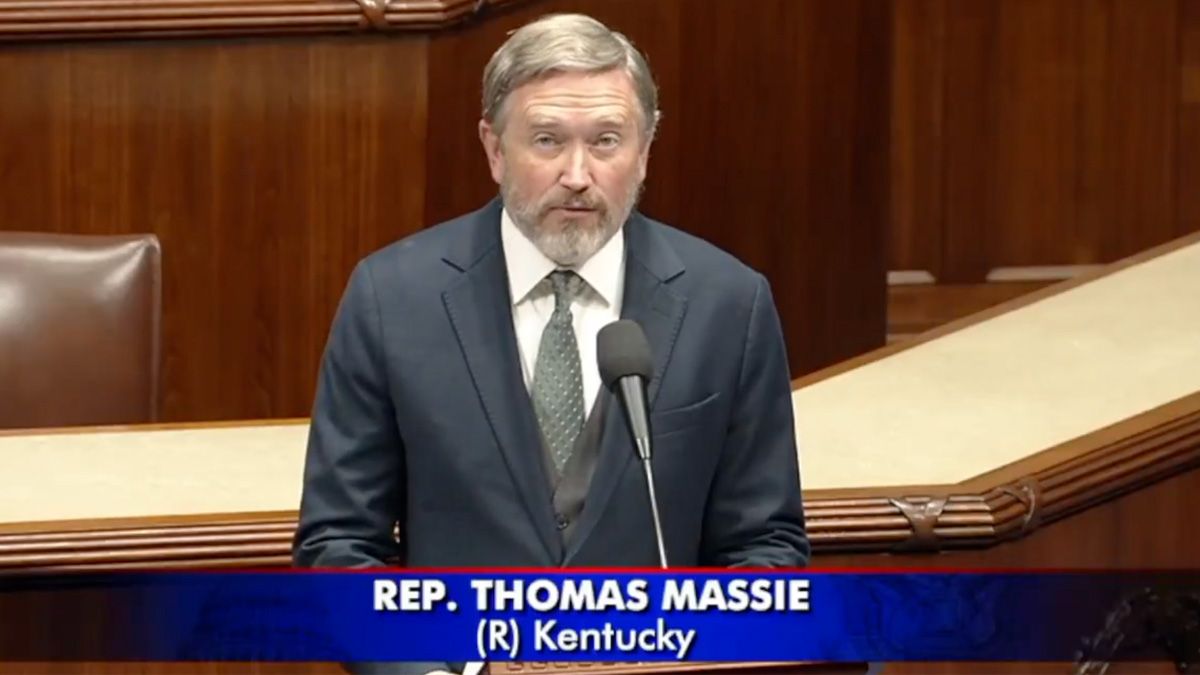
- Massie’s resolution accuses Hegseth of eight violations, centred on alleged War Powers Resolution breaches in Iran.
- Jeffries and Schumer back impeachment, so Massie needs only a few Republican votes.
- Trump and Rubio defended Hegseth, who called the effort “the politics of personal destruction”.

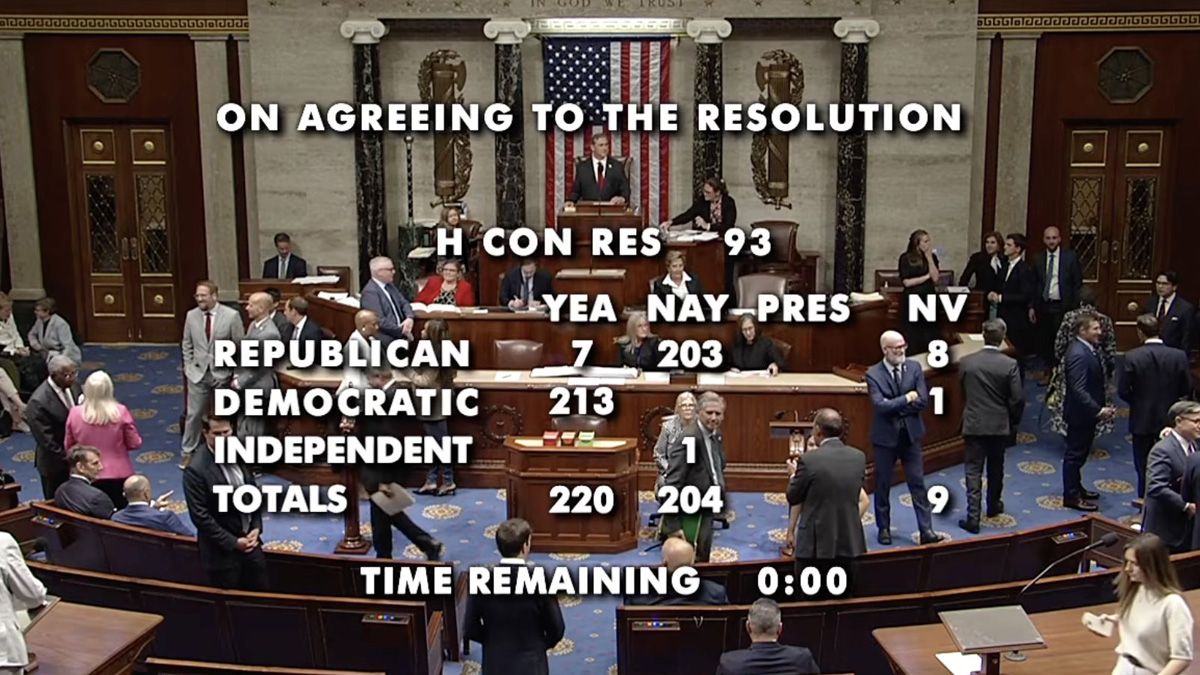
Representative Thomas Massie, a Kentucky Republican, moved on Monday, 9 November 2026, to force a House vote on impeaching US Defence Secretary Pete Hegseth, pressing fellow Republicans to remove one of the Trump administration’s most prominent figures.
Massie read the resolution on the House floor hours after the chamber opened for its first sitting since the midterm elections. The Associated Press (AP) reported that sweeping Republican losses at those elections were blamed partly on the Iran war.
Massie, who lost his primary this year to a Trump-backed challenger, alleged that Hegseth had “knowingly executed and implemented unlawful orders to initiate war against a foreign nation”. He said Hegseth “remains a threat to the Constitution”.
The House must take up a procedural vote on the measure by Wednesday, 11 November, according to CNN. President Donald Trump has defended Hegseth and attacked Massie personally.
Eight articles of impeachment
The resolution accuses Hegseth of eight violations of law or the Constitution. It largely focuses on the Iran war but also covers military actions in Venezuela, Yemen, the Caribbean Sea and the eastern Pacific Ocean.
The first three articles allege that Hegseth breached the 1973 War Powers Resolution by prosecuting the Iran war without congressional authorisation, an attack on the United States or an imminent threat.
It further alleges that he continued the war after the House and Senate adopted a concurrent war powers resolution in June calling for US forces to withdraw, and beyond the law’s 60-day termination period and any 30-day withdrawal window.
The remaining articles allege that Hegseth disregarded and sought to overturn laws designed to protect civilians during armed conflict, and conducted extrajudicial killings of at least 243 suspected drug traffickers in the Western Hemisphere.
In at least one instance, the resolution states, strikes targeted shipwrecked survivors at sea. It also accuses him of retaliating against Senator Mark Kelly, an Arizona Democrat, for constitutionally protected speech questioning unlawful military orders.
Another article concerns the January operation that seized former Venezuelan President Nicolás Maduro and his wife from Caracas, which the resolution describes as illegal.
The final article concerns strikes in Yemen that the resolution says were not authorised by Congress and reportedly killed more than 700 people, nearly a third of them civilians, as well as Houthi rebels.
Massie first announced the resolution in mid-September, but House Speaker Mike Johnson adjourned the House before a vote could occur, putting it off until after the midterms. The new version carries the same eight articles.
How the vote will work
Massie filed the resolution as a question of the privileges of the House. Johnson must now rule on whether it qualifies, and there is precedent for impeachment being treated as a valid privileged matter.
A vote must then be scheduled within two legislative days. If the resolution is ruled privileged, the House could vote on the resolution itself, or on a motion to table it or refer it to committee.
Impeachment through this route would be a historical anomaly. According to the Congressional Research Service (CRS), recent attempts to impeach officials as a question of privilege have failed, and the House has nearly always investigated before impeaching.
If the House votes to impeach, the Senate would either dismiss the charges or hold a trial. Republicans hold majorities in both chambers until the new Congress convenes in January 2027 with Democrats in control.
Massie weighs his chances
In an interview on 26 October, Massie put the chances of his resolution being adopted at 50-50. Speaking outside the Capitol on Monday, he said some Republicans might back it, though he had neither sought nor received assurances.
The outcome may turn on how many House Republicans defy Trump, and how many incumbents defeated on 3 November, a disproportionately Republican group, are absent for the vote.
Massie said defeated Republicans may feel freer to back impeachment. “If they were part of the retirement caucus, what do they have to lose?” he asked.
Asked why he had not targeted Trump instead, Massie said the president needed to see “one of his horses shot out from under him”, describing it as a metaphor, after which Trump might “see things differently”.
Democrats line up behind the measure
House Democratic Leader Hakeem Jeffries, who is expected to become Speaker in the next Congress, said on ABC’s This Week on Sunday that he was a “hard yes” on the resolution.
Hegseth has “got to go”, Jeffries said, accusing him of having “abused his power, undermined our national security and engineered this reckless and costly war of choice in Iran”.
Jeffries said the war had pushed up prices and left the country less safe, and that Democrats would pursue efforts to end it once they took control of Congress in January.
If most Democrats follow Jeffries, Massie would need only a few Republican votes to impeach Hegseth, AP reported. Senate Democratic Leader Chuck Schumer also endorsed the push, saying: “Hegseth must stand trial before the Senate.”
Representative Adam Smith, the senior Democrat on the House Armed Services Committee and its likely next chairman, told The New Republic last week: “By every estimation, it will pass and he will be impeached.”
Everett B. Kelley, national president of the American Federation of Government Employees (AFGE), which represents some 820,000 workers, wrote to House members on Monday urging a yes vote, citing risks to Pentagon personnel.
Republican leaders frustrated
Johnson, who has tried to prevent the vote, said impeachment “in the middle of hostilities abroad would be a terrible, terrible look, a terrible thing for our allies and our enemies to see”.
Senate Majority Leader John Thune said he was unsure why the vote was being held now, adding that the Senate would “deal with it accordingly”.
Trump and Rubio defend Hegseth
Trump lashed out at Massie hours after the floor reading. “He’s a loser. He shouldn’t be taking up the time of Congress or the Senate,” he told reporters.
AP reported that Trump also said Massie “has a lot of hatred in his heart”. The President accused the congressman of habitually voting against Republican legislation, even bills the party considered its best work.
“Pete Hegseth won two wars,” Trump said, praising him for having “won the war” in Venezuela and “winning the war” in Iran, which continues.
Trump asked why officials who led the wars in Vietnam, Iraq and Afghanistan had escaped similar demands, citing 18 American deaths over what he described as seven months in Iran.
Secretary of State Marco Rubio, speaking at the G7 foreign ministers’ meeting in Paris, said Hegseth had been doing “a great job” and that it was unfair a Republican was leading the impeachment effort.
Rubio said working alongside Hegseth let him see “a side of him that the media doesn’t see”, calling him “incredibly smart”.
Hegseth says he is ready to fight
Hegseth brushed aside the impeachment push after a speech at the Naval War College in Newport, Rhode Island. “It’s all about the politics of personal destruction. Didn’t work against President Trump, and it won’t work with me,” he said.
He added that if critics wanted to “litigate” the administration’s military actions, “I’m happy to do it all day long”.
Asked about Vice President JD Vance blaming the Iran war for the Republican election losses, Hegseth noted that Trump had said he would do it again, and added: “I agree.”
He argued that the war was necessary because “someone had to confront the Iranian regime’s pursuit of a nuclear weapon”, saying “the choice was don’t act and wish it away or take a bold move”.
Hegseth is due to address the impeachment threat at a Pentagon news conference on Tuesday, his first since 5 May, according to Fox News.
The war and public opinion
Iran maintains that its nuclear programme is peaceful. According to the International Atomic Energy Agency (IAEA), Iran holds 440.9 kilograms of uranium enriched up to 60 per cent, a short technical step from weapons-grade 90 per cent.
Hegseth reiterated that “Iran is devastated”. AP noted that Iran has nonetheless continued striking Middle Eastern bases used by the US, causing billions of dollars in damage, as well as commercial ships in the Strait of Hormuz.
Disruption to the strait, which carried one-fifth of the world’s oil before the war, has raised energy prices. About six in 10 voters called the war the “wrong decision”, according to the AP Voter Poll.
Cabinet impeachment precedents
The House has voted only twice to impeach a Cabinet member. In 1876, Secretary of War William Belknap was impeached over corruption allegations; his abrupt resignation likely contributed to his Senate acquittal.
In 2024, the House voted 214-213 to impeach then Homeland Security Secretary Alejandro Mayorkas for “willful and systemic refusal to comply with the law” and “breach of public trust”. The Senate dismissed the charges without a trial.