House Rules Committee blocks vote on bipartisan Israel defence amendment to NDAA
A committee in the US Congress has excluded a bipartisan amendment that would have removed a provision expanding US-Israel defence cooperation from America's annual defence policy bill, denying lawmakers a floor vote despite criticism from former intelligence officials and advocacy groups.

- A US congressional committee blocked a floor vote on a bipartisan amendment targeting Section 219.
- Section 219 would create a Pentagon initiative deepening US-Israel defence technology integration.
- Former US officials warn of espionage risks; AIPAC and Amnesty International hold opposing views.

A committee in the US Congress has blocked a vote on a bipartisan proposal to remove a contentious US-Israel defence provision from America's annual defence policy bill.
The bill, known as the National Defense Authorization Act (NDAA), sets the budget and policy priorities for the US Department of Defense each year and must pass Congress annually.
Before the full House of Representatives votes on the NDAA, a separate body called the House Rules Committee decides which proposed amendments will be allowed to reach the floor for debate and a vote.
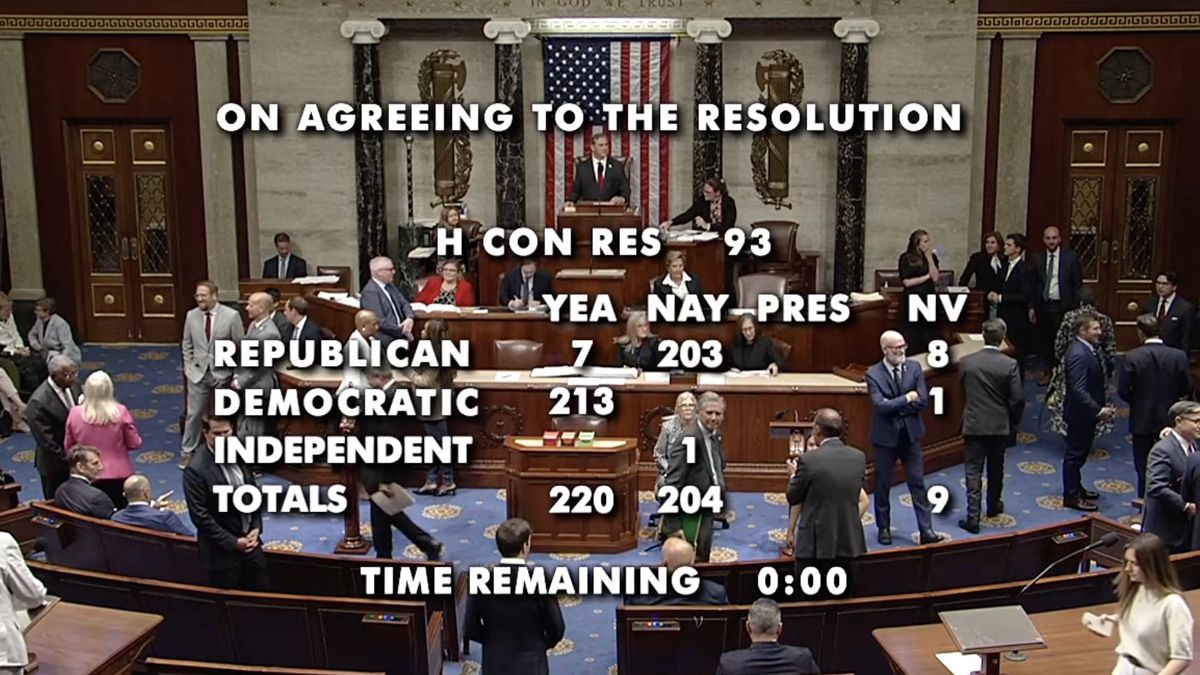
The committee's approved list did not include a bipartisan amendment from Rep. Thomas Massie, a Republican, and Rep. Ro Khanna, a Democrat, meaning it will not be debated or voted on.
Their amendment would have struck out Section 219 of the NDAA, a provision previously numbered Section 224, which was inserted into the bill without wide public attention.
Khanna criticised the decision on the social media platform X on Tuesday. "Congress has blocked the amendment Thomas Massie and I introduced to stop the integration of our military with Israel's," he wrote.
"It is unconscionable to not even have a vote," Khanna added. "We will be continuing on and will not be intimidated by the pro-Israel lobby."
Massie and Khanna, despite belonging to opposing parties, have previously worked together on issues involving war powers, surveillance and limits on executive authority in Washington.
Opposition to Section 219 has crossed party lines beyond Congress as well. Constituents have contacted lawmakers from both parties, and advocacy groups have urged its removal.
Section 219 would establish what is called the "United States-Israel Defense Technology Cooperation Initiative" inside the US Department of Defense, led by a dedicated official.
That official would oversee expanded defence technology cooperation between the two countries across a wide range of military programmes.
Massie has described the measure as "an unprecedented escalation of foreign involvement in our military," arguing it goes further than any existing US alliance arrangement.
He compared it unfavourably to the Five Eyes arrangement, an intelligence-sharing partnership between the US, UK, Australia, Canada and New Zealand, which he said is narrower in scope.
"If Section 219 is signed into law, the American people should see it as Congress fully capitulating our nation's autonomy to foreign influence," Massie said.
Critics argue the provision goes beyond authorising a single joint weapons project. They say it would permanently link parts of the American and Israeli defence industries together.
That integration would reportedly span artificial intelligence, cyber capabilities, autonomous systems, biotechnology and shared military data, according to opponents of the measure.
The bill's text bears this out. Beyond the ten technology domains it lists, it allows the two countries to expand cooperation into 'other emerging technologies as jointly agreed,' without requiring further congressional authorisation.
Opponents have also raised Israel's history of intelligence activity against the United States, including the Jonathan Pollard espionage case from the 1980s, as grounds for caution.
The US Defense Intelligence Agency (DIA) has reportedly described Israeli intelligence collection efforts against America as "unhinged," according to documents obtained through public reporting.
Separately, the DIA has rated the threat from Israeli intelligence collection as "critical," its highest threat classification, the same reporting said.
Joe Kent, a former director of the US National Counterterrorism Center, warned that granting another country broader access to sensitive US military technology carried clear risks.
"Back doors and spyware can be installed that will most certainly be used by the Israelis to influence US policy," Kent said.
Paul Pillar, who spent more than twenty-five years at the US Central Intelligence Agency, wrote in the outlet Responsible Statecraft that Israel should be regarded warily on intelligence matters.
"In intelligence, Israel is more of an adversary than an ally," Pillar wrote. "Israel has a long record of conducting that type of hostile act against the United States."
Oversight of the initiative is also limited by design. The bill routes reporting only to the House and Senate armed services committees, and permits a classified annex, meaning key details may not reach the public or lawmakers without clearance.
A separate provision requires the Pentagon to publish updates on how the initiative advances 'United States technological and military supremacy,' with no matching requirement to disclose risks.
Supporters of Section 219 include AIPAC, a prominent pro-Israel lobbying organisation in Washington, which argues the initiative strengthens an established alliance and improves defence innovation.
Israeli Prime Minister Benjamin Netanyahu has previously described the shift in the relationship as "my plan," according to a document released by his office.
Amnesty International's US branch has separately called on Congress to strip the initiative from the bill, arguing deeper military integration risks entangling America in conduct it has characterised, in its own reporting, as violations of international law by Israel.
The group noted that seventy-five members of the House have co-sponsored separate legislation, the Block the Bombs Act, which would impose a partial US arms embargo on Israel.
It also said forty US senators voted in April in favour of blocking a shipment of bulldozers and 1,000-pound bombs to Israel.
The Rules Committee's decision means the American public will not see how individual lawmakers would have voted, despite what advocates describe as significant public interest in the issue.
The matter is not yet settled. The US Senate is considering its own version of the NDAA, and any differences between the two chambers' bills must be resolved in a joint conference committee before the legislation can be signed into law.