Three Indonesian volcanoes erupt within hours on Tuesday evening, triggering renewed safety warnings
Mount Semeru, Mount Ibu and Mount Lewotobi Laki-laki erupted within several hours on Tuesday evening, with two volcanoes at Level III alert.
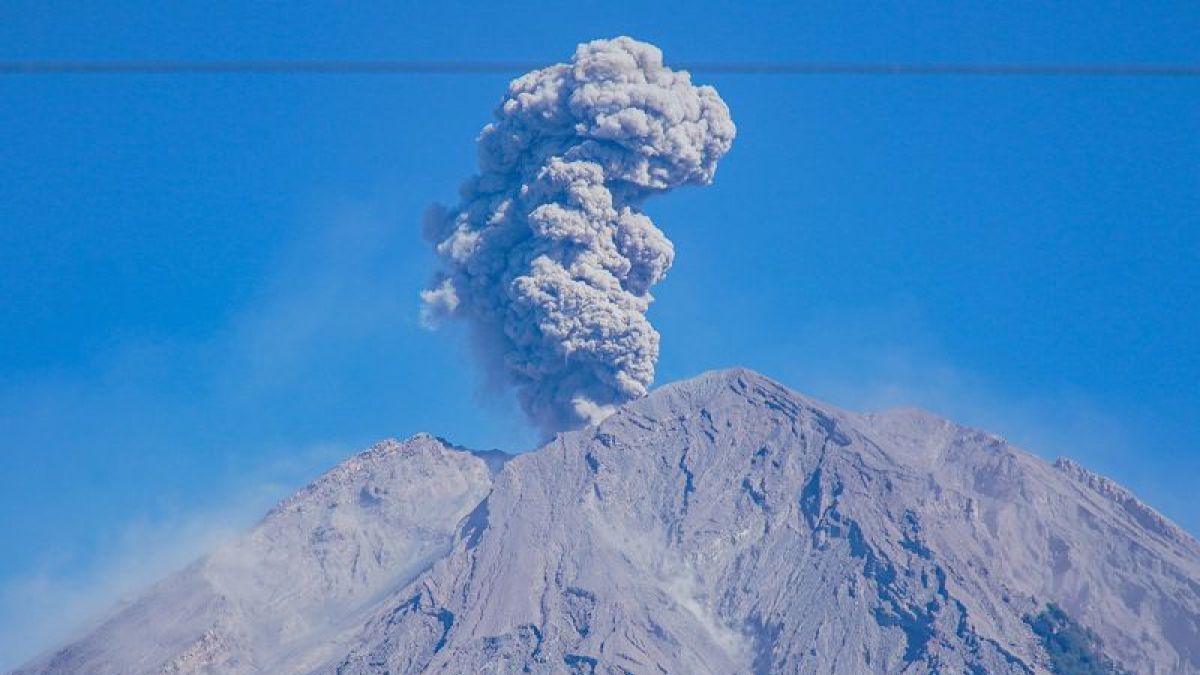
- Mount Semeru, Mount Ibu and Mount Lewotobi Laki-laki erupted within several hours on Tuesday evening.
- Semeru and Lewotobi Laki-laki remain at Level III alert, while Ibu is at Level II.
- Authorities have maintained exclusion zones and warned of ash, hot-cloud and lahar hazards.

Three active volcanoes in Indonesia erupted in quick succession on Tuesday (18 August) evening, according to the Geological Agency of the Ministry of Energy and Mineral Resources (ESDM).
Mount Semeru in East Java, Mount Ibu in West Halmahera, North Maluku, and Mount Lewotobi Laki-laki in East Flores, East Nusa Tenggara, all recorded eruptions within several hours.
The Geological Agency reported different levels of volcanic activity at the three volcanoes, with Mount Ibu at Level II (Alert), while Mount Semeru and Mount Lewotobi Laki-laki were both at Level III (Alert).
Mount Semeru erupts first
Mount Semeru was the first of the three volcanoes to erupt, with an event recorded at 8.33pm WIB on Tuesday.
The eruption could not be observed visually because the summit area was covered by fog. However, officers monitoring Mount Semeru recorded the eruption on a seismograph.
The eruption had a maximum amplitude of 22 millimetres and lasted 235 seconds.
Mount Semeru remains at Level III, or Alert.
The Geological Agency has advised the public not to conduct any activities in the south-eastern sector along Besuk Kobokan for up to 13 kilometres from the summit or eruption centre.
Residents are also prohibited from carrying out activities within 500 metres of the riverbank along Besuk Kobokan. The area could be affected by the expansion of hot clouds and lahar flows extending up to 17 kilometres from the summit.
Authorities have also prohibited activities within a 5-kilometre radius of the Mount Semeru crater or summit because of the risk of incandescent rocks being ejected.
Mount Ibu records three eruptions
Mount Ibu in West Halmahera, North Maluku, recorded three eruptions within several hours on Tuesday evening.
The first eruption was recorded at 8.36pm WIT, producing an ash column that reached 700 metres above the summit.
A second eruption occurred at 8.58pm WIT, about 22 minutes later. The ash column reached approximately 500 metres above the summit.
Mount Ibu erupted for a third time at 11.11pm WIT.
The third eruption produced a volcanic ash column reaching 600 metres above the summit. The ash was white to grey and moved towards the north-east and east.
The Geological Agency has placed Mount Ibu at Level II, or Alert.
Mount Lewotobi Laki-laki erupts
Mount Lewotobi Laki-laki in East Flores, East Nusa Tenggara, erupted at 9.09pm WITA.
The eruption produced a thick grey ash column reaching 300 metres above the summit.
The ash column moved towards the west and north-west.
The eruption was recorded for 109 seconds, with a maximum seismogram amplitude of 11 millimetres.
Mount Lewotobi Laki-laki is currently at Level III, or Alert.
Safety restrictions remain in place
The Geological Agency has urged people living near the volcanoes to comply with the safety recommendations issued for each location.
At Mount Semeru, restrictions cover the south-eastern sector along Besuk Kobokan, extending 13 kilometres from the summit or eruption centre.
Authorities have also warned of potential hot-cloud and lahar hazards along the Besuk Kobokan river, with restrictions applying within 500 metres of the riverbank. These hazards could extend up to 17 kilometres from the summit.
A separate 5-kilometre exclusion zone around Mount Semeru's crater or summit remains in place because of the risk of incandescent rock ejections.
The Geological Agency has asked the public to follow official information and recommendations concerning volcanic activity.