US House passes Iran war powers resolution as Massie moves to impeach Hegseth
The US House has passed a third resolution directing President Trump to end hostilities with Iran, by 220 votes to 204. The same day, Republican Thomas Massie filed eight impeachment articles against Pete Hegseth, three of them over the Iran war.
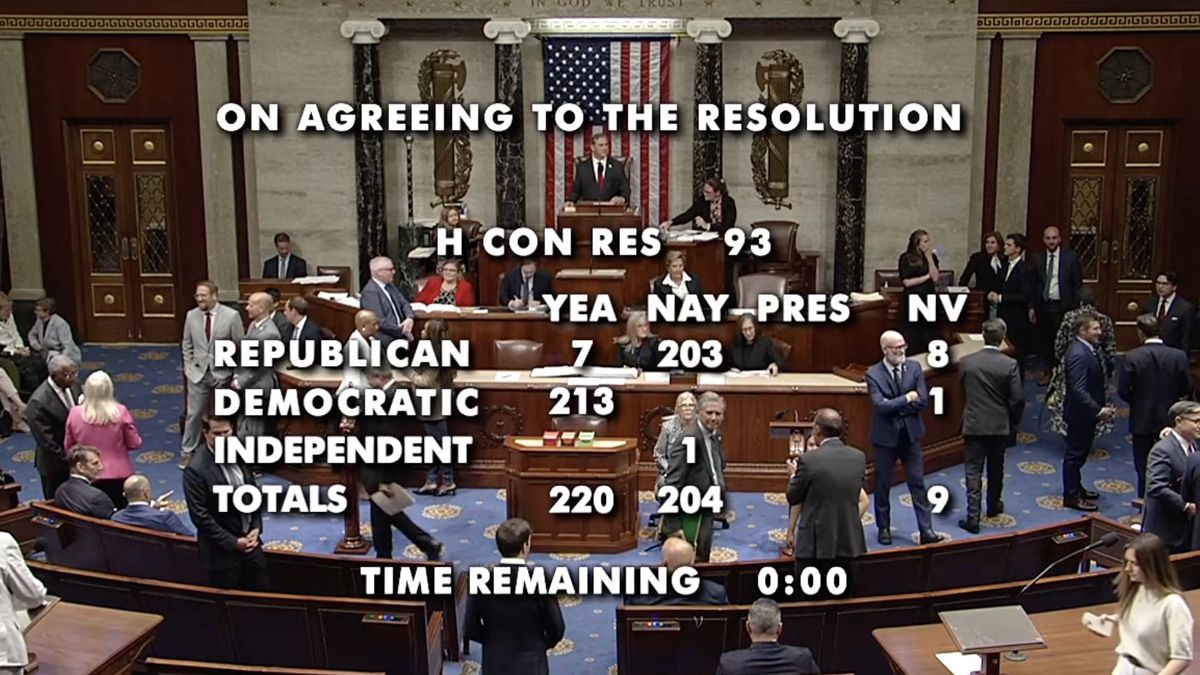
- The US House passed a third Iran war powers resolution by 220 votes to 204, with seven Republicans in favour.
- Thomas Massie filed eight impeachment articles against Pete Hegseth, three concerning the Iran war.
- The House must act on the privileged impeachment resolution within two legislative days, likely through a motion to table.

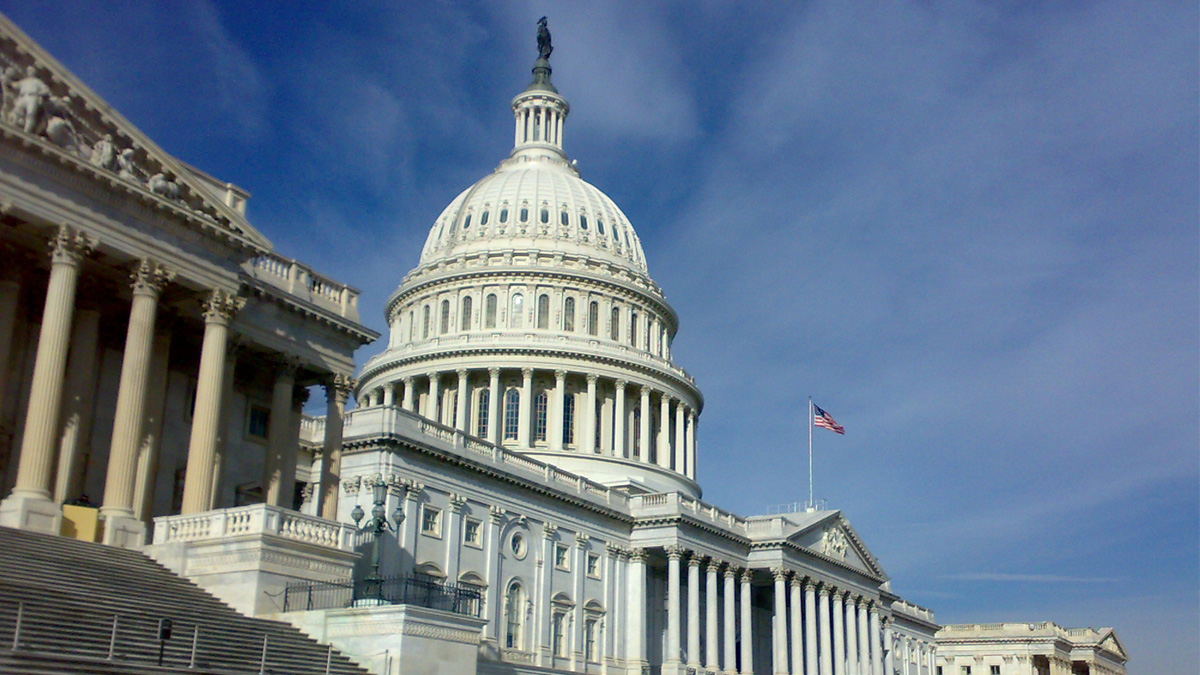
The US House of Representatives on Tuesday, 15 September 2026, passed a war powers resolution directing President Donald Trump to remove US armed forces from hostilities with Iran.
On the same day, Republican Representative Thomas Massie filed eight articles of impeachment against Secretary of Defense Pete Hegseth. Three of the articles accuse Hegseth of violating the War Powers Resolution over the Iran war.
The House approved House Concurrent Resolution 93 (H. Con. Res. 93) by 220 votes to 204. It was the third time the chamber had passed such a measure since the war began on 28 February 2026.
Seven Republicans voted in favour. The Washington Examiner reported that four of them, Massie and Representatives Tom Barrett, Warren Davidson and Brian Fitzpatrick, had backed the two previous resolutions.
The other three, Representatives Nancy Mace, Mariannette Miller-Meeks and Zach Nunn, broke with Republican leadership on the issue for the first time.
Resolution led by Democratic veterans
According to congressional records, Representative Seth Moulton introduced the resolution on 28 April 2026, with Representative Jason Crow as the first of eight co-sponsors.
The other co-sponsors are Representatives Pat Ryan, Chrissy Houlahan, Jimmy Panetta, Jake Auchincloss, Maggie Goodlander, Eugene Vindman and Bobby Scott. Moulton's office described the group as nine Democratic veterans.
According to the official summary published by Congress, the resolution directs the president to withdraw US forces from hostilities against Iran unless Congress declares war or authorises the use of military force.
Forces needed to defend the US, an ally or a partner from imminent attack are exempt, provided the president complies with the War Powers Resolution's reporting requirements.
After the vote, Crow wrote on X that the House had passed "my War Powers Resolution to end the reckless war in Iran". He added that he would keep forcing votes to hold Trump accountable.
Meeks cites the cost of the conflict
Representative Gregory Meeks, the ranking Democrat on the House Foreign Affairs Committee, criticised the administration's military campaign against Iran after the vote, Anadolu Agency reported.
Meeks said the US had been involved in the conflict for nearly 200 days and argued that the administration had failed to achieve its stated objectives.
He cited higher petrol prices and mortgage rates, inflation, billions of dollars in government spending and US military casualties as costs of the war.
Meeks called on the president to "appoint real diplomats, not real estate developers". He said they should work with other countries towards a diplomatic solution that reopens the Strait of Hormuz and reduces tensions.
In remarks prepared for the floor debate, Meeks said Trump had predicted the war would last four to six weeks. He also said American families had paid over US$100 billion more for petrol and diesel since it began.
19 US service members have been killed and more than 750 wounded since the US and Israel launched strikes on Iran.
The vote came a day after the Department of Defense Office of Inspector General (DoD OIG) published its first report on the war. The report estimated the war's cost at US$33.4 billion up to 29 June 2026.
Earlier votes and their legal force
The House first passed an Iran war powers resolution, Meeks's H. Con. Res. 86, by 215 votes to 208 on 3 June 2026. It passed a second by 214 votes to 208 on 23 July 2026, according to NPR.
According to a statement from Meeks, the Senate approved H. Con. Res. 86 by 50 votes to 48 in June. It remains the only Iran war powers resolution to have passed both chambers.
As a concurrent resolution, H. Con. Res. 86 did not go to the president for signature. Meeks has maintained that it is binding under the War Powers Resolution and said he would explore all legal avenues to ensure compliance.
The legal force of such resolutions has been disputed since 1983. That year, in INS v Chadha, the Supreme Court held that congressional action must pass both chambers and be presented to the president to be legally binding.
NPR reported that Trump has called the war powers votes "meaningless". It also reported that a Senate Democratic resolution failed by 47 votes to 49 in July. H. Con. Res. 93 now goes to the Senate.
Massie files impeachment articles
Massie read his articles of impeachment on the House floor and filed them as a privileged resolution. Under House rules, this requires the chamber to act on the measure within two legislative days.
According to Axios, Massie did not give Republican leaders advance notice. On the House floor, he said Hegseth had acted "contrary to his trust as Secretary of Defense".
The first three articles concern Iran. They allege that Hegseth took part in hostilities without congressional authorisation and continued military operations after Congress directed US forces to withdraw.
The articles also allege that Hegseth allowed the conflict to extend beyond the time limits set by the War Powers Resolution.
Massie has accused Hegseth of keeping US forces engaged in Iran for more than 90 days without authorisation from Congress. His resolution argues that the war was unlawful from the outset.
The 1973 law generally requires US forces to be withdrawn from hostilities within 60 days of the president reporting their deployment, unless Congress authorises the operation. A further 30 days may be allowed for a safe withdrawal.
Charges beyond Iran
The remaining five articles cover other military operations. One accuses Hegseth of disregarding laws intended to limit civilian casualties during military strikes on suspected drug traffickers at sea.
The resolution describes those killings as extrajudicial and claims the maritime campaign has resulted in at least 221 deaths.
Another article accuses Hegseth of using Defense Department authority to retaliate against Senator Mark Kelly over remarks questioning unlawful military orders.
The articles also target the US operation that seized Venezuelan leader Nicolás Maduro and his wife, Cilia Flores, as well as separate US military operations in Yemen.
Pentagon Press Secretary Kingsley Wilson described Hegseth as a "transformative leader" and said the department was unified behind his leadership.
Attorney General Todd Blanche also defended Hegseth on Tuesday, saying the defence secretary follows the law.
What happens next
Republican leaders can move to table the resolution, which would end Massie's effort for now, or allow the House to consider the articles.
Massie told the Kentucky broadcaster WHAS11 that he expected a vote before the House breaks on Thursday for recess ahead of the November midterm elections. He said the vote would probably be on a motion to table.
If a simple majority approves any article, Hegseth would become the third Cabinet secretary in US history to be impeached. Conviction and removal by the Senate would require a two-thirds vote of senators present.
Secretary of War William Belknap was impeached in 1876 and acquitted by the Senate. Homeland Security Secretary Alejandro Mayorkas was impeached in 2024, and the Senate dismissed the charges.
According to Axios, House Democrats separately introduced six articles of impeachment against Hegseth in April 2026. Those articles include allegations that he waged an unauthorised war against Iran.
Massie lost his Republican primary earlier this year and will leave Congress when his term ends. He said he waited until Tuesday to force the issue because lawmakers were preparing to leave Washington before the midterms.