Record rain kills four in eastern Japan as Chiba faces flooding
At least four people have died and one remains missing after record-breaking rain flooded Chiba near Tokyo, disrupting transport, stranding thousands at Narita Airport and leaving tens of thousands without power.
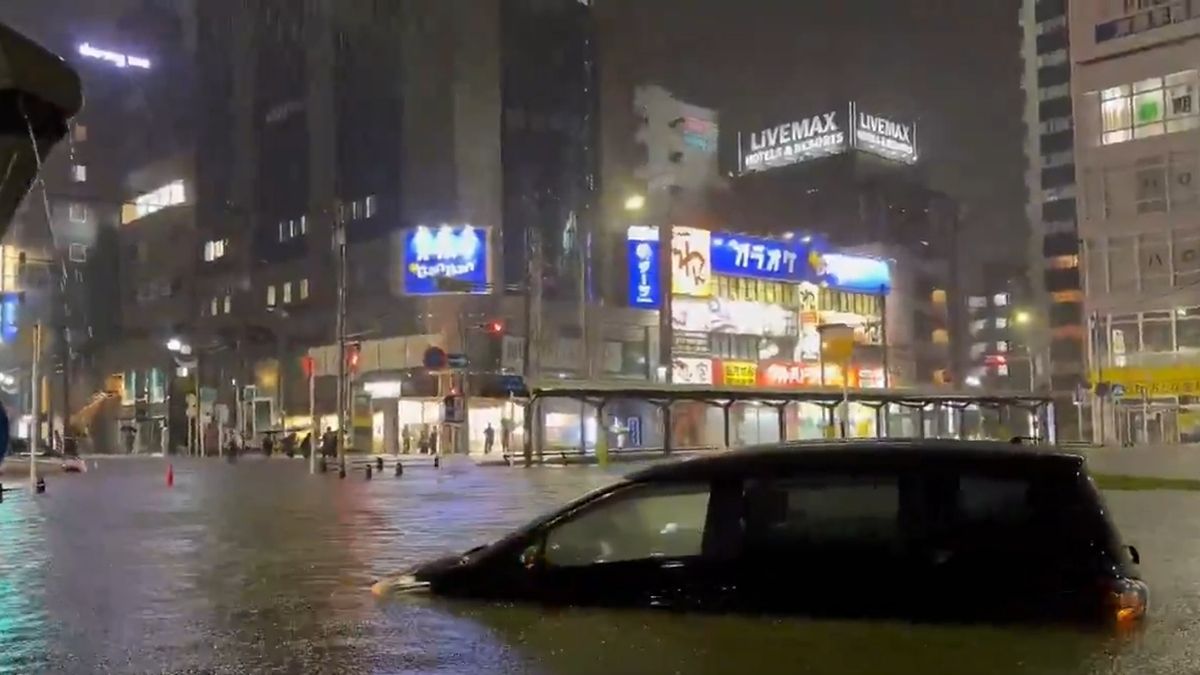
- Four people died and one remained missing after torrential rain triggered widespread flooding in Chiba.
- About 7,000 passengers were stranded overnight at Narita International Airport after transport services were suspended.
- Tens of thousands of households lost electricity while authorities continued to warn of flooding and landslides.

At least four people have died and one remained missing after record-breaking rain battered eastern Japan, flooding roads and disrupting transport and power supplies in Chiba Prefecture near Tokyo, while authorities continued to warn residents of landslides and flooding on Friday.
The Japan Meteorological Agency (JMA) issued its highest-level, Level 5 emergency heavy rain warning for 22 municipalities in Chiba, as well as an emergency landslide warning for six cities, after torrential rain began Thursday evening. The warnings were downgraded on Friday morning as the most intense rainfall eased.
Four people were confirmed dead in the cities of Ichikawa, Sakura and Yachiyo, according to the Chiba Prefectural Government. One person remained missing and another was determined to have experienced cardiopulmonary arrest.
A man spotted in floodwaters on a submerged road in Ichikawa was later confirmed dead. A 66-year-old woman died after becoming trapped inside a car on a flooded road in Sakura, according to the prefectural government.
Police said a man was confirmed dead after being found unresponsive on a flooded road in Yachiyo, while the prefectural government said on Friday that a man found collapsed in Sakura had also died.
A woman trapped in a car in Kashiwa was taken to hospital but remained unresponsive.
Record rainfall triggers widespread flooding
Bands of intense rain clouds repeatedly formed over Chiba from Thursday evening, bringing widespread flooding across the prefecture.
Chiba City's Chuo Ward recorded 367 millimetres of rain in the 12 hours through 9:40 a.m. on Friday, a record-breaking amount. Hourly precipitation there reached 115 millimetres on Thursday night, around the same level as the area's monthly rainfall in August in a normal year.
More than 360 millimetres of rain fell in 24 hours in parts of Chiba, inundating roads and railways during one of Japan's busiest holiday weeks.
Water gushed from manholes in Chiba City, while people waded through knee-high water as they rushed to get home.
The torrential rain was caused by warm, humid air flowing into eastern Japan and combining with cold air above, making atmospheric conditions extremely unstable, the JMA said.
The agency warned that unstable atmospheric conditions would persist across the Kanto region and neighbouring Nagano and Yamanashi prefectures through early Saturday, increasing the risk of further heavy rain.
Hundreds of thousands affected by evacuation orders
According to the Fire and Disaster Management Agency, evacuation orders were issued for more than 400,000 people in Chiba and Ibaraki prefectures at one point.
As of 7 a.m. on Friday, the orders remained in effect for around 126,000 people in the two prefectures.
More than 200 evacuation centres were established in Chiba and Ibaraki, as well as Saitama and Gunma prefectures, according to the Cabinet Office.
The Chiba governor requested a Self-Defense Forces disaster relief deployment at 5 a.m. on Friday to help transport about 4,000 people stranded at JR Soga Station to a temporary shelter at the Chiba Prefectural Cultural Hall.
Around 1,800 people also gathered at the prefectural government building, which was made available to stranded commuters.
Up to 150 millimetres of rain was forecast for southern Kanto in the 24 hours through 6 a.m. Saturday, with as much as 120 mm possible in northern Kanto and 80 mm in Nagano and Yamanashi.
Officials urged residents to remain alert for landslides, overflowing rivers and flooding in low-lying areas even after the emergency warnings were downgraded.
Thousands stranded at Narita Airport
The flooding also caused major disruption at Narita International Airport, with approximately 7,000 passengers stranded overnight after train and bus services were suspended.
An airport spokesperson said around 7,000 people were stranded at the airport, while all flights were scheduled to operate normally on Friday. Japan Airlines said some flights might experience delays but no cancellations were expected.
Overnight, hundreds of passengers queued to collect blankets, bottles of water and snacks from airport staff before bedding down across the terminal building, footage shown by public broadcaster NHK showed.
"We are never going to forget this trip," an American traveller stranded at the airport with his family told NHK.
Several rail services remained suspended on Friday morning, although some trains connecting Narita with Tokyo had resumed operations, easing congestion at the international transport hub.
JR East cancelled or reduced services on several lines on Friday morning, with delays also reported on other routes.
Several major highways in Chiba were closed, forcing drivers to use alternative routes and causing heavy traffic, according to highway operator NEXCO East. Road closures were also reported after landslides.
Power outages hit tens of thousands
The flooding and severe weather also disrupted electricity supplies across the region.
Power outages at one point affected around 45,000 homes in Chiba Prefecture, according to a subsidiary of Tokyo Electric Power Company Holdings Inc.
By 10:30 a.m. on Friday, about 24,000 households in Chiba, Ibaraki and Tochigi prefectures were without electricity.
More than 22,000 households remained without power at 11 a.m. on Friday, according to Tokyo Electric Power.
Chiba Governor Toshihito Kumagai described the situation as highly unusual during a news conference on Friday morning.
"This case was an extremely unusual situation," Kumagai said. "I have responded to many disasters in the past, but I have never experienced a case like this."
Authorities continued to urge residents to take precautions against flooding and landslides as heavy rain remained possible across eastern Japan.