A decade later, the same problem: PAP's one agency approach falls short again
Opinion: Ten years after former PM Lee Hsien Loong championed the "One Agency" approach to streamline governance, Singapore faces the same inefficiencies under PM Lawrence Wong. The PAP's failure to resolve these issues raises questions about competence and the sincerity of their reform agenda.
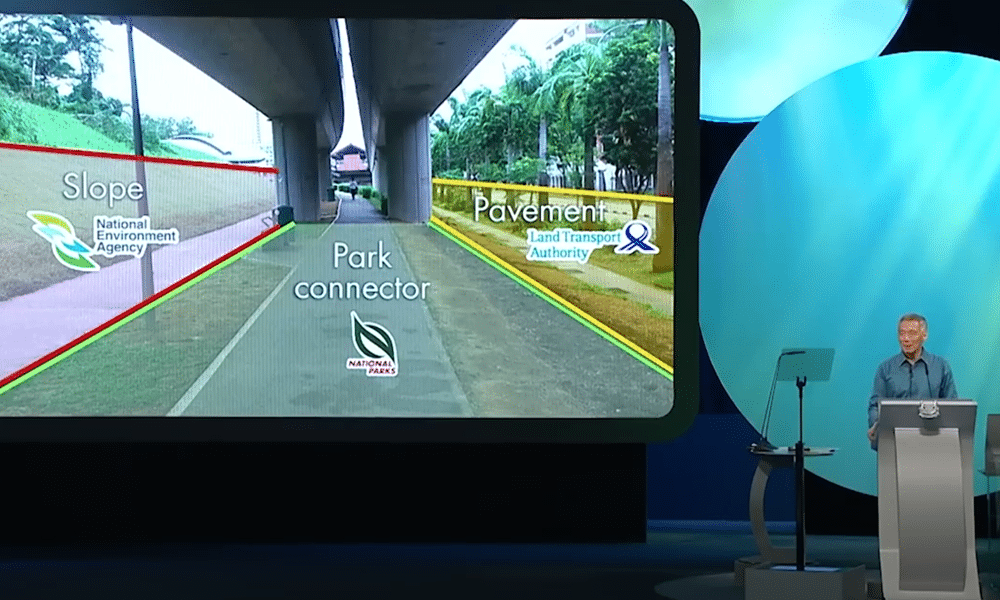

The People's Action Party (PAP) government has long touted its commitment to efficient and integrated governance, yet a decade after former Prime Minister Lee Hsien Loong's grand vision of a "One Agency" approach, Singaporeans are left wondering if these promises were ever more than mere rhetoric.
In 2014, during his National Day Rally speech, Mr Lee highlighted the absurdity of inter-agency fragmentation by recounting examples like the infamous "fishball stick" incident, where multiple agencies were involved in cleaning a single walkway.
To address such inefficiencies, he announced the creation of the Municipal Services Office (MSO) to streamline public service delivery and ensure a more coordinated approach among government agencies.
Fast forward ten years and Singapore's newly appointed Prime Minister Lawrence Wong is still grappling with the same issues, albeit in a different context.
In his 2024 National Day Rally speech, Mr Wong admitted that the country's regulatory environment had become burdensome, stifling innovation and increasing costs for businesses.
He pointed to the complicated process of organizing drone shows as a prime example of how bureaucratic red tape had grown unchecked. To address this, Mr Wong announced the formation of yet another inter-ministerial committee, this time to review and simplify these outdated rules.
The glaring question is: why was the "One Agency" approach, so passionately advocated by Mr Lee in 2014, not consistently applied over the past decade? Why has it taken so long for the government to recognize and address these inefficiencies?
The very fact that Mr Wong is now initiating a similar reform, albeit focused on business regulations, suggests that the PAP government has either been complacent or incompetent in following through on its promises.
The irony is hard to miss. Mr Lee's 2014 speech was filled with optimism about breaking down inter-agency silos to better serve the public.
Yet, a decade later, Mr Wong's speech reveals that the problem persists, and now, businesses are bearing the brunt of bureaucratic inefficiency. The new inter-ministerial committee led by Deputy Prime Minister Gan Kim Yong is being touted as a solution, but it raises the question: why wasn't this done earlier? What happened to the "One Agency" approach that was supposed to eliminate these issues?
The PAP's failure to deliver on this promise not only undermines public confidence in the government's ability to govern effectively but also calls into question the sincerity of its reform agenda. If the government was truly committed to efficiency and innovation, why have these issues been allowed to fester for so long? Is it sheer incompetence, or is it a deeper systemic issue within the PAP's approach to governance?
Adding to this concern is the recurring question about inefficiencies that seem to serve political ends rather than the public good. Consider the issue of some HDB blocks having their shelters connecting to amenities built only after the Build-To-Order (BTO) flats are completed. In the eyes of some, this appears to be a way for Members of Parliament to score political points by "solving" a problem that should never have existed in the first place, had the Housing & Development Board (HDB) done its job correctly from the start.
Is this kind of inefficiency intentional, allowing for quick fixes that politicians can showcase as achievements, or is it simply another example of a government machinery that struggles to get things right the first time?
Singaporeans deserve answers, not just more promises. The time has come for the PAP government to reflect on its shortcomings and take real, meaningful action to ensure that the "One Agency" approach is not just a catchphrase but a reality in every aspect of governance. Otherwise, the cycle of inefficiency and bureaucratic inertia will continue, to the detriment of the very people the government is supposed to serve.