Singapore reclaims title as world's most powerful passport
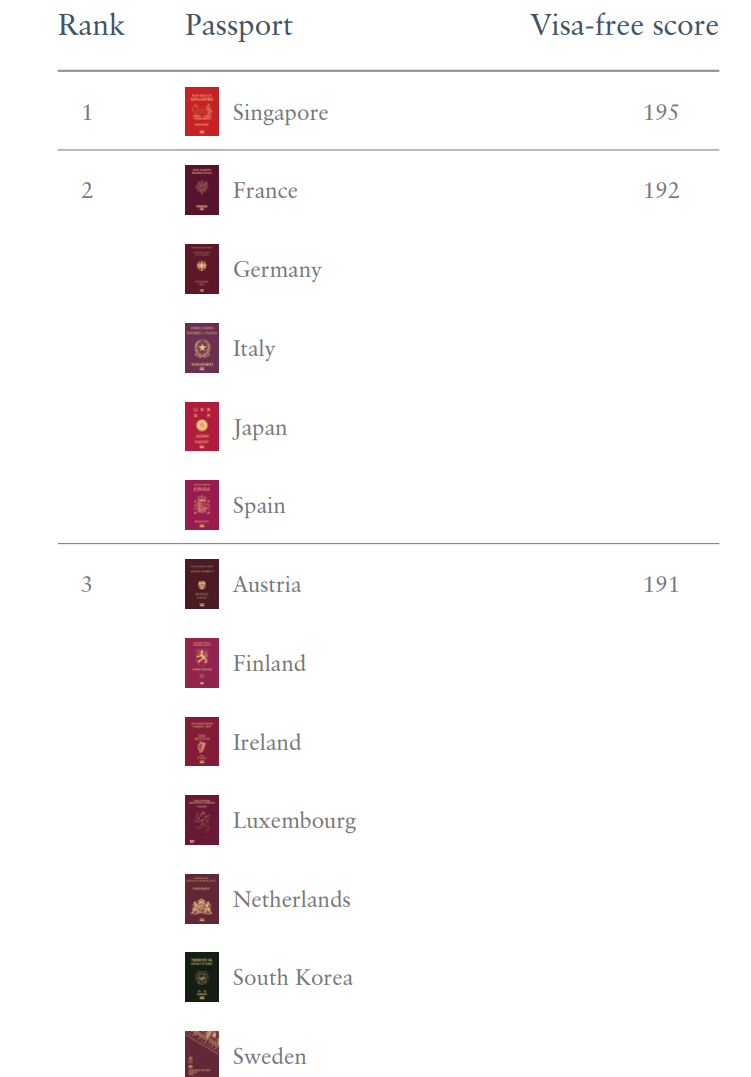
Singapore is now the world's most powerful passport, offering visa-free access to 195 destinations. It leads the Henley Passport Index, ahead of France, Germany, Italy, Japan, and Spain, which offer access to 192 destinations. The UAE enters the Top 10 for the first time.
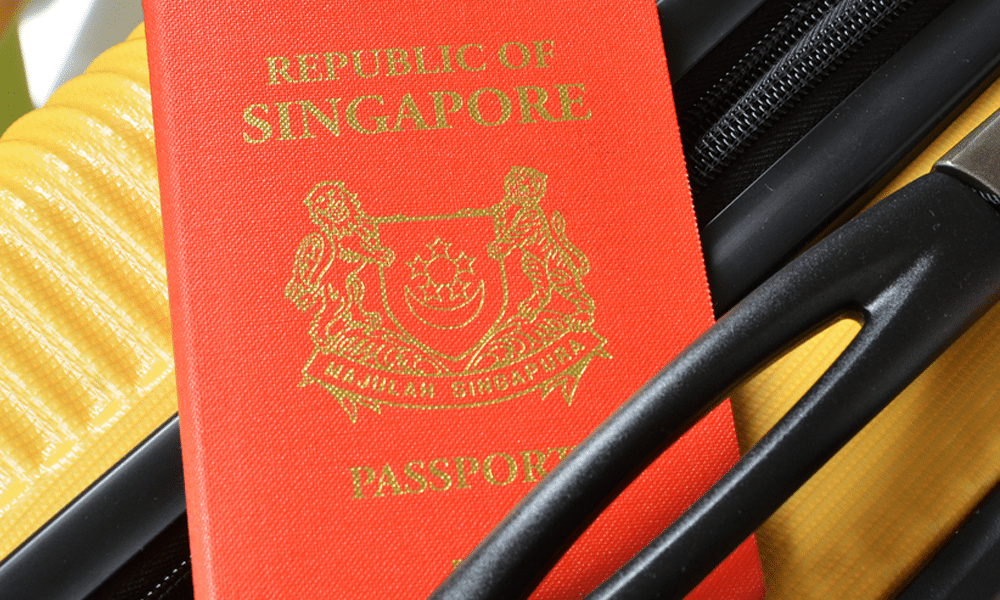

Singapore has regained its position as the world's most powerful passport, according to the latest Henley Passport Index published on 23 July.
The city-state now holds the top spot, with its citizens enjoying visa-free access to 195 travel destinations out of 227 globally.
Previously sharing the top spot with six other countries, Singapore has moved ahead of France, Germany, Italy, Japan, and Spain, which have now dropped to joint-2nd place with visa-free access to 192 destinations each.
Additionally, seven nations, including Austria, Finland, Ireland, Luxembourg, Netherlands, South Korea, and Sweden, now share the 3rd position with access to 191 destinations without a prior visa. These rankings are based on data from the International Air Transport Association (IATA).
UK and US See Changes in Rankings
The United Kingdom remains in 4th place along with Belgium, Denmark, New Zealand, Norway, and Switzerland, although its visa-free destination score has fallen to 190.
The United States continues its decade-long decline, dropping to 8th place with access to 186 destinations visa-free. Notably, the UK and US jointly held the top position a decade ago in 2014.
At the other end of the spectrum, Afghanistan remains the world's weakest passport, now offering visa-free access to only 26 countries, the lowest score recorded in the index's 19-year history.
Insights from the Henley Global Mobility Report
Dr. Christian H. Kaelin, Chairman of Henley & Partners and the inventor of the passport index concept, noted a significant trend over the past two decades towards greater travel freedom.
“The global average number of destinations travelers can access visa-free has nearly doubled from 58 in 2006 to 111 in 2024. However, the global mobility gap between those at the top and bottom of the index is now wider than it has ever been, with top-ranked Singapore able to access 169 more destinations visa-free than Afghanistan.”
According to IATA, airlines are expected to connect nearly 5 billion people over 22,000 routes on 39 million flights in 2024, transporting 62 million tonnes of air cargo, facilitating USD 8.3 trillion in trade.
Willie Walsh, IATA's Director General, remarked on the industry's tight margins despite its immense value. “Our industry expects to record revenues of almost USD 1 trillion this year. Expenses, however, will also be at a record high of USD 936 billion. Net profit will be USD 30.5 billion, translating to a net margin of around 3%, making the profit per passenger just USD 6.14.”
Biggest Climbers and Fallers
The UAE has entered the Top 10 for the first time, having added 152 destinations since 2006, achieving a current visa-free score of 185 and rising from 62nd to 9th place.
Dr. Juerg Steffen, Henley & Partners CEO, attributes this to the Emirati government's efforts to position the UAE as a global hub for business, tourism, and investment. Research consistently shows a strong correlation between a country's visa-free score and its economic prosperity.
China and Ukraine are among the Top 10 countries with the highest climb in rankings over the past decade.
China has moved up 24 places from 83rd to 59th, with access to 85 destinations visa-free, while Ukraine has advanced 23 spots to 30th, with its nationals able to visit 148 destinations without a prior visa. Conversely, Russia has fallen seven places over the past ten years to 45th position.
Venezuela is the biggest faller over the last decade, dropping 17 places to 42nd. The country faces a decisive presidential election on 28 July that could affect millions who have fled amid economic and political crises.
Africa and EU Visa Rejections
Research by Prof. Mehari Taddele Maru, conducted for Henley & Partners, reveals that African Schengen visa applicants face higher rejection rates compared to other regions. About 30% of African applicants were rejected, compared to a global average of 10%. The poorest African countries face the highest rejection rates.
Prof. Maru's research indicates a bias against African applicants, driven by factors such as per capita income, illegal overstays, and low return rates. He suggests that European migration policies, shaped by national identity politics, play a significant role in these restrictions.
Henley Openness Index and Visa Reciprocity
The Henley Openness Index ranks countries by the number of nationalities they permit entry to without a prior visa. The top 20 'most open' countries are predominantly small island nations or African states. Singapore ranks 15th on this index, allowing visa-free access to 164 nationalities, contrasting with Japan and other second-ranked nations.
The USA, despite its high visa-free access for its citizens, ranks low on the openness index, allowing only 45 other nationalities to enter visa-free. This disparity highlights the importance of visa reciprocity, with many developing countries now demanding equal treatment in visa policies.