DPM Wong: IRAS to reclaim S$60M from '99-to-1' property scheme to cut ABSD
DPM Wong disclosed IRAS's discovery of 166 cases of private property purchases evading ABSD via the "99-to-1" scheme. 10 cases, potentially involving property agents, are under review by the Council for Estate Agencies.
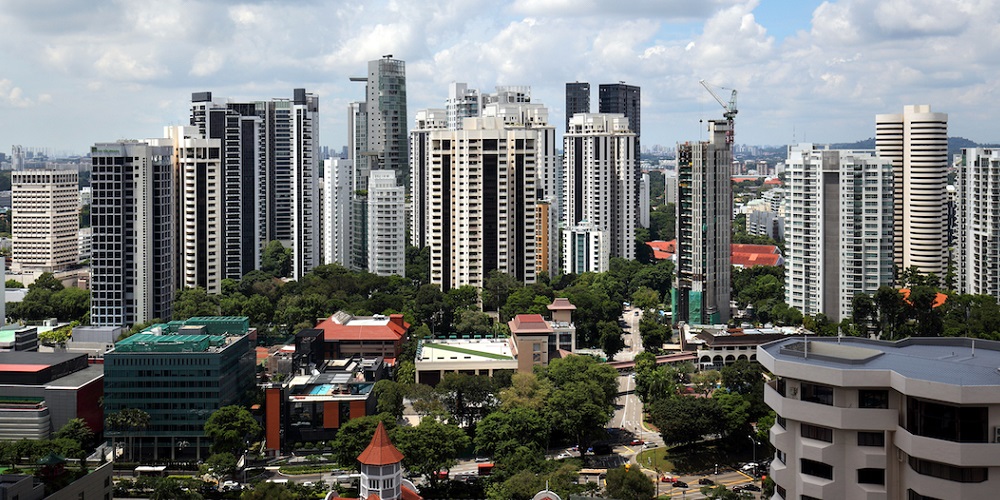

SINGAPORE: The Inland Revenue Authority of Singapore (IRAS) has uncovered 166 instances of private property purchases utilizing the "99-to-1" scheme to evade payment of the additional buyer’s stamp duty (ABSD).
According to Deputy Prime Minister and Minister for Finance Lawrence Wong, as of April, IRAS has completed the examination of 187 such transactions.
Out of these, 166 cases were identified as instances of tax avoidance.
"About S$60 million (approximately US$44 million) in ABSD and surcharges will accordingly be clawed back," he added.
Mr Wong addressed a Parliamentary Question from Ms He Ting Ru of the Workers' Party for Sengkang GRC regarding the "99-to-1" arrangement for stamp duty payment in property acquisitions.
Ms He inquired about the number of audits conducted thus far, the instances of tax avoidance detected by IRAS, the total amount of unpaid additional stamp duty recovered by IRAS, and the number of cases where IRAS imposed the 50% surcharge on the additional duty owed.
The “99-to-1” arrangement allows buyers who already own property to avoid paying the full ABSD sum while still becoming the new property’s co-owner and co-applicant for bank loans to finance it.
The loophole enables them to reduce or avoid paying ABSD, which is a tax on residential property purchases, imposed by the Singaporean government as part of its property cooling measures.
Mr Wong responded to Ms He's PQ in a written reply by describing the "99-to-1" scheme as a "tax avoidance arrangement used by some property buyers to reduce the rightful ABSD payable on the purchase of a residential property".
He elucidated that when such arrangements are utilized to decrease tax obligations, the Commissioner of Stamp Duties has the authority to "disregard the individual transactions and assess them as a single joint purchase".
Furthermore, Mr Wong emphasized that the commissioner is vested with the authority to reclaim the rightful ABSD amount owed, accompanied by a 50% surcharge.
Out of the 166 cases identified for tax avoidance, approximately 10 exhibit potential involvement by property agents and are currently "under review by the Council for Estate Agencies," Mr Wong added.
0.5% of property transactions utilized '99-to-1' schemes between 2018 and 2021
Last April, Mr Chee Hong Tat, then Senior Minister of State for Finance, disclosed to the House that approximately 0.5% of private residential property transactions between 2018 and 2021 involved "99-to-1" or similar purchase arrangements.
Property regulations, including the ABSD, were introduced in December 2011, with an additional 3% levy imposed on Singaporeans' third and subsequent property acquisitions.
Presently, Singaporeans incur a 20% ABSD on their second residential property and 30% on their third and subsequent homes, while foreigners face a 60% ABSD for any property purchased.
IRAS in last April said If the stamp duty and surcharge are not paid by the deadline in case of tax avoidance taken place, it can also impose penalties of up to four times the outstanding amount.
IRAS added that the time frame does not matter and that audits can be conducted on any past cases or transactions.
Mr Chee also emphasized that the Singaporean government takes a serious view of individuals who promote or facilitate tax avoidance arrangements, in addition to the buyers.IRAS will refer those identified as such to the relevant regulatory agencies.
This was in response to a question by an MP, who had asked whether lawyers will be held accountable for such arrangements as they have a duty to highlight such risks when drafting the agreements.
Mr Chee also stated that property agents who facilitate such arrangements will be referred to the Council for Estate Agencies for investigation and disciplinary action, and may face financial penalties and/or suspension of their registrations depending on the severity of the breach.