Not able to buy HDB, 27-year-old Singaporean buys S$200K apartment in JB
A 27-year-old single Singaporean woman, not eligible to buy an HDB flat, invested in a JB apartment for S$200,000. The news sparked discussion on Reddit, with some attributing the trend to Singapore's strong currency and high living costs.
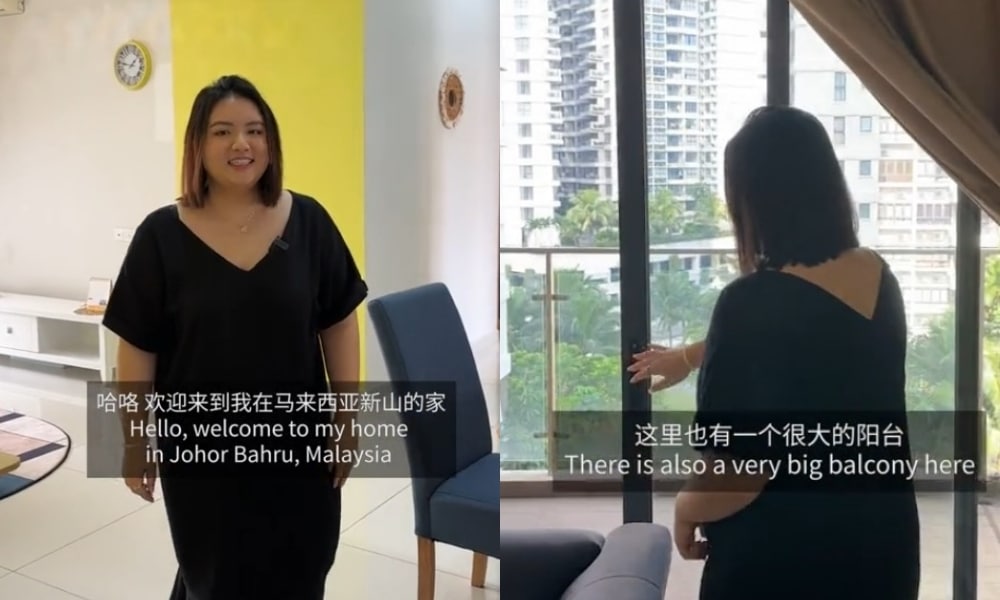

A Singaporean woman recently featured in an 8world News report shared her journey of purchasing a house in Johor Bahru (JB).
As a 27-year-old single woman, business owner Kylie did not meet the requirements to apply for an HDB flat in Singapore.
As of now, singles in Singapore are required to be 35 years old or above to purchase a new flat from HDB or acquire one from the resale market.
Despite the setback, Kylie was determined to secure a place of her own.
She opted to invest in a 3-bedroom, 3-bathroom apartment in JB for S$200,000, a significantly more affordable option.
According to 8world News, Kylie embarked on her entrepreneurial journey at the age of 18, establishing her own online marketing company.
Now at 27, she has further expanded her ventures by launching a new online store, UPawsion, specializing in pet supplies.
Despite her burgeoning career, Kylie lacked the financial stability to invest in private property in Singapore.
Desiring independence and a space of her own away from her parents, she took a leap of faith and purchased a home in JB.
After thorough research, Kylie settled on an apartment in Country Garden Danga Bay, JB, completing the purchase last year with a down payment of approximately S$50,000.
She now manages monthly payments and apartment fees totaling over S$1,000.
Recognizing the risk associated with investing in JB's real estate market, Kylie took proactive measures to familiarize herself with the neighborhood. She stayed with friends who were renting in JB before making her decision.
“I also have friends who rent a house here, so before buying a house I stayed with them for a few days,” she told 8world in Mandarin.
Kylie revealed to 8world that her JB home is conveniently close to her parent's residence in Singapore, where she stays during visits.
Despite the commute of 40 minutes to an hour, Kylie doesn't view it as a hassle.
Living independently in JB symbolizes a significant milestone for Kylie, allowing her to make decisions autonomously, a departure from her previous reliance on parental guidance.
Having resided in JB for approximately five months, Kylie expressed contentment, citing the presence of supportive friends and a thriving social life, crucial for both personal and professional fulfilment.
Trend of Singaporeans investing in JB property
The news ignited a Reddit discussion, with some attributing the trend of property purchases in Malaysia to the robust Singaporean currency against the Malaysian ringgit and the high cost of living in Singapore.
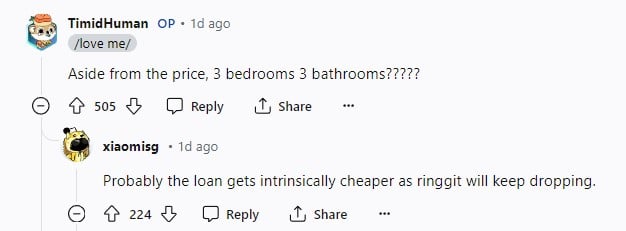
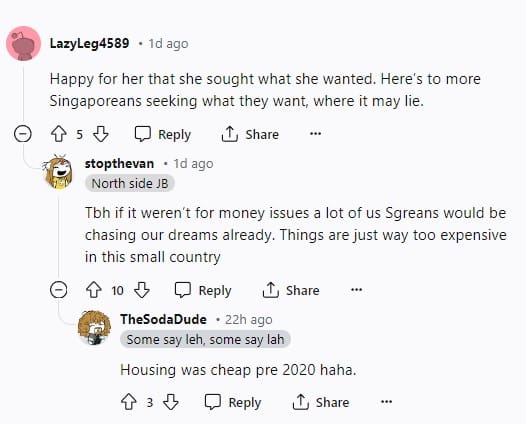
One comment noted that his Malaysian colleagues own terrace homes and cars in Malaysia while concurrently sharing rented rooms in Singapore.
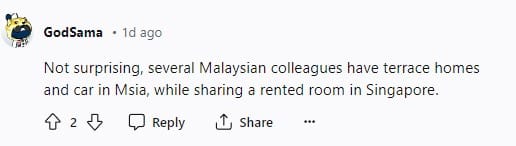
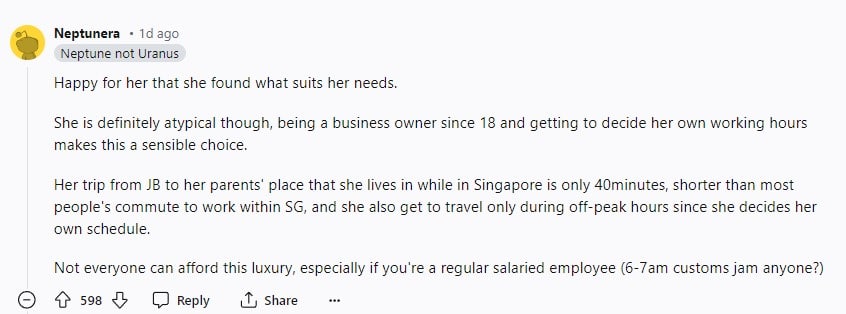
A comment extended best wishes to Kylie for finding a living arrangement that meets her requirements.
However, it suggests that Kylie's experience might be 'atypical', cautioning that not everyone can afford such a luxury, particularly regular salaried employees who may encounter heavy traffic congestion during peak commuting hours, such as the notorious 6-7 am customs jam.
Exploring dual-country living
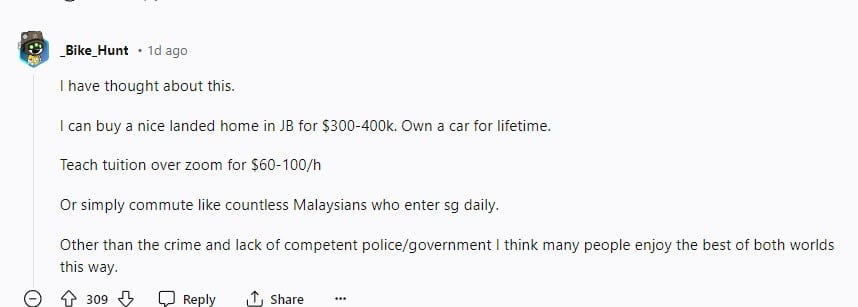
A Redditor suggested buying a landed home in JB, which could also allow him to afford a car for a lifetime. Alternatively, he could commute to Singapore daily, similar to many Malaysians.
He acknowledged crime and perceived shortcomings in law enforcement and governance concerns but believed that many people could enjoy the benefits of both countries by adopting this lifestyle.
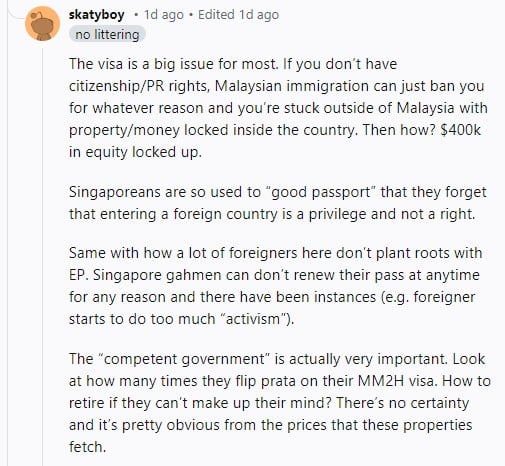
Some Reddit comments discussed potential risks and complications associated with purchasing property in JB for individuals who are not citizens or permanent residents of Malaysia.
These comments underscore the significance of visa-related challenges, outlining scenarios where Malaysian immigration authorities might refuse entry to individuals without citizenship or permanent residency status.
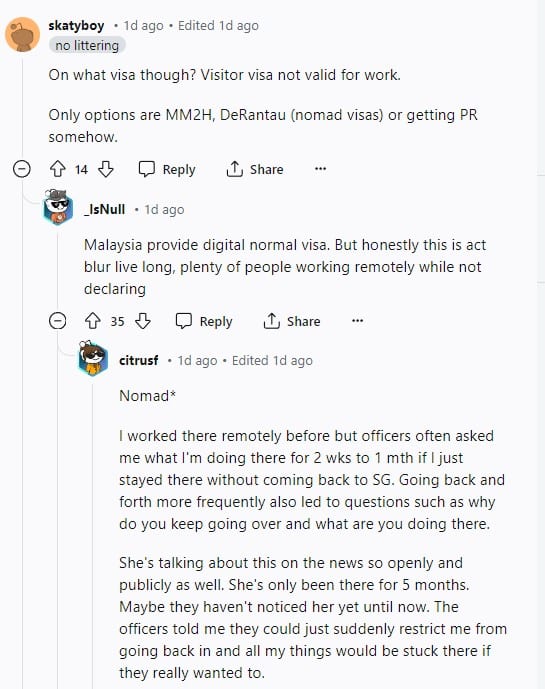
Some comments revolve around the types of visas available for individuals working remotely while residing in Malaysia, particularly in JB.
One comment notes that conventional visitor visas don't permit work activities. The viable options are the Malaysia My Second Home (MM2H) program, the DeRantau (nomad visas), or obtaining permanent residency (PR) status.
Another comment mentions the challenges they faced while working remotely in Malaysia, including scrutiny from immigration officers regarding their prolonged stay and frequent travel between Malaysia and Singapore.
According to PropertyGuru, Singaporeans interested in purchasing property in Malaysia could explore the MM2H visa program for potentially more affordable options.
The MM2H visa offers a 10-year renewal period, although specific requirements such as financial qualifications, age criteria, medical reports, insurance obligations, minimum property prices, and property tax rates may vary depending on the state.
Without an MM2H visa, individuals may encounter higher property prices and the necessity to repeatedly reapply for visas.
Additionally, acquiring permission from the relevant state authorities in Malaysia is essential for property acquisition.
56,066 active MM2H pass holders in Malaysia, with China leading the ranks
According to Malaysian media reports, Tourism, Arts, and Culture Minister Datuk Seri Tiong King Sing stated in parliament on 12 March that an increase in foreign nationals participating in the MM2H program is anticipated as the government is considering relaxing certain requirements.
This decision aligns with the Malaysia's Budget 2024 announcement made last year by Putrajaya, aiming to enhance the attractiveness and competitiveness of the program.
As of 31 January this year, Tiong disclosed that there are currently 56,066 active MM2H pass holders, including principals (27,759) and dependents (28,307).
Among these, China leads the list with a total of 24,765 holders, followed by South Korea (4,940), Japan (4,733), Bangladesh (3,604), the United Kingdom (2,234), Taiwan (1,611), the United States (1,340), Singapore (1,282), India (1,223), and Australia (1,069).
Singapore's MND Minister rejected PSP’s call to lower HDB age limit, warned of potential price surge
During the Committee of Supply Debate for the Ministry of National Development on 5 March, Hazel Poa, Non-Constituency Member of Parliament (NCMP) from the Progress Singapore Party (PSP), made a recommendation to lower the age limit for singles to buy HDB flats to 28, allowing them to purchase new three-room flats.
This change aims to enable singles to own a flat before finding a partner, facilitating quicker family formation when they do find the right partner.
“Low TFR has troubled us for very long. The political will to implement major changes is needed if we really want to turn it around, ” she added.
In response, National Development Minister Desmond Lee explained that the government is already taking steps to allow singles to purchase two-room Flexi BTO flats islandwide, with plans to implement this in the second half of the year.
He emphasised the need to carefully balance the housing needs of various segments, including married couples, families, seniors, and singles, to ensure the stability and sustainability of the housing system
He cautions that implementing proposals without corresponding increases in flat supply could lead to spikes in application rates and resale prices, making it harder for people, including singles, to obtain flats.