User shares experience of overcharges on SimplyGo due to missed entries
As SimplyGo sparks user concerns over balance visibility issues and overcharging, a Facebook user's revelations of missed entries and potential losses spur sharing of similar experiences.
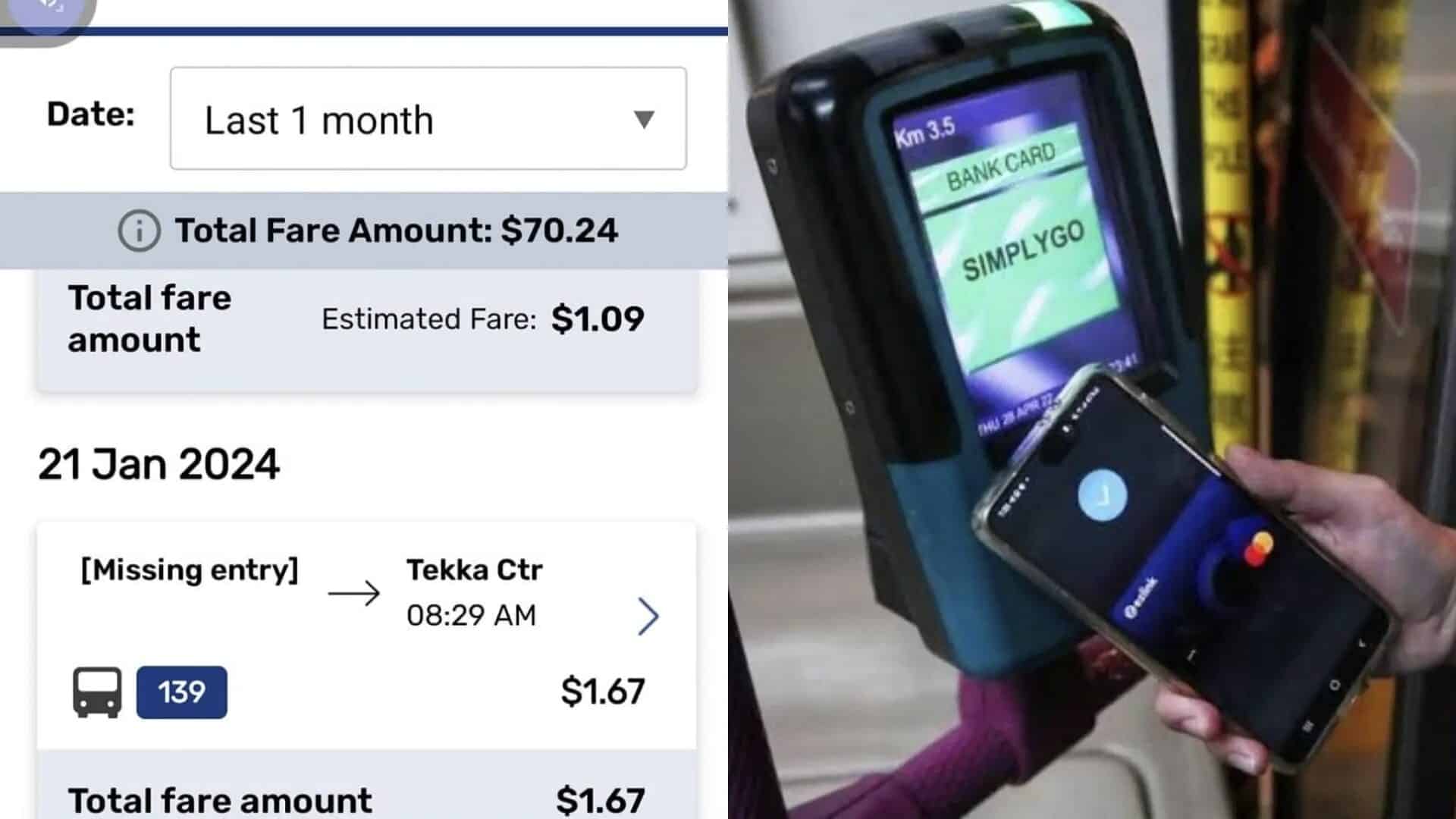

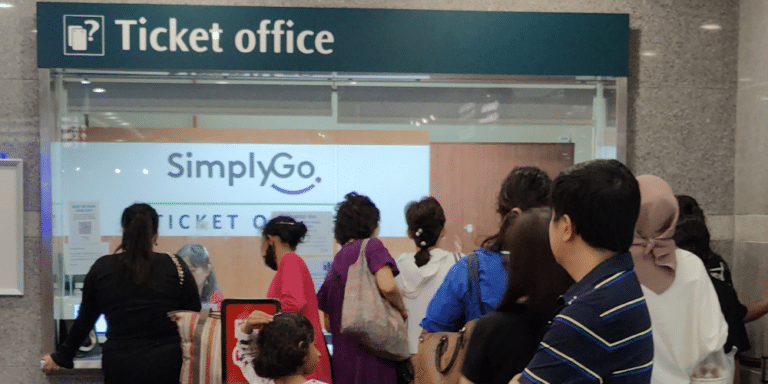
SINGAPORE: Controversy and criticism have arisen surrounding the Land Transport Authority's decision on SimplyGo due to the app's inability to display the user card balance.
This has left public transport users questioning how they can verify if their balance has been deducted correctly, leading to concerns about potential double payments or overcharging.
A Facebook user named Sharon took to her Facebook page on 24 January to address the matter.
Prompted by the ongoing SimplyGo controversy, she decided to check her SimplyGo App, a task she hadn't undertaken since 2019/2020 when she transitioned to using her credit card on her phone.
To her surprise, she discovered instances where entries were missed, resulting in overcharges exceeding S$2 (US$1.5).
Sharon emphasized the necessity of regularly checking the app to ensure that the system deducts the correct fare from users' accounts.
Concerned about the frequency of such incidents, she speculated on potential losses, noting that if this happened once a month over the last three years, the cumulative impact could be close to S$100 (US$74.65).
If occurring weekly, the overcharges could amount to almost S$500 (US$373.23).
Sharon shared a silver lining, mentioning that filing a claim is a straightforward process.
However, she also highlighted a time constraint, urging users to find out the period between discovering an error and being able to submit a claim.
In a subsequent update, Sharon expressed shock at finding 2-3 missed entries in both September and November.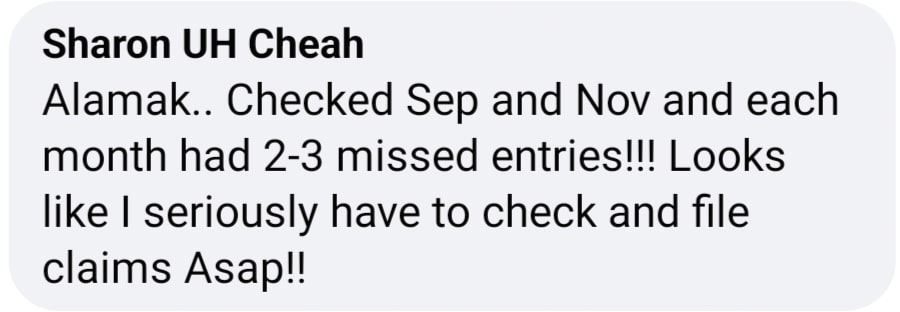
Realizing the urgency, she stressed the need to check and file claims promptly.
She also shared that claims cannot be filed for entries older than two months, recounting her inability to file for missed entries in November.
Netizens share SimplyGo experiences, expressing concerns and solutions
Netizens engaged in discussions under Sharon's post, sharing various experiences with the SimplyGo system.
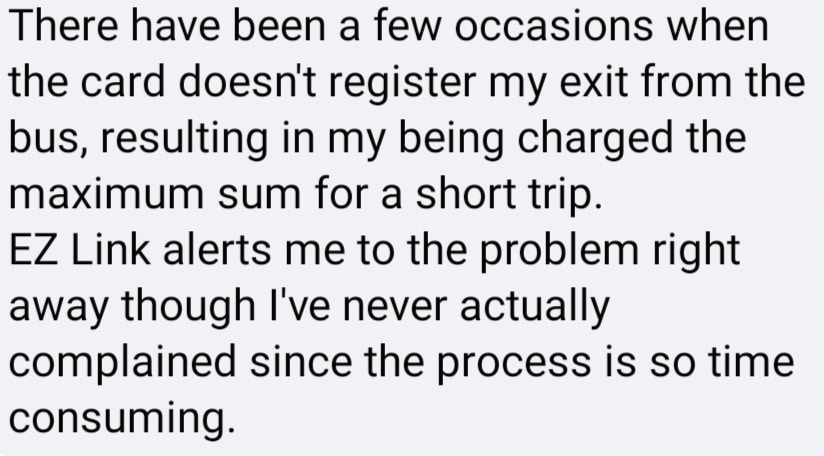
One user recounted instances when the card failed to register his exit from the bus, resulting in maximum charges for short trips.
He also mentioned how EZ-Link promptly alerted him to the issue, although he admitted to never formally complaining due to the time-consuming process.
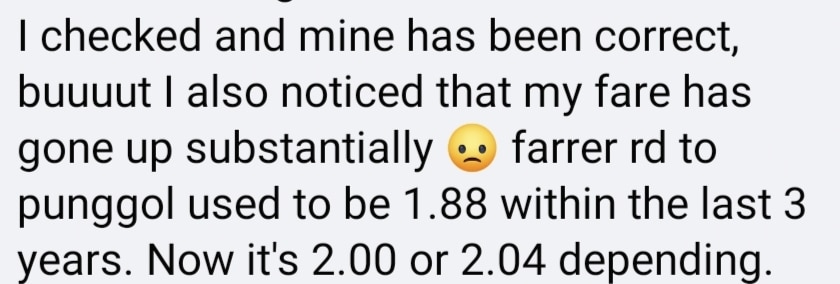
Another user added to the conversation, mentioning that she had verified her transactions and found them to be correct.
However, she observed a substantial increase in her fare, raising concerns about the unexpected rise.
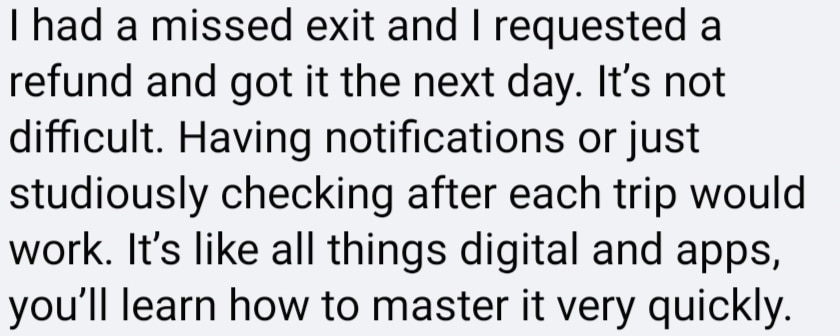
Yet another user contributed by sharing her experience of missing an exit and successfully requesting a refund, which was promptly processed the next day.
She reassured others that the refund process is not difficult, suggesting that having notifications or diligently checking after each trip could be effective.
Drawing a parallel to the learning curve of digital platforms and apps, she expressed confidence that users could quickly master the intricacies of the system.
Chee Hong Tat apologizes for LTA's underestimation of commuters' preference
Speaking at a doorstep interview on 26 January, Transport Minister Chee Hong Tat publicly apologized for the government's decision to phase out traditional public transport payment cards, acknowledging the Land Transport Authority's (LTA) underestimation of some commuters' strong preferences.
He stated, “If we had consulted more widely, and gathered views from a wider group of commuters before making the decision... we would have encountered stronger reactions and preferences that some commuters had expressed.”
The additional $40 million is projected to maintain the card-based ticketing system until at least 2030. Chee explained that this extension necessitates significant investment in new equipment, maintenance, and operating costs, which the government will cover without impacting bus and train fares.
Chee noted the technical challenges of integrating the fare display feature into SimplyGo, a problem that remains unresolved. He committed that the authorities would later decide whether to extend the card-based system beyond 2030, based on the technical feasibility of SimplyGo displaying fares on payment readers.
The minister emphasized the government's commitment to working with other agencies and industry partners to improve SimplyGo’s features and user experience. He acknowledged the absence of a current technical solution for the fare display issue but remained optimistic about finding one.
Members of Parliament rally to address SimplyGo concerns with probing questions
In response to the controversy surrounding SimplyGo, several Members of Parliament have submitted parliamentary questions addressing the matter, seeking clarification and improvements.
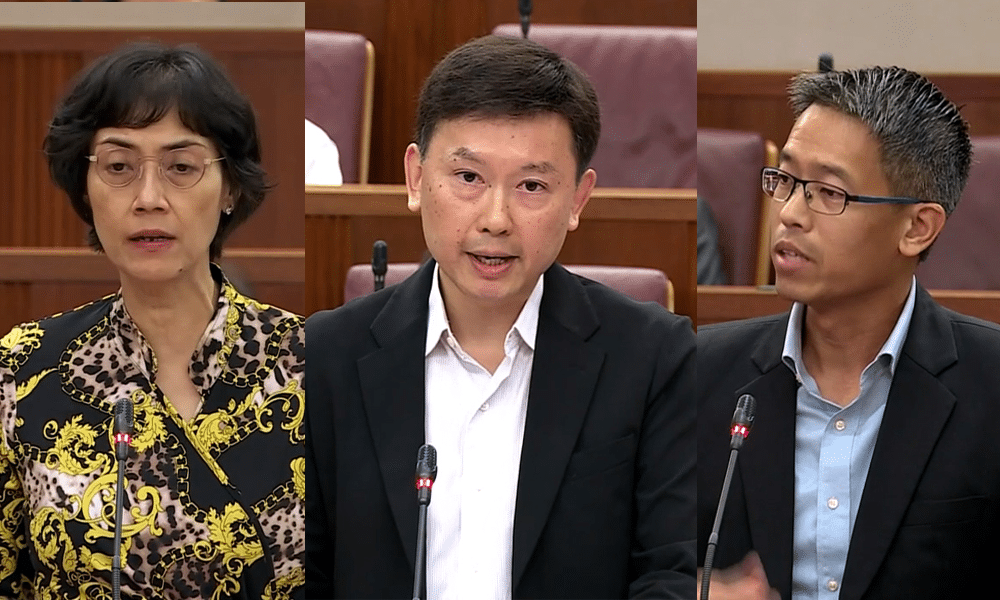
Dr Lim Wee Kiak took the initiative on 15 January, filing a parliamentary question regarding the implementation of SimplyGo based on feedback from his constituents.
His questions cover the number of reports on overcharged trips, the possibility of displaying card balances on fare readers, efforts to enhance the reliability of the SimplyGo app, and the potential postponement of the mandatory upgrade until compatibility with in-vehicle units is achieved.
Joan Pereira through her Facebook page emphasized the importance of listening to residents, highlighting the filing of her parliamentary question for the upcoming session in February.
She raised concerns about a full switch to SimplyGo, seeking information on measures to ensure platform and backend system reliability and security, the integration of a balance display function, and the possibility of continuing to accept older EZ-link cards.
Christopher de Souza also will be filing two Parliamentary Questions. His inquiries focused on the reasoning behind phasing out the card-based ticketing system and ways to inform commuters of their fare and balance at the point of tapping out without causing delays.